Archive | Beat Generation RSS feed for this section

Jonathan Collins’ Beat Generation Locale Series

8 Oct


9 Lupine Road

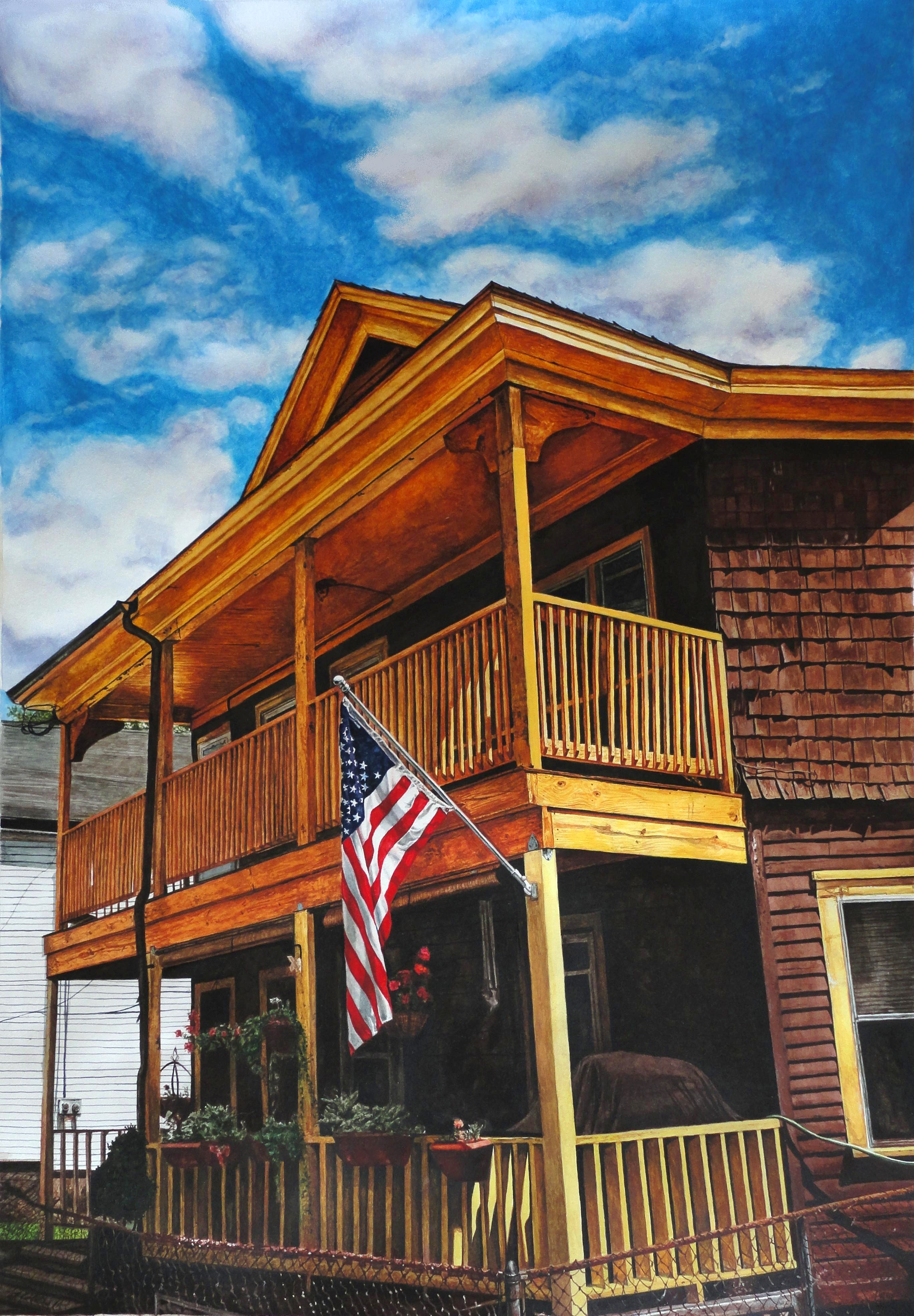
When I first saw artist Jonathan Collin’s paintings in person, I thought they were photographs.  They’re stunning.  Incredibly detailed and richly saturated, his Lowell series captures with paint the Massachusetts landscape that Jack Kerouac captured with words.  More than just setting and subject matter, Collins’ use of chiaroscuro resonates with Kerouac’s literature.  There is light piercing the darkness.

When I asked Jonathan if he’d write a little artist statement, he sent me back an email with the below, saying he’d written it spontaneously and with no revision, according to Beat principles.

Visions of Lowell

Jack Kerouac’s Duluoz Legend has always been an important touchstone of literature and revelation of light and beauty to me. In my research of those heady days of the 40s and 50s, I found them not only to be thrilling, but all in the family.

My father, Don Collins, was also in the Navy in WWII , the Merchant Marines, and traveled the world as Kerouac did. My father came back home, worked and painted, Kerouac wrote!

I began this series of paintings of Beat Generation locales in 2010. Traveling to San Francisco first, via the California Zephyr , in 2007, I was astounded by the natural richness and depth of the American landscape. I strolled the streets of North Beach, with its glistening neons and vibrating nightlife. I recorded everything in my journal, sketchbook, and camera. Everything that rose the hairs on my neck in artistic excitement!

I had been to Lowell many times, from the mid 1990s on, but my trip in July 2011 was intended to document the birth and mystery of the seeds planted in Kerouac’s psyche. From the Lupine Road house, to downtown cobbled streets, to the glowing Grotto, I stood transfixed.

Paterson was where my mother was born, and my parents met at the bridge surrounding the Great Falls. Allen Ginsberg was raised in Paterson and grew up  a mere four blocks from these sites. I found Ginsberg’s poem, “The Green Automobile” to be an exquisite inspiration, tying the mythical past to present;”From Lowell’s Merrimack to Paterson’s Passaic.”

My main focus was not only the historical context both personal and literary , but illumination, literally.  Light is the essence of my paintings and a key ingredient in the tempest of Beat literature. From Rimbaud’s “Illuminations,” to Kerouac’s “Visions” series, Gregory Corso’s visionary odes, to Ginsberg’s “Howl,” his plea for understanding.

The need to shed light, to reveal hidden truths beyond words, to make sense of the beauty and sanctity of life, feeling the mystery in the shadows, was and IS, the artists’ true quest.

Just as the Paterson Falls continue to boom and crash, and the neons of Frisco glow endurably, and the spirit of Lowell pulses in the night, so will the work of the Beats continue to inspire, and illuminate generation after generation.

It is my hope that these paintings will enrich the hearts and minds of others, with a glimpse of the light surrounding us, and pray we honor and express the light within us all.

The Moon Her Majesty

Lord

The Visitation

[The three paintings above are of the Grotto in Lowell and should be viewed from left to right in the order in which they appear.]

Lowell Celebrates Kerouac 2012: The Basics

5 Oct

Lowell Celebrates Kerouac kicks off next week, and this year the literary festival features a full week-long schedule of fantastic events with an incredible lineup of authors and poets, musicians, and filmmakers.  Perhaps most exciting of all, Jack Kerouac’s play “Beat Generation,” written the same year that On the Road was published, will also have its premiere during Lowell Celebrates Kerouac.

Roger Brunelle will also be leading his guided tours of Kerouac’s old haunts, which in the past have been my favorite part of LCK.  Brunelle has firsthand experience of Lowell and injects his tours not only with fascinating historical knowledge but also personal stories and warmth from his own life.

Visiting Lowell and seeing the Merrimack River and walking the bridges gives readers of Kerouac better insight into the landscape he describes in his Lowell novels and his upbringing in this Massachusetts mill town.  For the first-time visitor, LCK is an opportunity to encounter Kerouac’s hometown.  Many people return year after year to the festival, though, because LCK is also about community.  You meet people who grew up around the same time as Kerouac, and you meet fresh-faced pilgrims eager for experience. You meet people who have read every single one of Kerouac’s books, and you meet people who are new to Beat literature and simply curious.  You meet people who come every year to LCK, and you meet people who just happened to stumble upon it.

Here are a couple tips if you decide to go to Lowell Celebrates Kerouac:

How to get to Lowell by public transportation — There is a Greyhound bus that goes to Lowell, however service is not frequent.  The easier option is to take the commuter rail from Boston to Lowell.  You can take the train from Boston’s North Station.  It runs about once an hour during the weekday and is only about an hour long.

Wear your walking shoes —  If you’re on any of the tours you’ll be doing a bit of walking.  Lowell is a very walkable city, so if the tour or event is meeting anywhere in Lowell you can probably walk there without much difficulty from the center of the city.  It’s usually easier to walk than to catch a cab.  Unlike in major cities, taxis aren’t easily flagged down in Lowell; if you want a taxi, you should call for one in advance.  There are a few sections of Lowell that get a little eerily quiet at night, so after dark it is best to not walk alone, which is commonsense for any city.

Take time out to eat — There will be so much to see and do at LCK that you may forget to actually eat!  Many of the locales you’ll visit during the pub crawl offer food, and there usually is time on the tour to get a bite to eat at the pub, but chances are you’ll be so absorbed in conversation you will neglect eating.  That or maybe pub food just isn’t your thing.  An inexpensive, quick, light, and conveniently located alternative is Brew’d Awakening Coffeehaus, which offers delicious bagel sandwiches and other fare.  It’s a particularly good choice if you’re traveling solo since there’s often live acoustic music, so you can just sit back and read one of the free magazines and listen to some great music without the awkwardness of being in a sit-down restaurant by yourself or being in a takeout joint.  They also have great vegetarian options.

Skip an event or two — You’ll want to attend most events, but you don’t have to attend every single event at LCK.  Lowell has a rich history outside of Jack Kerouac, and discovering the city itself can help you understand the environment in which Kerouac grew up.  Visiting Boott Cotton Mills Museum, for instance, can lead to a great understanding of immigration in Lowell and Kerouac’s desire not to be a “mill rat.”  Meanwhile, the Whistler Museum is a great place to discover another one of Lowell’s great artists.

Here’s the complete schedule from LCK.

Miguel Algarin’s Birthday Reading

4 Oct

Poet RA Araya invited me to read at poet Miguel Algarin‘s birthday bash last month at Mama’s Bar in the East Village.  It was such an honor to read for someone who has influenced so many lives.

Miguel has been a major force of influence in poetry, creating space and awareness for ethnic literature and community.  He is a Shakespeare scholar and Professor Emeritus at Rutgers University in New Jersey.  He also co-founded the Nuyorican Poets Cafe in the 1970s, which is one of those sacred New York City literary scenes.

Here’s a section of Algarin’s bio from his website:

Born in Santurce, Puerto Rico, Algarin moved with his family to New York City in the early 1950’s where his love for the written word intensified by the artistic energy radiating from the City streets. Obtaining advance degrees in literature from the University of Wisconsin and Pennsylvania State University, Algarin developed a successful career pursuing his passion for literature. He served as a Professor Emeritus for more than 30 years of service to Rutgers University where he taught Shakespeare, Creative Writing, and United States Ethnic Literature.

The life and work of Algarin spans the universities and the streets, so much so that combining the two resulted in the development of the Nuyorican Poets Cafe, a New York City cultural haven within the Lower East Side famed for being creatively drenched with great artistic intensity. Being the founder of such an organization, Algarin’s mission was to create a multi-cultural venue that both nurtures artists and exhibits a variety of artistic works to both enlighten and empower the underclass, it is a mission that has remained true to this day.

When I first moved back to northern New Jersey, after attending college in California, I became friends with a group of people that included many first- and second-generation Puerto Rican Americans and Colombian Americans.  It was through one of them that I first heard about the Nuyorican Poets Cafe.  Nuyorican is an amalgamation of the words “Nueva York” (Spanish for “New York”) and “Puerto Rican,” and the Nuyorican Poets Cafe championed Spanish-language poets and spoken word.  At the time, I had never been to the Nuyorican Poets Cafe, but together my friends and I founded a coffeehouse in suburban New Jersey, where we invited bands, poets, and visual artists to perform.  Most of the people involved were immigrants or children of immigrants–including myself.  As the child of an immigrant father, I have always gravitated toward other immigrants and children of immigrants.  That’s why even though I myself am not Nuyorican, I in many ways relate to the issues of identity and language raised through Nuyorican poetry.

That being the case, one of the highlights of Miguel Algarin’s birthday bash reading was hearing poet Joe Pacheco, whom I had just heard read “The Night Charlie Parker Played Tenor at Montmartre Cafe in Greenwich Village” at David Amram‘s show the week prior, read his poem about the pronunciation of his name and other immigrant people’s names.  I couldn’t help but laugh when he included a Greek name!  With great humor, Pacheco pointed out how people with ethnic names are often perceived by others (“but you speak English so well!”).

Produced by Araya, the reading also included:

  • Brian Omni Dillon
  • Rome Neal
  • Charlie Vazquez
  • Ray DeJesús
  • Danny Shot
  • Jeff Wright
  • Puma Perl
  • Kymberly Brown
  • Carlos Manuel Rivera
  • Lydia Cortes
  • Noah Levin
  • Edwin Torres
  • Nancy Mercado
  • David Henderson
  • Lois Griffith
  • Adam Ash
  • Susan Yung
  • Nancy Mercado

It was really great meeting Edwin Torres, who was huge on the poetry scene when I first came back to the East Coast but has since moved out of the city, making it rarer to get to see him perform.  I enjoy his poetry so much, and he was really down to earth and easy to talk to.

Jeff Wright and I had connected through social media a while back, and it was fun to finally meeting him in person.  He even gave me a copy of Live Mag, which I was really excited about because I had gotten a chance to skim it at John Reed‘s reading at the Guerilla Lit Reading series back in July and really wanted my own copy because it contains poetry by some of my favorite living poets.

Well, I could obviously go on and on about how great everyone was, but really the night was about Miguel Algarin.  I had actually never heard him perform before, so it was awesome hearing him scat!

The last time I saw him, Miguel had told me about how he had known Jack Kerouac and was very interested in having me send a copy of Burning Furiously Beautiful: The True Story of Jack Kerouac’s On the Road, the book I’m coauthoring with Paul Maher Jr., to him.  The photo above, taken by Ra, is of me reading from the book for Miguel’s birthday.

Banned Book Week 2012

1 Oct

It’s Banned Books Week!

I’ve been in a few conversations recently about censorship that really got me thinking.  In one, I admitted I’m probably a “square.”  I like following the rules.  That said, I believe 100% in the freedom of speech and the freedom of expression.  I don’t believe the government or libraries or anyone else should ever block our access to literature.  In fact, I believe we should have more free access to information and the written word.  As cliche as the saying is, knowledge is power.  Books are an incredible source for people looking to gain knowledge but also for those trying to understand themselves and the world around them a little bit better.  Censorship is dangerous to our well being.

The other conversation I had was in regard to ratings for children’s books.  Now, personally, I don’t really think ratings are all that helpful.  I’ve seen PG-13 movies that were more offensive to me than movies rated R.  The documentary This Film Is Not Yet Rated exposes why this occurs.  This brings me back to literature: the YA books I read as an adolescent were far more scarring than the books I read today.  So many of the books I grew up reading were about teens that had been raped or physically abused or had other terrible things happen to them.  I suppose these were the moral books that were supposed to scare me into being square so bad things didn’t happen to me.  The books I read today may have adult language or themes, but these classics and New York Times bestsellers intended for adult readers are generally milder and less damaging than the books I read when I was younger.  I don’t think ratings on YA books would necessarily change reading habits, and I do believe teens should have free access to the reading material of their choice, but perhaps both parents and young readers should be aware that the YA label can be a bit misleading.

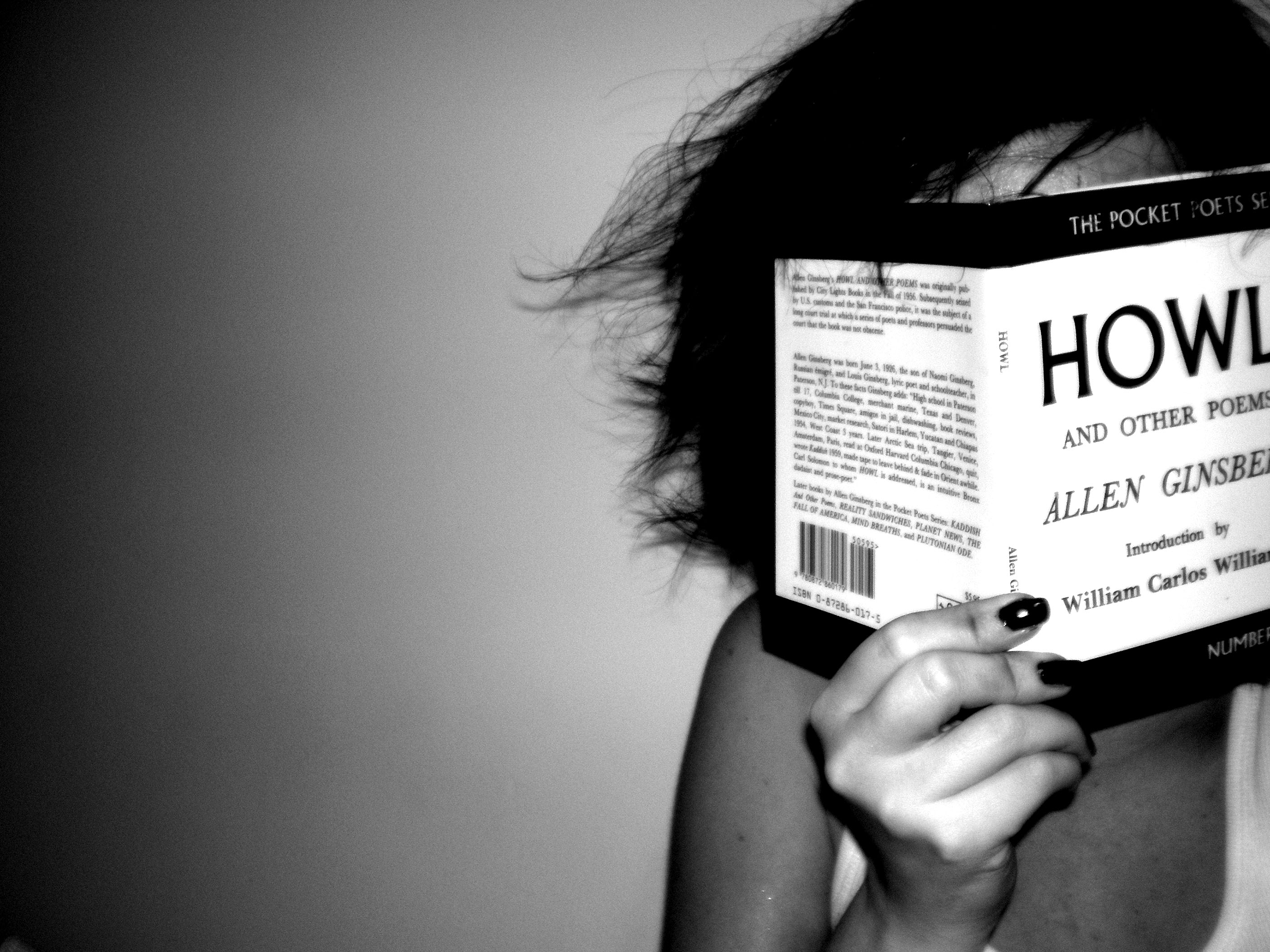
If you’ve never seen HowlBanned Books Week would be a good week to watch it.  The film portrays the true-life events surrounding the obscenity case over City Lights’ Shig Murao and Lawrence Ferlinghetti selling Allen Ginsberg’s Howl.  The book Howl on Trial: The Battle for Free Expression reports on this historical trial, going into more depth.  From the City Lights product page:

To celebrate the 50th anniversary of Howl and Other Poems, with over 1,000,000 copies in print, City Lights presents the story of editing, publishing, and defending the landmark poem within a broader context of obscenity issues and censorship of literary works.

The collection includes:

* The complete “The Howl Letters” — correspondence between Allen Ginsberg, Lawrence Ferlinghetti, Jack Kerouac, Gregory Corso, John Hollander, Richard Eberhart, Louis Ginsberg, and others – with first-person insight into Ginsberg’s thinking and the significance of the poems to the author and his contemporaries.

* Ferlinghetti’s account of hearing “Howl” read at the Six Gallery, of editing the book, and of his court battle to defend its publication.

* A timeline of censorship in the U.S. that places the Howl case in the broader historical context of obscenity issues and censorship of literary works.

* Newspaper reportage, magazine essays, cartoons, photographs, and letters to the editor that illuminate the cultural climate of the mid-1950s, when sexual expression in print was suppressed.

* Excerpts from the trial transcript that show the brilliant criminal lawyer Jake Ehrlich in action.

* ACLU Defense Counsel Albert Bendich’s reflections on the Howl case, and his thoughts about challenges to Constitutionally guaranteed freedoms.

*A look at how the fight against censorship continues today in new forms. 

Interestingly, it was a conservative judge who saw the value in Ginsberg’s Howl, finding it to have “redeeming social importance.”

Find out more about Banned Books Week here.

10 Things You May Not Know about Jack Kerouac

27 Sep

Here are ten things you may not know about Jack Kerouac.

  1. His parents were French-Canadian immigrants, and he didn’t learn to speak English until he went to school.  It wasn’t until he was a teenager that he began feeling comfortable conversing in English.
  2. He was the baby of the family.  He had an older sister named Caroline (nicknamed “Nin”) and an older brother named Gerard, who died when he was just a boy.
  3. He was a Classicist.  He used to skip school just to go read the Classics in the library.
  4. He attended prep school.  Graduating a year early from high school, he had a scholarship lined up to attend Columbia University, but they required him to attend Horace Mann Preparatory School first.
  5. While in school, he wrote music reviews.  He also had a job as a sports writer for his hometown paper.
  6. He joined the US Navy and the US Merchant Marine.
  7. His go-to food while hitchhiking across the country was apple pie.
  8. His first book, The Town and the City, was published under the name John Kerouac.  When he drew the cover he envisioned for On the Road, he also wrote his name as John Kerouac.  His parents had given him the name Jean-Louis, and John was the closest Americanization of his name.
  9. His first marriage took place in prison.  He had been arrested as a material witness after his friend murdered a man who had been stalking him.  Kerouac’s girlfriend agreed to post bail if he married her.
  10. In addition to writing, he also was a painter.

Foreign Film Titles of On the Road

24 Sep

The other day I was editing a book that mentioned an 80s movie.  This particular book happened to have been translated into English, though, and the title of the movie was botched!  The tricky thing with translation work is that there are multiple words that mean similar things and sometimes the literal translation isn’t correct.

The film adaptation of Jack Kerouac’s On the Road debuted in Cannes back in May and, although it won’t make it to the US until December, it has gone on to show in some other countries around the world.  However, if you’re looking to find out if the film is showing in theatres in your country, you may find it listed with a translated title.

According to IMDB, these are the titles that On the Road is going by in other countries:

En el camino Spain (imdb display title)
Kelyje Lithuania (imdb display title)
Matkalla Finland (imdb display title)
Na Estrada Brazil (imdb display title)
Na ceste Czech Republic (imdb display title)
On the road – Unterwegs Germany (imdb display title)
Onderweg Netherlands
Pela Estrada Fora Portugal (imdb display title)
Sur la route France (imdb display title)
W drodze Poland (imdb display title)

Some of these, for example the French and Spanish, are literal translations, but it doesn’t appear that all of them are.  I believe “Matkalla” is the Finnish word for “trips.”  The Polish title could also translate as “In Transit.”

If you speak any of these languages, let us know if they’re exact translations.

Video from Collaboration with Jazz Musician David Amram

19 Sep


This is the video from my collaborative reading with David Amram at Cornelia Street Cafe on Labor Day.  If you missed my full recap, you can read it here.

In the video you’ll hear me reading a section on Jack Kerouac’s time in Mexico, which gives some perspective on Kerouac’s faith, his sensitivity toward animals, and his tumultuous friendship with Neal Cassady.  The book I’m reading from is my book with Paul Maher Jr. called Burning Furiously Beautiful: The True Story of Jack Kerouac’s On the Road

Special thanks to my videographer Liz Koenig.

The event also picked up some press!

Larry Closs mentioned it in his article “Transcending Beat with David Amram.”

The Pappas Post mentioned it in “Stephanie Nikolopoulos and Jazz legend David Amram pay tribute to Jack Kerouac.”

Recap — with Photos! — of David Amram Reading

10 Sep


When musician David Amram introduced me before I read with him at Cornelia Street Cafe on September 3, 2012, he very generously said people should pay attention because one day they’d see me on television.  To me, though, reading with David Amram was a much bigger deal than being on television.  There are countless television shows, but there is only one David Amram.  While there are many fantastic musicians and writers out there whom I’d be honored to read with, there are few who hold such a special place in forming my creative identity as Amram does.

I first became acquainted with Amram through studying Jack Kerouac when I was just a teenager.  I was enamored with his improvised performance as Mezz McGillicuddy in the 1957 Robert Frank and Alfred Leslie film Pull My Daisy.  In fact, this photograph, featuring Larry Rivers, Jack Kerouac, David Amram, Allen Ginsberg, and Gregory Corso, who all collaborated on the film, is probably my all-time favorite photograph of the poets, writers, and artists associated with the Beat Generation.  It seems to so purely capture their friendship: just a couple of people hanging out at a cafe, maybe talking about the arts, or maybe just drinking coffee late into the night and enjoying each other’s company.

Although it was literature that introduced me to Amram, his music fascinated me.  Here was a musician who was more than just skillful.  Amram is an innovator.  He’s someone who experiments, improvises, blends genres, captivates.  He is, quite simply, mesmerizing to watch and listen to.

Through reading biographies on Kerouac and also reading Amram’s own biographies, I came to discover the jazz-poetry readings Amram and Kerouac began doing in the Village in 1957.  These were improvised sets, requiring each to masterfully foresee and adapt to changing tempos and moods in each other’s works.  These jazz-poetry collaborations captured my imagination, challenging my view of art and the way in which it’s created, the musicality of words, and the role of collaboration, improvisation, and performance in literature.  As I read about the collaborations in musty library books, forty-some-odd years after they’d taken place, I envisioned what it must’ve been like to be in the crowd at a painter’s loft or at the Circle in the Square.  Did the people there realize they were part of history?

In 2001, I had the opportunity to ask Amram just that when I interviewed him for some research I was doing at the time.  I sat enthralled, clinging to his every word, as he told me about all the places he used to hang out at in New York, about collaborating with Kerouac, and about how the term “Beat Generation” is just a marketing term that people later attached to the individual artists who each create unique works.  As he talked, answering all of my questions and never rushing me, and later as I read another biography of  his, I realized that Amram is the real deal — a creative genius and also a beatific individual, an artist who inspires and encourages.

Amram has been someone whom I’ve long admired, both on an artistic and a personal level.  Reading about those 1957 jazz-poetry readings he did with Jack Kerouac, I never imagined that one day I would have the opportunity to read the book I’m writing on Jack Kerouac with him.  When my former editor suggested we attend Amram’s show at Cornelia Street Cafe in the Village, I excitedly said yes.  A few days later, I had to email him back to say Amram had invited me to read with him.  It was completely surreal.

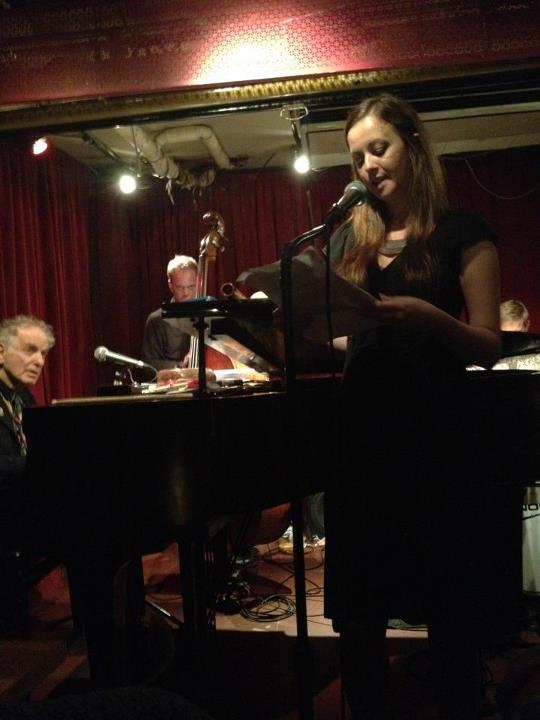
The September 3, 2012, show was completely sold out.  I had some friends who were turned away at the door.  Special thanks to Cornelia Street Cafe’s Robin Hirsch and the staff for hosting the reading and for doing such an excellent job in organizing the event.  I read a short selection about Kerouac’s time in Mexico from Burning Furiously Beautiful: The True Story of Jack Kerouac’s On the Road, the book I’m co-authoring with Paul Maher, Jr.  It was really exciting because author Larry Closs and painter Jonathan Collins, both of whom I met through the Burning Furiously Beautiful Facebook page, were in the audience.  Poet and producer RA Araya, who has been hugely supportive of my work and whose birthday bash was the premiere reading from Burning Furiously Beautiful, was also there, and graciously provided the photography you see here.  I had some other family and friends there as well and am so appreciative of their support.  It means more to me than most people realize.

As soon as my videographer, Liz Koenig, sends the video, I’ll post it so you can hear me reading with David Amram and his band.  The band, consisting of Amram, Kevin Twigg, and John de Witt played so beautifully — even more of a feat, considering Twigg had hurt his hand before the show.  The music was haunting and fit the piece that I read so perfectly.  I wanted to remain present in the moment, to really hear what they were playing, and savor the moment.  It was one of those times in life that I wanted to tuck into my heart and cherish.


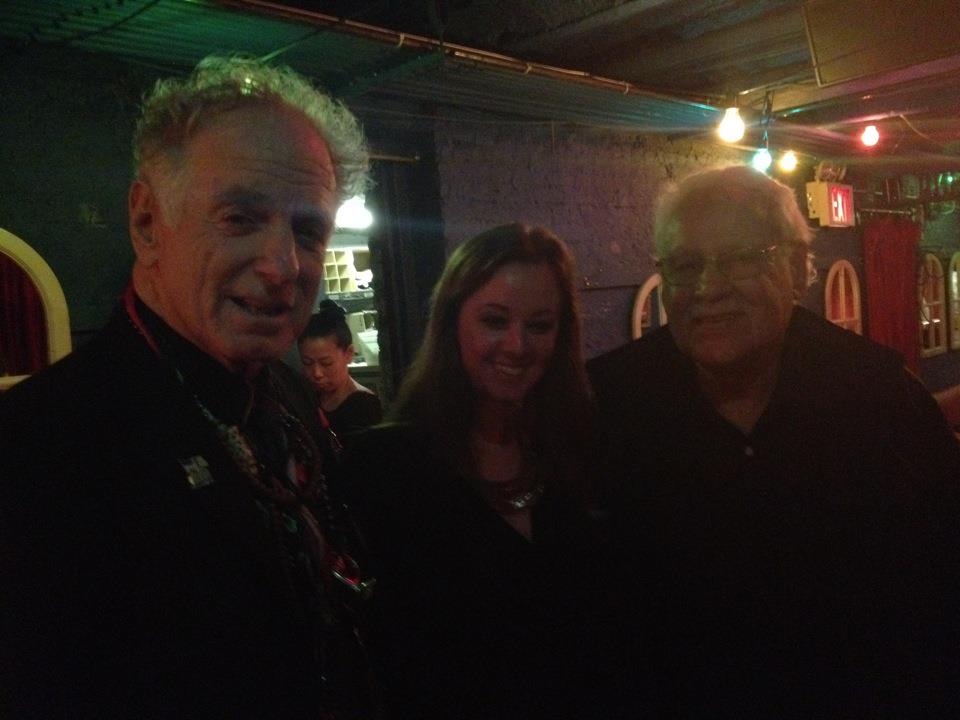
David Amram, Stephanie Nikolopoulos, Joe Pacheco

Stephanie Nikolopoulos, David Amram, RA Araya

Exclusive Interview with Author Paul Maher Jr.

7 Sep

I am so excited to share my interview with Paul Maher, Jr.  He has such incredible insight on Kerouac and the writing process in general.  I think you’ll see why I enjoy working with him so much on Burning Furiously Beautiful: The True Story of Jack Kerouac’s On the Road.

How did you first become interested in Jack Kerouac?

I remember one of the first books I ever picked up of Kerouac’s, it was Dr. Sax. I didn’t buy it at the time, I just looked at the back cover and read its blurb: “In this haunting novel of intensely felt adolescence, Jack Kerouac tells the story of Jack Duluoz, a French-Canadian boy growing up, as Kerouac himself did, in the dingy factory town of Lowell, Massachusetts.” That was the exact same sentiment of myself at the time, I must have been about 18 or 19, and my adolescence too was “intensely felt” as well as growing up in Lowell. I also grew up in Centralville in a French  Canadian enclave for about the same time period as Jackie Duluoz. Soon afterwards, when I did buy Dr. Sax, I related to Kerouac’s capturing of the whole scene, the sense of hauntingness; the dialects, the sensibilities, and the mystery of Catholicism. I attended Saint Louis de France school like Jack did, and attended masses there. My last time in the basement of that church, it was for my father’s funeral. I remember sitting in those little wooden pews, smelling the burning candles, and the hushed yet amplified sounds of murmurings, sneezes and the priest standing before us all. It brought me right back to my boyhood when I used to walk there every day. Except, of course, the cycle was complete for my father who had also attended that church as a boy, as well as his parents.

So, dipping into Kerouac was easy for me. That was my introduction, not, like many, On the Road. After reading Dr. Sax and Visions of Cody, my first Kerouac books, On the Road seemed a bit tame. A disappointment really, and it still ranks lower than those aforementioned visionary masterpieces. It is no wonder Dr. Sax was a novel that he was really proud of.

You grew up in Kerouac’s hometown of Lowell, MA.  What was that like and how does it inform your understanding of Kerouac and his work?

I can’t objectively say what it was like, it just was. There was also a lot not to like about Lowell, like any other town or city. Growing up in Lowell was as natural as anything else. My home address was less than a quarter-mile from three of his Centralville addresses. His house in Dr. Sax was next to the Hildreth Street cemetery, and walking by that cemetery, as a child, the stone wall was high and there were iron gates surrounding it. It was padlocked with a chain. We never got in, so we wondered what was in there, and so that naturally retained a mystery for us. Adjacent to that house was a funeral home, and my father and grandfather were waked there (among others). There was a mystery to all of it, and I easily made those associtations captured so perfectly in his Lowell writings. However, I didn’t feel it so much with Maggie Cassidy or Vanity of Duluoz, because I didn’t grow up in Pawtucketville or attend Lowell High School. Those two books do more to capture an era than a certain mystical reverence for childhood.

I have a high regard for Visions of Gerard as well, because it captures more of the Franco-American sensibility of Centralville, and that sort of insular vibe common to the city. Like Kerouac, I was friends with kids named Plourde and Beaulieu, for all I know they were grandsons of his friends.

Which is your favorite of Kerouac’s books?

In no particular order, any of those books written between 1952 and 1954, especially those that have more of a mystical nature. I love The Subterraneans and Tristessa. The Lowell novels, Visions of Gerard and Dr. Sax; Book of Sketches and Some of the Dharma. I always carry Visions of Cody with me, though I am no admirer of Neal Cassady, I am fond of how Kerouac transmuted that person into his artistic sensibility to create a portrait of bygone America.

One of your greatest skills as a biographer is the thoroughness of your research.  Do you have any tips for aspiring biographers on how to track down hard-to-find material and incorporate the information into a work without it sounding like a Wikipedia entry?

I’m not a trained researcher. I took courses for my degrees on how to conduct research and much of it was rote, based on archaic practices and for the most part, teaching us to dispense with the piecemeal detective work of newspapers and archives, and instead operate backwards by working through secondary sources. For my Kerouac biography, I made it a point not to use the existing biographies as a resource. On the other hand, I had already retained much of what was written and having that knowledge, I could work on another level.

I also operate out of a sixth sense, almost intuiting where material might be, or something that may exist and is worth pursuing by surmising that it might be there. It may be as simple as spelling a name wrong, and then doing searches for it. The Internet has made it awfully easy to do much of it, especially in regards to newspapers and magazines. However, there is also room to abuse it, so that it does sound like a Wikipedia entry.

Per incorporating it, that can be tricky. You always want to use it where it adds to the narrative and doesn’t seem like filler material. I could have easily added anecdotal information on every town Kerouac passed through when he traveled across America. However, the emphasis is on Kerouac, not the town. However, if it was a documentary on the Travel channel, then it works.

I feel like you and I have worked really well together on Burning Furiously Beautiful, but collaboration is not desirable to many people or can be intimidating for those interested in it, particularly artists who want to leave their personal imprint on a work.  However, there is a grand tradition of collaboration; Kerouac himself collaborated with Burroughs on And the Hippos Were Boiled in Their Tanks.  What would you say to someone who is contemplating collaboration?

You just have to operate on blind trust and intuition. I like collaborating, but I can certainly understand the desire to want to have your own book, with just your name beneath the title. I am past that; it doesn’t matter to me if my name is on there at all. Films are created in collaboration with others, books are no exception.

In addition to various biographies on Kerouac, you’ve written Tom Waits on Tom Waits, Miles on Miles, and One Big Soul: An Oral History of Terrence Malick.  You’ve recently started writing your first novel and are documenting the process through your blog Scrivener Notes.  Why are you documenting the writing process?  What do you think are the positive and negative effects of lifting the curtain to expose the work that goes into writing, especially this early on when the work is still at its nascent stage?

I have always been very open about my work, sometimes to my detriment. To write inside a vacuum, to sit on your idea and let it gestate in isolation doesn’t seem like fun at all. I feel with this little adventure, that the book can just as well bloom when it is fostered by a like-minded community. I think there is something perilous and reckless yet strangely beautiful in throwing your ego out the window and letting the world watch you try to invent something out of nothing.

I have finally arrived to the point in my life that I don’t care about how any book of mine is received, because they are written out of a pure volition of wanting to do it, not having to, and in wanting to do it, once it is done, the act of creating has already been accomplished. The rest is just grist for the mill.

Documenting it just seemed right to do. I always wanted to see someone else do it, and I haven’t found it done to my satisfaction. I could write an entry how thrilled and elated I am to finish a chapter, and the next day write how much I suck. There is a reality television vibe to it. I do understand that it will only appeal to maybe 1% of the people out there, if anyone at all, but since I am doing it for myself, it doesn’t matter to me who reads it in the end. At the very least I will eventually get a novel out of it for better or for worse.

In happenstance, I could say the negative thing is that someone can lift your ideas and run with it. This has already happened with a reputable person in Kerouac studies. However, I think once the writing on the blog is exposed enough, it is more or less on public record so if someone does lift from it, then they are pretty much hurling themselves and their work into disrepute.

You write a little on your blog about why you wanted to make the leap from biography to novel.  What I want to know is how, if at all, do you think your biography work will influence your fiction?

I’m not sure that it will. The work ethic is already ingrained in me. I wanted to free myself from the world of facts and I have started resenting having to prove myself to publishers any longer. I have come to recognize that it isn’t an art form, it is a business, and I do not have a business mindset.

Also, a recent incident when my research and ideas were stolen from me has totally killed the spirit of writing biography, though I do admire others that are more honest in their profession. Operating out of my own intelligence and imagination keeps my ideas and impulses sacred and pure. I guess that’s it.

You also are a photographer and a filmmaker.  While these are notable in their own right, as a writer I am curious if you see any correlation between those art forms and the literary arts?  You and I have spoken before about how the narrative of film has influenced your scene-setting in your books.  Can you talk a little more about this?

The only correlation for it is personal, in that I am creating out of my own impulses to satisfy me. Taking a photo is immediate gratification, writing keeps me constantly busy, and it keeps my depression at bay. It keeps me in books and it serves to keep my mind occupied and focused since it is always burning at both ends.

Through chance and not design, I have a natural tendency to see things cinematically. That takes in imagery, dialogue, and creating a setting. This is how our collective minds are trained, and to bombard a reader with minutiae just for the sake of being all-encompassing with the facts is just an exercise of indulgence. We live in new times, where the facts are available if we want them, within a few keystrokes. I think pointing to the heart of the matter, isolating a biographical scenario like it was a storyboarded scene adds to the appeal of the book tremendously. I think Kerouac also had that in mind with his “bookmovies.”

How do you find time to do everything?  How do you balance all these various projects?

If I had to itemize my time, I couldn’t do it. I live this stuff. I breathe it. If we were taught at the beginning of our lives that we had to make sure we breathe at least eighteen times per minute, and it wasn’t automatic, that we had to go about our daily lives having to count, then we would crumble, sooner or later, under the pressure of it all. It would be too stressful. Instead, it comes to us automatically; we don’t have to make room for it. I just do it because it is all I think about. If I don’t do it, then I feel like shit. My mind turns to mud. I get lethargic. Unbalanced. So, like I said, it has become a survival mechanism for me, whether it is a book, a blog entry, an email or a photograph, all of it is tied into the daily phenomena of my being.

I never have considered how it is all balanced other than I keep my own schedule. When I need a break from one project to let it breathe, I move to another. Eventually I return to all of them.

Actually, managing writing projects is a lot easier than trying to manage a practical everyday life for me. To that end I am a colossal failure.


***

9/7/12, 10:28am: Several minor edits were made to this interview.

How I Came to Work with Paul Maher Jr.

6 Sep

A few years ago, I was at the New York Public Library, browsing the shelves for something new to read, when I stumbled upon Jack Kerouac’s American Journey: The Real-Life Odyssey of “On the Road.  I immediately added it to my stack of books (I greedily hoard books from the library and end up with outrageous fines) and headed to the check-out line.  Tunneling through New York City on the subway, I read the book, never thinking that one day I might work with the book’s author, Paul Maher, Jr.

I’d been studying Kerouac for well over a decade and always had vague plans of “one day” writing a book on him; by vague plans, I mean I had not only read voraciously (Kerouac’s books, biographies on him, books about the era) but also taken copious notes, interviewed, written well over a hundred pages, and blogging, but was doing it more for my own research — both academic and for fun — than any tangible book plans.  It was like I was living out that line in the opening of On the Road: “…always vaguely planning and never taking off.”  It was quite some time after I’d read American Journey that I came upon Paul’s website The Archive – Sketches on Kerouac.  I left a comment on one of his entries, without thinking too much about it, and was stunned and thrilled when he wrote back.  We began talking about Kerouac and writing, and he told me he was thinking of reworking American Journey and asked me if I’d be interested in collaborating on it.

It was quite possibly the worst timing ever.  By that point I was entering my thesis semester for my MFA, where I had to write two theses, one creative and one academic/research.  I was also working full-time.  But there was no way I was going to say no to the opportunity of working with Paul.  Besides American Journey, he’d also written the incredible biography Kerouac: His Life and Work.  This was a dream opportunity.  I said yes.

Check back tomorrow for my exclusive interview with Paul Maher, Jr. 

***

And check back Monday to hear all about reading with David Amram!