Archive | Faith RSS feed for this section

Light of the World

18 Apr

I think there’s probably a law against carrying an open flame in the subway.  I’m not sure.  But it’s a pretty safe bet.  This threw my Easter celebrations into flux last year.

Usually I spend Easter with my family in Baltimore.  Last year, though, Greek Orthodox Easter fell on the same Sunday as “American” (i.e., Protestant and Catholic) Easter, so I decided to stay in New York rather than deal with holiday traffic.

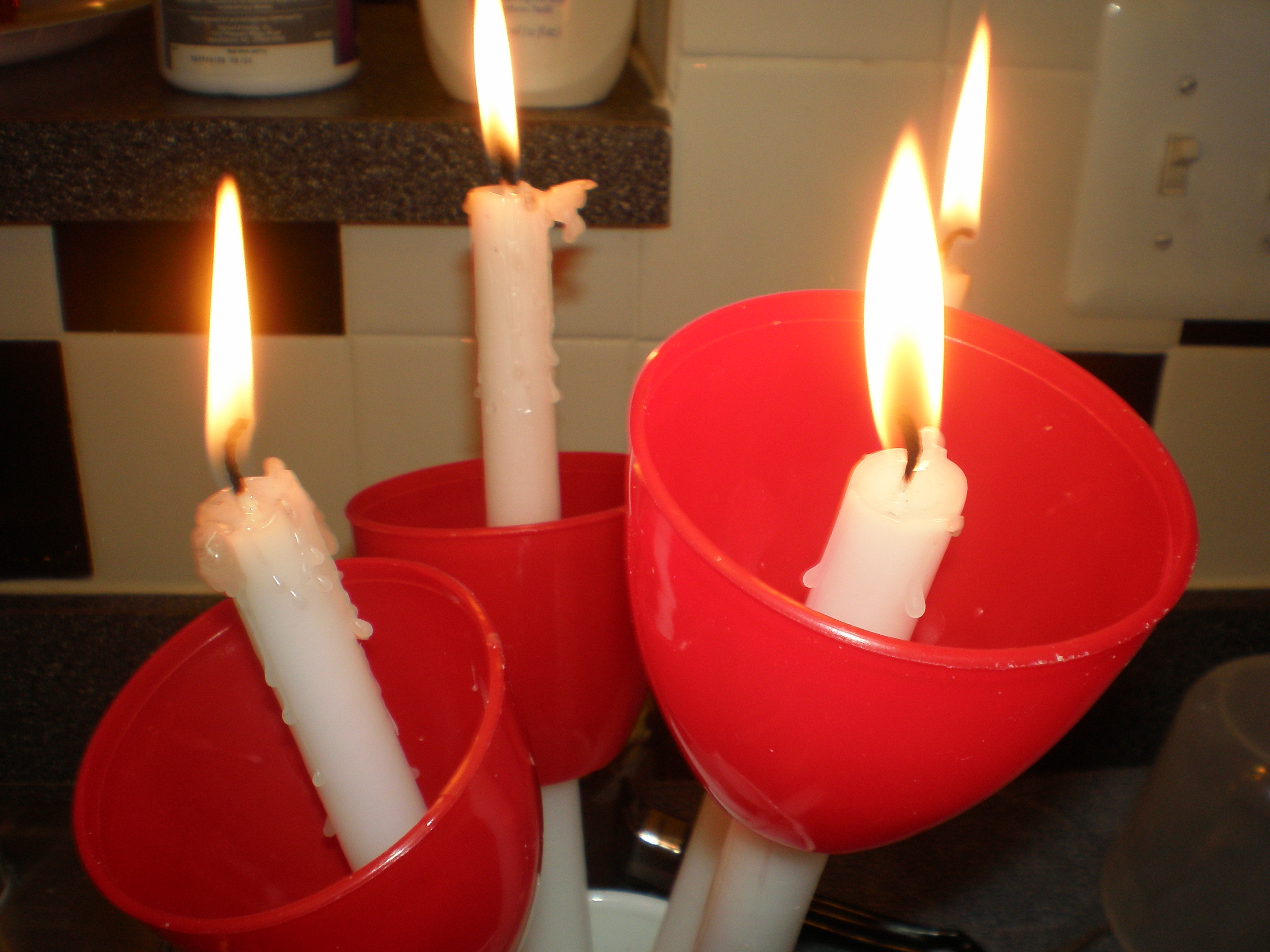
At the Cathedral, we lit candles to signify that now that Jesus is sitting at the right hand of God in heaven, we, the believers, are to be to the light to the world.  We carry our lit candles out of the church with us at the midnight Easter service, and shine them for all the world to see on our way home.  Up until last year, that had always meant carrying our lit candles into my uncle’s van.

Last year, though, I took the subway to the Easter service.  When I left the Cathedral, lit candle in hand, I realized I was more than twenty blocks from my apartment.  How could I get home with my candle still lit?

Surely, I’d get stopped if I tried to go in the subway.

What cabbie wouldn’t object?

I can never figure out the bus system, and it certainly wouldn’t be the solution anyway.

So, I hoofed it.  I got a lot of stares from passersby on my walk home.  At first, the masses coming from the Cathedral looked like we’d attended a vigil.  Or, maybe we were part of a weird cult.  As the crowd dispersed—east, west, uptown, downtown—we began to look like solitary candle holders.  Who were we?  Why were we carrying candles across city sidewalks in the middle of the night?

I’m glad you asked.

Church Hopping: Don Justo’s “Trash Cathedral”

14 Apr

Image via Wikipedia

Hola!  The latest entry in my Church Hopping column at Burnside Writers Collective is up, and it’s probably one of the most unique churches I’ve featured to date.  It’s Don Justo’s “Trash” cathedral in Spain.  A lot of my friends said the church is “interesting” in that tone that means “strange,” and while I agree it’s definitely not your traditional cathedral, I think the symbolism behind it is astounding.  What do you think?

Spring Break ’11 Recap: I Got Sick

7 Apr

It’s been go, go, go for the past few months.  When spring break came around, I was so excited for the opportunity relax and have some fun.  I imagined I’d read in the Egyptian room at the Met.  I’d buy fresh veggies at the Union Square greenmarket.  I’d invite friends over for dinner.

Instead, I got sick.  I guess my body knew it could finally take a rest from the manic pace I normally put it through.

Before I got sick, though, I did have some fun.

I went with my sister and my friends Rachel and Fred to the FXB Speed-Networking for a Good Cause event at Sidebar, where I met some really cool people.  FXB, which has been around for twenty years, works to support children affected by poverty and AIDS.  They organize a lot of fun fundraising events for young professionals.

Afterward we met up with our photographer friend Annie and Carly, who was visiting from out of town.  We went to an amazing Japanese restaurant.  I seriously could not get enough of the green beans and corn.

The next day I spring cleaned my apartment. Woot!  Then my friend came over and we ate pizza and chocolate and watched Paper Heart and The Virgin Suicides (which is of course based on the book by Greek-American author Jeffrey Eugenides).

That kick-off weekend I also hopped on the bus and headed over to New Jersey, to have lunch with a friend.  I hadn’t seen her for a few months so we had one of those really good, drawn-out lunches and talked about everything.  So therapeutic.

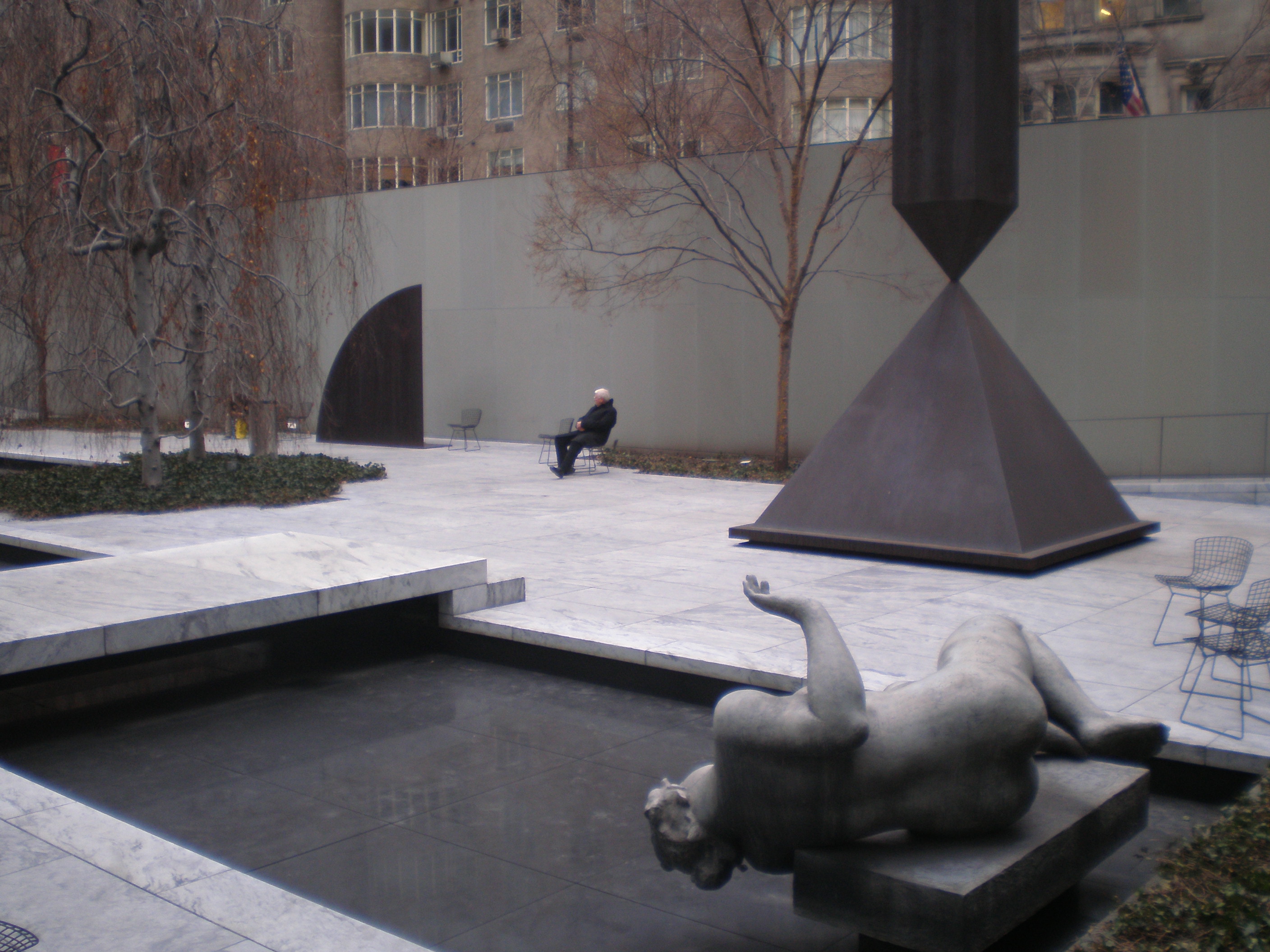
Monday I met up with a friend and fellow Scripps alumna who works at MoMA.  We had lunch and then she gave me a tour of the Pictures by Women: A History of Modern Photography exhibit.  I learned so much more from what she told me than if I had been there by myself.  It was such an inspiring and monumental exhibit.

Then I went to the New York Society for Ethical Culture to hear what all the hoopla was about over Rob Bell and his new book.

By Tuesday I was sick and spent the rest of the time watching films like The Runaways on Netflix and reading Lydia DavisThe End of the Story.

Is the Greek Flag More Prominently Displayed than Other Country Flags in the US?

5 Apr

Since we’ve been chatting about how the revolutionary flag was raised at Agia Lavra, I thought it would only be appropriate for us to talk next about the Greek flag itself.

When I was a kid, there used to be a house in Paramus that had a giant Greek flag painted on its garage.  Greeks love to show off their flag.  I don’t think I’ve ever seen another country flag so readily displayed in America.  I’ve seen the United States flag, the Confederate flag, and the flag of California (mainly on t-shirts), but I’ve rarely seen a non-US flag in America as often as I’ve seen the Greek flag.  We like our flag.

But how many of us actually know the meaning behind the Greek flag?

Galanolefki, “blue-white,” is the name of Greece’s flag.  Although no documents exist that explicitly state the reason for the chosen colors, most people agree that the blue is for the color of the Mediterranean Sea and the white is the waves.  Some have also suggested the blue and white are for the Greek sky.

In the upper left of the Greek flag is a white Greek cross on a blue background.  The Greek cross, also known as crux immissa quadrata, is perfectly parallel: all four arms are equal length.  Kind of like the symbol of the Red Cross.  The cross is, of course, representative of Greece’s Greek Orthodox faith.

In addition to the cross, the Greek flag hosts nine alternating blue and white horizontal stripes.  The top and the bottom stripes are both blue.

Remember how the Greeks shouted “Ελευθερία ή θάνατος” at the start of the revolution?  Well, popular theory has it that the nine stripes of the flag correspond to the nine symbols of the phrase: ” E-lef-the-ri-a i Tha-na-tos.”

Another theory is that the nine stripes stand for the nine letters in “Έλευθερία,” the Greek word for “freedom.”

It’s really quite beautiful when you understand the significance of each part of the Greek flag.

*  *  *

Ever wonder what it would be like to design your own flag??

A Chat with My Editor Brings Exciting News

1 Apr

Had a great chat with my former editor last week.  He told me about some great events at Cornelia Street Café;  I told him about a reading by a political prisoner I attended at The New School.

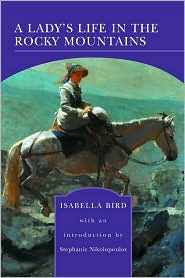
He also let me in on some exciting news::: the ebook edition of A Lady’s Life in the Rocky Mountains—letters by Isabella Bird, introduction by yours truly—is currently one of his bestsellers!


Obviously, I’m happy on a personal and professional level, but I’m also happy because Isabella Bird’s story is so beautiful and inspiring and it deserves a wider audience.  The short of it is that Bird left the comforts of home in Victorian England to travel by herself through the rough terrain of America’s Rocky Mountains.  As I wrote in my introduction to the book, “Whether you’re interested in nature, the history of the Rocky Mountain region, travel writing, Christianity, or women’s studies, Bird’s simple yet provocative letters will entertain your imagination.”

I’d say that’s worth the $1.99 for the nook book!

Church Hopping: Agia Lavra

30 Mar

In case you missed it, here’s the link to my most recent Church Hopping entry on Burnside Writers Collective.  In this adventure, I bring you to Agia Lavra, the little church where the Greek revolution began.  Long before Facebook organized citizens, the Church was a place of social change.

Victory Hellas!

25 Mar

Happy Independence Day!  I fully realize in this chilly weather that today is not July 4.  March 25, however, marks the 190th anniversary of Greek Independence from the Ottoman Empire.

Greece was a strong empire, impacting language and culture around the world for much of ancient history.  Even after Greece fell to Roman rule, Greek thought and influence remained strong.  However, in 1453 the Byzantine Empire fell to the Ottoman Empire.

On March 25, 1821, Metropolitan Germanos of Patras raised a revolutionary flag under a tree outside of Agia Lavra, a monastery in the Peloponnese.  This wasn’t the first clash between the Greeks and the Ottoman Empire in those 400 years.  The Turks had burned monastery, which was built in AD 961, to the ground in 1585.  The Greeks rebuilt it in 1600 but then the Ottoman Empire armies of Ibrahim Pasha of Egypt destroyed the church in 1715.  The Greeks rebuilt it again, and in 1821 Germanos gave an oath to the Greek fighters and raised the flag.  Pasha’s army destroyed Agia Lavra again in 1826.

The War for Independence lasted nine years.  Finally, on 1829, a small part of Greece was liberated.  Slowly, other parts of Greece were liberated.  On July 21, 1832, the Treaty of Constantinople, which put the Greek borders in writing, was signed, and on August 30, 1832, it was ratified.  Still, it wasn’t until after World War II that other Greek lands were returned to Greece.

You can read my full article on the church where the revolution began in my Church Hopping column on Burnside Writers Collective.

*  *  *

Get out your blue and white… in New York, the Greek Independence Day Parade will be taking place this Sunday, March 27, beginning at 1:30.  The parade goes up Fifth Avenue, starting at 64th Street until it reaches 79th Street.

If you can’t get there, you can watch it on WWOR TV Channel 9.  It will be anchored by Greek-Americans Ernie Anastos, Nick Gregory, and Nicole Petallides.

I’ve attended the parade many years, and when I was a kid I even got to ride on one of the floats!

Read my write up on the 76th Annual Greek Independence Day Parade in New York that took place a few years ago on Daily Frappe for more insight on the history of the parade and Greeks life in America.

Mapping Out Houses of Worship in NYC

24 Mar

Remember the other day when I mentioned that cute little restaurant Penelope?  Well, last Friday Penelope happened to be the opening setting of a New York Times article by Mark Oppenheimer, entitled “Mapping Religious Life in the Five Boroughs, With Shoe Leather and a Web Site.”  The article is about a Texas native named Tony Carnes, who moved to New York to go to The New School, where incidentally I’m enrolled in the MFA program, and who is, according to his website, “exploring the postsecular city.”

He’s mapping out every house of worship in the five boroughs of New York.  My immediate thought was: there are so many churches that make use of school auditoriums, bars, and ballrooms — how will he find those churches, if he’s driving around looking for church signs?  Well, apparently Carnes hears about those by word of mouth.

But he isn’t just mapping the city out.  He and his colleagues are telling stories.  Stories such as:

“The youth of Bethany Baptist Church put together a modestware fashion show in Jamaica, Queens called ‘A World of Difference.’ They follow a long tradition of fashion shows in African American churches.” —Fashion in Church, Jamaica, Queens

“Under the searing sun and stench of roadside garbage, a teenage Hispanic girl carrying a baby boy comes out of a door next to a church. Her tousled hair looked like she’d been up all night. The baby’s unwashed face was smeared with dirt; a diaper was the only thing covering his bare skin.” — Girl Power in Flatbush

“What church would get rid of its pews to make more room for feeding the poor? Surely, wouldn’t the pastor resign, the elders stomp out in exasperation, and the members hastily decamp for a properly pewed church? All that didn’t happen at a Lower East Side church ten years ago when it did just that…” —East Village church threw out its pews to make room for the poor

If you want to know about Greek Orthodox churches and Greek Pentecostal, there’s also an article posted on the census the nonprofit took in Astoria.

I love the way Carnes and his nonprofit organization are uniting houses of worship.  In a way, it’s kind of a blend of the way Burnside Writers Collective gives community and voice to people of varied Christian background (head’s up: check out my church hopping column tomorrow!) and Asphalt Eden illustrates various New York church’s unique personalities by listing events.

In another way, it reminds me of the exciting and noble work the Endangered Language Alliance, headed up by Dan Kaufman, Bob Holman, and Juliette Blevins, is doing, mapping out endangered languages in New York and working to preserve them.

For more on Carnes’ “Journey thru NYC religions” visit http://www.nycreligion.info.

Hello, Carnival; Good-bye Meat

7 Feb

The Carnival season won’t start until next month in Catholic countries (Mardi Gras isn’t until March 8), but the Carnival season in Greece kicks off on February 12 and will run until March 6 this year.  The dates are different but the significance is the same.

The dates differ for the Roman Catholics and Eastern Orthodox because of two things: Firstly, Catholics use the Gregorian calendar, while Orthodox use the Revised Julian calendar.  Secondly, for Catholics, Lent begins on Ash Wednesday, while for Orthodox, Lent begins on Clean Monday.

The concept behind Carnival for both denominations is the same, though.  Carnival marks a season of revelry before Lent begins.  Lent is the forty-day period before Easter when Christians prepare for the crucifixion and resurrection of Christ by fasting and other means.  Since certain foods cannot be eaten during Lent and would spoil before the forty days are up, they had to be eaten ahead of time.  According to some accounts, this resulted in gluttonous parties in the days leading up to Lent, a season we now celebrate as Carnival.

In Greece, Carnival is known as Apokriés (Αποκριές), which literally translates to “saying goodbye to meat.”  Each week there are different celebrations to say good-bye to the favorite foods we’ll be giving up.

2011’s Key Carnival Dates for Eastern Orthodox:

Triodion: Sunday, February 12th
Tsiknopempti or “Burnt Thursday”: February 24th
Tsiknopempti Weekend: Friday, February 25th – Sunday, February 27th
Main Carnival Weekend: Friday, March 4th – Sunday, March 6th
Clean Monday: Monday, March 7th

Just as in other Carnival celebrations around the world, Greeks celebrate Apokriés with parades, floats, and wild masks.

Christian Resolutions

20 Jan

Part 2 of my look at New Year’s resolutions was published on Burnside Writers Collective yesterday.  In part 1, I asked “Does God Laugh at Our Resolutions?”  Now in part 2, I look at “Christian Resolutions.”  It starts:

I’m tempted to write a satire called Christian New Year’s Resolutions.  It would go something like this:

  1. Pray without ceasing.  Ever.
  2. Don’t watch secular television.
  3. Become a physically fit Proverbs 31 woman.
  4. Read the bible every day and nothing besides it.
  5. Go to church every Sunday.

Is there such a thing as Christian New Year’s Resolutions?

You can read the rest on Burnside.

I started to have some self-doubt about my writing–this piece included but writing in general–and I’m so encouraged by the comments I received on this article.

Larry Shallenberger, author of the books Divine Intention: How God’s Work in the Early Church Empowers Us Today and Lead the Way God Made You, said, “If there were a “like” button, I’d have pushed it.”

Diane Nienhuis, a Burnside writer and food blogger whom I met at the Festival of Faith & Writing at Calvin College (she picked me up at the airport, she’s so sweet!), wrote, “Well said, Stephanie! Beautiful!”  She also shared some of her own resolutions.

Michael D. Bobo, who tackles a highly controversial work of art in his thought-provoking piece “Ants on a Crucifix,” currently featured on Burnside, and as it turns out writes the Claremont Christianity Examiner, which is in the California town where I went to undergrad (small world!), said, “Thanks Steph for getting us back to the basics in 2011.”

And, my editor, Jordan Green, said, “This is tremendous, as if that would be a surprise coming from Stephanie.”  Wow.  Jordan recently cowrote the book Besides the Bible: 100 Books that Have, Should, or Will Create Christian Culture and just wrote what is probably the most thorough review of the new IFC show Portlandia there is.  Incidentally, I once met Jordan in Portland.  (We did not Kombucha tea.) (PS. Check back here tomorrow for a bit of trivia on the Greek influence on Portlandia.)

Anyway, the reason I mention all this is two-fold:::

1.  To show my appreciate for the comments I received, I wanted to promote what all these other talented writers are doing.  Check out their links.  Buy their books.  Leave nice comments for them.  They deserve it.

2.  To encourage writers who struggle with self-doubt.  As I mentioned, I was plagued by insecurity and almost deleted the article.  Sometimes my writing is bad.  That’s the way it goes some days.  But sometimes, and I suspect this is true for other writers as well, my writing isn’t as horrible as I imagine it to be.  Sometimes, it might even resonate with someone.  And that’s why I write.