Archive | Writing RSS feed for this section

10 Quotes about Persevering and Finding Your Story

21 Nov

I’ve never been intimidated by a blank page or a brand new diary.  When I was younger and in elementary school, I relished in-class writing assignments.  Inspiration and ideas came easily to me, and I wrote fast and furious.  Perhaps this is because I was a quiet student, who probably went days without speaking in class, so writing assignments gave me a chance to let loose all the thoughts that had been bottled up inside my head.

Most of the time when I sit down to write, I have little idea what will come out.  I almost never work off of an outline, and even when I have a thesis or a direction I want to take my work, the writing seems to have a mind of its own.  I feel that my job as a writer is to just let the words flow and the story will find itself.  If I try to wrestle my words down to keep to some preconceived notion of what I am expected to say, I run the risk of missing something purer and truer.

Much more intimidating to me than the blank page is a work in progress.  Are my words rebelling against my story and leading me astray?  Has everything I’ve said been gibberish?

Below are famous literary quotes about persevering and finding form and structure:

The work never matches the dream of perfection the artist has to start with. ~William Faulkner

There is no method except to be very intelligent. ~T.  S. Eliot

One must be drenched in words, literally soaked in them, to have the right ones form themselves into the proper pattern at the right moment.  ~Hart Crane

Something that you feel will find its own form.  ~Jack Kerouac

The task of a writer consists in being able to make something out of an idea. ~Thomas Mann

If the artist does not fling himself, without reflecting, into his work, as Curtis flung himself into the yawning gulf, as the soldier flings himself into the enemy’s trenches, and if, once in this crater, he does not work like a miner on whom the walls of his gallery have fallen in; if he contemplates difficulties instead of overcoming them one by one…he is simply looking on at the suicide of his own talent. ~Honore de Balzac

Any man who keeps working is not a failure. He may not be a great writer, but if he applies the old-fashioned virtues of hard, constant labor, he’ll eventually make some kind of career for himself as writer. ~Ray Bradbury

It is perfectly okay to write garbage–as long as you edit brilliantly. ~C. J. Cherryh

Books aren’t written, they’re rewritten. Including your own. It is one of the hardest things to accept, especially after the seventh rewrite hasn’t quite done it… ~Michael Crichton

Get it down. Take chances. It may be bad, but it’s the only way you can do anything really good. ~William Faulkner


Do you plot out your entire work before you begin writing?

10 Quotes for Writing When You’re Staring at a Blank Page

14 Nov

The blank page.  So full of potential, yet perhaps the most intimidating for some people.  If you’re participating in NaNoWriMo or just starting a new writing project, you may be facing the blank page wondering where to begin your story or what you even want to say.  Here are some famous quotes by authors who have come before us to inspire and encourage us when we’re faced with a blank page:

So often is the virgin sheet of paper more real than what one has to say, and so often one regrets having marred it.  ~Harold Acton

The pages are still blank, but there is a miraculous feeling of the words being there, written in invisible ink and clamoring to become visible.  ~Vladimir Nabakov

The story I am writing exists, written in absolutely perfect fashion, some place, in the air.  All I must do is find it, and copy it.  ~Jules Renard

If you haven’t got an idea, start a story anyway. You can always throw it away, and maybe by the time you get to the fourth page you will have an idea, and you’ll only have to throw away the first three pages. ~William Campbell Gault

Fill your paper with the breathings of your heart.  ~William Wordsworth

Find the key emotion; this may be all you need know to find your short story. ~F. Scott Fitzgerald

There are thousands of thoughts lying within a man that he does not know till he takes up the pen and writes.  ~William Makepeace Thackeray

Write down the thoughts of the moment.  Those that come unsought for are commonly the most valuable.  ~Francis Bacon

First thought best thought. ~Allen Ginsberg

Every writer I know has trouble writing. ~Joseph Heller


How do you approach a blank page?

Jack Kerouac and NaNoWriMo

8 Nov

Jack Kerouac claimed to have written On the Road in three weeks.  That’s only partly true.  My coauthor, Paul Maher Jr., and I tell the less marketable but more realistic story in Burning Furiously Beautiful: The True Story of Jack Kerouac’s On the Road.

Part of the way Kerouac wrote his novels was to sit down at a typewriter and write, write, write til the story was told.  There’s something to be said about this.  The intensity of writing a whole novel in a short time span drives the work.  It’s so easy as an author to get distracted, to start something and never complete it, to get so caught up in getting syntax correct that the story never moves forward.  The “backspace” button on the computer keyboard is all too familiar to most authors, struggling as self-editors.  We want to get it right.  Sometimes this happens at the expense of getting it done at all.

While many would disagree, some authors believe that the key to writing is to push out a first draft.  Once the backbone of the story is there on the page, the author can always go back and edit it.  Most times, the editing process is the longest and most arduous.  Whole sections are moved or deleted.  Characters are killed off if they’re not important.  Diction is tightened.

I decided to participate in NaNoWriMo — National Novel Writing Month — this year to gain a better sense of what Kerouac went through when he wrote his books.  Call it “method writing” to understand the subject of my book better.

Election 2012: Colonel Washington and Me

5 Nov


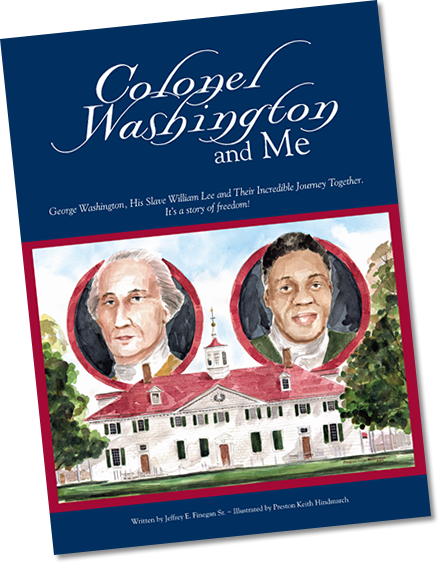
Part of what I love about being a writer and editor is getting to work with other authors who have important stories to tell.  Jeffrey E. Finegan Sr. was one such author.  He wrote a children’s book called Colonel Washington and Me: George Washington, His Slave William Lee and Their Incredible Journey Together!  The book, beautifully illustrated by Preston Keith Hindmarch, tells the story of the founding of the United States through the eyes of one of the slaves of our first president.  It’s a story I certainly don’t remember hearing when I was a child, and Finegan brings light to how George Washington struggled with the issue of slavery.  I was enlisted to write a curriculum for the book so that teachers, librarians, andhttp://www.colonelwashingtonandme.com/for-teachersparents can ensure children comprehend the subject matter and also to provoke dialogue for further reflection.

Do you talk to your children about the election and about politics?

Happy NaNoWriMo Day!

1 Nov

Today is the start of NaNoWriMo — National Novel Writing Month!

NaNoWriMo is touted as “thirty days and nights of literary abandon!”  The premise is simple.  On November 1, anyone interested in writing a novel begins a novel with the goal of completing the first draft by the end of the month.  More specifically:

National Novel Writing Month is a fun, seat-of-your-pants approach to novel writing. Participants begin writing on November 1. The goal is to write a 50,000-word (approximately 175-page) novel by 11:59:59 PM on November 30.

Here’s how it works.  The novel has to be completely new, though you are allowed to write an outline before the official start of the month.

In addition to the writing goal itself, participants receive encouragement from the staff and from famous authors and can join in in a variety of meetups, virtual and in person.

I’ve signed up for NaNoWriMo for a few years now without writing a single word toward a novel.  I’m interested in actually participating this year for a number of reasons.

Check in next week to find out why!

Are you signing up for NaNoWriMo?

Overarching Writing Tip from Big Sur Writers: Don’t Censor Your First Draft

17 Oct

If you’re a frequent visitor to this site, you’re probably a fan of the Beat Generation, which means you’ve probably read Jack Kerouac’s Rules for Spontaneous Prose.  In a recent fit of procrastination, I stumbled upon Henry Miller’s Commandments while browsing the blog a lovely being.  Then through a rabbit hole that began on Poets & Writers, I discovered John Steinbeck’s writing rules on brain pickings.

As I scoured their tips for jewels of wisdom, I considered whether there were any repeating schemes amongst the three authors, who each lived at various points in their career in the Monterey area of Northern California.  The theme that emerges is one of writing with the force of one of the ferocious waves in Big Sur—quickly, spontaneously, wildly, freely, bravely, deeply, purely.

John Steinbeck: Write freely and as rapidly as possible and throw the whole thing on paper. Never correct or rewrite until the whole thing is down. Rewrite in process is usually found to be an excuse for not going on. It also interferes with flow and rhythm which can only come from a kind of unconscious association with the material.

Henry Miller: Don’t be nervous. Work calmly, joyously, recklessly on whatever is in hand.

Jack Kerouac: Composing wild, undisciplined, pure, coming in from under, crazier the better

In other words, while you’re composing, just get it all out there on the page.  Don’t concern yourself with censoring your thoughts, diction, or punctuation.  You can always go back and fix things later, but for the first draft, at least, it’s better to let the story take shape naturally.

I’m generally not the type of person who subscribes to a set of writing rules, mainly because I believe everyone has their own technique and process, but I am a huge fan of lists.

Through Poets & Writers, I also discovered Kyle Minor’s “Advice to My Younger Self” and Margaret Atwood’s advice to writers, through which I consequently found similar lists by Zadie SmithElmore LeonardKurt Vonnegut, and David Ogilvy.

What are your tips for writing?

Lowell Celebrates Kerouac: The Typewriter

9 Oct


One evening, a student came into our writing workshop at The New School and announced he’d bought a typewriter.  We were all very impressed.

“What kind?” we asked.

“Where did you get it?”

Most of us were in our twenties or thirties and had grown up using computers.  Many of us had entire mini computers—smart phones—jammed into our pockets and purses at that very moment.  We’d attended readings in bars across Manhattan, where authors had read poetry off their iphones.

But a typewriter!  Now that sounded really literary.  The click-clack of the keys echoing in a bare-bulb room.  Allen Ginsberg’s first-thought-best-thought mantra forced upon a generation accustomed to the “backspace” button on our keyboards.  Facebook procrastination less accessible.

And the history!  Continuing the beautiful tradition of authors attached to specific models of typewriters.

This evening, the documentary The Typewriter will screen at the Lowell National Historical Park Visitor Center Theater (245 Market St.) as part of the Lowell Film Collaborative with Lowell Celebrates Kerouac.  Here’s a little bit about the film from its website:

Three typewriter repairmen the filmmakers have interviewed all agree that their business is better than it has been in years.

Perhaps it is a reaction to the plugged in existence of today’s 24/7 communications world. Perhaps it is mere nostalgia and kitsch. Perhaps it is an admiration for the elegance of design and the value of time-tested workmanship. And for some, like typewriter collector Steve Soboroff, it is the appeal of owning machines on which American writers like Ernest Hemingway, Tennessee Williams, Ray Bradbury, John Updike and Jack London typed some of their finest work. (He also owns typewriters once owned by George Bernard Shaw and John Lennon)

The film is directed by Christopher Lockett and produced by Gary Nicholson.  You can read fascinating typewriter stories here.

As for Jack Kerouac, he owned several typewriters throughout his lifetime but most famously used a 1930s Underwood typewriter.  His father was a printer, so even from a very young age, Kerouac was in a world full of language, literacy, typography, and printing presses.  Not surprisingly, he had a reputation for being a speed typist.  myTypewriter.com offers some background information on Kerouac’s—as well as other literary figures’—use of typewriters.  Burning Furiously Beautiful: The True Story of Jack Kerouac’s On the Road will also include information about Kerouac’s typewriter.  Larry Closs‘ novel Beatitude also includes a plot involving Kerouac and typewriters.

Here’s a tip for those of you attending Lowell Celebrates Kerouac or if you happen to find yourself in Lowell any other time: you can see one of Kerouac’s Underwood typewriters, and other memorabilia firsthand at the Mill Girls and Immigrants Exhibit at the Morgan Cultural Center.  It may sound like an unlikely place to view some of Kerouac’s possessions, and it’s not really well advertised, so it’s easy to miss if you don’t know about it, but the exhibit is open 1:30-5:00pm except on major holidays.  It’s free, but even if it weren’t the entire exhibit is fascinating.  The case display for Jack Kerouac is very small, but literary pilgrims will appreciate it nevertheless, since it’s rare to have opportunities to view his personal travel gear and typewriter in person.  The exhibit is engaging in retelling the story of immigration to Lowell.  Many of the immigrants were from Greece so the exhibit gives insight into the influence of Greek culture on Lowell.

Miguel Algarin’s Birthday Reading

4 Oct

Poet RA Araya invited me to read at poet Miguel Algarin‘s birthday bash last month at Mama’s Bar in the East Village.  It was such an honor to read for someone who has influenced so many lives.

Miguel has been a major force of influence in poetry, creating space and awareness for ethnic literature and community.  He is a Shakespeare scholar and Professor Emeritus at Rutgers University in New Jersey.  He also co-founded the Nuyorican Poets Cafe in the 1970s, which is one of those sacred New York City literary scenes.

Here’s a section of Algarin’s bio from his website:

Born in Santurce, Puerto Rico, Algarin moved with his family to New York City in the early 1950’s where his love for the written word intensified by the artistic energy radiating from the City streets. Obtaining advance degrees in literature from the University of Wisconsin and Pennsylvania State University, Algarin developed a successful career pursuing his passion for literature. He served as a Professor Emeritus for more than 30 years of service to Rutgers University where he taught Shakespeare, Creative Writing, and United States Ethnic Literature.

The life and work of Algarin spans the universities and the streets, so much so that combining the two resulted in the development of the Nuyorican Poets Cafe, a New York City cultural haven within the Lower East Side famed for being creatively drenched with great artistic intensity. Being the founder of such an organization, Algarin’s mission was to create a multi-cultural venue that both nurtures artists and exhibits a variety of artistic works to both enlighten and empower the underclass, it is a mission that has remained true to this day.

When I first moved back to northern New Jersey, after attending college in California, I became friends with a group of people that included many first- and second-generation Puerto Rican Americans and Colombian Americans.  It was through one of them that I first heard about the Nuyorican Poets Cafe.  Nuyorican is an amalgamation of the words “Nueva York” (Spanish for “New York”) and “Puerto Rican,” and the Nuyorican Poets Cafe championed Spanish-language poets and spoken word.  At the time, I had never been to the Nuyorican Poets Cafe, but together my friends and I founded a coffeehouse in suburban New Jersey, where we invited bands, poets, and visual artists to perform.  Most of the people involved were immigrants or children of immigrants–including myself.  As the child of an immigrant father, I have always gravitated toward other immigrants and children of immigrants.  That’s why even though I myself am not Nuyorican, I in many ways relate to the issues of identity and language raised through Nuyorican poetry.

That being the case, one of the highlights of Miguel Algarin’s birthday bash reading was hearing poet Joe Pacheco, whom I had just heard read “The Night Charlie Parker Played Tenor at Montmartre Cafe in Greenwich Village” at David Amram‘s show the week prior, read his poem about the pronunciation of his name and other immigrant people’s names.  I couldn’t help but laugh when he included a Greek name!  With great humor, Pacheco pointed out how people with ethnic names are often perceived by others (“but you speak English so well!”).

Produced by Araya, the reading also included:

  • Brian Omni Dillon
  • Rome Neal
  • Charlie Vazquez
  • Ray DeJesús
  • Danny Shot
  • Jeff Wright
  • Puma Perl
  • Kymberly Brown
  • Carlos Manuel Rivera
  • Lydia Cortes
  • Noah Levin
  • Edwin Torres
  • Nancy Mercado
  • David Henderson
  • Lois Griffith
  • Adam Ash
  • Susan Yung
  • Nancy Mercado

It was really great meeting Edwin Torres, who was huge on the poetry scene when I first came back to the East Coast but has since moved out of the city, making it rarer to get to see him perform.  I enjoy his poetry so much, and he was really down to earth and easy to talk to.

Jeff Wright and I had connected through social media a while back, and it was fun to finally meeting him in person.  He even gave me a copy of Live Mag, which I was really excited about because I had gotten a chance to skim it at John Reed‘s reading at the Guerilla Lit Reading series back in July and really wanted my own copy because it contains poetry by some of my favorite living poets.

Well, I could obviously go on and on about how great everyone was, but really the night was about Miguel Algarin.  I had actually never heard him perform before, so it was awesome hearing him scat!

The last time I saw him, Miguel had told me about how he had known Jack Kerouac and was very interested in having me send a copy of Burning Furiously Beautiful: The True Story of Jack Kerouac’s On the Road, the book I’m coauthoring with Paul Maher Jr., to him.  The photo above, taken by Ra, is of me reading from the book for Miguel’s birthday.

Banned Book Week 2012

1 Oct

It’s Banned Books Week!

I’ve been in a few conversations recently about censorship that really got me thinking.  In one, I admitted I’m probably a “square.”  I like following the rules.  That said, I believe 100% in the freedom of speech and the freedom of expression.  I don’t believe the government or libraries or anyone else should ever block our access to literature.  In fact, I believe we should have more free access to information and the written word.  As cliche as the saying is, knowledge is power.  Books are an incredible source for people looking to gain knowledge but also for those trying to understand themselves and the world around them a little bit better.  Censorship is dangerous to our well being.

The other conversation I had was in regard to ratings for children’s books.  Now, personally, I don’t really think ratings are all that helpful.  I’ve seen PG-13 movies that were more offensive to me than movies rated R.  The documentary This Film Is Not Yet Rated exposes why this occurs.  This brings me back to literature: the YA books I read as an adolescent were far more scarring than the books I read today.  So many of the books I grew up reading were about teens that had been raped or physically abused or had other terrible things happen to them.  I suppose these were the moral books that were supposed to scare me into being square so bad things didn’t happen to me.  The books I read today may have adult language or themes, but these classics and New York Times bestsellers intended for adult readers are generally milder and less damaging than the books I read when I was younger.  I don’t think ratings on YA books would necessarily change reading habits, and I do believe teens should have free access to the reading material of their choice, but perhaps both parents and young readers should be aware that the YA label can be a bit misleading.

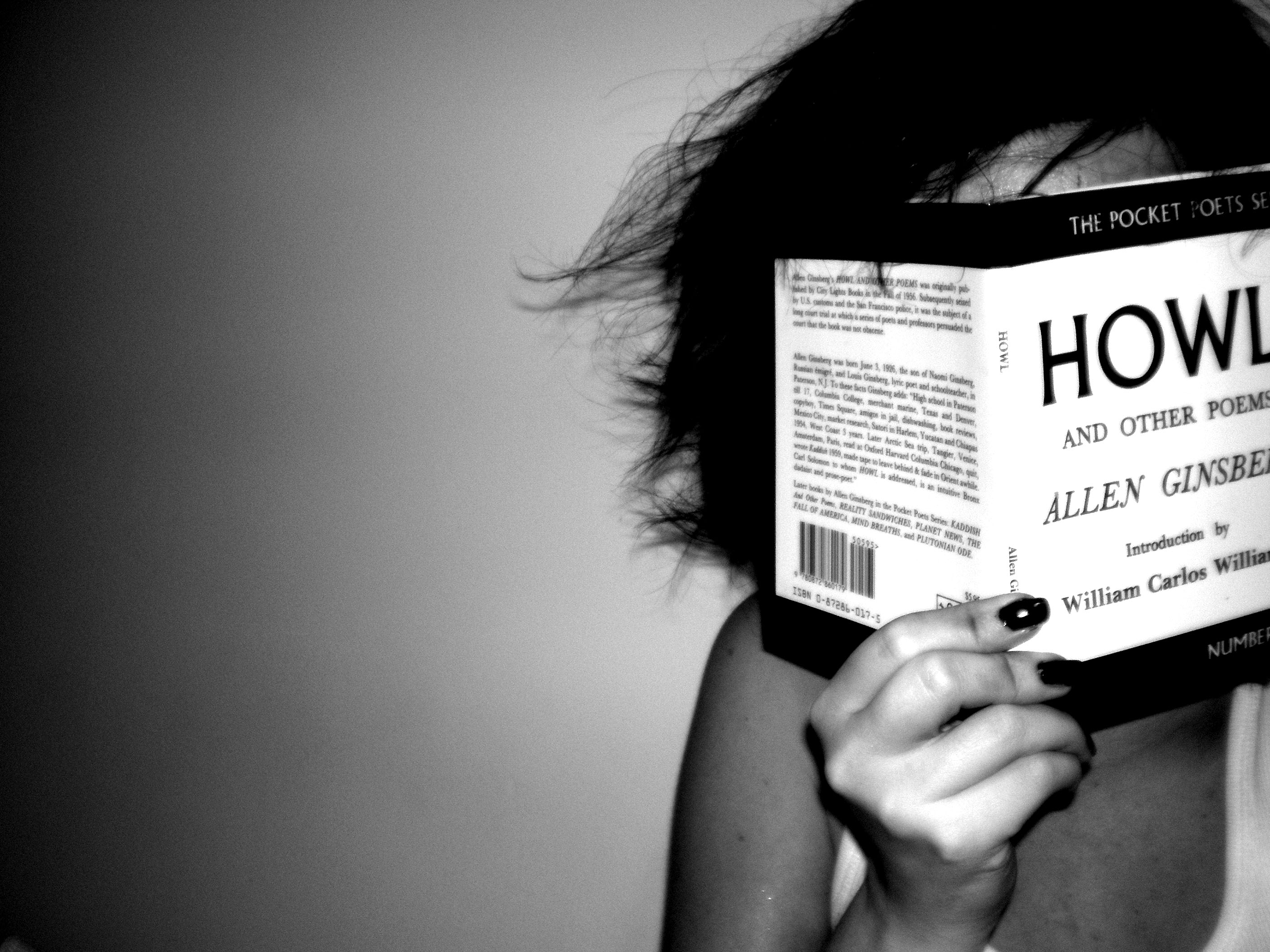
If you’ve never seen HowlBanned Books Week would be a good week to watch it.  The film portrays the true-life events surrounding the obscenity case over City Lights’ Shig Murao and Lawrence Ferlinghetti selling Allen Ginsberg’s Howl.  The book Howl on Trial: The Battle for Free Expression reports on this historical trial, going into more depth.  From the City Lights product page:

To celebrate the 50th anniversary of Howl and Other Poems, with over 1,000,000 copies in print, City Lights presents the story of editing, publishing, and defending the landmark poem within a broader context of obscenity issues and censorship of literary works.

The collection includes:

* The complete “The Howl Letters” — correspondence between Allen Ginsberg, Lawrence Ferlinghetti, Jack Kerouac, Gregory Corso, John Hollander, Richard Eberhart, Louis Ginsberg, and others – with first-person insight into Ginsberg’s thinking and the significance of the poems to the author and his contemporaries.

* Ferlinghetti’s account of hearing “Howl” read at the Six Gallery, of editing the book, and of his court battle to defend its publication.

* A timeline of censorship in the U.S. that places the Howl case in the broader historical context of obscenity issues and censorship of literary works.

* Newspaper reportage, magazine essays, cartoons, photographs, and letters to the editor that illuminate the cultural climate of the mid-1950s, when sexual expression in print was suppressed.

* Excerpts from the trial transcript that show the brilliant criminal lawyer Jake Ehrlich in action.

* ACLU Defense Counsel Albert Bendich’s reflections on the Howl case, and his thoughts about challenges to Constitutionally guaranteed freedoms.

*A look at how the fight against censorship continues today in new forms. 

Interestingly, it was a conservative judge who saw the value in Ginsberg’s Howl, finding it to have “redeeming social importance.”

Find out more about Banned Books Week here.

Writing Wednesday: Why I’m Tweeting and Posting on Facebook

26 Sep

I have a nifty little free newsletter that you can sign up for over there on the right-hand column of this blog à.  All you have to do is type in your email address, and you’ll automatically receive notification whenever I post a new blog entry. Those who are signed up for my free newsletter find out about my blog articles first.  The second an article gets posted, subscribers get notification.

A lot of you come to my website through Facebook and Twitter, though.  I generally post on Facebook that I have a new entry up about three hours after the entry posts.  I should probably sync my Facebook and Twitter accounts through HootSuite so it posts to Twitter at the same, but I haven’t done that yet.  I don’t have any particular reason why.  I just tend to use my Twitter account a little differently and less frequently.  My Facebook account tends to be more personal.  On Twitter, I post more publishing and Beat news.

Since a lot of people prefer not to sign up for the newsletters, social media is a great way for me to keep people up to date on what I’m writing about.  But it does more than just drive traffic to individual articles I post.

According to AllTwitter, social media is “strongly correlated to Google search engine rankings.”  Check out this incredible fact:

Facebook is the highest correlated factor when it comes to search engine rankings – even higher than on-page optimization like domain name keywords and traditional off-page optimization like backlinks.

Before returning to book publishing, I used to do SEO (search engine optimization) for a company.  It’s incredible to think that social media may have even more influence on page rank than SEO.

It also says that sharing posts is one of the biggest ranking improvers.  So feel free to share my blog entries with your friends on Facebook and Twitter!

That’s my story, but it should be yours too.  I’ve spoken to many of you one-on-one about the importance of blogging and social media.  If you’re an aspiring writer, you need to build a platform, an audience of readers.  Being a good storyteller just isn’t enough these days, unfortunately.  Publishers want to know you have a built-in readership.  If you have a blog, it’s super easy to post it on Facebook, Twitter, and Google+ whenever it gets updated.  And sites like Hootsuite, make it even easier to do it quickly and efficiently.  Why aren’t you using social media to build your writing career?