Archive | Writing RSS feed for this section

Life after the MFA

5 Jun

As thesis submission deadline approached, people began asking me what I was planning on doing after graduation.  Then they’d stop themselves, afraid they may have asked too painful of a question.  But it’s not!

In one of my last posts, I left off telling you about grabbing a cup of tea after turning my theses in.  What I didn’t tell you was that on my walk back to my office, while sipping that delicious tea, I made a phone call to biographer Paul Maher Jr.  Paul’s books are some of the most well respected in his categories, and they’ve been translated and sold around the globe.

Inspired by Laura Vanderkam’s List of 100 Dreams, I created my own a while back.  Become a scholar on the Beat Generation was on my list.  I’ve been studying the writers generally categorized as Beat for more than a decade now.  I did my MFA at The New School, where Jack Kerouac took writing classes, and where I connected with writers who had known Jack Kerouac.

Now, my dream of becoming a Beat scholar is being realized.  Paul and I are working on a book that tells the true story of Jack Kerouac’s On the Road.  The phone call to him on Monday was to discuss cover ideas.

I don’t have a big life-altering answer to the question of what I’m doing after the MFA.  Paul and I have been working on this book for a while now, and since I won’t be simultaneously working on a thesis anymore I’ll simply be refocusing my creative energies into the book.  It helps that I didn’t enter the program straight out of undergrad.  I’d already been working in book publishing, a career many of my classmates are hoping to enter, and so graduation isn’t a big scary unknown for me.  I’ll be continuing in my editorial role.  For me, life after the MFA is about continuing to follow my passions while also seizing new opportunities.

I’m extremely excited to say that my post-MFA plan is to co-author a book on Jack Kerouac.

Happy 86th Birthday, Allen Ginsberg!

3 Jun


“Poetry is not an expression of the party line.

It’s that time of night, lying in bed, thinking what you really think, making the private world public, that’s what the poet does.”

~Allen Ginsberg


Today would’ve been Allen Ginsberg’s 86th birthday.  In celebration, here are a couple of links:::

2012 Howl Festival

Howl (the film starring James Franco); clip of the section on how to write poetry

Allen Ginsberg reading part 1 of Howl

The flowering dogwood at St. Mark’s is blooming for Ginsberg’s birthday

“when did you forget you were a flower?” ~ Sunflower Sutra (one of my favorite poems — It’s beautiful. It’s true. It makes me tear up.)

Ginsberg’s Karma (documentary on Ginsberg’s time in India; produced by Ram Devineni and hosted by Bob Holman)

Ginsberg’s photography

Vomit Express (Allen Ginsberg and Bob Dylan)

Howl on the list of banned books

Ginsberg’s hometown of Paterson, NJ

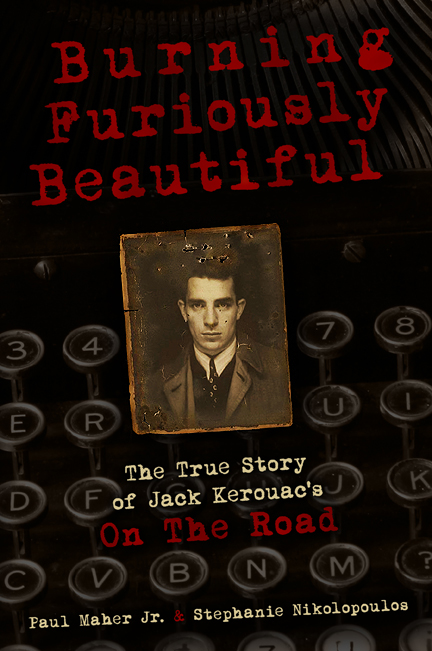
Sneak Peek of the Burning Furiously Beautiful Cover

31 May

Here’s a sneak peek of the cover design for Burning Furiously Beautiful: The True Story of Jack Kerouac’s On the Road, which I am co-authoring with critically acclaimed Kerouac scholar Paul Maher Jr.

Award-winning designer Igor Satanovsky created the cover.  Igor also happens to be a poet in his own right and studied poetry under Allen Ginsberg at City University of New York-Brooklyn College.

Can’t wait to share more with you!

Writing Wednesday: You Are King

30 May


I have a lot of friends who work in book production.  When the publishing industry began to change and ebooks grew in popularity, putting some people out of jobs, they looked at me, the editor, and said, you’re safe.  You’re on the content side.  Publishers will always need editors, writers, and people working with content.

As I simultaneously entered the blogosphere, I became more disenchanted.  Most blogs weren’t writer-centric.  They weren’t generating new content, they were rehashing—“aggregating”—content.  Any new content provided was mostly in the form of criticism.  Obviously that’s not all blogs, as today there are many blogs that feature fascinating stories that cater to niche readers, but if you follow the rabbit hole long enough you tend to see the same material linked over and over again.

In “Content Is No Longer King,” Ben Elowitz makes a very interesting and valuable point: “Content isn’t the goal.  Audience is.”  He explains that distribution needs more focus today.  Packaging and delivery are just as important as what you have to say.  In the end, advertisers—the people who pay your bills—care about how many readers you have, not what it is you’re actually saying.

Okay, that’s true, but it’s kind of a chicken-and-egg scenario.  Which comes first, the audience or the content?  You need to have content to draw an audience, right?  Well, yes and no.  Here are two different stories:

A while back, a bunch of my favorite blogs mentioned a new food blog.  Because of their lovely posts, I trusted their opinion on this new blog and clicked to check it out.  It was indeed an adorable blog with pictures that made my mouth water.  Unfortunately, there were only two or three posts.  I went back a while later and there was maybe another post or two, but nothing too substantial.  Now I no longer remember the name of the blog.  My point is, they had beautiful packaging and a built in audience, thanks to all the hype, but without significant content they failed to keep me as a reader.

On the flip side, I’ve read many blogs that have great content, content that has informed and inspired me.  However, these same blogs appear to have no following.  Perhaps they get many hits, but no one leaves witty remarks in the comments section.  So great content obviously isn’t enough.  These bloggers are failing to reach an audience, perhaps because of their distribution or lack-thereof.

Elowitz gives a few tips on distribution.  He says:

Put someone in charge of audience development

Adopt an audience development strategy

Systemize it

Under each of these headers he explains the tips.  They’re valuable tips, but they’re also vague.  What are some audience development strategies?  Elowitz says “know your audience segments, and what each one will like.”  I’d like to expand on that a little because it’s an important point.  Here are some questions you might want to ask yourself:

  • What can you do to make your blog stand out from other blogs on that subject?
  • Is your content too broad?
  • Who is your dream reader?
  • Would you read your blog?
  • What ideas can you “steal” from other blogs?  Don’t literally copy and paste content or do the exact same thing as another blog, but think about what your favorite blogs are doing right and use it as inspiration.
  • Is your voice consistent?
  • Are you blogging often enough?

Now as far as getting your content out there, Elowitz mentions disseminating content through social media.  I’ve definitely found Twitter, Facebook, and Pinterest to be useful means toward promoting and distributing work.  However, you have to an audience on these social media platforms for it to work.  So, again, it all comes back to finding and developing that audience.  How do you reach an audience on social media?  Here are some questions to think about:

  • Do you sound like an advertiser?  Buy this! Read this! Click here!
  • Do you sound needy?  Like me!  Follow me!  Share this!  Subscribe!
  • Are you only disseminating your work or are you promoting other bloggers’ work too?
  • Are you only posting or are you interacting with your any followers?
  • What time of day are you posting?
  • Can any of your older posts be redistributed?
  • Are you following people who have the same interests as what you blog about?
  • Are you leaving comments on other people’s works?
  • Is your social media voice consistent with your blogging voice?

It’s important to be patient and consistent.  As in the example above, it’s not always a good thing to have an immediate following.  You want to grow with your audience.

Think of it this way:  Content and audience aren’t king.  You are king.  You rule your corner of the blogosphere, making important decisions about content.  The diplomatic aspect of being ruler is developing relationships with your subjects (your audience) and other rulers of the blogosphere.  If you’re a benevolent king, spreading good will (content) and cheer (promoting and encouraging other bloggers), more people will want to visit your kingdom.

The Story of Turning My Thesis In

29 May

You already saw the picture from my reading, but here’s the story of completing my theses.  Oh and what an adventure it was.

One of my best friends was getting married on the Sunday before my thesis was due (why don’t people plan their lives around my writing schedule?!) so I had to put the finishing touches on it, print it out, and get it professionally bound that Saturday.  Well, let me tell you, finding a company that does vello binding is not as easy as it sounds even in New York City, where most things are at your fingertips.  I was rushing around New York, being turned down by one place after the next.  Finally, I found a FedEx in Chelsea that could do it, but they were so packed that they told me to drop off the manuscript and then they’d call me back once it had been printed on high-quality paper and bound.  I don’t live in that area so of course that meant lots of time traveling back and forth on the subway.  But the guy who helped me had the name of one of literature’s most fascinating characters and was so helpful, giving me special coupons for when the time comes to mail my manuscript off to publishers.

It felt kind of anticlimactic turning my thesis in on Monday.  I ran down to the Writing Program’s office on my lunch break and thought the office would be abuzz with friends from my workshops.  I only ran into one other person turning her thesis in at the same time as me.  I was in and out pretty quickly, after indulging in a piece of delicious chocolate from the office’s basket as my reward.

Since I was in the area I decided to go to Argo Tea.  One of the women from the writing program introduced the Chicago-founded company to me, and I’m officially obsessed with their Red Velvet Tea.  It is insane how delicious that tea is.

That evening I saw a bunch of writers from my graduating class post that they had submitted their theses.  It’s so exciting!  There were so many great writers in the program, and I can’t wait to see their theses turned into books.

Not Hunting the Grizzly

25 May

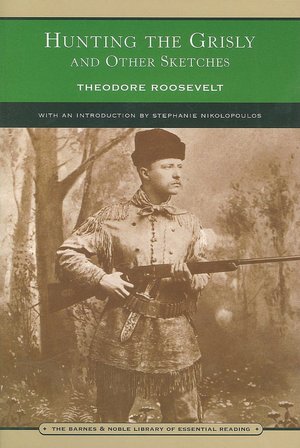
On this day in 1975 the Grizzly bear was classified as a “threatened” species.  Even though President Theodore Roosevelt wrote Hunting the Grisly, he actually worked with John Muir, the founder of the Sierra Club, to protect America’s wildlife and landscape.  I address this in my introduction to the reissue of this classic book, which is available in both paperback and ebook format.

Sadly, there are likely less than 1,000 Grizzlies in the United States today.  Find out more about Grizzly bears and other endangered animals at the Wildlife Conservation Society, where you can even send letters to Congress about protecting animals.

Accidental Speed Dating

23 May

Being a writer means spending a lot of time by yourself in front of a computer screen that just blinks back at you, waiting for you to make the first move.  Even when you’re a gainfully employed freelancer you rarely go into an office and meet your editor.  Interaction comes via emails, sometimes snail mail if you’re not linked up to PayPal.

A couple years ago, I was working as an arts writer for a hipper-than-thou New York blog that actually sought to foster their community of writers through social events.  The first time I got invited to an event, I still had never met my editor or any of the other contributors in person, and had no idea what anyone looked like.  The first time I got invited to an event, the bar where we were meeting also happened to be holding a speed dating event.  I’m sure you know where this is headed: I got a little confused, and almost ended up accidentally speed dating.

All of this comes to mind because I just read Frank D. Santo’s “Waiting for a stranger to roll her eyes: My adventures in literary speed dating” for NY Daily News.  Apparently, literary speed dating exists.  A book seems to serve as a great conversation starter, a little peek into a person’s interests—and reading level.

Roses from My Father

17 May

When I was a little girl, my father used to surprise me with roses.  Most of the gardening my father did was of a practical nature: cucumber and tomato plants, the occasional “karpouzi” (watermelon) if the raccoons didn’t get to it first (they always got to it first).  He had grown up on a farm in Greece, and gardening was not a hobby so much as a way of life and a means toward putting food on the table.  There were very few flowers in our garden in New Jersey.

In our backyard, there was a tattered fence that separated our yard from a little brook.  It was here that he planted roses.  In the spring, the thorny bushes climbed up the fence in a tangled mess.  Then one summer morning, while I was still asleep, they bloomed pink, yellow, white, and red, opening their petals up to the blue, blue sky.  My father would cut these beautiful roses and present them to me.  He told me I was a delicate flower.

I’ve been swirling in these memories of my father out in the garden, as I’ve been writing my memoir.

Picture of Me at My MFA Thesis Reading

16 May


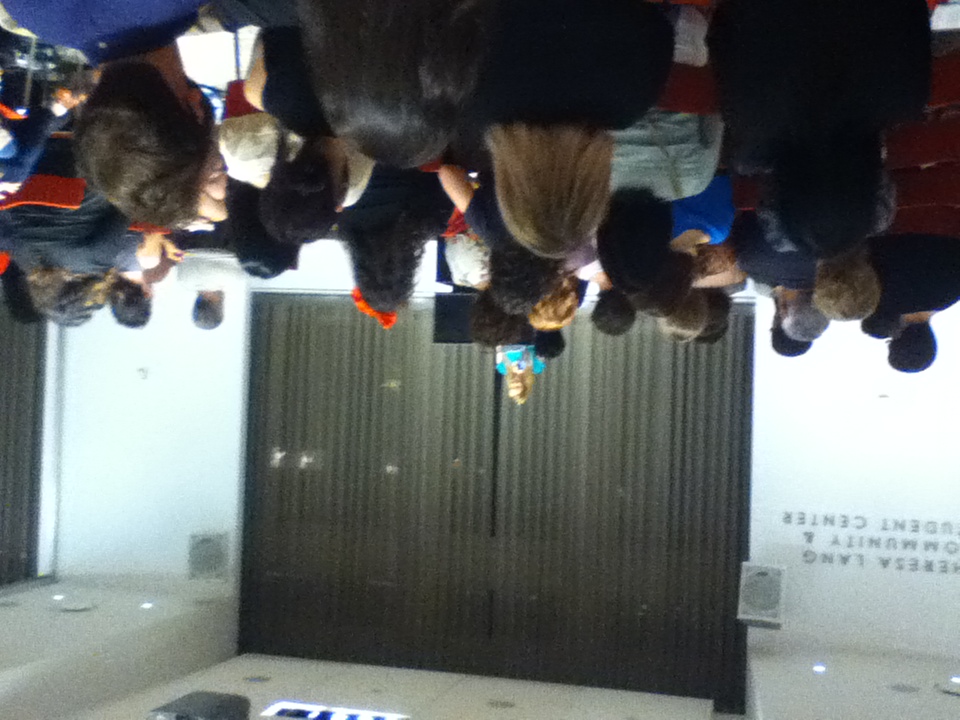
That’s me at the podium!  Thank you all for coming out to my reading at The New School last week!

The Shy Person’s Guide to Giving a Reading

11 May


I used to be shy.  I don’t mean a little shy.  I mean the type of shy that held me back from different opportunities.  It wasn’t that I lacked confidence in my abilities.  I just felt uncomfortable having attention focused on me.  Writing therefore seemed like a great career choice—except that, as I soon discovered, writing involves a fair amount of speaking.  If you’re a journalist, for example, you’re tracking people down and asking them oftentimes personal questions.  However, even if you’re a creative writer, these days it seems like you have to be a speaker as well.

It’s all part of that wonderful word we’ve come to know all too well: “platform.”  A writer needs to build their following and promote their work through readings and interviews.  If you’ve been sitting alone in a dark makeshift home office, you might relish these opportunities to speak to someone other than your pet bird.  However, many writers, even if they’re not shy, are introverts.  Which means, even they’re not shy, they’re not necessarily the type to seek out big crowds of people.  When I was at the Festival of Faith and Writing last month, so many people who approached me (not something a shy person would necessarily do) afterwards told me that they’re introverts.

I remember giving my first big oral presentation in fourth grade.  As the shyest person in the class, I was certainly not looking forward to it.  However, the day of the oral presentations came, and I was just fine.  You know who fainted?  The popular kid in class.

These days I don’t dread public speaking.  It’s not an activity that gives me great pleasure, the way some people love karaoke or acting, but I generally don’t mind public speaking.  I’ve even been encouraged by it.

Here are a couple tips for public speaking I’ve learned through trial and error:::

Get plenty of sleep 48 hours in advance.  Being tired will make you feel anxious.  Try to get a decent amount of sleep the two nights before the reading.  I say two nights because you can’t just cram in sleep.

Drink plenty of water 48 hours in advance.  Don’t drink anything too close to your reading time.  When you’re nervous, you might feel like you need to pee more often.  However, you should be hydrated because speaking loudly can make your throat parched.  Also, lay off the caffeine and alcohol.  I know a lot of writers have notoriously drank to overcome their nerves.  Jack Kerouac was one of them.  And everyone knows it.  Do you really want to be that person?  While caffeine will make you anxious and make you sound like the Micromachines man, zooming through your reading, alcohol might make you slur your speech.  Stick with water.

Dress up.  When I was in undergrad, I used to dress up whenever I had a big test.  It may sound superficial, but dressing up gave me confidence.  When you give a reading, you’ll want to dress appropriately for the occasion.  I won’t mention the specific name of the awards ceremony, but I went to a book award ceremony a while back and was dismayed at the authors’ appearances.  They looked unkempt.  Yes, I know what matters more your inner character and your talents, however if you’re receiving an award or have been selected to give a reading, you should be respectful in your attire and dress for the occasion.  Besides, there are very few opportunities when we get to dress up.  Why let Hollywood stars have all the fun??

Be prepared.  Practice your reading several times.  Type your talk up in a large enough font that you don’t have to hold the paper close to your face to read it.  It may also be helpful to write little notes or add extra spaces reminding yourself to breathe, to look up, to smile.

Be thankful.  Being selected to give a reading is not a punishment.  It’s an honor.  People are celebrating your writing talents.  They’re making time in their busy schedules to hear you.  You’re already a star in their mind.  You don’t have to change who you are and pretend to be a stand-up comedian or loudmouth if that’s not who you are.  You just have to be yourself and be gracious.


If you happen to be in New York City, I cordially invite you to attend my reading this Friday, May 11.  It will be a super short reading sometime between 5pm and 9:30pm, at Lang Center, 2nd Floor, 55 W. 13th Street.