Archive | Writing RSS feed for this section

Immigrants à Gogo

22 Jan


garychangimage via Vulture

Discussing how all immigrant writing is dystopian, the unique pressures of being the children of immigrants, and critiquing their own cultures, Boris Kachka’s interview with Chang-rae Lee and Gary Shteyngart in New York magazine offers brilliant insight on the state of immigrant literature.

Here’s a quote from Shteyngart that particularly resonated with me:

And to jump off of that, I teach Native Speaker in my “Immigrants à Gogo” fiction class at Columbia. I read it every year, and there are phrases like “my mother’s happy kimchi breath” that bowl me over. I didn’t know one had permission to write like this about one’s ethnicity. I was absolutely shocked that one could get away with that. And I didn’t see that with a lot of immigrant writers. I still don’t. I can think of Junot Díaz, a few other immigrant writers, but there’s a lot of this sort of endless overcoming of obstacles, racism, the triumph over adversity, and off we go. And that’s not what Chang-rae writes.

Growing up, I wasn’t at all interested in immigrant fiction because I so often found it to be depressing studies of being the Other. Or else, the overriding factor of the book was ethnic pride or the mystery and allure of that culture. As Lee said:

And the people leading those ethnic pride parades are those members of your group that you probably least admire.

Kachka’s interview with Lee and Shteyngart brings to the forefront many of the concepts I’ve been thinking about for my own memoir, which deals not so much with a personal immigrant experience but more so with expectations and identity from a tangential viewpoint.

You can read the full interview here.

I’m Leading a Free Writing Workshop Jan. 20

15 Jan

writers

I’m leading a free writing workshop next week with two of my colleagues, one who is an established novelist and the other who works in book publishing. The workshop will be held on January 20, 2014, 7-9pm, at the offices of Redeemer Presbyterian Church, located 1359 Broadway, 4th Floor, Main Conference Room The American Bible Society, located at 1865 Broadway at 61st Street, 11th Floor. (edit: 1/16/14)

Admission is free! Please bring 1-2 pages of your writing (any genre!) for critique.

Kerouac’s Hometown Inspires Charles Dickens

23 Dec

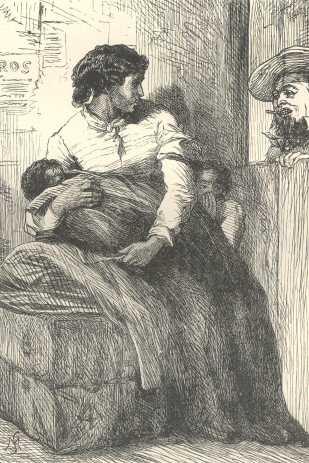
p112sIllustration (not of Mill Girl, fyi) by Marcus Stone, R.A., from Charles Dickens’ American Notes for General Circulation

Many authors have penned Christmas stories, but perhaps the most celebrated is Charles Dickens’ A Christmas Carol, which has spawned Broadway musicals, a Disney cartoon, a Muppet retelling, a United Nations special by Rod Sterling, a Star Trek version, among so many others.

Is it possible that the inspiration for this Victorian novella came from Jack Kerouac’s hometown?

Natalie McKnight, a dean at Boston University, conducted research with student Chelsea Bray that suggests Dickens was inspired by the stories of the Mills Girls when he visited Lowell, Massachusetts, in 1842.

On one of my trips to Lowell to research Kerouac, my friend George Koumantzelis had given me a stack of newspapers, magazines, and flyers to aid in my studies. Among these was information on UMass Lowell’s seven-month-long celebration of Dickens’ trip to Lowell. I had edited new editions of the British author’s stories including his work American Notes for General Circulation, about 1842 trip to America. About to turn thirty years old, he had traveled from Liverpool (later home to the Beatles!) aboard the RMS Britannia and arrived in Boston, where he then visited mental hospitals, orphanages, and prisons around the country and visited with President Tyler.

Among the dots on his map was Lowell … also known as Mill City. Lowell was founded about twenty years prior to Dickens’ visit, as a center for textile manufacturing. Dickens came about two years after the height of the Industrial Revolution, when there were about 8,000 women working in factories in Lowell. If Dickens was inspired by their stories, it should go without saying that their existence was one of strife. About 80 women were packed into a noisy room from 5 am to 7 pm, working under the direction of two men. However, Dickens actually seemed to think well of the mills.

Dickens wrote:

These girls, as I have said, were all well dressed: and that phrase necessarily includes extreme cleanliness.  They had serviceable bonnets, good warm cloaks, and shawls; and were not above clogs and pattens.  Moreover, there were places in the mill in which they could deposit these things without injury; and there were conveniences for washing.  They were healthy in appearance, many of them remarkably so, and had the manners and deportment of young women: not of degraded brutes of burden.  If I had seen in one of those mills (but I did not, though I looked for something of this kind with a sharp eye), the most lisping, mincing, affected, and ridiculous young creature that my imagination could suggest, I should have thought of the careless, moping, slatternly, degraded, dull reverse (I have seen that), and should have been still well pleased to look upon her.

The rooms in which they worked, were as well ordered as themselves.  In the windows of some, there were green plants, which were trained to shade the glass; in all, there was as much fresh air, cleanliness, and comfort, as the nature of the occupation would possibly admit of.  Out of so large a number of females, many of whom were only then just verging upon womanhood, it may be reasonably supposed that some were delicate and fragile in appearance: no doubt there were.  But I solemnly declare, that from all the crowd I saw in the different factories that day, I cannot recall or separate one young face that gave me a painful impression; not one young girl whom, assuming it to be a matter of necessity that she should gain her daily bread by the labour of her hands, I would have removed from those works if I had had the power.

Though he clearly recognizes that the girls work long and hard, he describes the mills as well as the girls’ dorm rooms in a somewhat positive light, mentioning pianos and libraries.

It would seem that the mills girls were of a literary mindset. Beyond just mentioning the library, Dickens goes on to say:

Of the merits of the Lowell Offering as a literary production, I will only observe, putting entirely out of sight the fact of the articles having been written by these girls after the arduous labours of the day, that it will compare advantageously with a great many English Annuals.  It is pleasant to find that many of its Tales are of the Mills and of those who work in them; that they inculcate habits of self-denial and contentment, and teach good doctrines of enlarged benevolence.  A strong feeling for the beauties of nature, as displayed in the solitudes the writers have left at home, breathes through its pages like wholesome village air; and though a circulating library is a favourable school for the study of such topics, it has very scant allusion to fine clothes, fine marriages, fine houses, or fine life.

What Dean McKnight and Bray suggest is that Dickens lifted ideas from these girls’ stories. Kevin Hartnett at The Boston Globe writes:

Now, new research is suggesting that the book may have borrowed—quite liberally—from the amateur writings of the millworkers he visited.

After reading an obscure literary journal published by Lowell textile workers and comparing it to Dickens’s novella, a Boston University professor and student are arguing that some of the most memorable elements of Dickens’s story—the ghosts, the tour through the past, Scrooge’s sudden reconsideration of his life—closely resemble plot points in stories by the city’s “mill girls” that Dickens read after his visit.

They propose that the ghost trope of A Christmas Carol stems from several selections in The Lowell Offering. Comparing the Mills Girls’ stories with Dickens’, they have found several parallels that they believe go beyond mere coincidence or literary tradition.

Their research has created quite a stir online, and they haven’t even written their paper yet, let alone published it.

It’s well worth visiting The Mill Girls and Immigrant Exhibit at the Morgan Cultural Center to find out more about the fascinating lives these factory workers led.

The Morgan Cultural Center also happens to be where one of Kerouac’s typewriters reside. While Kerouac began writing about a hundred years after Dickens’ visit, he too was inspired by the Mill Girls. He didn’t want to be a mill rat. He wanted to get out of Lowell, to do something more with his life. As a struggling writer, he did eventually end up working for a short time at a mill in America, but he continually worked on his writing. While Dickens had come over to Boston by ship from Liverpool, Kerouac went to Liverpool as a merchant seaman. Like Dickens, Kerouac toured America, writing his own travelogue full of social commentary.


* * *

Burning Furiously Beautiful: The True Story of Jack Kerouac’s “On the Road” is now available as an ebook and paperback!

Writing Wednesday: Is Greatness Sabotaging Your Writing?

18 Dec
For better or worse, I don’t recognize a lot of critics’ names. David L. Ulin is an exception. Book critic for The Los Angeles Times, Ulin writes reviews that do so much more than summarize or sweep up a book in a blanket statement. His reviews critique on a higher intellectual plane.
Of course, it helped that he articulated so much of what I felt when I’d read Bruce Bawer’s attack in the New Criterion on Jack Kerouac being included in the Library of America. That’s not to say he unscrupulously defended Kerouac’s poetry—he admitted the Kerouac poem Bawer quoted is “negligible”—but he called Bawer out on spending more time focusing on the so-called Beat label and the people associated with it than on digging into Kerouac’s individual style and innovations.
But I digress.
Ulin has an essay entitled “My First Book(s)”  in the Paris Review Daily that first-time and struggling writers should read. With humorous (not silly—witty) self-deprecation, he writes about what provoked him to write (jealousy, opportunity) and how he got so bogged down in ideas that he incapacitated his body of work. Perhaps my favorite line from the essay:
I was twenty that summer, turning twenty-one in August, and I felt a growing pressure to be (how do I put this without reservation or irony?) great.
That parenthetical itself says so much about not only writing but the human condition. Guarding ourselves through cleverness we can become inauthentic. Sometimes the more we strive to be “great,” the more we lose our true vision and voice. We lose our stories. We lose ourselves.
He writes:
But here’s what is important: I sabotaged my own book. I did this in two ways, first by overthinking and then by overtalking, by telling everyone I knew everything about the work.
Replete with quotes from renowned authors, “My First Book(s)” explores the expectations an author puts of himself, some of which are naïve (“I had gathered so much material—so much unused material—that I’d had the fantasy the book would write itself…”) and some of which are nearly impossible to live up to (“I wanted to write not just a novel but a landmark novel…”).
Ulin’s essay is a refreshing read for all of us who get overwhelmed by our own “big” ideas. It’s also a gentle reminder that all writing—including our unpublished writing—is worthwhile because it teaches us about the process and improves our skills.
In the same link roundup in which they mentioned Ulin’s essay, Poets & Writers linked to a blog post by Percy Jackson author Rick Riordan that also spoke to the slippery idea of greatness:
One thing I’ve discovered. People who believe they are awesome and wonderful at their profession are often . . . not. People who have more self-doubt, who question themselves and are always examining what they did wrong and how they might do better – those folks are often better than they think they are, and they are much more likely to improve. It’s a difficult balance, between self-confidence and self-reflection. No wonder writers are a little barmy. But it is an important balance to strike.
Riordan continues:
Writing is hard. Not everyone can do it. It requires a combination of innate talent and lots and lots of practice and endurance. It also requires the right story, and publishing that story at the right time.
Though they have dissimilar writing styles, Riordan and Ulin both suggest that writing requires humility and stamina.

* * *

Burning Furiously Beautiful: The True Story of Jack Kerouac’s “On the Road” is now available as an ebook and paperback!

10 Books That Have Stuck with Me

17 Dec
gypsy
The other night I fell asleep thinking about the books that have stuck with me over the years. My friend had tagged me in a Facebook post about the ten books that have stuck with her—not necessarily the best books or her favorite books, but the ones that come to mind first. She then tagged me and nine other friends to do the same. I figured it would make for a fun blog post because some of the books may come as a surprise.
Without further ado…:
  1. Bread and Honey by Frank Asch
  2. Squiggly Wiggly’s Surprise by Arnold Shapiro
  3. Charlotte’s Web by E. B. White
  4. Gypsy Summer by Wilma Yeo
  5. Anne of Green Gables by L. M. Montgomery
  6. Sins of the Father by Eileen Franklin
  7. The Dangling Man by Saul Bellow
  8. On the Road by Jack Kerouac
  9. The Pillow Book by Sei Shonagon
  10. Blue Like Jazz by Donald Miller
I could probably write a blog post for each of these titles on why they stuck with me! I could also add so many more books to the list.
There are a few things I’ll point out about the books that actually made the list, though. The first half of the list are children’s books, or perhaps YA. The first two, in fact, are children’s storybooks, but even today their message remains with me. Adult books have a lot more “grey” in them when it comes to morality and message, as we come to understand the complexities and nuances of life, but I think there’s something to be said for the simple and beautiful messages of children’s picture books.
The other thing I’ll point out is that the second half of the list was all read more than ten years ago. Actually, number 6 on the list I read in middle school, and the only book post-undergrad on the list is number 10. It’s obviously not that I haven’t read since then or that I haven’t read good books since then. In fact, I took fantastic literature classes while working toward my MFA and was exposed to books that shaped the way I think about literature and writing. It’s just that when I think of books that have really stuck with me over the years, I was thinking of books that have stood the test of time.
I tag you! What 10 books have stuck with you? Leave them in the comments below.

* * *

Burning Furiously Beautiful: The True Story of Jack Kerouac’s “On the Road” is now available as an ebook and paperback!

Writing Wednesday: When Two Words Become One

11 Dec

1560

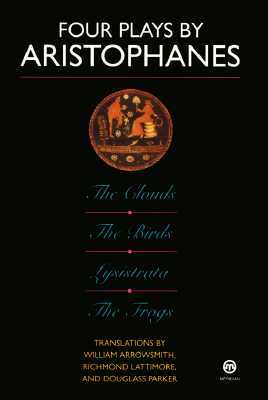
Welcome back to Aristophanes week!

Yesterday I mentioned that fun bit of trivia that Aristophanes is the creator of the longest word in literature that I gleaned from Oliver Tearle’s Huffington Post article “12 Fascinating Facts About Famous Literature.” Like any dutiful Greek scholar, I read some of Aristophanes’ plays when I was in college. They were strange and wild reads.

What I don’t remember learning back then and which I found while I was reading up on him this week was that Aristophanes had a knack for heaping words together, creating long, tongue-twisting compound words. It’s no wonder he’s the king of the longest word in literature!

Take a look at that last word in this stanza from The Acharnians:

How many are the things that vex my heart!
Pleasures are few, so very few — just four –
But stressful things are manysandthousandsandheaps!

The word Aristophanes used there in Greek was the made-up word ψαμμακοσιογάργαρα, which actually meant “sandhundredheaps.”

Meanwhile, in The Birds (no relation to Hitchcock’s film!), Aristophanes coined the word Νεφελοκοκκυγία, which translated is the compound word Cloudcuckooland. Genius, right?!

Okay, so when writing about the longest word in literature Tearle mentioned runner up James Joyce:

Some may think that James Joyce is responsible for the longest word in all of literature, but the longest he managed was 101 letters long, in Finnegans Wake. (This word, for those who are interested, was Bababadalgharaghtakamminarronnkonnbronntonnerronntuonnthunntrovarrhoun-awnskawntoohoohoordenenthurnuk, referring to the thunderclap associated with the Fall of Adam and Eve.)

You word nerds won’t find it too surprising that Joyce appropriated Aristophanes’ penchant for inventing new words since he was more than mildly inspired by Greek literature. You already know that Joyce’s Ulysses parallels Homer‘s The Odyssey. In Ulysses, he created made up and compound words like “scrotumtightening” and “endlessnessnessness.”

Now, I’ve made the point before about the connection between the Greek Classics, James Joyce and Jack Kerouac, and here is another instance in which we see the influence in that Kerouac used compound words as well. He used words like “hangjawed,” “redhot,” and “sicksicksick.”

Through the course of literary history, many authors have used compound words for effect and have coined their own words.

Can’t find the right word? Make up your own!

* * *

Burning Furiously Beautiful: The True Story of Jack Kerouac’s “On the Road” is now available as an ebook and paperback!

David Amram On Contributing Our Gifts

3 Dec

It was musician David Amram’s birthday last month, and he left the most inspiring message in the comments section on my blog. Since a lot of readers don’t go back and reread the comments on blogs, I want to draw attention to what he said because its worth paying attention to. It’s worth really meditating on. You can read his entire comment here, but I’ll highlight a few things in particular.

On what we should be doing with our time here on earth:

I am still searching for some wisdom, and recently realized that when you get as close to Methusala City as I am, and try to figure out what it all means, you realize that the most important thing for us to do in this life is to make SOME kind of contribution while we are here.

On our gifts:

And we all have something worth sharing with others, but often our dreams appear to be hopeless to experts who themselves have often given up hope.

[…] We are all born with gifts.

On persevering:

I hope my efforts will inspire young kids to hang in there FOR LIFE, especially when they are told by their career councilors that they should give up before they have had a chance to even get started.

On taking action:

So when young kids come to me and say “I wish i had been around when knew and worked with all these fantastic people. i wish i had lived during that time”, i always tell them what Charlie Parker told me in my basement apartment in 1952 in Washington D.C. when i asked him what it was like to have his song “Now’s the Time” (which he had composed seven years earlier in 1945)

“It’s just the way it should ” he said. “Now was and will always be the time because Now is the RIGHT time!”

My own birthday is coming up, and I’ve been thinking a lot about what I’ve done with my life and what I want to do with my life. I’ve been thinking about how I spend my time and what my goals and dreams are. Sometimes dreams feel impossibly unobtainable. Sometimes they feel like work. Work gets a bad rap. So does dreaming, for that matter. I think, though, that it’s essential to dream, and it’s crucial to work towards those dreams.

As David said, “We are all born with gifts.” Therefore I believe it is our responsibility to contribute them.

I think we often wait for a reason to change or start something new. After the holidays, we’ll exercise. At the New Year, we’ll make our resolutions. Next November, we’ll write our novel. In a different season of our lives, we’ll make time to volunteer more. And then when we fail to meet our own expectations, we wait for the next big marker to begin again. Every minute of every day is a gift. We have the chance to become who we want to be TODAY. We can start using our gifts RIGHT NOW. Sure, over time, our gifts will be honed that much more and we might look back and cringe at our past efforts, but without those past efforts we won’t get to where we need to be.

“Now’s the time.”

* * *

Burning Furiously Beautiful: The True Story of Jack Kerouac’s “On the Road” is now available as an ebook and paperback!

Writing Wednesday: Five Tips for How to Promote without Selling Out

6 Nov

WP_20130913_003

One of my anxieties about going to Lowell Celebrates Kerouac this year was that people might think I was there just to hawk my recently published Beat Generation book, Burning Furiously Beautiful: The True Story of Jack Kerouac’s “On the Road.”

That was not the case! Now, I’m not going to lie. Of course I wanted people to find out about the book and purchase it. Not only am I proud of the book, but more so if I were someone interested in Jack Kerouac’s literature and literary development I’d want to know about the book. Therefore, I want people to know about the book because I honestly think they’d actually want to hear about it and get value from it.

But I didn’t go to the festival to push the book on anyone. Truth be told, if I’m not into something, it’s really obvious. Sorry, Lady Gaga, I have no poker face. I would probably turn people off from buying my book, if I went somewhere just to sell it.

I’ve been to Lowell Celebrates Kerouac before I ever had a book deal, and I went again this year because I was excited about the festival. I was excited to attend the events. I was excited to catch up with friends. I was excited to reencounter a town that I’ve been reading about for years and that has come to be familiar to me. I was excited to escape the hustle and bustle of New York City for a long weekend.

At the festival, I was happy to talk about my book when anyone asked, but I didn’t shove postcards for it in people’s faces the way one author did one year I was at the festival.

I’m by no means an expert, but these are my top 5 tips on how to promote your book without selling out:

1. Believe in your product. – If you don’t think your book has worth, you shouldn’t be selling it or even giving it away for free. If you honestly believe your book is great, then it’s only natural that you’ll think others will want to hear about it too. People will hear the excitement in your voice. They’ll want to know more, and you’ll be able to tell people about the book without sounding like you’re giving a sales pitch.

2. Be genuinely interested in others. – One of the great lessons I learned while teaching a writing workshop at the Festival of Faith & Writing is that as much as people pay big bucks to learn, the time they spend actually engaging in conversation and talking about their own work and interests often feels more powerful to them. I’ve gotten to spend some time with some of the people that have “Liked” Burning Furiously Beautiful on Facebook, and it’s been so rewarding hearing their stories.

3. Don’t look at people as if they have dollar signs over their heads. – Not everyone is a potential customer. Some people may not be interested in your subject matter—gasp!—and that’s okay. They’re probably still great people. Engage them about themselves and enjoy the conversation. Maybe you’ll even become friends. It’s good to have friends with varied interests. And who knows, maybe they’ll end up being your biggest promoter simply because they have a large network and are enthusiastic about the conversation they had with you. Even if that’s not the case, there’s more value in relationships than money.

4. Enjoy the event. – If you’re just going to work the room at a festival or conference, you’re not going to have any fun and no one’s going to want to talk to you or buy your book. Don’t bother going to events that you’re not actually interested in. It’s just not worth it. Mingle with people, attend readings and tours, let your guard down.

5. Be prepared. – Don’t feel anxious about promoting your book. If it’s something people are interested in knowing more about, you should be able to talk about it in a natural way without droning on and on. If you don’t have the book on hand to sell, have postcards, flyers, or business cards to give. Nothing’s more annoying that finding out about a great book and then not remembering the name of it later on. Also, some people are prone to losing things or not remembering what the business card is for, so it’s good to also get their contact info and follow up with them.

What are your tips for promoting yourself without selling out?

You may also enjoy:


* * *

Burning Furiously Beautiful: The True Story of Jack Kerouac’s “On the Road” is now available as an ebook and paperback!

Recap from My Reading at Jason Harrod’s Album Launch

2 Oct

WP_20130913_001

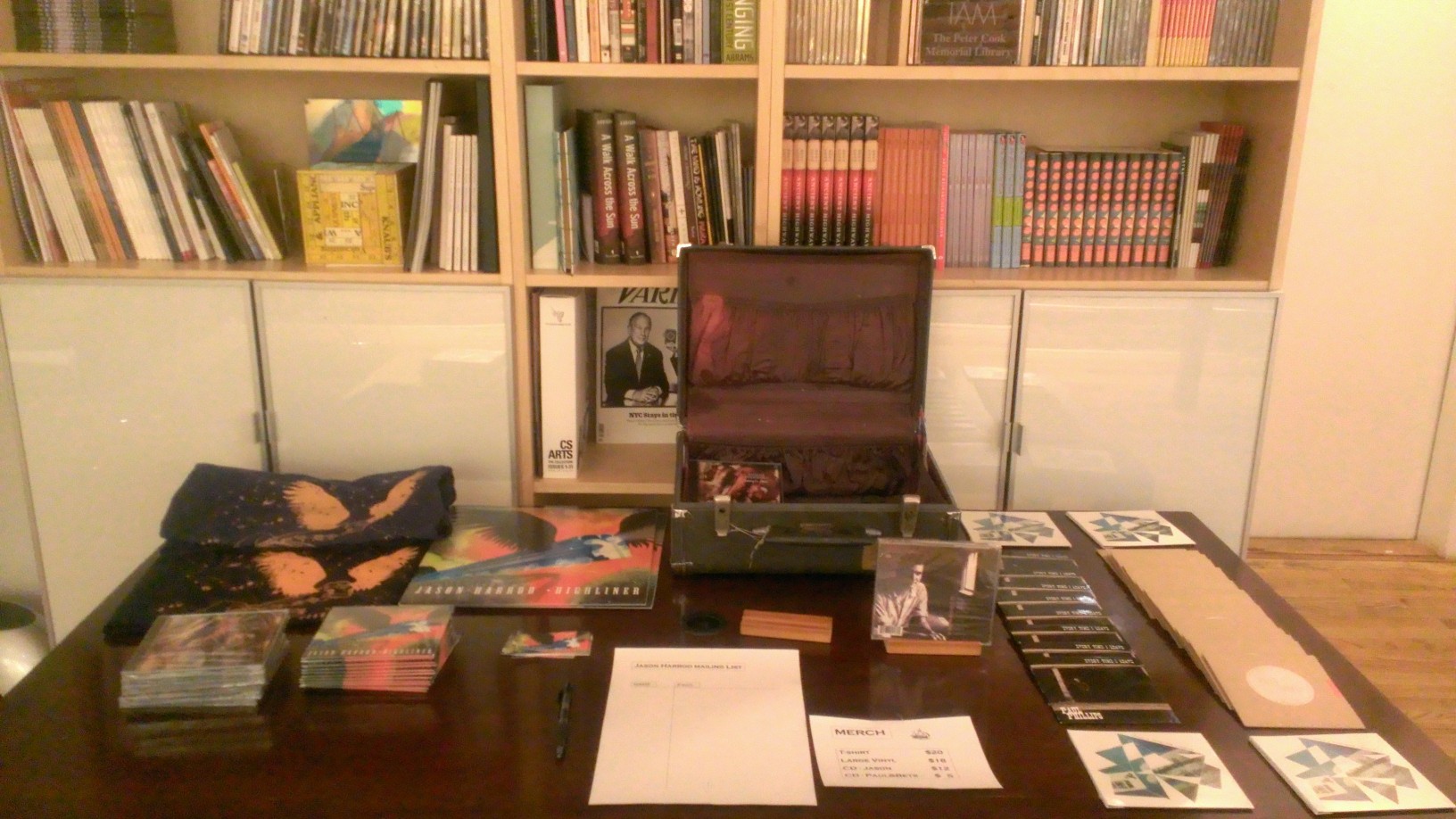
Do you mind if I tell you about my reading with Jason Harrod, even though it happened a few weeks ago? I know it’s waaaaay overdue but I still want to share it with you because it was a fun event and I was happy to see some of you there.

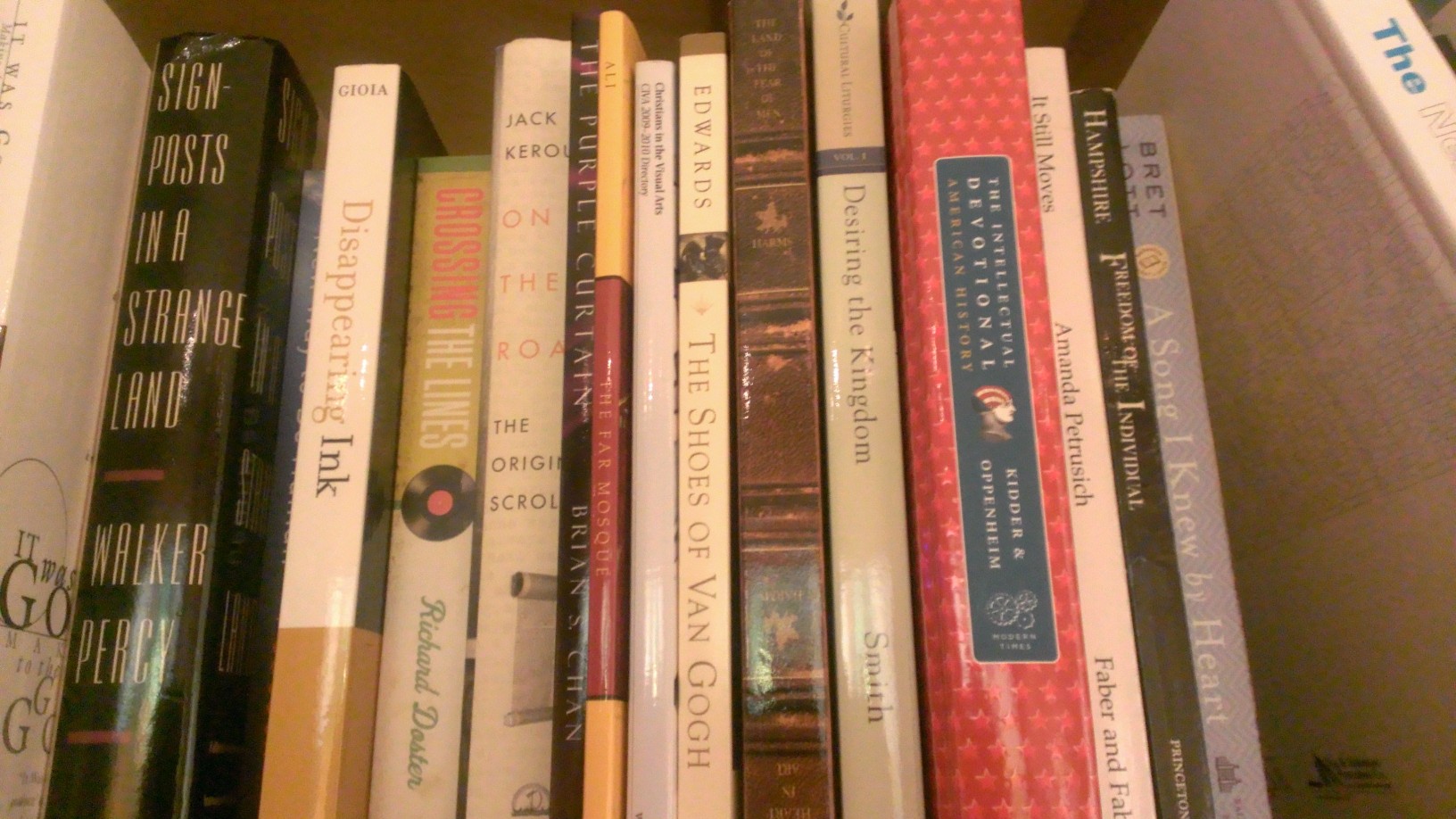
So I get to Space 38|39 a bit early and, as any bibliophile would do, I spend my time browsing the bookshelves. And look what I spy on the shelves! Do you see it? The original scroll version of Jack Kerouac’s On the Road! Providence, right?!

I actually read the same passage from the book I coauthored with Paul Maher Jr., Burning Furiously Beautiful: The True Story of Jack Kerouac’s “On the Road,” as the one I read with David Amram. Someone recorded it so I may have video in the future to show you from the reading, but in the meantime you can see me reading it with Amram here. I selected this particular passage because Jason had asked me to read something about wrestling with God, and here Paul and I tell about when Kerouac felt God wanted to have a few words with him and paid penance for watching a bullfight. It’s actually a pretty gruesome passage, so I always feel awkward reading it, but I think it’s an important passage. It speaks a lot to the way we try to reconcile our actions to God, and it demonstrates Kerouac’s softer, sensitive side.

I was invited to read a second piece and chose an old personal essay I had written. Jason joked with the audience that most of his songs were about God, girls, and the road, and it fit in perfectly with my writing. My first piece was about Kerouac’s road trip, but my second one was about my own road trip, where I met a woman who talked to me about God. The essay I read was called “Man Cannot Live on Bread Alone,” and it’s an early piece that Burnside Writers Collective published. You can read it here.

I made Jason play guitar as I read, and it was beautiful. I love collaborating with other people, and he’s a super talented musician. You can get Jason Harrod’s new album, Highliner, here.

Paul and Bets also performed, and they were so adorable. They’re this amazingly good-looking couple that look like they should be on TV, and they sang songs that transported us from the grime of New York City to the quaintness of the South. And you guys! They whistled! Oh it was too hipster cute.

Anyway, after the show this woman comes up to me, and starts saying her name and how I may not remember her but…. And I was like of course I remember you! It was a woman I used to work with and whom I actually met with on a regular basis right before the publishing division at the company shut down. She and another woman had been a  blessing on my life in dealing with work and life and the transition with the company, but whom over the course of the past few years I had lost contact with. It was such a surprise and so nice to see her. She had no idea when she came to Jason’s album release that I would even be there, so we were both surprised!

Anyway, New York City is a small world full of wonder. It was a great honor to get to read at Jason’s album release party and to have so many friends show up to support it and to run into a few I wasn’t even expecting to see!

WP_20130913_003


* * *

Burning Furiously Beautiful is now available as an ebook! You can download your copy here.

Friday Links: …Punctuation!

27 Sep

In honor of it being National Punctuation Day earlier this week (the 24th, to be exact), here are some punctuation-related links:::

Mary Norris’ delightful piece on National Punctuation Day in The New Yorker

Literary agent Sterling Lord talks about how deeply Jack Kerouac thought about punctuation in his recent memoir Lord of Publishing

“Remove literary, grammatical and syntactical inhibition,” said Kerouac in his “30 Beliefs and Techniques for Prose and Life

Alexis C. Madrigal gets to the bottom of William S. Burroughs and Jack Kerouac duking it out over the Oxford comma in The Atlantic

I suggest The Atlantic is creating their own fauxlore in their beatnik punctuation story

Thoughts on punctuation in haiku, with references to Ezra Pound, Amy Lowell, Jack Kerouac, R. H. Blyth, Sora, Yaha, Richard Wright, James Hackett, Choshu, Hashin, L. A. Davison, David Coomler, and e. e. cummings

e. e. cumming’s liked to play with punctuation in poems like r-p-o-p-h-e-s-s-a-g-r

Roi Tartakovsky considers this topic in E. E. Cumming’s Parentheses: Punctuation as Poetic Device

“There are some punctuations that are interesting and there are some punctuations that are not,” says Gertrude Stein in Poetry and Grammar

Poet Bob Holman explains how to read a crossed out word out loud in The Brooklyn Rail

David Foster Wallace used endnotes to capture fractured reality

Check out “the greatest literary project of all time“: The punctuation-named lit journal The Ampersand Review

Punctuation impacts how readers perceive a work, I argue in this Writing Wednesday post

Which punctuation tattoo would you get?

Grammar Girl is the best go-to guide for “quick and dirty tips” on punctuation

Want exclamations in bed?! Check out the punctuation pillows from PB Teen