Archive | Writing RSS feed for this section

Writing Wednesday: Choosing the Right Writing Tools

25 Sep

Alison Nastasi recently posted a great article on Flavorwire entitled “The Writing Tools of 20 Famous Authors.” Critics have long had a disproportionate fascination with Jack Kerouac’s implementation of the typewriter, and I commend Nastasi for noting Kerouac’s use of notebooks.

A Columbia friend of Kerouac’s used to always carry along a little notebook, and Kerouac picked up the practice from him. In fact, his notebooks became so important to him that one of his girlfriends accused him of caring more about taking notes on what was happening around him than actually living life. When I interviewed Kerouac’s Lowell friend Billy Koumantzelis, he mused that Kerouac was always jotting down notes in his hometown bars. As he told me this, the intonation suggested he thought Kerouac was a bit eccentric in his writing habit. In Burning Furiously Beautiful, Paul and I go into more detail about Kerouac’s use of notebooks because it’s an important aspect of his development as a writer.

Truman Capote famously quipped that Kerouac was merely typing, and indeed typewriters are important to understanding Kerouac’s editorial process. His father was a printer so Kerouac grew up accustomed to printing technologies and was a masterful typist. His L.C. Smith and Underwood typewriters allowed him to spill out a mad rush of words, capturing the speed of the highway. These words and ideas, however, were culled from his notebooks.

It’s important for writers to find the right tools for them. Some authors commit their best works directly into their laptops. They are used to composing emails, and typing on the computer is more natural than writing longhand. Other writers, however, find that starting their first draft in a Word document only results in stilted text, as they are too quick to rely on shorthand, thanks to all the time they spend on Twitter. For many writers, a combination of different media work best, as they find the ease of cutting and pasting helpful to their editing process once they’ve gotten a first draft done in a notebook.

For me, personally, it depends on what type of writing I’m doing. If I’m writing a blog post, I indefinitely type it directly into the computer. Blogging isn’t my best writing. I care more about the content than the style when I blog.

If I’m writing research-heavy nonfiction, even then I will often write the majority of it on the computer, as I find it helpful to be able to keep my notes together and play with the placement of quotes. If I hit a wall, I’ll print out the work and mark it up with pen.

For memoir writing, though, I enjoy writing with ink in a notebook or even just a loose-leaf piece of paper. It feels more intimate to me, like I’m writing in my diary or writing a letter to a friend. I do a lot of my editing even with paper and pen.

When I was a teenager, I sometimes wrote on an electric typewriter. I think there was a part of me that had romantic literary notions associated with typewriters. I loved the click-clack of the keys. As an adult, I still see the value of writing on a typewriter. It is too easy to hit the delete key and to play with the order of paragraphs on the computer when starting a draft. Good drafts are often the ones where we don’t censor ourselves, where we commit words to the paper for a good long while before we look at them again and decide what stays and what goes.

Every writer needs to find what works best for them. Sometimes it’s a matter of trial and error. Sometimes it helps to shake up the routine every once in a while.

What are your favorite writing tools?


You may also be interested in:

Overarching Writing Tips from Writers from Big Sur: Don’t Censor Your First Draft

I Just Give Myself Permission to Suck

If You Miss a Beat, Create Another

Today’s the Day


Your Coffee Personality

24 Sep

How do you like your coffee? I read on Yahoo! On the Road that James Moore and Judi James published a book called The You Code: What Your Habits Say About You, which says that your coffee order may give insight into your personality.

This coffee-intertwined-with-one’s-personality hypothesis reminds me of Dean Bakopoulos’ My American Unhappiness. The novel’s protagonist, Zeke Pappas, “psychically” knows customers’ coffee orders at Starbucks. I put “psychically” in quotes because Zeke’s clairvoyance is in reality a parlor trick, educated guesses based on how the customers look and act. In other words, he can guess their coffee order based on their personality.

Moore and James’ The You Code suggests that your coffee order is about more than your taste buds. It’s about who you are deep down inside. For instance: Those who take their coffee black, according to the Yahoo article written by Vera H-C Chan, are “quiet and moody.”

I’m not too picky when it comes to how I take my coffee. When I first began drinking coffee in high school, I drank it black. I think I thought that made me a badass or something. I was far from a badass: the word “badass” makes me uncomfortable; I wouldn’t say it aloud. I actually really liked the taste of coffee, though. It wasn’t something I forced myself to drink to look cool. Coffee felt comforting. Maybe because I associate it with my mom. These days I often take my coffee with milk, putting the milk in first, then the coffee. But not always. Some days I still drink it black, no milk, no sugar. If I’m at Starbucks I usually order a latte—sometimes just a regular latte, but other times, as I consider ordering coffee out a treat, I’ll get a vanilla latte, pumpkin spice latte, or gingerbread latte. When the weather’s warm, I’ll switch to a Frappuccino. Some days, I just drink tea.

The article doesn’t say—though maybe the book does—what it means if you vary your coffee order. Perhaps multiple personality disorder? I’ve always been a bit of a chameleon, adapting to circumstances and refusing to be pigeonholed.

Or perhaps that’s just me being a writer.

Citing Ryoko Iwata’s research, Pooja Thakkar noted one’s profession is indicative of the type of coffee they order. Apparently, we writers like flavored coffee, which might be why I switch up my latte choices.

How do you take your coffee?

Redeemer Writers Meet Tonight: Fall Writers Workshop

23 Sep

2062-writers


I’ll be co-leading a fall writers workshop today with my friends Nana, Maurice, and Jane. Here’s the info:


Fall Writers Workshop
Monday, September 23rd, 7PM
Redeemer Offices, 1359 Broadway, 4th Floor, Main Conference Room

The Redeemer Writers Group will be hosting a writing workshop for which we invite you to bring a short piece of writing to be read aloud in small groups for on the spot feedback.

It will be a new thing for us as a group and our hope is that it will not only bond us closer as writers as we “put ourselves out there,” but it will sharpen our respective crafts to the ultimate glory of God.

See You Tonight at the Album Release Party

13 Sep

Harrod

Just a reminder that I’ll be reading TONIGHT at Jason Harrod’s album release party!

Here are the essentials:::

When: September 13 @ 7:30pm

Where: IAM (International Art Movement), located at 38 West 39th Street, 3rd Floor, NYC.

Cost: There’s a $10 suggested donation. Wine, beer, and hors d’oeuvres will be available.

Bonus: Musicians Paul and Bets will also be performing.


I’ll be reading from Burning Furiously Beautiful: The True Story of Jack Kerouac’s “On the Road,” which I’m coauthoring with prolific biographer Paul Maher Jr.

I’ll also be reading a personal essay about a road trip I took across the country. The essay was published by Burnside Writers Collective, a website founded by Donald Miller (author of Blue Like Jazz) and Jordan Green.

Both of the stories I’ll be sharing about feeling beat, down and out, yet still searching, wrestling, clinging to God.

Hope to see you there!

* * *

Also, save the date: Thursday, September 19, at 6pm, I’ll be in conversation with Tim Z. Hernandez, author of the beautiful book Manana Means Heaven, at La Casa Azul in Spanish Harlem.

I’ll post on that next week, but in the meantime you can find out more in Appearances.

“On the Road”‘s Dilemma

12 Sep

logo-sm

“[M]ost people (perhaps increasingly) don’t seem to be drawn to fiction that offers more questions than answers,” writes Rob Roberge in “Literary Fiction’s Dilemma” for The Rumpus. Toward the end of the essay, the MFA professor and author of The Cost of Living writes:

We are messy creatures. Beautiful, flawed, disturbed, at times selfless and at times selfish animals left to attempt to make sense of a world that doesn’t lend itself to easy questions or easy answers. To document a world where we are neither gods nor beasts but often a mix of both is to document a world most don’t like to think about.

Roberge makes an interesting—and beautifully written—point that we are complicated beings made up of good and bad characteristics. I wouldn’t necessarily say we don’t want to acknowledge the fact that we don’t live in a black-and-white, all-or-nothing world because I think it’s a very American trait to want to see the silver lining in something and to want to hear a comeback story. I would argue we even prefer our characters a little flawed. We like Jo March, Rodion Raskolnikov, Jay Gatsby, and Tom Sawyer. But I think Roberge is onto something. Even if we don’t desire perfect, goody-two-shoes characters—and I don’t mean to say Roberge is suggesting we do—I think we want the author’s point of view to be morally clear.

Roberge’s thesis does not mention Jack Kerouac, but it got me thinking about the criticism I’ve read about On the Road. So many articles I’ve read about Kerouac’s novel and the recent film adaptation refer to morality:

David Depsey’s 1957 article “In Pursuit of ‘Kicks’” in The New York Times:

Today, one depression and two wars later, in order to remain uncommitted one must at least flirt with depravity. “On The Road” belongs to the new Bohemianism in American fiction in which an experimental style is combined with eccentric characters and a morally neutral point of view.

Referring to Norman Podhoretz’s 1958 essay “The Know-Nothing Bohemians,” Andrew O’Hagan writes the following in the New York Review of Books article “Jack Kerouac: Crossing the Line”:

In actual fact the Beats now seem pretty innocent: far from being a threatening group of “morally gruesome” primitives, they were a bunch of college kids with a few new things to offer.

Yahoo! Movies describes the film On the Road saying:

Dean is extremely charming and has a flexible moral code….

Amanda Chen reviewed the film for Scene Creek:

If you have a thirst for adventure and a loose line of morality, you will enjoy all that Walter Salles has to offer in his cinematic interpretation of Jack Kerouac’s novel, On The Road.

Ann Hornaday reviewed it for the Washington Post:

The literary and larger cultural argument that Kerouac’s book ignited and engaged — about formalism, narrative, morality and breaking open new ways of being and expression — is virtually nonexistent in “On the Road,” Walter Salles’s warm but strangely staid adaptation of a piece of literature that was never meant to be tamed as cinema.

Robert Moor writes in “On The Road Again” for the Paris Review:

The moral atmosphere of American life has changed considerably over the past half century; we have moved towards Kerouac’s liberal ideals, which has slackened the tension between the lived and the imagined.

An anonymous poster on Barnes & Noble left this review:

I can give you symbolism for every event in Vonnegut’s Cat’s Cradle. I can give you the moral, philosophical points of Burgess’ A Clockwork Orange. I can decode the works of Burroughs. But ‘On the Road’ left me feeling like it was pointless…a good, enjoyable read, but…pointless.

These reviews would make one think that Kerouac was the first writer to ever write about characters with flaws, that somehow literature up until 1957 was devoid of characters who did “bad” things—or at least if they were immoral they were severely punished for their crimes. I get the sense that they want to see Dean Moriarty die in a fiery car crash or repent of his sins and devote his life to helping winos and pregnant teens. But that’s not how life works, and I think the beauty of On the Road is that it is complex.

Roberge says readers have trouble with work that “offers more questions than answers.” Interestingly, despite criticism to the contrary, it would appear that Kerouac believed he found good, moral answers:

Dean and I were embarked on a journey through post-Whitman America to FIND that America and to FIND the inherent goodness in American man. It was really a story about 2 Catholic buddies roaming the country in search of God. And we found him.

Kerouac’s characters are complex, flawed, blessed, messy, striking, honest, real. They ask questions we might very well be asking ourselves.

You might also like:

Life Continues to Be Absurd: Saul Bellow, Jack Kerouac, F. Scott Fitzgerald, and Joseph O’Niell

From the Inside Out: Harrowing Escapes from the Twin Towers of the World Trade Center

11 Sep

9781566493840_p0_v2_s260x420

If you’re looking for an insider’s perspective on September 11, check out From the Inside Out: Harrowing Escapes from the Twin Towers of the World Trade Center. The author, Erik O. Ronningen, was the last person to escape from the South Tower after it was attacked by terrorists.

Here’s the marketing copy for the book:

Erik Ronningen was on the 71st floor of the North Tower on September 11, 2001 when American Airlines Flight 767 struck the building. After an incredible, even miraculous journey down through the acrid, smoke-filled building lit by occasional fireballs, Erik tried to get to the Security Command Center in the South Tower. Unable to do so, he was the last person to make it out of the South Tower alive.

Here is the story of his harrowing escape interwoven with the accounts of fourteen others who were lucky enough to be able to recount them.

Altogether, these accounts document the bravery and heroism, selflessness and generosity demonstrated by hundreds of people when their normal everyday lives were suddenly plunged into a fiery scramble for survival.

The astonishing photograph on the cover of this book was taken by survivor Jim Usher as he lay on the concrete outside the WTC losing consciousness, so his family could see what he saw during what he thought were the last moments of his life. And yes, that flag was really there! This photograph has never before been made public.

I happen to know the agent, who gave me an early draft of the book to read about two years ago, and I remember being impressed by the grand scope of the story. There are parts of it that have stuck with me — not only the scenes of fireballs in the elevator, but more so the quieter moments that personalize the story. Piercing the trauma are profound demonstrations of loyalty and love.

I sat down with the author, agent, and publisher, Welcome Rain, a few weeks ago, right before it went to press. The excitement buzzed in the air, as they told me about its progress and the never-before-made-public photograph being used for the cover. Last week I picked up a copy signed by the author.

The book has historical and personal importance. The stories told in the book are by people who made it out of the Twin Towers alive, but I think we all have a 9/11 story….

The Quotable Greek: I’ve Never Had the Right Words to Describe My Life

9 Sep

“Emotions, in my experience, aren’t covered by single words. I don’t believe in “sadness,” “joy,” or “regret.” Maybe the best proof that the language is patriarchal is that it oversimplifies feeling. I’d like to have at my disposal complicated hybrid emotions, Germanic train-car constructions like, say, “the happiness that attends disaster.” Or: “the disappointment of sleeping with one’s fantasy.” I’d like to show how “intimations of mortality brought on by aging family members” connects with “the hatred of mirrors that begins in middle age.” I’d like to have a word for “the sadness inspired by failing restaurants” as well as for “the excitement of getting a room with a minibar.” I’ve never had the right words to describe my life, and now that I’ve entered my story, I need them more than ever. ”

~Jeffrey Eugenides

Writing Wednesday: There Will Be Twerking at Brooklyn Book Festival

4 Sep

310aVv9nW8L._SY300_

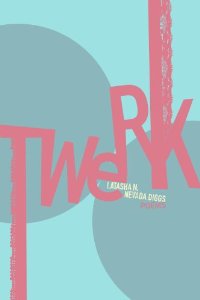
It may not be the VMAs, but the Brooklyn Book Festival isn’t your mother’s book club. The festival announced its schedule of events last week, and, yes, there will be twerking … or rather, the author of TwERK, LaTasha N. Nevada Diggs, will be on the panel Poetry in Performance. Here’s TwERK‘s overview, in case you aren’t familiar with it:

TWERK unveils an identity shaped by popular media and history, code switching and cultural inclusivity. The poems, songs, and myths in this long-awaited first book are as rooted in lyric as in innovation, in Black music as in macaronic satire. TWERK evokes paradox, humor, and vulnerability, and it offers myriad avenues fueled by language, idiom, and vernacular. This book asks only that we imagine America as it has always existed, an Americana beyond the English language.

“Here it is: a dope jam of dictions; a remixed, multicultural, polyphonic dance of vocabularies; a language of high stakes, hi-jinx, and hybridity. TWERK is subversive, vulnerable, and volatile. TwERK twists tongues. TwERK tweaks speech. Reading these amazing poems mostly makes me say, Wow! Open your ears to take this music in, open your mouth to say it out loud. And: Wow!”—Terrance Hayes

The Poetry in Performance panel will also feature Tyehimba Jess (leadbelly), Taylor Mali (The Last Time As We Are), and Quincy Troupe (ErranCities) and is moderated by Mary Gannon of the Academy of American Poets.

Performance has long been an essential part of poetry. The great ancient epics were told through oral storytelling or sung. It’s believed that Homer’s The Odyssey, for example, was brought to life by a professional performer known as a rhapsode, who improvised according to his audience.

Readings expose works to new audiences. They can make the words on a page feel more personal as the audience hears the intonation of the author’s voice and connects with him or her.

Allen Ginsberg’s “Howl” stands on its own as a great poem, but hearing him read it aloud makes it that much more powerful.

It’s sometimes been said, though, that writers are their own worst readers. This is because writing and performing are two very different skill sets.

Some poets love open mics and performing their works, but not all do. Many introspective writers envisioned a life of sitting alone in a room with a cup of steaming hot coffee as their fingers flew over a typewriter; not a life shuttling from bookstore to coffeehouses to give readings to bored patrons. Yet, many authors today are told to give readings, appear on radio shows, and sell their work.

The blogs have been abuzz about Miley Cyrus’ twerking at the VMAs, and some, like Pakalert Press, have blamed her handlers, like her father, Billy Ray Cyrus, did a few years ago. We like to think of poetry performance as being on a higher plane, but, to play devil’s advocate, is it always so different? Isn’t performance just another form of marketing?

Is the proliferation of burlesque poetry an example of literary twerking? Are these female poets subverting expectations or unwittingly playing into them? Does slam improve one’s improvisation and literary techniques or has it simply become its own cliche style? Must a writer give into the agent/publicist/handler’s pressure to perform his or her work to succeed in today’s literary landscape?


More Writing Wednesday posts here.


Friday Links: Tennis

30 Aug

tennisSir John Lavery’s Played!

We writers aren’t known for being the sportiest bunch. Oh, sure, there are exceptions to the rule, and if you read my blog regularly you know that I write about one such writer: Jack Kerouac, who went to Columbia on a football scholarship. I don’t know how it is that of all the writers I’ve read—and mind you I was a voracious reader from childhood on, reading both male and female authors—I grew most attached to one that was a jock. I guess that’s just irony.

Growing up in New Jersey, I was the cliché example of the girl in the glasses picked last in gym class. Most of my friends lived for the days we had gym, which was only maybe twice a week when I was in elementary school. I hated it. I would’ve rather sat in science class or written an essay than be forced to participate in a rousing game of What Time Is it Mr. Fox? or kickball.

In high school, I started taking tennis lessons. This was very much encouraged by my father, who thought it was great for my future—that it would help me succeed in life and business. I’m sure even in today’s economy there are corporate types who discuss mergers over a competitive game of tennis or golf. I mean, I did see it on an episode of Friends so it must be true. I’d bet there are even publishing types who do so. The reputation of writers and editors, though, is more akin to writing a book contract on a cocktail napkin during our three martini lunches. And so it surprised me that I actually liked tennis. I didn’t like it enough to actually exert too much energy running for the ball, but I liked it enough to make a bit of an effort to endure physical activity. I only took lessons for about a year—there were other things to do with my time, things like study for the SATs and hang out at diners—but I held onto my racket for quite some time. It made the move with me from New Jersey to my first apartment in New York. But it didn’t make it to my second apartment. I hadn’t made friends with the type of people who belonged to tennis clubs. I’d made friends with the type of people who were also picked last for gym class.

In celebration of the US Open, today’s Friday links are tennis related:::

Jason Diamond writes about David Foster Wallace and tennis literature (Flavorwire)

Harvest Books even put out an anthology called Tennis and the Meaning of Life

I myself am a bit partial to the use of tennis in Philip Roth’s Goodbye, Columbus

The Great Gatsby came out around the time tennis was becoming popular in the US; Greg Victor offers a few thoughts on this (Parcbench)

I once sat behind this tennis star and author at Z100’s Jingle Ball

One of the earliest paintings to depict tennis was recently sold at auction (BBC)

Love this fashion spread depicting The Royal Tenenbaums, which of course featured a tennis prodigy (This Is Glamorous)

Althea Gibson broke the color barrier in 1950 when she entered the U.S. Championships

Have a sporty Labor Day weekend! Let me know if you’re doing anything fun.

Writing Wednesday: 10 Reasons Memoirists Should Make Time to Keep a Diary

28 Aug

I wrote recently about how Jack Kerouac kept a dream journal and have been blogging a lot about social media. In a recent Salon article, Michele Filgate wonders “Will social media kill writers’ diaries?: Now Facebook and Twitter are business necessities, they may be losing writers’ journals. Is something lost?”

Filgate writes that authors’ personal diaries offer a key into their literary development and intentions. She says authors’ social media posts can do the same thing, but that it’s not as authentic:

Even if there is a level of acting involved in authors who use social media, it isn’t anything new. Brian Morton (author of “Starting Out in the Evening” points out: “I’ve read that Tolstoy used to keep two diaries, one that he left lying around for other people to read, the other a more intimate record for himself alone. I think self-exposure on social media is probably like the diary we leave out for others. There’s probably always an element of performance in it, even when it seems most naked.”

The pressure to build a platform and use social media is real for authors. Finding time to write isn’t always easy to begin with, but not it’s a constant juggle between writing (and researching, editing, and pitching) and social media (blogging, tweeting, facebook-ing, and pinterest-ing). In addition to big writing projects, many writers are also taking on small projects, like writing articles for various lit mags.

Diary keeping is last on my literary to-do list, and I miss it! Not only do I miss it for personal reasons, but I miss having a record of what I was going through and what I was feeling at various points in my life. Especially as a memoirist, I think it’s essential to keep a diary.

Here are

  1. It is a log for when and where we were on exact days
  2. It reminds us of precise events in our life
  3. It reminds us of little details that we forget over time
  4. It is a more accurate record of our emotions than our social media entries
  5. It is a raw space to create
  6. It’s a reminder of our growth in life
  7. It’s a reminder of our literary accomplishments
  8. It’s a place to dream and make goals
  9. It’s a good way to warm up our writing muscles
  10. Technology changes over time, so having a tangible diary preserves our day-to-day thoughts

How do you juggle journal-keeping with your other writing and social media? How has keeping a diary helped your writing?