Consulate General of Greece in New York Proves That Current Greek Art Matters

26 Oct
 IMG_3436
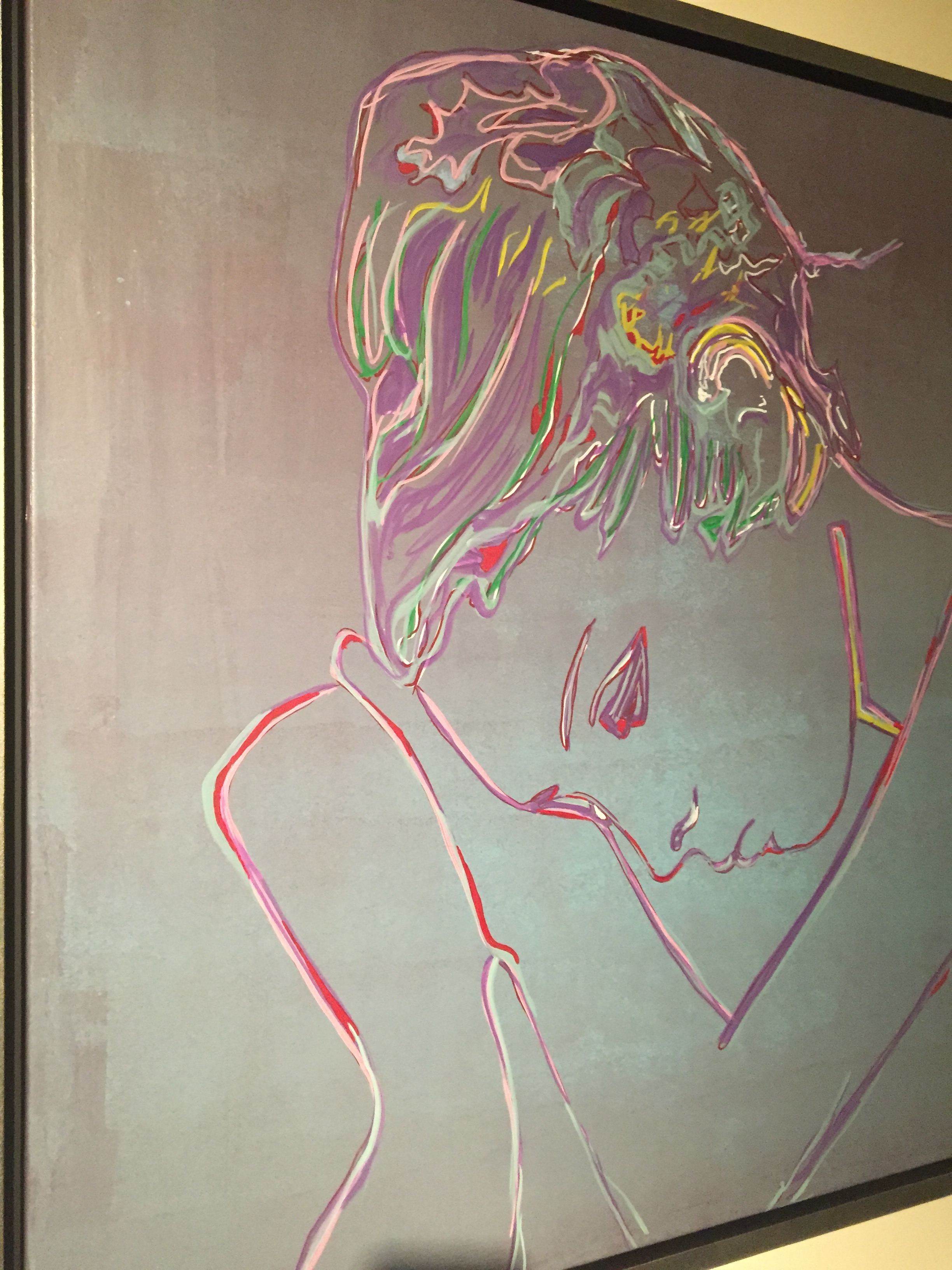
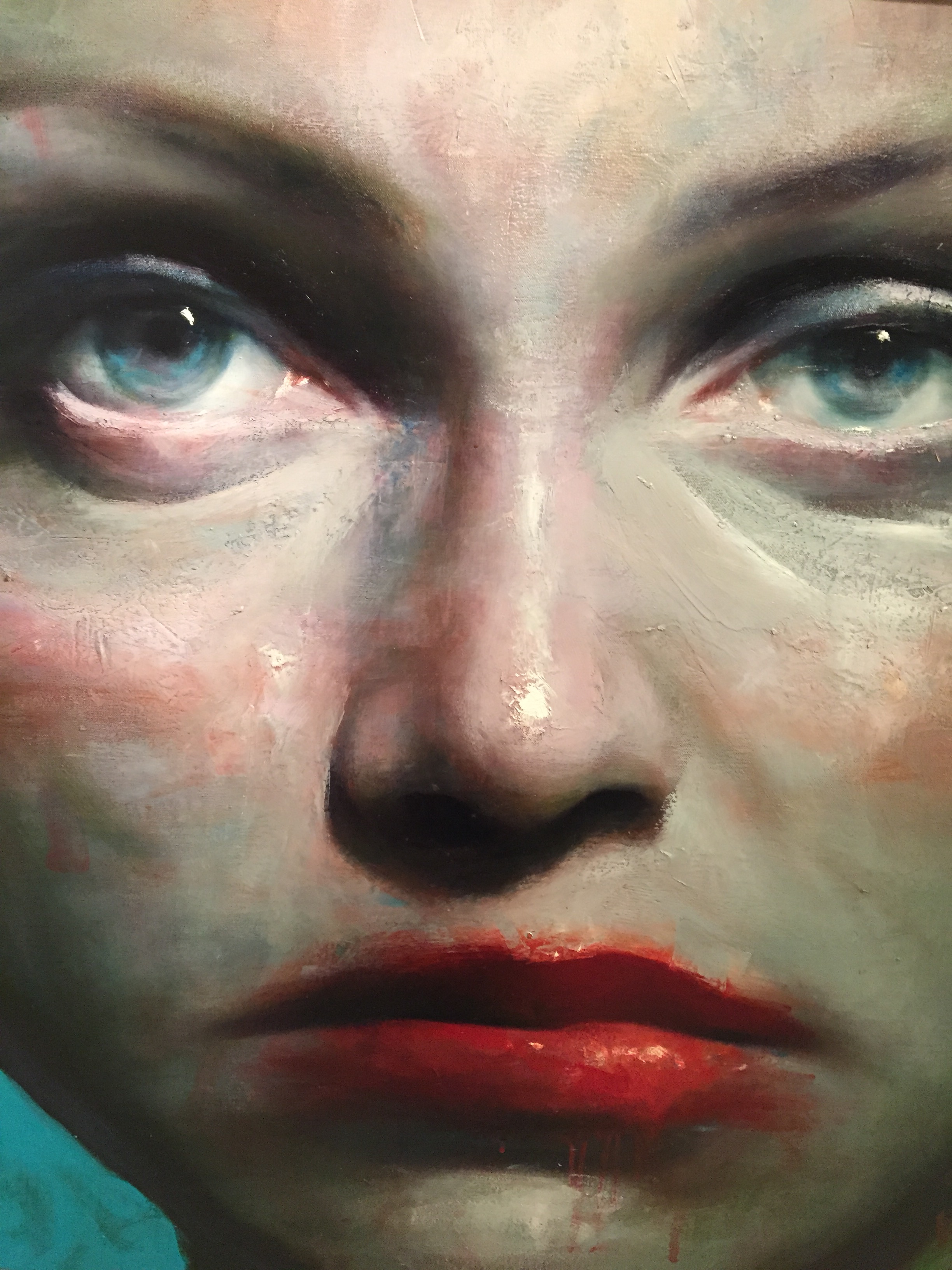
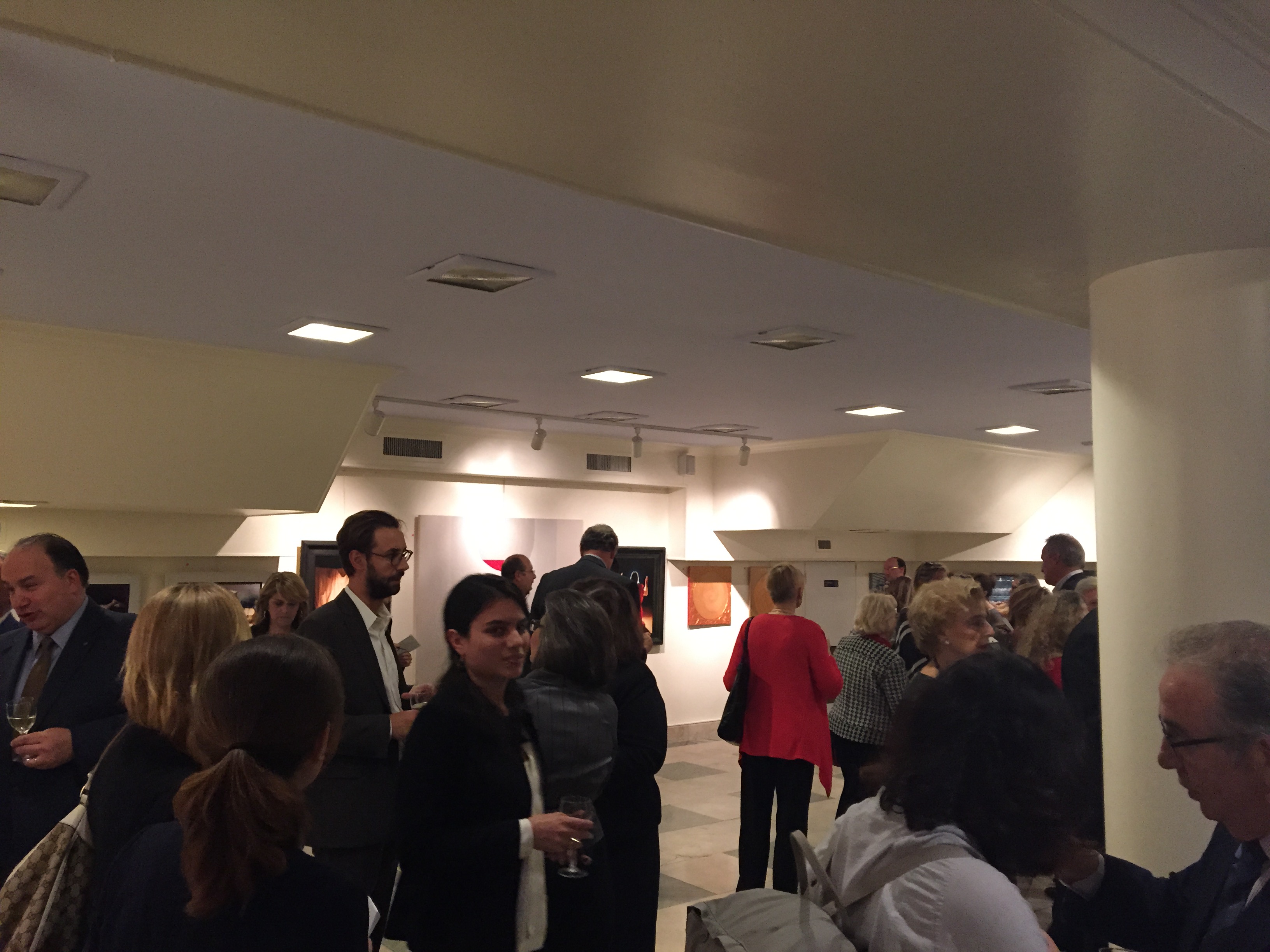
The new art exhibion Colors of Greece at the Consulate General of Greece in New York is a phenomenal display of artistic diversity. I was thoroughly impressed by the variety of subject matter and aesthetic style of Greece’s contemporary artists.
 
Contemporary Greek art—be it visual art, as it was in this case, or the literary arts—matters to me a lot. Now, more than ever.
 
As a Greek, I am proud of my country’s rich Classical history. Our ancient art and architecture is revered the world over, and for good reason. To this day, I still stand in awe every time I look up at the Parthenon. How could anyone not? And yet, as well-meaning individuals speak to me about Olympia and Homer and all the beautiful work of Greece’s centuries’ old history, a part of me feels frustrated that only the Greece of the past is recognized. It is as if the Greece of today is nonexistent in their eyes. I think most Americans would be hard-pressed to name any Greek artists living today.
 
This saddens me because Greeks and Greek Americans have done much to enliven the postmodern art world. As a scholar of the Beat Generation, I have often turned to the art of the 1940s and ’50s. Specifically, I have researched the abstract expressionists who hung out at the Cedar Tavern and mingled with the Beats. Several of the most famous abstract-expressionist artists were Greek American: Wiliam Baziotes, Theodore Stamos, and Peter Voukos. Another famous artist of that time period was neon-sculpturist Stephen Antonakos. Today, there are artists like Maria Fragoudakis, who continues the collage and pop-art work of that era. These artists have done exceptional work that does not hinge on their being Greek.
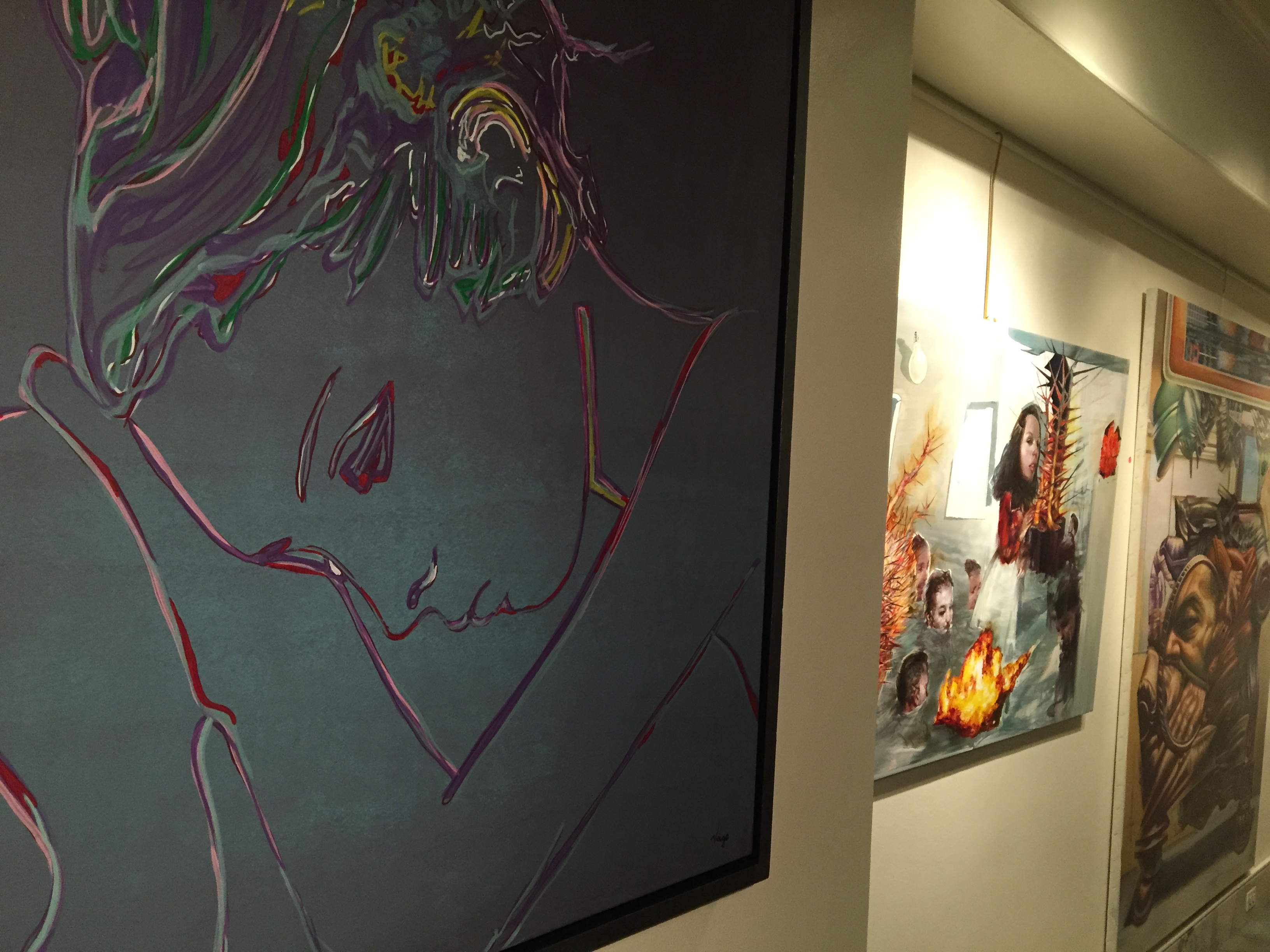
Colors of Greece, likewise, demonstrates the vast scope of Greek art in 38 works. The artists cast their eye far and wide, landing on people swimming in blue, blue bodies of water; dramatic flora; city streets; the human face. Their style is photorealistic, figurative and full of emotion, abstractions. In a small exhibit hall it may perhaps seem jarring to view dissimilar works, and yet that is what makes this exhibit so special. It only captures a small sliver of the variety of work Greek artists today are doing. 
 
At a time when contemporary Greece is looked at through a negative political and economic lense, drawing attention to contemporary Greek artists’ work is a political statement. The Consuate General of Greece in New York shows that there is more to Greece than what you see on the evening news and read in history textbooks. There is a Greece that is vibrant, full of life, energetic, and colorful. There is a Greece that sees beauty among the ruins. It is the artists who perhaps will raise Greece up, who will innovate, who will create a new Greek generation.
 
Colors of Greece runs until October 30, 2015. Free of charge, the exhibit is open to the public from 9:00am to 2:30pm at the Consulate General of Greece in New York, located at 69 East 79th Street.
IMG_3439 IMG_3435 IMG_3440 IMG_3441 IMG_3437
Also, I’m pleased to announce Hellas, a 2016 wall calendar that I created using photographs I took while in Greece this past summer. You can purchase it here.

Should We Judge the Quality of a Memoir by Its Confessions?

21 Oct

jamison-bookends-master315Leslie Jamison Credit Illustration by R. Kikuo Johnson via The New York Times

At the Hobart Festival of Women Writers, part of my class, “Writing Under the Influence of the Beat Generation,” was about confessional writing. As a class, we took a look back at the first examples of confessional writing in literary history before plunging into the poetry of Diane Di Prima, who is associated with the Beat Generation.

The New York Times’ Sunday Book Review posed the question “In the Age of Memoir, What’s the Legacy of the Confessional Mode?”

Leslie Jamison wrote:

These days, American literary culture features both a glut of so-called “confessional” work and an increasingly familiar knee-jerk backlash against it: This writing is called solipsistic or narcissistic; it gets accused of lacking discretion or craft. Its heritage is often traced to women writers, Sylvia Plath and Anne Sexton, and its critiques are insidiously — and subcutaneously — gendered. So many of the attacks against the confessional mode come back to the language of the body: An author is spilling her guts or bleeding on the page. Her writing whores itself out, exposing private trauma for public fame. (Or a four-figure advance and an adjunct job.)

Ouch! But, unfortunately, so true. Jamison says:

Because people have grown so obsessed with the drama of Plath’s life, they read the poems solely as reflections of its traumas….

In other words, readers get so caught up in the content that they forget the style. This is a huge tragedy. Commercial memoirs today are all about celebrity or about hard-won, momentous moments in life. There is certainly room for works that celebrate and motivate, but is that the whole or only point of the memoir?

I’ve often heard people sarcastically remark that memoir writing is egotistical. Or else, they denigrate their own lives by arguing there’s nothing in their life worth writing about. I disagree. Whole-heartedly. First of all, the process of writing a memoir is at its core about seeking a balanced truth that is far from self-promoting. At times, the memoirist may even feel self-loathing. But again, every life matters. Everyone has something to say. Everyone is complex and interesting.

Memoir is not just about a flat telling of one’s life. It’s storytelling. It’s choosing words that capture a moment so precisely that the reader can step into the author’s world even if their lives are vastly different. Memoir, in the end, is about craft. It’s an art form.

How Do You Like Them Apples?

20 Oct

IMG_3483 IMG_3485 IMG_3497 IMG_3500 IMG_3503 IMG_3509 IMG_3512 IMG_3532 IMG_3549

Every year my friend organizes an autumn apple-picking trip. It’s a nice break from fighting long lines in tiny aisles at grocery stores in New York City. Also, it always makes me think of helping my dad out on the garden in Greece. I took the bus out to Fort Lee, New Jersey, to meet my fellow apple-picking friends, and then we drove two hours or so out to Highland, New York. My friend is the definite “mom” of the group — she brought me an extra jacket because it was spectacularly cold out that day, which I wore on top of my lighter coat.

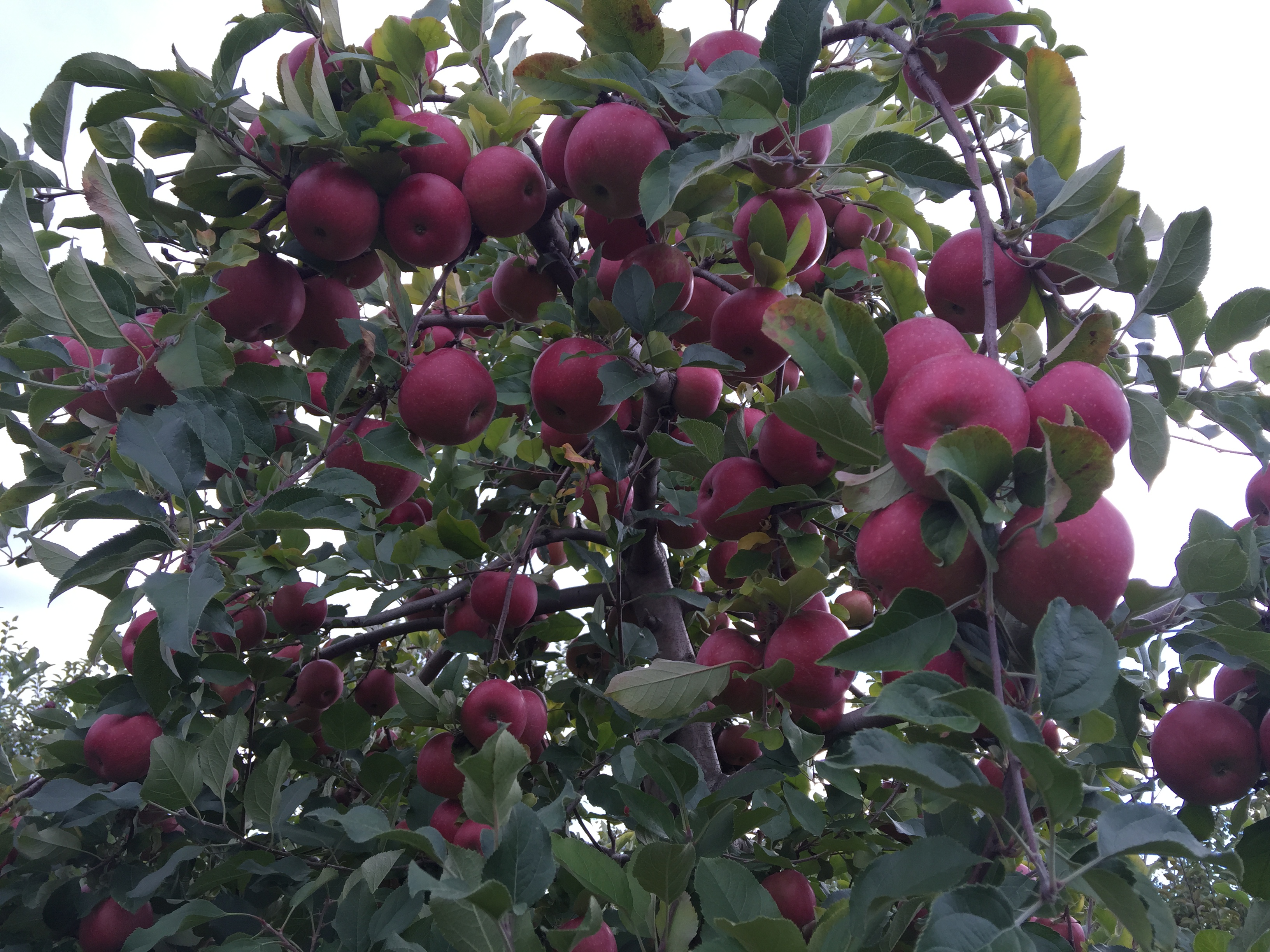
The farm we went to was called Dubois Farms U-Pick (209 Perkinsville Rd., Highland, NY), which we determined was pronounced like author W. E. B. Du Bois. We were immediately greeted by the smell of grilling burgers and apple cider donuts. The employees there were also super friendly, going out of their way to help us on our apple-picking mission. We were on the hunt for Fuji apples. Or, I should say, my Japanese American friend was on the hunt for that specific apple type. Hmm… does she perhaps have a bias when it comes to apple selection? I also got some Gala apples, which I picked up because they sounded fancy. The type of apples that would know how to throw a swanky party.

What I particularly liked about Dubois Farms is that you don’t have to pay an entry fee. Some farms make you pay to pick. So basically you’re paying to do the labor yourself on top of paying by the pound. At Dubois, though, you only pay by the pound — and the pound is cheaper than what a city dweller pays for apples. It’s a win-win for a starving artist. You can have your fun, and eat your apples too!

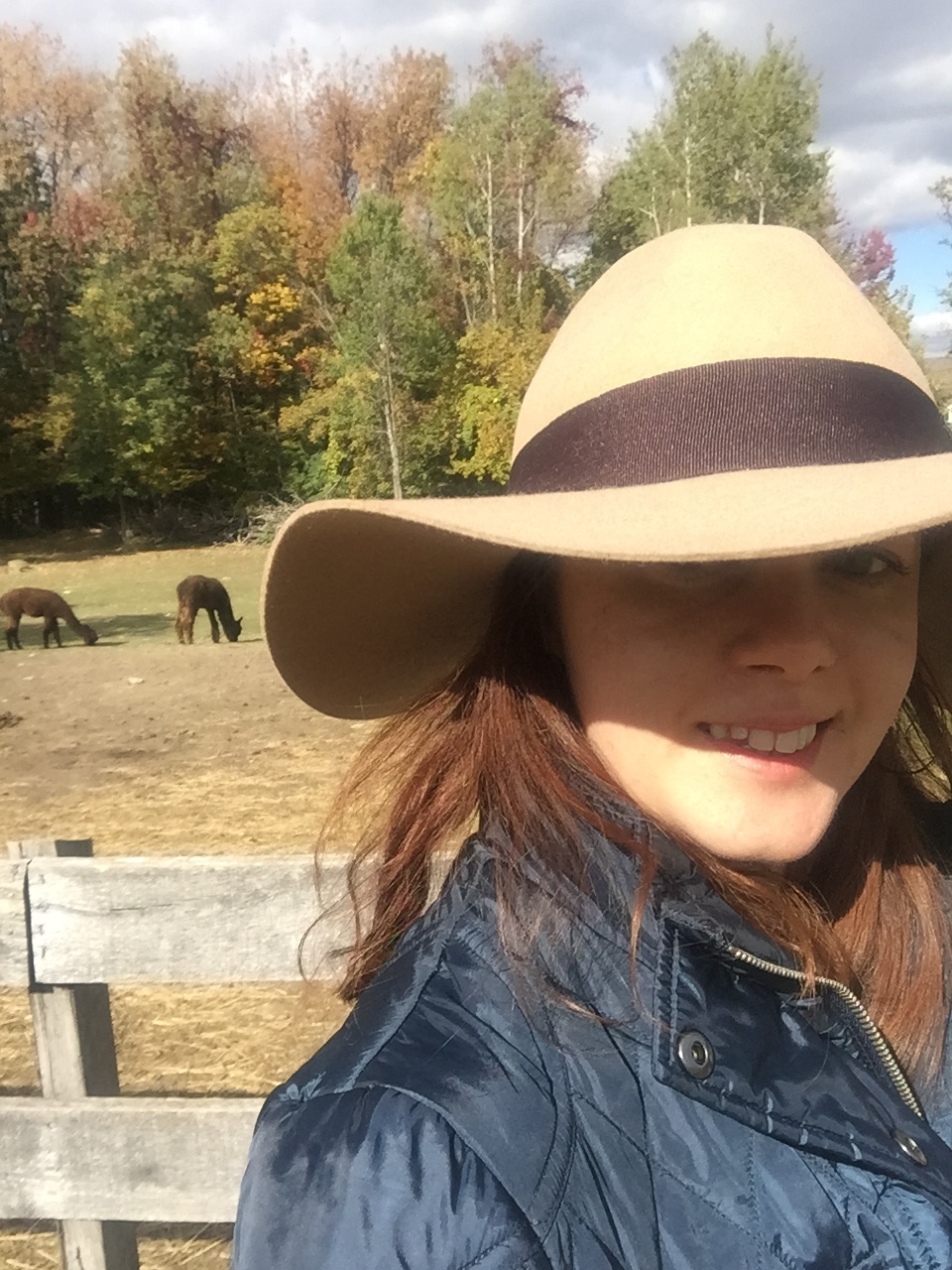
I have to admit, though, one of my favorite parts had nothing to do with the apples. I loved all the farm animals, especially that silly goat, who kept trying to my attention. Plus, it was my first time seeing an alpaca in real life!! Remember this scene in Napoleon Dynamite?!

How to Get an Editor’s Attention

14 Oct

Freeman

The other day I wrote about John Freeman’s new literary magazine, Freeman’s. I’d started that blog entry as an introduction to an article he’d written for Electric Literature, but it got unwieldy. At least in blogging terms. Internet readers like their posts pithy!

In “Anatomy of a Discovery: How a Literary Magazine Finds New Writers,” Freeman dives into the editorial selection process. In short, he say editors:

“Read the slush. Tell the ones we meet to try. Listen to a writer’s supporters.”

The essay reveals that sometimes it’s through meeting someone at a booth at AWP and oftentimes, it’s through the recommendation of an MFA writing instructor.

It’s an insightful article that shows the importance of networking, attending high-profile literary events, and enrolling in the right MFA program (that is, one where the instructor’s are well-connected) being such a standout writer that your writing professor is willing to mention your name to their editor.

As an introvert, I found hope in this sentiment from Freeman:

Fatin, who had seemed so shy in person and on email, was not at all shy on the page. She moves swiftly in and out of four or five different characters points of view like it was nothing, like it was what she was for.

If you want to get published, read the full article here.

You might also enjoy my blog posts:
Keep in Touch with Your Alumni Network

Speed Networking with Eventsy

So You Want to Be in Publishing

Five Tips for How to Promote without Selling Out

Making the Most of My Writing MFA

Also! Next month, I’m slated to speak on the panel “Lessons Learned” about my experience publishing at BinderCon.

“I don’t feel that it is necessary to know exactly what I am.” ~Michel Foucault

12 Oct

“I don’t feel that it is necessary to know exactly what I am. The main interest in life and work is to become someone else that you were not in the beginning. If you knew when you began a book what you would say at the end, do you think that you would have the courage to write it?
What is true for writing and for love relationships is true also for life. The game is worthwhile insofar as we don’t know where it will end.”

~Michel Foucault

The Personal “I” in Literature: Narcissus & Literature at the Onassis Festival

12 Oct

CQzuKmdUwAQhiZ3

Is writing inherently narcissistic? Even when writing in the third person, can the writer ever fully disappear from the page? Is the personal “I” more trustworthy in journalism because it acknowledges the reporter’s presence? Is the personal “I” in literary fiction more prone to becoming an unreliable narrator than a third-person narrator?

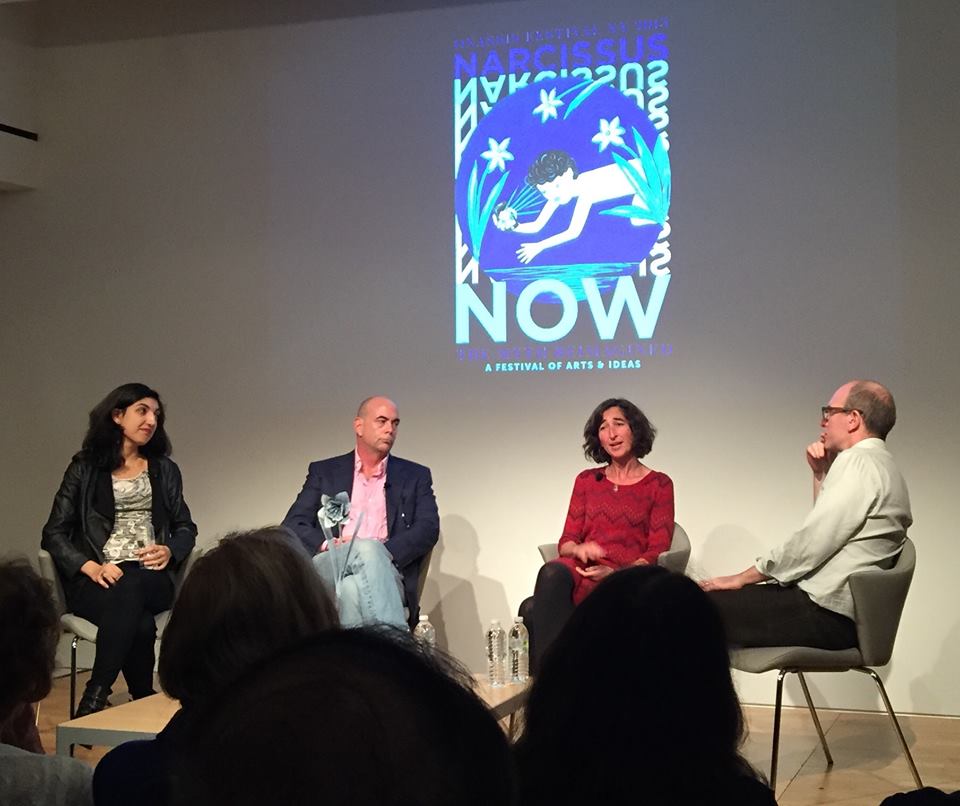
Lorin Stein, editor in chief of The Paris Review, sat down with Donald Antrim, Elif Batuman, and Jessica Moss to tackle the question of how writers interact with the mirror of the page in the panel Narcissism & Literature at the Onassis Festival‘s Narcissism Now: The Myth Reimagined on October 10, 2015.

Jessica Moss, professor of philosophy at NYU, opened the dialogue up by discussing Plato’s RepublicShe discussed Plato’s thoughts on writing in the first person versus the third person, literary concepts that didn’t quite yet have terms at the time. She revealed that Plato believed that a first-person narrator should be “a good, noble person.”

The author of The PossessedElif Batuman is also well-known for her journalism for n+1 and The New YorkerShe related that she likes putting herself into her journalism pieces because she feels she will be perceived as more trustworthy. Her editor, at times, disagrees, telling her to remove herself from the story. Batuman transitioned the conversation from the Greek Plato to the Russian Fyodor Dostoyevsky. She told how Dostoyevsky — or as Jack Kerouac would call him, Dusty — originally wrote Crime and Punishment in first-person diary form before switching to the third-person narrator of the published version. In discussing this, the panelists agreed that the third-person showed the story through more action.

Donald Antrim, who also frequently writers for The New Yorker, is the author of the memoir The Afterlife, which deals with his relationship with his mother, Louanne Antrim, and resulted in him writing in the third person to tell her life story. Antrim explained that one of the pitfalls of the first-person narrator is that he or she is constantly in the reader’s ear, justifying his viewpoint. Antrim said, “We’re not interested in a narrator who’s telling us all the time what to think.” Antrim brought the conversation from the Greek Plato and the Russian Dostoyevsky to the English Mary Wollstonecraft Shelley’s Frankenstein, an interesting exploration of narration, which starts out as a letter from a sea captain, transitions into Victor Frankenstein telling his story, and then transitions into the story of the monster.

Antrim said, “The third person doesn’t require having things figured out”; he explained that, in contrast, a first-person narrator either is telling the reader exactly how he or she feels in that moment or is reflecting on that moment. Stein said the first-person stories that interest him are the ones where there is dramatic irony because the narrator doesn’t know something. He suggested French novels use more immediate first person than American novels do. That reminded me of how Darcey Steinke once said French authors think American writers write “close to the house,” an expression, if I remember correctly, that suggested American authors over-explain themselves. As a memoirist, this is something I’ve spent significant time thinking about and working out in my writing. I once had someone in a workshop come up with what they thought was a revelation about why I acted and thought the way I did and she asked me if I realized that thing about myself, and I, frankly, was surprised that she’d asked me that because I had purposely written to reveal that very same thing. I had thought my subtlety was a sign of good writing, but their question made me wonder if people would think I’m not self-aware if I don’t spell things out for them. Unfortunately there wasn’t a Q&A for the panel because I would’ve been quite curious to hear the panelists thoughts on immediacy and self-awareness in memoir writing. I was surprised there wasn’t more talk about memoir, personal essay, semi-autobiographical writing, and the insertion of the personal “I” in journalism in a panel on narcissism. The discussion of narration in literature, however, was riveting.

12079279_10207673385575022_2805350310731032260_n

Lowell Celebrates Kerouac 2015 Is Underway

8 Oct

lck_festival_2015_poster_220x340

Lowell Celebrates Kerouac! is officially underway, kicking off on Monday with a reading by Michael McClure. As if McClure alone wasn’t enough to draw a crowd, Tim Z. Hernandez, author of Manana Means Heaven, and David Amram will be there, along with lots of other special guests and a great crowd of Beat scholars and fans. You can view the whole 2015 Lowell Celebrates Kerouac! line-up here.

Whether you’re attending LCK or living vicariously through others’ reports, here are a few links to get you in the spirit:::

John Freeman’s New Lit Mag Packs in High-Profile Writers

7 Oct

Freeman

John Freeman has a new literary magazine. The eponymous Freeman’s already it has the literary world buzzing. In the internet age where everyone and their long-lost brother publishes a lit mag, it’s rare that a new publication garners this much attention.

But this is John Freeman we’re talking about. While on the board of the National Book Critics Circle, the author and literary critic had been at the front and center of drawing attention to the diminished coverage of books in print media. As editor of Granta, he edited everyone from Chimamanda Adichie, Peter Carey, Colum McCann, Mary Gaitskill, Herta Muller, Richard Russo, and Salman Rushdie to Joshua Ferris.

Back then, I blogged about a panel on magazines that he moderated at McNally Jackson.

For a little background on Freeman’s departure from Granta and what he’d been up to before launching his own literary magazine, check out this Vogue article.

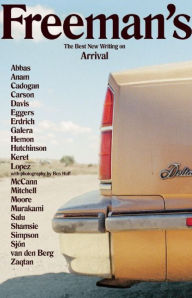
Freeman’s boasts no shortage of literary talent. The premiere issue, out this month, includes Lydia Davis, Dave Eggers, Louise Erdich, Haruki Murakami, and many other literary superstars. Here’s how it’s described on the Barnes & Noble website:

We live today in constant motion, traveling distances rapidly, small ones daily, arriving in new states. In this inaugural edition of Freeman’s, a new biannual of unpublished writing, former Granta editor and NBCC president John Freeman brings together the best new fiction, nonfiction, and poetry about that electrifying moment when we arrive.

Strange encounters abound. David Mitchell meets a ghost in Hiroshima Prefecture; Lydia Davis recounts her travels in the exotic territory of the Norwegian language; and in a Dave Eggers story, an elderly gentleman cannot remember why he brought a fork to a wedding. End points often turn out to be new beginnings. Louise Erdrich visits a Native American cemetery that celebrates the next journey, and in a Haruki Murakami story, an aging actor arrives back in his true self after performing a role, discovering he has changed, becoming a new person.

Featuring startling new fiction by Laura van den Berg, Helen Simpson, and Tahmima Anam, as well as stirring essays by Aleksandar Hemon, Barry Lopez, and Garnette Cadogan, who relearned how to walk while being black upon arriving in NYC, Freeman’s announces the arrival of an essential map to the best new writing in the world.

Sounds like a collector’s edition to me!

The Wall Street Journal Excludes Greek American Novels in Its List about the Immigrant Experience

7 Oct
9780312427733_p0_v4_s192x300
In a list of “10 Notable Novels about the Immigrant Experience,” there are bound to be many great and notable novels who don’t make the cut. This isn’t about just literature, though. This isn’t just about craft or sales numbers.
It’s nice to see a novel about a Swedish-American family on the list, as we Swedes are sometimes overlooked. However, I was disappointed not to see any novels about the Greek-American immigrant experience on the list.
That being the case, I would like to offer up Jeffrey Eugenides’ Pulitzer Prize-winning Middlesex, which in portraying three generations of Greeks weaves a story of immigration and the American Dream.
What would you add to the list?
PS::: Remember that time Jeffrey Eugenides’ vest was Tweeting? And a great quote from the author.

Memoirist Michael W. Clune Speaks on Exploring Solitude in His New Book

30 Sep
9780865478282_p0_v4_s192x300
My brother could probably play video games before he could walk. He recently told me about a book he was reading about a woman from the same tech sphere as him.  Big sister as I am, I naturally clicked on an article a video-game inspired book when I saw it in case it might be something to pass along to my brother. What I discovered was an interview that resonated with my own life and work.
In an interview with NPR’s All Things Considered, author Michael W. Clune talked about Gamelife, his memoir about growing up playing video games that speaks to the idea of solitude. He says:
My mother told me early when I was young that what’s most meaningful in life are the relations you have with other people. In this book, what I really wanted to explore was the part of life we have — the part of life we live — when we’re not with other people. The part when we’re alone.
There’s the cliche that we’re born and we die alone, and I take that quite seriously, and I believe that our most powerful and profound experiences in many ways are solitary experiences, and I believe that computer games, like literature and like some other devices in my life, were a means of training me for that kind of solitude.
Though I did play videogames as a child, it wasn’t a large part of my life. Solitude, however, was. And just as Clune said, it was suggested to me that solitude was a negative thing. Though my parents and teachers praised me for reading and writing, I was also made to believe that I was abnormal for indulging those pleasures at the expense of playing outdoors with other children.
Even as an adult, as I’ve struggled through writing my memoir, I’ve heard mentors and instructors say again and again that protagonists have to be decisive, goal achievers at odds with outside forces. They can’t be writers. They can’t be people who just sit around and think.
They can’t be me?
I feel a little vindicated when Clune says, “I believe that our most powerful and profound experiences in many ways are solitary experiences.” Maybe he doesn’t mean this literally. Maybe he means that even when we’re in relationship with people who love us dearly and whom we love, our experiences, even when shared are, at their core, are so highly individualized that they are solitary.
Relationships—family relationships, friendships, romantic relationships, literary camaraderie—are relevant, important. But so are times of solitude. We need quiet, private moments to ourselves to know ourselves, to be ourselves, to reflect, to dream, to pray, to read, to write, to rest, to imagine.