
“The most difficult thing in life
is to know yourself.”
~ Thales
“The most difficult thing in life
is to know yourself.”
~ Thales

Brennan Manning was laid to rest yesterday. I was in my early twenties when I read Manning’s The Ragamuffin Gospel. It had been highly praised, and I wanted to see what all the fuss was about. I don’t recall particularly enjoying it, but I do remember that I was on a plane, perhaps an important detail because I don’t read very well on planes. I rush my reading when I’m on a plane, as if trying to match its V-speed, and Manning’s prose was slow-paced, contemplative, meditative. Despite how I felt about the book at the time, I was enthralled with the title and the central message of the book. This is from the description provided for the book:
Yet God gives us His grace, willingly, no matter what we’ve done. We come to Him as ragamuffins—dirty, bedraggled, and beat-up. And when we sit at His feet, He smiles upon us, the chosen objects of His “furious love.”
The Ragamuffin Gospel contains such provokingly entitled chapters as “Tilted Halos” and “The Victorious Limp,” and suggests Christians aren’t perfect specimens who have risen above other so-called sinners. Those with a holier-than-thou attitude have their halos on too tight. It’s unpopular to admit, but we’ve all experienced brokenness and inflicted pain on others.
Manning too. Manning was an alcoholic. A priest. A prisoner. A hermit. A public speaker. A force of contradictions.
It’s the type of contradictions that Jack Kerouac spoke to in his novels and in his reference of the Beatitudes in describing his generation, the Beat Generation.
It’s the type of contradictions we often don’t like. We like to have people fall into neat little categories of “good” and “evil.” We like to hold people up on pedestals. We like to demonize others. We like our reality stars to be trainwrecks. We like our leaders to be heroes. We like our heroes to be faultless. We like our Christians to be Jesus.
Life is messy. We are messy.
We need to extend more grace, and we need to accept more grace.
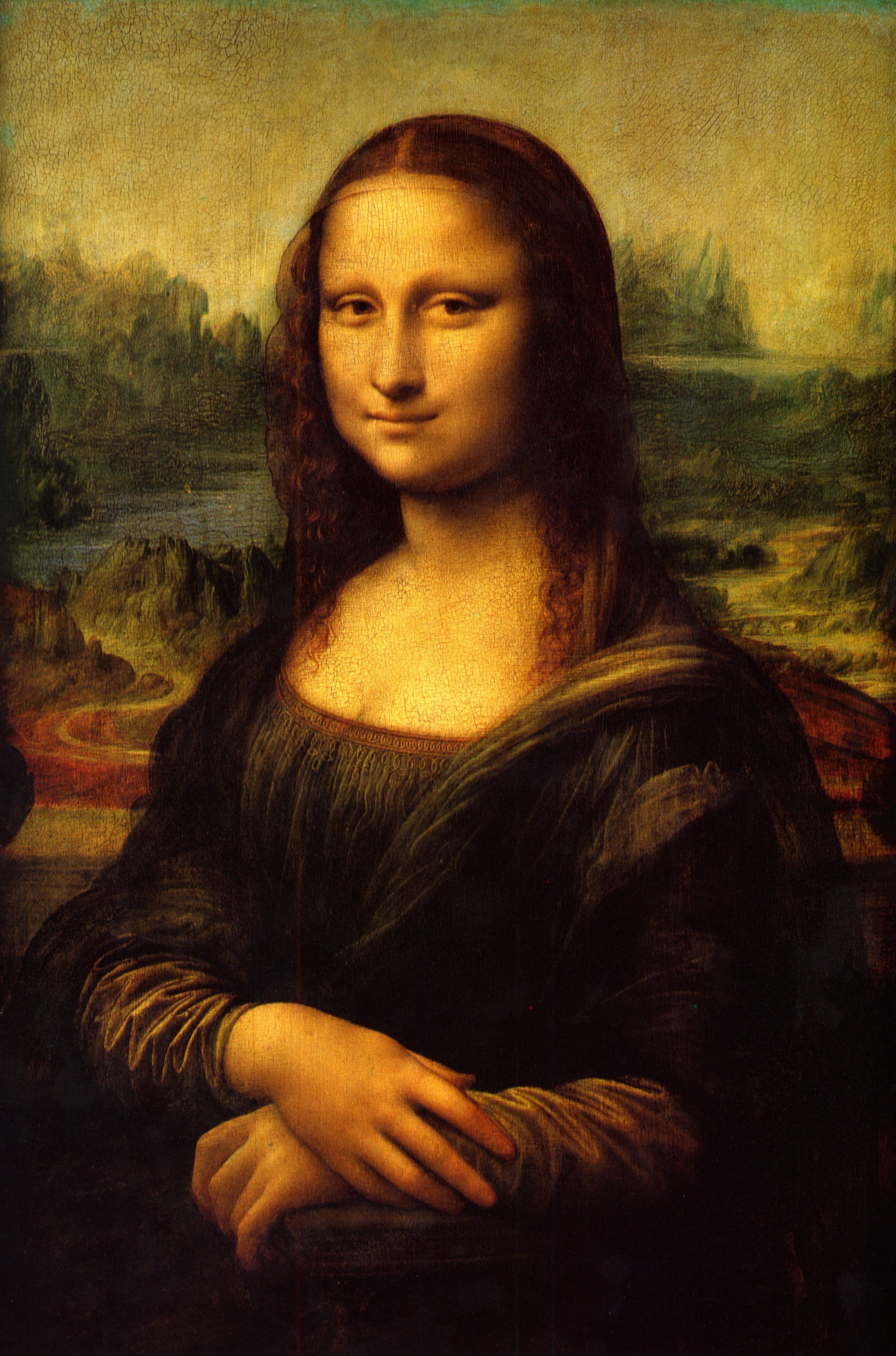
The post “A Time to Weep” seems more appropriate this week, after the Boston Marathon explosions, but yesterday my pre-scheduled post “A Time to Laugh” went up on Burnside. It’s just two works of art and a verse, like most of the blog posts in this “A Time to…” series. Sometimes, though, short is effective. If you need a little levity, silly renditions of the Mona Lisa might be just what you need.
“The mind is not a vessel to be filled
but a fire to be kindled.”
~ Plutarch

When I was a junior in high school, my English teacher gave our class a list of topics we could do our research papers on. We had never studied Saul Bellow before, but his name was on the list, and I chose to write about his absurd heroes. As Wikipedia states:
In philosophy, “the Absurd” refers to the conflict between the human tendency to seek inherent value and meaning in life and the human inability to find any.
When you’re an angsty teenager, life is Absurd. Writing out Spanish vocabulary words three times each in a row for homework was absurd. Learning square dancing in gym class while living in northern New Jersey was absurd. Having to do math long-hand when calculators existed was absurd. Parents were absurd. The routine of waking up, eating cold cuts for lunch, doing homework until bedtime was all absurd. Surely, there had to be more to life than this humdrum suburban life?
When I became an adult, working in a cubicle, my personal email address had the following quote from Saul Bellow’s The Dangling Man:
It may be that I am tired of having to identify a day as ‘the day I asked for a second cup of coffee,’ or ‘the day the waitress refused to take back the burned toast,’ and so want to blaze it more sharply, regardless of the consequences. Perhaps, eager for consequences.
It turned out, even when you’re an adult, life is Absurd. I was supposed to be over that the melodramatic apathy of a teenager, but I couldn’t shake that feeling that there had to be more to life. And I don’t think I was living a life more boring than most people. I was working in New York City. I had an enviable job. I had my own one-bedroom apartment. I had a boyfriend. I had a great group of friends. I was happy. But the routine of the day-in, day-out felt so mundane and ordinary … and meaningless. Being happy and successful wasn’t enough.
This is what Saul Bellow’s books capture so wonderfully. At the end of Henderson the Rain King–it came out in 1959; deal with the spoiler–the main character realizes that instead of searching to fulfill his own desires, he should have been helping others get what they want. It’s a long book, and it takes Henderson a long time to get there. Isn’t that just like life? He goes on a road trip of sorts to Africa. He sort of bumbles his way through adventures and has a lot of philosophical mad talk.
It’s because I first read and studied Saul Bellow that I was primed to understand Jack Kerouac. Even though I read it first, Henderson the Rain King actually came out two years after Kerouac’s On the Road, in which bumbling characters frenetically philosophized while road tripping across America. Both Bellow’s and Kerouac’s characters, sensing the alienation and Absurdism of life, have a longing that can best be described as spiritual. The dates of these books’ publications are important to note: Both Bellow and Kerouac had been in the merchant marine during World War II, and these are postwar novels dealing with the philosophical questions about the meaning and purpose of life.
Tonight, Joseph O’Niell is reading at the Saul Bellow Slam II at Housing Works. O’Niell is the author of Netherland. This beautiful novel isn’t written in the aftermath of World War II, like Bellow’s and Kerouac’s works, but of September 11. James Wood, however, wrote in the New Yorker, that it has been “consistently misread as a 9/11 novel, which stints what is most remarkable about it: that it is a postcolonial re-writing of The Great Gatsby.” Astute as that revelation is, F. Scott Fitzgerald’s The Great Gatsby is a post-World-War-I novel, whose narrator is war veteran swept up in Gatsby’s boozy parties that allow people to escape the mundaneness of their lives through social interaction. Netherlands, likewise, deals with the human need for connection.
We live in an Absurd world. We live in a sanitized, consumer, over-educated-and-underemployed culture. There are mass shootings and stabbings and an ongoing war. It is tempting to disengage, to “turn on, boot up, jack in,” as Timothy Leary said. Oftentimes, those who do choose to engage fashion themselves as critics and don a coat of irony. They comment on life from afar instead of risking to bumble through it.
I struggle with letting my walls down, with opening up. I don’t like the idea that people might think the most memorable thing about my day is that I had two cups of coffee or ate burnt toast. It’s hard to admit I long for something more, that I’m not satisfied. I keep turning to this literature, though, and I sense that this dissatisfaction or angst is a good thing. This world will never satisfy, and if I am too comfortable or too fulfilled or too put-together then I am probably deluding myself.
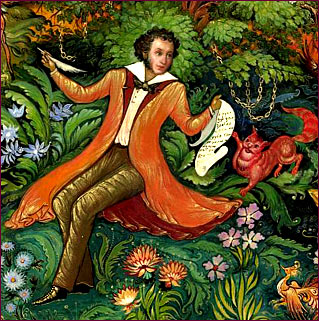
Back when I was in undergrad at Scripps, my thesis involved the relationship between poets and painters. Later, at grad school at The New School, I continued to study the way visual and literary artists influenced each other other and collaborated with one another. It’s endlessly fascinating and much more broad than the time periods of the ’40s, ’50s, and ’60s that I tend to focus on. Burnside Writers Collective just published a survey I did that shows painters honoring poets throughout the ages called “Painters in Praise of Poets.”
Jack Kerouac’s parents were French Canadian, and he described some fantastic meals in The Town and the City. While he was on road trips though, he barely had enough money to buy food sometimes.
Saveur magazine created a springtime menu for if you happen to find yourself roadtripping through France … or just dreaming of being there!
The menu includes:
Get the dinner party recipe here.
What’s your dream menu for a road trip along France’s famous Route 7?
“If you wish to be a writer, write.”
~ Epictetus

Huffington Post columnist and Burnside Writers Collective colleague Emily Timbol invited me to join a blog hop organized by writer Kirsten Oliphant of the wonderfully titled blog I Still Hate Pickles. You may remember that I participated in The Next Big Thing Blog Hop last year. I kind of feel like they’re the chain letters of the blog world and am infinitely curious who’s in my six degrees of separation.
Kirsten says in her “about me” section on her blog that she doesn’t like rules, so it should come as no surprise that she gave me and the other blog hoppers some general guidelines but told us we didn’t have to follow any set format or answer every question. Since I’m one of those creative types that tends to actually like rules (blame the editor side of my brain), I am taking a literal approach to the blog hop and answering her questions one by one.
What makes you (or makes a person) a writer?
A while back there was a funny meme going around called “What People Think Writers Do,” which shows just how relevant it is to discuss what makes a person a writer. There are all sorts of writers—some are political journalists, some write children’s books, some have their books turned into films, some are hobbyists. I don’t think it’s fair to place absolute judgment on who qualifies as a writer. There are many poets and fiction writers who only became famous late in life or even after death. Is a little girl writing in a diary a writer? What if I tell you her name is Anne Frank? Is a doctor who writes poetry on the side a writer? What if his name is William Carlos Williams? Okay, but what if that doctor is a career oncologist who writes nonfiction about cancer? Does it make a difference if his name is Siddhartha Mukherjee and he won a Pulitzer Prize for The Emperor of Maladies? Even if he never writes another book again? Is a blogger a writer? Is a grant writer a writer? Is someone a writer just because they have to write emails at work? Is there a difference between being a writer and writing? I wouldn’t say that whether someone is published or not or whether someone earns money or not means they are or are not a writer, but I would suggest that being a writer, in the sense of it meaning more than someone who occasionally writes their name on a check or writes a grocery list, means being intentional. This could mean being intention in carving out time for writing or being intentional in the selection of words, but not necessarily so: William S. Burroughs, for instance, used a cut-up technique that displaced authorial syntax yet he is still considered a writer.
So do I have the right to call myself a writer? Well, my name has appeared on book covers across the country and the New Yorker and the Paris Review have mentioned my writing. Then again, I don’t live off my writing—I didn’t even make a thousand dollars off my writing last year—and most people have never heard of me. I call myself a writer because even when I’m not writing I am thinking about writing.
Why is it sometimes hard to fess up to being a writer?
There are two big reasons why I sometimes have a difficult time admitting I’m a writer. The first is that when I introduce myself as a writer to people, they automatically ask who my publisher is—and I mean even people who aren’t in the industry suddenly want to know who the gatekeepers who let me through are or want some sort of proof that validates me as more than just the (in their mind) dreaded hobbyist. I feel like it’s like saying I’m a woman, and then someone asking who my gynecologist is. For the record, Barnes & Noble and HarperCollins Publishers have published books containing my writing. The truth, though, is that I sometimes don’t feel comfortable confessing to being a writer because I haven’t written, or published, a full-length book by myself—yet.
The second reason I don’t always like confessing that I’m a writer is because I am an editor. I personally feel that these two callings work well together, but I have noticed that people in publishing houses tend to think that the only reason I am an editor is because I’m trying to get published. I wish I was that savvy! The truth is that I began a career in book publishing because I love working with words. When I was starting out as a proofreader, the idea of being an author seemed like some far-off imagery dream, like being an astronaut. I always had a need to write, and even back then wrote for various publications, but I wasn’t diligently working on my own book. I really love working at a publishing house, seeing a book go from concept to finished product. I love working with authors and helping them achieve their dreams. From my experience, there are a lot of people in the industry who are editors and publishers because they love books and not because they themselves want to be writers. I just happen to be both.
How does writing affect your identity or otherwise impact your life?
I tend to view my experiences through the lens of being a writer. When I go to an art gallery, I automatically think that I have to write about the art I saw. When there’s a particularly momentous current event, I feel the need to write it down in my diary. It’s not just a matter of mining life for stories. I process information by writing. I often joke that I don’t really know what I think about something until I write about it.
Being a memoirist has helped me understand my identity beyond being a writer. Agents and editors tell writers that their main characters should never be a writer. But what do you do if you’re a memoirist and your main character is you, a writer? You dig deeper, you don’t allow your writerly self to speak for who you are. When you can’t rely on that shorthand of clichés about being a writer, that fancy wordwork that hides your true identity, you’re left with just yourself. Writing doesn’t just allow me to be myself—it forces me to be myself.
Want to join the blog hop? Answer the questions however you see fit on your own blog and post a link below as well as link to Kirsten’s post.

My art post “A Time to Weep” went up on Burnside yesterday.
The photo above is of a statue of Mary, the mother of Jesus. Catholics refer to her as Our Lady of Lourdes because of the apparition Saint Bernadette had of her in Lourdes, France.
Jack Kerouac fans may be interested in my Church Hopping column on the Grotto of Our Lady of Lourdes.
Stephanie Nikolopoulos is a writer, editor, writing teacher, and speaker based in New York City.
She is the coauthor, with Paul Maher Jr., of "Burning Furiously Beautiful: The True Story of Jack Kerouac's 'On the Road.'"
You can email her at stephanie_701 {@} yahoo.com


 Stephanie Nikolopoulos