Tag Archives: Beat Generation

Save the Date! I’m reading at Sidewalk Cafe on August 12

1 Aug

Image via the event’s Facebook invitation

Poet RA Araya invited me to read from Burning Furiously Beautiful: The True Story of Jack Kerouac’s On the Road, the book I’m coauthoring with esteemed biographer Paul Maher Jr.  It’s going to be an AWESOME event!  I’m so honored to have been invited to read as part of R’s birthday jam.

Get a load of this line up:::

RA’s Music Poetry Jam Celebration… FREE ADMISSION Sunday August 12th 5PM-9PM

Featuring:
Cabaret singer Marissa Mulder and pianist composer Mr Bill Sefiro

… Foamola to perform

Opera gospel singer Virdell Williams

Tango singer Steve

Poets Patricia Spears Jones, Sparrow, Puma Perl, Kate Levin, Sarah Sarai, birthday-oh-boy RA “R!” Araya and the German poetry of Hillary Keel

Stephanie Nikolopoulos will read, as the f-b-p band plays, from her upcoming co-authored biography about Jack Kerouac: Burning Furiously Beautiful

RA’s Flashbackpuppy band featuring bassist singer Jon Martinez and guitarist singer composer Peter Becket

With poet Mia Hansford via telephone

MORE PERFORMERS TO BE ADDED AND YET CONFIRMED

Plus invited performers from the audience

Free Admission, one drink minimum

http://www.sidewalkny.com/

It’s my b-day celebration… With artists friends at a nice hip restaurant bar with a stage in the back room, free admission with a one drink or coffee minimum… ’tis to be a sweet four hour event, come and go and come back for more on a Sunday that’s surely be filled with fine seasoned performers… Open-mic with band backing yer poetry or and music… Don’t bring a present, bring a poem 🙂 -R!

Seriously, seriously excited about reading while Flashbackpuppy plays and hearing all the other amazing poets and performers.  This also will be my debut reading from Burning Furiously Beautiful.

Road Trip Writing: On the Road and “Human Snowball”

26 Jul

Many summers ago, a couple of poets and I dragged some rickety chairs outside of the Bowery Poetry Club and sat in a circle, chatting about our writing, our day jobs, and life, as people passed by, sometimes stopping to talk to us. One of the girls in the group worked at a publishing house, like I did, and she offered to send us some of the books everyone in her office was buzzing about. About a week later, the package arrived, and I excitedly opened it. It’s been too many years to recall all that was in it, but I do remember it contained a book by Philipppa Gregory, which I in turn gave to another coworker because I have little patience for historical novels about the Tudor period—although I later saw her The Other Boleyn Girl on an airplane and enjoyed it—and Found.

Found started as a magazine that showcased notes, lists, drawings, and other miscellanea that readers found and sent in to the editors. In April 2004, they compiled the best of the best from the magazine and published the book Found: The Best Lost, Tossed, and Forgotten Items from Around the World. Having the book upped my coolness factor among the skinny hipster set I was hanging with at the time, and I began dating one of the guys. When Found’s founder, Davy Rothbart, published a short story collection called The Lone Surfer of Montana, Kansas, in 2005, I gave it to the guy I was dating.

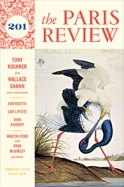
I never read the book myself, but recently I read one of Rothbart’s short stories in the summer 2012 issue of The Paris Review, and it made me wonder if Rothbart might be my generation’s Jack Kerouac. While Rothbart lacks Kerouac’s poetry, they share an ear for dialogue, a captivating retelling of riding in buses and cars, an obsession with music, and an awkwardness with girls. In the short nonfiction story “Human Snowball,” Rothbart takes a Greyhound from Detroit to Buffalo to see a girl who isn’t quite his girlfriend yet or maybe ever and ends up in a carful of eccentric characters, including an ancient black man and a Neal Cassady-esque car thief. It may not have the sensory details that On the Road has, but “Human Snowball” captures characters with such honest and real details and dialogue that you feel like you know them. They’re beat characters. A little rough-around-the-edges, but sensitive and full of life.

In a bit of a Kerouac connection, actor Steve Buscemi, who stars in the film adaptation of On the Road, optioned the rights for Rothbart’s The Lone Surfer of Montana, Kansas. Rothbart himself is a chronic roadtripper. He’s traveled the country and toured with the punk rock band Rise Against, creating the documentary How We Survive for the dvd Generation Lost as well as the documetnary Another Station: Another Mile.

Parallel Generations

19 Jul

Why is Hollywood taking an interest in the Lost Generation and the Beat Generation?  Are there parallels between the generations of the past and today’s generations?  Is history cyclical?

From a historic standpoint, it makes sense that today’s generations are looking back at the Lost Generation and the Beat Generation.  Like the Lost Generation, the current generation has experienced war.  Although the Lost Generation predates the Great Depression by a few years, novels such as The Great Gatsby have much to say about the disparity of wealth, a topic that this generation has dealt with during the Great Recession.  Part of the seedy wealth distribution of the ‘20s had to do with bootlegging.  Prohibition may not be something today’s candidates have on the table, but there’s a definite right-wing conservatism bent influencing culture today.

The Beat Generation writers were those who were born around the time of the Great Depression and came of age during World War II.  Kerouac and John Clellon Holmes actually were thinking of the Lost Generation when they came up with the idea that they were the Beat Generation.  The obvious parallels between the two generations being the world wars.  While the Lost Generation was going into the Great Depression, the Beat Generation was coming out of it, and so while the Lost Generation was more about decadence the Beat Generation was more about simplicity.  Perhaps, then, today’s older generation is looking toward the Lost Generation and the younger generation looking towards the Beat Generation for confirmation on the way we live our lives.

After all, generations have followed suit in this pattern of economy and war since these generations.  The Baby Boomers were all about the money, and then Generation X was the slacker generation.

Since then we’ve seen Generation Y, also known as the Millennials or Generation Next, who are often thought of as privileged Trophy Kids.  These are the eighties babies (give or take) that are now in their twenties, a few even in their thirties.

Generations X and Y heard Reality Bites, My So-Called Life, and Fight Club tell us our great war was within ourselves.  –And then the terrorist attacks took place on 9/11.  It was around that time that Generation Y turned to indie music, the locavore movement, and reviving arts and crafts.

After that came Generation Z, or Generation I, the kids born in the ‘90s, for whom the Internet, the War on Terror, and the Great Recession are a way of life.  Generations Y and Z are the i-generation, each having their own personal computers, finding fame on blogs and in social media, the generation that is connected and disconnected.  They began looking back at Generation X, wearing flannel.  Miley Cyrus was photographed wearing a Nirvana t-shirt.

The Pew Research Center has a fascinating report that charts the different Generations’ attitudes toward politics, religion, immigration, marriage, and more.

Technology is developing at a faster and faster rate, and with it, generations are shortening and multiplying.  When you think about it, iphones models are even called by their generation, as in the second generation iphone, acknowledging how much generations are defined by technology, as well as money and politics.  Therefore, it’s easy to see how certain generations blend together, which may also be a result, as the Pew Research Center data seems to suggest, of the delayed adulthood.

What generation do you identify with?

should i read on the road

13 Jul

Someone found my blog by typing in

“should i read on the road”

I hope they found the correct answer.

From the Lost Generation to the Beat Generation: Hollywood’s Obsession

12 Jul


With Hemingway and Gellhorn currently on HBO and a remake of The Great Gatsby heading to theatres this Christmas, The Observer’s Daniel D’Addario ponders if we’re experiencing a “Lost Generation Boom.”

The Lost Generation refers to the writers during the World War I era, many of whom became expatriates.  The Lost Generation writers include F. Scott Fitzgerald, T. S. Eliot, Gertrude Stein, Ernest Hemingway, and John Dos Passos, among others.  Hemingway popularized the term in A Moveable Feast, in which he quoted Stein as telling him a story about a man who said, “That’s what you all are … all of you young people who served in the war. You are a lost generation.”

D’Addario also references last summer’s Midnight in Paris, but in some regard, we’ve been experiencing the “boom” for quite some time now … at least in the cocktail scene.  A few years ago, speakeasy-type bars became all the rage here in New York.  Dimly lit lounges served up spiked punches in tea cups.  There are also Jazz Age parties on Governor’s Island, where everyone gets all dolled up in fantastic flapper dresses and Sacque suits.  And the Oak Room—which in the ‘20s was Algonquin’s Pergola Room—just reopened.

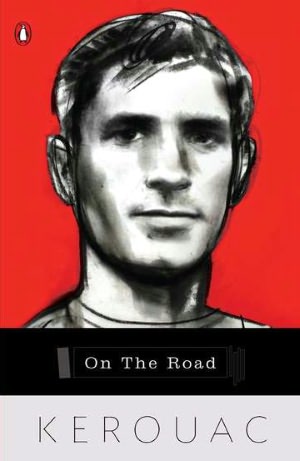
However, Hollywood isn’t only obsessed with the Lost Generation.  The Beat Generation, which wasn’t popular for a long time, is beginning to see a revival.  On the Road, based on Beat writer Jack Kerouac’s novel, just premiered at Cannes Film Festival in May and will be released Stateside sometime later this year.  Next year, Kill Your Darlings, about a murder involving Kerouac, William S. Burroughs, and others associated with the Beat Generation, will be released.  In 2010, Howl, based on Allen Ginsberg’s poem and the trial that followed its publication, came out.  These aren’t small movies by any means.  Howl starred it-boy James Franco, Kill Your Darlings will star Daniel Radcliffe, and much has been made of On the Road starring Kristen Stewart.

Perhaps we’re trying to figure out our own generation by looking at those in the past.

Your Home Can Smell Like Big Sur

9 Jul

Busy poet Lawrence Ferlinghetti, who is still active at ninety-three years old, moved out to San Francisco and founded City Lights in 1953.  More than just the independent bookstore of Beat pilgrimages, City Lights is a book publisher, and in 1956, Ferlinghetti was arrested on obscenity charges because he had published and sold Allen Ginsberg’s Howl.  He was later found not guilty of a crime.

The year after Ginsberg and Ferlinghetti made the papers, Jack Kerouac finally found fame with On the Road.  The fame was overwhelming, though.  Talk-show hosts invited the naturally shy author on their show.  Wanderlust kids, winos, and dogged readers showed up unannounced at his home.  Fame took a toll on his mind, body, soul.

Ferlinghetti had a cabin, a refuge, out in the wilderness of Big Sur.  He could escape the hustle and bustle of San Francisco for respite along the coast of central California.  After the fame wore him down, Kerouac escaped there too, living for a brief time in Ferlinghetti’s cabin in the woods.  The result of this experience is the 1962 novel Big Sur.

Juniper Ridge now has a room spray called Big Sur.  According to their website, it smells of “wild ginger, burnt honey, salt, damp ground.”  The ingredients are plucked from the deserts and mountains of the West, and 10% of the $20 spray bottle goes back to protecting western wilderness.  They also have a Big Sur soap, essential oil, and sachet.  For $50 you can give the gift of Big Sur, which includes the items already mentioned, plus wild huckleberry jam (perhaps reminiscent of Neal Cassady, whom some have said is Huckleberry Finn incarnate).  The gift comes gift wrapped with real pine cones!  And, like the others, 10% of the profit goes to protecting wilderness.

Hipsters Hate Driving

3 Jul

I knew I was getting old the day I saw a car commercial where the driver was clearly younger than I am.

So here’s an interesting bit of news: Generation Y doesn’t like to drive. According to Reuter’s “America’s Generation Y not driven to drive,” the Millennials think driving is more of a hassle than it’s worth.  A California think tank analyst, Tony Dudzik says instead of a driver’s license, a cell phone is the new rite of passage for young adults.

The article points to a few different reasons why Generation Y may be less interested in driving:

  • Smart phones make it easier to know public transportation schedules
  • More Gen-Yers are riding bikes
  • People are more concerned about saving the planet
  • Car-sharing services are making it easier not to have to own a car

From a cultural perspective, this makes total sense.  Gen Y is the hipster culture.  The kids in Williamsburg who listen to low-fi indie music on their hi-tech iphone, knit water-bottle cozies that they sell on etsy, ride their bicycles to work, buy their clothes from Buffalo Exchange, spend their weekends at the food coop, brew their own craft beer, and vlog on YouTube. If they drive, they drive hybrids. Because they’re all about the i-this and the i-that, they seek out community more intentionally. Who needs a car, if your friend or parents (they also happen to be the Peter Pan Generation, living at home after college) have one?

I personally fall somewhere between Gen X and Gen Y, making me part of Generation Flux.  Generation X refers to people born between the early 1960s and 1980s, while Generation Y refers those born between the late 1970s and the 2000s.  I know when I was growing up, there were a lot of cultural arts programs in the school about saving the rainforest and saving the whales, we studied acid rain and the ozone layer, and we joined KAP: Kids Against Pollution.  In drivers ed, they pretty much terrified you with statistics, photos, and videos that suggested it was likely you were going to die if you got behind the wheel. The shows that were popular when I was a teen were Mad About You, Seinfeld, Friends, Will & Grace, and Sex and the City, all of which were set in New York City.  Other popular shows like Ally McBeal, Frasier, and ER were also set in cities. Our stars didn’t drive.  They took cabs and rode the subway. Is it any surprise that we moved into the city and followed suit?

So will a generation who grew up watching Paris Hilton, Lindsey Lohan, and Snooki getting arrested for driving under the influence and/or crashing their cars, a generation coming of age during the Great Recession, a generation who doesn’t care about driving, embrace the 1950s road trip adventure of On the Road when the movie comes out and the novel by Jack Kerouac it is based on?  Well, here’s another interesting twist: Jack Kerouac didn’t like driving either. If you read his novel, you’ll see that most of the time, the character based on him in the novel is on the bus or in the passenger seat.

How do you feel like the era you grew up in influenced you?

Now you can “like” Burning Furiously Beautiful on Facebook!

Mixtape: Music and Poetry for On the Road

28 Jun

photo via Aunt13’s 8tracks mix

Aunt13 over on 8tracks made a mix called Music and Poetry for On the RoadIt’s inspired by Jack Kerouac’s On the Road and in the blurb she mentions Burning Furiously Beautiful!  How cool is that?!

I have the coolest friends!  I am going to be listening to this while I write, for sure, and daydreaming of hitting the road.  Aunt13 has over 300 mixes, so be sure to show her some love.

You may recall I posted a while back the soundtrack for the On the Road film.  It was just announced yesterday that the film will be making its US debut in late fall.

J. Haeske also made a mix for the soundtrack he’d envision for the film.  Teaser!  I have an interview with him about his new book on Kerouac lined up for you, so stay tuned.

What songs would you put on a mix for On the Road?

Also, I took my own advice about social media, and created a Facebook page for Burning Furiously Beautiful: The True Story of Jack Kerouac’s On the Road, the book I’m co-authoring with Paul Maher Jr.  Be sure to “like” the book on Facebook!  We’ll be posting news about the book, information from Across the Underwood, updates on the film, and so much more!

I’m Mentioned in Sojourners

11 Jun

Oh my gosh!  I forgot to mention back in April that I was mentioned in Sojourners!!  Such an honor.

My Burnside Writers Collective colleague Larry Shallenberger, whom I attended the Festival of Faith and Writing with, wrote the article “On the Need to Start an Ole Boys’ Club For Writers” about strong women literary voices, and there was my name alongside Kim Gottschild, Rachel Held-Evans, Sarah Thebarge, Karen Spears Zacharias, Jo Hilder, and Susan Isaacs.  I’m so fortunate to be part of a collective that has strong literary voices — both male and female — and that is an incredible support network.

In the article, Larry mentions my work in writing about Jack Kerouac.  It’s so interesting that he specifically mentioned this, as opposed to my visual arts writing for Burnside, because the Beat Generation has often been criticized for not being more open to women’s voices.  Furthermore, so many women have told me they don’t enjoy reading Kerouac because of his hyper-masculinity.

Larry blogs about things like, oh, “God Talk and the Stenciling on an Atomic Bomb” and “The Personality Bending Power of Story.”

Goodreads Page for Burning Furiously Beautiful

7 Jun

We’re on Goodreads!  Now you can add Burning Furiously Beautiful as a to-read on Goodreads.