Tag Archives: Beat Generation

Remembering John Clellon Holmes

30 Mar

brother

Earlier this month we celebrated what would’ve been John Clellon Holmes’ 88th birthday. Today marks the anniversary of his passing from cancer at the age of 62 in 1988.

Holmes’ first published book was Go, a fantastic novel about the early Beat scene featuring the same cast of characters that Kerouac wrote about in On the Road. In fact, Kerouac and Holmes remained life-long friends, after initially meeting on their way to a party in 1948.

Somewhat recently — 2010 — Ann Charters and Samuel Charters edited Brother-Souls: John Clellon Holmes, Jack Kerouac, and The Beat Generation. Here’s the write up on Barnes & Noble:

John Clellon Holmes met Jack Kerouac on a hot New York City weekend in 1948, and until the end of Kerouac’s life they were–in Holmes’s words–“Brother Souls.” Both were neophyte novelists, hungry for literary fame but just as hungry to find a new way of responding to their experiences in a postwar American society that for them had lost its direction. Late one night as they sat talking, Kerouac spontaneously created the term “Beat Generation” to describe this new attitude they felt stirring around them. Brother Souls is the remarkable chronicle of this cornerstone friendship and the life of John Clellon Holmes.

From 1948 to 1951, when Kerouac’s wanderings took him back to New York, he and Holmes met almost daily. Struggling to find a form for the novel he intended to write, Kerouac climbed the stairs to the apartment in midtown Manhattan where Holmes lived with his wife to read the pages of Holmes’s manuscript for the novel Go as they left the typewriter. With the pages of Holmes’s final chapter still in his mind, he was at last able to crack his own writing dilemma. In a burst of creation in April 1951 he drew all the materials he had been gathering into the scroll manuscript of On the Road.

Biographer Ann Charters was close to John Clellon Holmes for more than a decade. At his death in 1988 she was one of a handful of scholars allowed access to the voluminous archive of letters, journals, and manuscripts Holmes had been keeping for twenty-five years. In that mass of material waited an untold story. These two ambitious writers, Holmes and Kerouac, shared days and nights arguing over what writing should be, wandering from one explosive party to the next, and hanging on the new sounds of bebop. Through the pages of Holmes’s journals, often written the morning after the events they recount, Charters discovered and mined an unparalleled trove describing the seminal figures of the Beat Generation: Holmes, Kerouac, Neal Cassady, Allen Ginsberg, William Burroughs, Gregory Corso, and their friends and lovers.

In addition to reading any of Holmes’ works, Brother-Souls provides a portrait of an author whose work deserves more recognition.

Happy 84th Birthday, Gregory Corso!

26 Mar

corso-gasoline

Gregory Nunzio Corso was born on March 26, 1930, in New York City. He would’ve been 84 today.

He’s one of my favorite poets, and to celebrate his wit and warmth, here is a link to his poem “I Am 25.”

You may also like:::

Writing Wednesday: Oxford Comma for the Win!

26 Mar

,


Remember a while back when I posted about the story about Kerouac and Burroughs getting into a duel over the Oxford comma—or more so my reaction to that story?

Well, I just came across two recent articles fighting for this little bit of punctuation.

For up this Buzzfeed article that argues—quite humorously and convincingly—about the necessity of the Oxford comma.

Second, this Tin House article provides historical context to the Oxford Style Guide.

Yes, I’m a firm believer in the Oxford comma—or as it was called when I did my editing certification at NYU, the series comma. The Beats may be all about “open punctuation,” meaning very little punctuation, but I’m old school. I like a heavy dose of commas.


How do you feel about the Oxford or series comma? Am I a total nerd for even thinking about this??

White Trash Uncut: The Resource Magazine Interview with Christopher Makos

20 Mar

white


Around the same time that Jack Kerouac packed his rucksack and went on the road, Christopher Makos was born into a Greek American family in Kerouac’s hometown. In the June 2013 issue of That’s, Ned Kelly reported:

Christopher Makos was born in 1948 in Lowell, Massachusetts, the birthplace of pioneering Beat Generation writer Jack Kerouac; a heritage he was oblivious of in his youth. “Growing up in Lowell, I wasn’t aware of anything, except how to leave,” he says. “How to grow up fast and figure out how to leave.”

Sounds pretty Beat to me!

Makos went on to live in California and then, after high school, moved to New York and, later, Paris. It was there that he became an apprentice to the esteemed Man Ray. Back in New York City, he photographed the scene on the Lower East Side—Beat writer William S. Burroughs, the Ramones, Patti Smith, David Bowie, Lou Reed, and Debbie Harry are just a few of the icons who ended up in his book White Trash. Though it was the ’70s by this point, it’s got it’s Beat Generation connections. (If you’re interested in reading up more on this, I’d recommend Victor Bockris’ Beat Punks.)

Makos became friends with Andy Warhol, who called him the “most modern photographer in America.”

The latest incarnation of this seminal punk photography book, White Trash Uncut, is coming out in May 2014 (published by Glitterati Incorporated), and Resource Magazine’s Aria Isberto caught up with the Greek-American photographer to talk about the underground scene, what it takes to get published, and what kind of camera he uses. You can read it here.

Interested in my writing for Resource Magazine? Check out:::

Read more of my Lowell posts here. Among my favorites are:::

Read about other Greek Americans I’ve written about on my blog. Here’s a few selections:::

Which Greek American do you want to see me write about next?!

I’m Soooooo Pretentious

18 Mar

jurassic


I told a boy I’m reading Proust, and he told me that sounds pretentious.

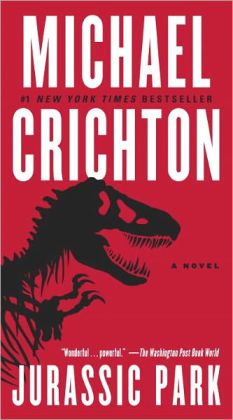
He suggested I check out Michael Crichton. …As in the author who writes about dinosaurs.

I have to laugh at the suggestion of sounding pretentious for reading Marcel Proust, though. I’m usually called immature and not well read for reading Jack Kerouac. The irony is that my inspiration for reading Proust is Kerouac. David Amram had actually mentioned to me how he and Jack read Proust’s A Remembrance of Things Past, and when Walter Salles and Ann Charters spoke after a screening of the film adaptation of On the Road they talked about the role of Proust (Swann’s Way is seen a few times onscreen). Paul and I decided to read Swann’s Way, and each got different translations, which I think will give us a well-rounded perspective.

I just can’t win! Either I’m pretentious or I’m banal. Haha, good thing I’ve never cared what people thought of my reading habits.

Happy 88th Birthday to the Quiet Beat!

12 Mar

Go

John Clellon Holmes is the friend Jack Kerouac was talking to when he coined the phrase “Beat Generation.” Holmes actually found success more quickly than Kerouac did in writing about the scene when he published Go in 1952. The writing style is vastly different than Kerouac’s, as it takes a much more traditional approach to novel writing, but it is fantastic! Go is one of my favorite books of the so-called Beat canon. Holmes does a fantastic job bringing all the familiar characters — Gene Pasternak as Kerouac, Hart Kennedy as Neal Cassady, David Stofsky as Allen Ginsberg, Will Dennison as William S. Burroughs, and so forth — to life as he explores hipsters partying it up in New York City. Dare I say his descriptions of the 1940s party scene are more memorable to me than Kerouac’s?!

Holmes was born in Holyoke, Massachusetts, on this day in 1926. Celebrate his life and work by reading Go!


Happy 92nd Birthday, Jack Kerouac!

12 Mar

OLYMPUS DIGITAL CAMERAphoto I took two years ago at Kerouac’s birth home when I attended Lowell Celebrates Kerouac

On a Sunday in winter, Jean-Louis Kerouac was born to Leo and Gabrielle Kerouac in Lowell, Massachusetts. He was the baby of the family, the youngest of three, and his French-speaking family called him Ti Jean, or Little John.

It was March 12, 1922. Warren G. Harding, a Republican, was president and had just introduced radio to the White House the month before. Women had received the right to vote two years prior to that, but even the month before Kerouac was born the Nineteenth Amendment was still being challenged in court — a fact important to understanding the gender politics in which Kerouac grew up.

James Joyce’s Ulysses was first published that year by Sylvia Beach in Paris, and the experimental novel would impact Kerouac’s own writing. Kerouac himself would grow up to become the voice of his generation, the Beat Generation, a generation that had been born around the time of the Great Depression, that had seen the destruction of World War II and lost many friends and loved ones, that had faced a repressive government. Kerouac remains a startlingly refreshing voice even today, reminding readers to observe the sparkles in the sidewalk, to embrace life over possessions, to blaze their own paths.

KerouacCakephoto I took at Kerouac’s birthday bash last year at the Northport Historical Society

Happy 89th Birthday to Lu the Glue!

1 Mar

“Lu was the glue,” said Allen Ginsberg, talking about how integral Lucien Carr was to connecting the people who would go on to become collectively known as the Beat Generation. Carr and Ginsberg met when Ginsberg came knocking on his dorm door at Columbia (well, technically they were attending Columbia but lodged at Union Theological Seminary) to discover who was playing the delightful music of Brahms. Carr was also friends with a fun-loving student named Edie Parker who introduced him to her boyfriend Jack Kerouac. Meanwhile, around that same time, Carr’s stalker, David Kammerer, and William S. Burroughs, whose family Carr had known back in their hometown of St. Louis, arrived in New York City. A charismatic wit, Carr drew this circle together and came up with the idea of a New Vision that embodied “naked self-expression,” a “derangement of the senses,” and the doing away with conventional morality” when it came to art.

Lucien Carr was born on this day in 1925 in New York City.

Clip: Scripps Magazine Features “Burning Furiously Beautiful”

27 Feb

2012-header-scripps-college

If you flip — or scroll! — to page 40 of Scripps Magazine you’ll see me featured in their regular column of alumnae authors, “ManuScripps.”

The column talks about how Scripps, the women’s college of the Claremont Colleges, fostered my education in the Beat Generation. …Which just goes to show you that feminists can like the Beats!

Special thanks to the Scripps Magazine and the Scripps College Alumnae Association for their support of my writing.

And if you missed it, here’s a post on the New York chapter of the Scripps book club reading Burning Furiously Beautiful: The True Story of Jack Kerouac’s “On the Road.”

UCLA Prof Blames “Beatniks” for Kristen Stewart’s Poetry

12 Feb

mc

Kristen Stewart’s poetry has been blowing up the internet. I read a bunch of snarky comments about it on facebook last night, and this afternoon on my lunch break I discovered via Poets & Writers that the venerable Poetry Foundation gave it attention on their blog, Harriet.

I wasn’t going to comment on it, but then I read, via The Poetry Foundation, what Brian Kim Stefans had to say about it:

My own initial post went like this: “The second stanza isn’t horrible. Worst part of the poem are those awful adjectives! Stupid Beats.” What I meant by this was that the words “digital” (applied to moonlight), “scrawled” when linked to “neon” (neon is a much overused word by poets who want to sound like Beatniks) and “abrasive” (applied to organ pumps) weren’t working for me….”

What Stefans doesn’t say and what The Poetry Foundation doesn’t say is that Kristen Stewart played the role of Marylou in the film adaptation of Jack Kerouac’s Beat novel On the Road. Part of her training for the film included “Beatnik Boot Camp,” where biographers and Neal Cassady’s son, John Allen Cassady, talked to them about the real-life individuals the novel was based on and the time period. It’s important to state this upfront because the very critique hurled against her work is that it sounds too Beatnik. Whether that’s because her poetry does sound too “Beatnik”—we’ll come back to defining that word in a moment—or whether her association with the Beats fueled criticism of her work is up for debate. Maybe, more than anything, though, the criticism surrounding Stewart’s poetry has less to do with the work itself and more to do with her celebrity persona—which, let’s face it, is similar to how the Beats are reviewed. Even before her poem was revealed, the media has loved to lash out at Stewart.

Actress Amber Tamblyn was also in a Beat-related film—One Fast Move Or I’m Gone: Kerouac’s Big Sur—and has gone on record about being influenced by the Beats. Except Tamblyn blogs for The Poetry Foundations’ Harriet and has published a jazz-inspired poetry chapbook, while Stewart, seven years her junior, revealed her road-trip inspired poem to the women’s glossy Marie Claire. This certainly says something about the difference in the seriousness and literary merit of their work, but it also says something about their celebrity persona and how they are received by the media.

Okay, so now we’re caught up on Stewart. In case Stewart, or you, didn’t know, Stefans makes his authority known at the outset of his open letter:

I’m a poet and professor at UCLA, and thought you might be interested in what some of my poet friends (most of whom also teach and are otherwise very accomplished) and I have been writing on Facebook about your recent poem published in Marie Claire.

I take it Professor Stefans is not a fan of the Beat poetry. That’s fine; to each their own. Stefans is actually quite an accomplished poet, and I particularly respect his postmodern innovations in digital poetry as he bridges the gap between new media and literature. From his UCLA faculty page:

My interests in electronic writing stem directly out of my work as a poet, though it has branched off into any number of art genres that have fallen under the persuasion of digital technology, such as photography, film/video and book publishing. Research interest include creating a “bridge” between the concepts and traditions of various 20th-century avant-gardes — Language writing, the Oulipo, concrete poetry, conceptual art, Situationism, metafiction, etc. — and the various genres of digital literature, including animated poems, interactive texts, algorithmically-generated and manipulated texts, “nomadic” writing, hacktivism and experimental blogs. Presently working on a series of wall projections called “Scriptors” which will appear as gallery and environmental installations in the coming years.

His research and work in electronic literature suggests his open-mindedness toward new and experimental ideas that may not yet be culturally accepted. I would think then that he’d find Stewart’s use of the word “digital” related to his own interests, but perhaps it wasn’t “working” for the Brown graduate who got his MFA in Electronic Literature because it was too obvious of a connection, the word “digital” sounding contrived or outmoded in today’s ever-changing technical world. I wouldn’t disagree with that assessment. His forward-searching eye may also be why he lays into her for relying on passé Beatnik clichés and the word “Whilst.” Stefans’ critique of Stewart’s poem is fair and balanced. There is validity to his point about “overused words” in poetry and even Beatnik buzz words.

My contention is with Stefans’ comment “Stupid Beats” and the lumping of Beat literature with “people who want to sound like Beatniks.” Yes, I get that this is a flippant response to pop culture that shouldn’t be taken too seriously, however the cultural knowledge of so-called Beatniks is wrought with so much misconception that it makes me uncomfortable to see a humanities professor at a well-known college perpetuate the stereotype.

Here’s a little Beat 101 refresher course:

  • Jack Kerouac coined the term “Beat Generation” during a conversation with fellow novelist John Clellon Holmes, in which they were riffing on the Lost Generation and their own generation.
  • Holmes went on to write “This Is The Beat Generation” for The New York Times Magazine in 1952.
  • Six years later, journalist Herb Caen coined the term “beatnik” in an article for The San Francisco Chronicle. An amalgamation of the word “beat” and “Sputnik,” the word, as conceived during the Cold War, was derogatory.
  • In fact, “The Examiner had a headline the next day about a beatnik murder,” reported the SF Gate. Note that this had nothing to do with David Kammerer or any of the writers associated with the literature of the Beat Generation.
  • In the column in which Caen coined the term “beatnik,” he was eye rolling at how Look magazine was doing yet another photo spread on the San Francisco Beat Generation scene, saying “250 bearded cats and kits were on hand.” So right there we have it that he wasn’t commenting specifically on Kerouac, Holmes, Allen Ginsberg, Gregory Corso, and the specific poets or poetry associated with the Beat Generation. He was talking about the scene, man.

Let me put this into more current context. Caen used the word “beatniks” the same way people today use the term “hipster.” Think of the way people in the 2000s equated the Williamsburg hipster with the eccentric trust-fund kid wearing aviator sunglasses and skinny jeans and making really bad “art.” That’s the equivalent of a “beatnik.” They’re both pop-culture fads that aren’t wholly indicative of the art, literature, and music that loosely inspired these “scenes.”

Consequently, saying Kristen Stewart was writing in the vein of bad beatnik poetry could be a worthwhile critique and even a very interesting one if the critic were to delve into more specific examples like the use of the word “neon” (HTML Giant questions if “neon” is solely beatnik; I apparently already have a tag for “neon” because I used it for light sculptor Stephen Antonakos … was he a beatnik??), discuss the appropriation and disfiguration of Beat ideas and style (Stefans mentions a colleague who posted a response to Stewart’s poem that suggests an evolution of Beat literature: “If it’s ‘beat’, it’s more Bolinas or young Bernadette than hortatory elder beat.” [hyperlinks mine]), and analyze the cultural phenomenon of beatniks.

Saying “Stupid Beats,” though, is akin to saying “Idiot Pre-Raphaelites,” “Dimwitted Transcendentalists,” or “Insipid Oulipo.” It’s negating an entire body of literature that has resounding cultural importance.

You can read Stewart’s poem “My Heart Is A Wiffle Ball/Freedom Pole” on IndieWire’s blog, The Playlist.