Tag Archives: Greece

Writing Wednesday: Building Your Book Before You Even Begin Writing It

5 Sep

David Krell’s article “From Book to . . . Blog? Inspiration for the Aspiring Nonfiction Author,” published in Publishing Perspectives is jam-packed with great advice for nonfiction writers.  To sum it up succinctly: start garnering interest in your nonfiction book before you even publish it.

Krell offers five tips on how to build your author platform before you’ve even published books.  He advises that you can score interviews and forewords for your book as well as lectures at conferences before you’ve even finished writing your book.  This, in turn, will improve your chances of writing a well-informed book, obtaining a reputable agent, and selling your book successfully because you’ll have taken the time to build up your reputation as an authority on the subject and gotten other authorities on the subject to contribute to your book.  You should read his tips on Publishing Perspectives for more insight on how to begin building your platform and become a successful author now, even before you’ve written a book.

In relation to Krell’s advice, here are a few questions I think a nonfiction writer should start thinking about as early as possible:

Who is your target audience?

What are the sub-themes of your book?  What are the various angles you can use to market your book?  (Krell’s book is about the Brooklyn Dodgers, but his friend suggests it’s also about urban history.  One of my books is a memoir about growing up Greek American in New Jersey.  It touches on family dynamics, coming-of-age stories, New Jersey, Greece, identity, and the immigrant experience.  Another of the books I’m working on is about Jack Kerouac.  Looking at it through a broader lens, it could appeal to anyone interested in the Beat Generation, the 1940s and 1950s, travelogues, and American history.)

Who would you like to interview?  (Approach them now.)

Who would you like to write your foreword?  (Approach them now.)

Who would you like to blurb your book?  (A blurb is the endorsement on the back of a book.  Approach people now.)

What associations are there for your subject?  (Sign up for the mailing list, get to know its leaders, volunteer to help with an event or to write a guest blog entry.)

What conferences are held on your subject—or on your sub-theme?  (Begin attending, meeting people, speaking.)

What websites are about your subject or sub-theme?  (Sign up for their newsletter, leave comments on their posts, offer to guest blog.)

What books are similar to yours?  (Read them to get ideas.  Also, read the acknowledgements to find out who their agent is.  Begin following the agent’s work to see if you’re interested in signing with them.)

Are there any other questions you would add to the list?

By thinking about these questions now, you’ll have a clearer vision of where you’re headed.  You’ll also be more motivated to continue writing because you’ll have people who are already invested in your success.

Happy writing!

Photos from Reading at Sidewalk Cafe

15 Aug

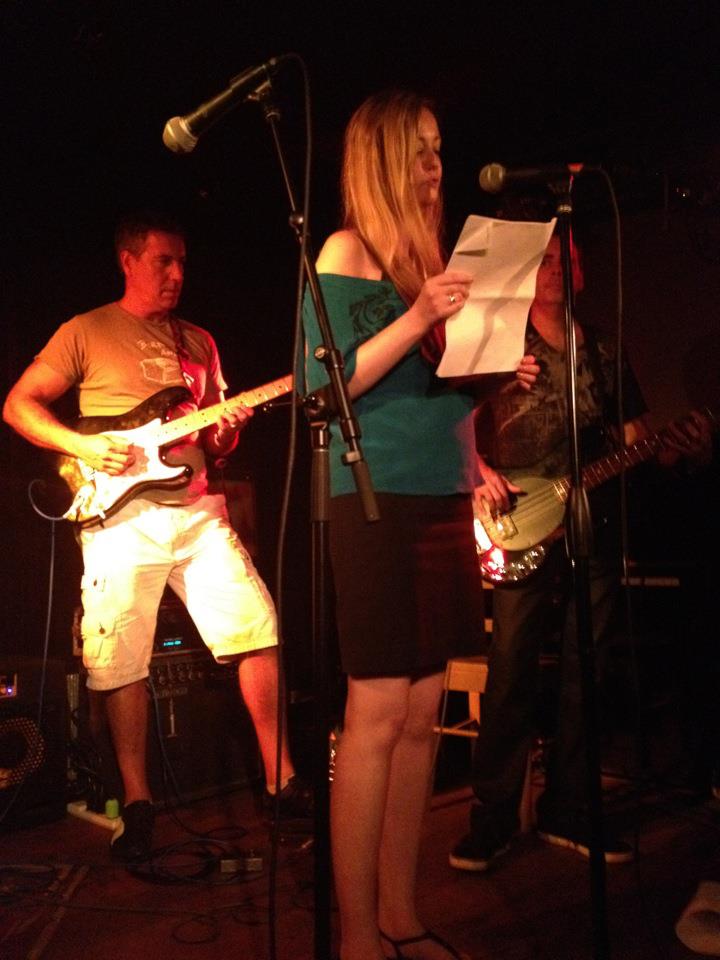
I had so much fun reading at poet RA Araya’s birthday bash at the Sidewalk Cafe this past Sunday!! RA was such a great host and is so encouraging.  There were so many amazingly talented poets and musicians there.  I felt so honored to get to read with them.

I started off reading the beginning of Homer’s The Odyssey in Ancient Greek (bringing awareness to Greece’s cultural heritage as well as the plight of endangered languages) and then read a section from Burning Furiously Beautiful: The True Story of Jack Kerouac’s On the Road, the book that I’m coauthoring with Paul Maher Jr., while the flashbackpuppy band improvised a jazzy tune.

Here are some pictures RA took.


That’s me sitting next to poet Juan Valenzuela.  In the foreground is poet Miguel Algarin, who co-founded the Nuyorican Poets Cafe and knew Jack Kerouac back in the day.

Special thanks to my friends, who came out to support me.

Photographs from the Olympics in Greece

9 Aug


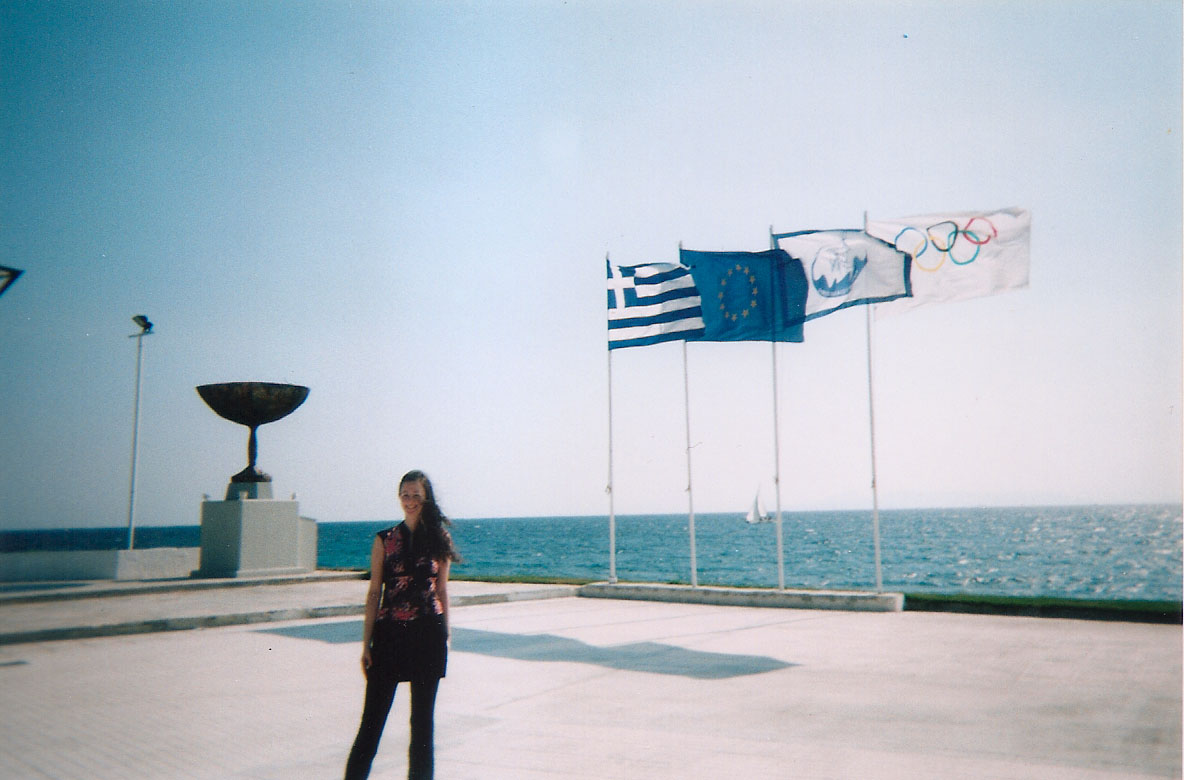
I couldn’t pass up going to the Olympics when they were held in Athens in 2004.  At last, the Olympic Games were back where they began!  The men’s and women’s shot put tournament were even held in Olympia, the original site of the Olympics.  The rest of the games were in Athens, which had been completely revamped and upgraded with insanely gorgeous stadiums.  Unfortunately, because of the slow rate of construction there was a lot of fuss in the media about whether the Greeks could get it done in time.  The condescending attitude seemed kind of ironic, considering the Greeks invented the tradition of the Olympics and preserved the ancient site.  Between that and it being the first Olympics since 9/11, there weren’t as many people there as expected.  It was too bad because the Olympic Village that they created especially for the 2004 Athens Olympics was one of the most gorgeous modern venues I’ve ever had the experience of being in.  My friend and I got great seats to our chosen event — men’s swimming 😉


Have you ever been to the Olympics?  Which sports would you most want to watch in person?


Greece Leading the Pack

2 Jul

So many people I talk to seems to have this idea, driven by the media and not personal experience, that Greeks are lazy and aren’t doing anything innovative.  This is simply not true.

  • Greeks were ranked third in Europe for the number of hours they work in a year, according to a poll surveying 1995-2005.
  • Greek healthcare is amongst the best in the world.  It’s universal.
  • The Greek maritime industry is recognized as incredibly powerful in the world economy.  It’s not as high as it was in the 1970s, but Greek shipping heirs still seem to be attracting the likes of Paris Hilton and an Olsen twin.
  • Greek companies, such as Korres and Apivita, are leading the natural skincare and makeup revolution.
  • Greece is leading animal rights activism by banning the use of animals in circuses.
  • Greeks are often considered the most hospitable people.  It’s no wonder tourism continues to thrive, despite the media’s ploy to scare people away from the country.  Time + Leisure magazine named Santorini “The World’s Best Island” last year.
  • Greece’s Peloponnese region hardly needs to market itself to attract surfers and golfers from around the world.
  • Greek wine is currently having a revival.  Greek wine is very trendy right now in the United States.
  • Greece is home to the longest cable-stayed bridge in Europe.

Greece is working hard to bridge the gap between its rich history and its present.  The country is respecting its past, its traditions, its natural landscape, and its flora and fauna, while simultaneously capitalizing on these strengths.

New Yorker Quips Greeks Invented Tragedy, Not Much Else Lately

15 Jun


I’m getting sick of the way everyone’s always ragging on Greece.  I just read this comment in “Greece Vs. The Rest” in The New Yorker:

Greeks are fond of pointing out that they invented democracy; they invented tragedy, too, and that is what their situation increasingly looks like, whoever wins the election. The problem is that in recent years they haven’t invented much of anything else.

The author clearly thinks he’s being witty, but it is an insensitive and erroneous remark.  We don’t go around mocking other countries that are experiencing crises.  Why is it okay to denigrate Greece?  Is it because, yes, “Greeks are fond of pointing out that they invented democracy,” and therefore come off as braggers?  Or are other countries purely jealous of how much Greece has influenced the world?

Greece in fact is innovating.  Greece is part of the Global Monitoring for Environmental and Security Initiative.  Three years ago, Nanophos SA received first prize for Innovation and Sustainability in the International Exhibition “100% Detail.” Lavrion Technological and Cultural Park is linking culture and technology research. Furthermore, many well-known international companies—such as Coca-Cola, Ericsson, and Motorola—conduct their research and development in Greece.

Sorry, Greece did not invent the ipod.  Let’s remember that much of modern Greece was under oppression.  During World War I, many Greeks were killed, and Greek refugees fled Turkey for Greece, which led to its own economic stresses.  During World War II, Nazis occupied Greece, sending Greek citizens to concentration camps.  From 1946 to 1949, Greece had a civil war, when it rose up against Communism.  And now, even in the years leading up to the economic crisis, the media has lampooned Greece, scaring off tourists and investors.  It’s hard to be creative and inventive when you’re fighting for your life.

What I do agree with is the author’s statement:

An unsustainable burden is being loaded on those sectors of the population who were already paying.

Just like here in the US, where the rich are able to write everything off so as not to pay taxes, there are many people in Greece who are not paying taxes.  Those who do pay their taxes are being overtaxed.  These are the people who are poorer, who are older, who are retired, who are more generous to those in need, who do what is right, who are loyal to their country.

This is why we saw a 77-year-old man shoot himself in the head in Syntagma Square—the Times Square of Athens—back in April.  As the Guardian reported, he shouted, “I’m leaving because I don’t want to pass on my debts.”

It saddens me that the media is not more compassionate towards Greece.  Yes, there are many things that need to change there, but the blame cannot be placed solely on Greece.  The country has suffered many hardships.  There are real people living in Greece who are, yes, experiencing tragedy.  Maybe we need to cling to our heritage to remind us of what we can accomplish and give us some hope for our future.  Maybe instead of lambasting Greece, the foreign media should believe in Greece.  Because you know what?  Greece has overcome many trials and tribulations, and will rise again.

Clip: Coffee and Portraiture and the Associations We Make

27 Dec

Associations are revealing.  This morning, as I was drinking a cup of horrid office coffee, my brain leapt from the specific brand and flavor of coffee my mom drank when I was growing up to a seemingly unrelated bit of biographical information about a photographer I’d researched while working on a blog post on his efforts to Save the Whales.  The photographer is Louie Psihoyos, the film director of The Cove, the Oscar Award-winning feature documentary that uncovers the horrifying mass slaughter of dolphins.  Psihoyos is from the Midwest, as is my mom (he was born in Iowa, my mom in Minnesota), and his immigrant parent came from the Peloponnesus, the same region of Greece my dad grew up in and where both of my parents now live.  That wasn’t the association I made this morning, though.  Instead, I was recalling that I myself had recently taken a photograph of my coffeemaker and a bag of hazelnut Eight O’Clock Coffee, while photographing some other food in my kitchen, and that I always associate hazelnut Eight O’Clock Coffee with my mom.  From there, I remembered I’d recently read about a photographer who’d photographed people with their possessions.  At first I didn’t even remember that the photographer was Psihoyos.  As I started to write the blog post about how I associate coffee with my mom, I kept thinking about the significance of Psihoyos photographing people with their possessions and what the objects we’re associated with impart about our identity.

Read the rest of the article on Burnside Writers Collective.

Oxi Day

28 Oct

No!


Happy Oxi Day!  No matter if you spell it “oxi,” “ohi,” or “ochi,” it is the Greek word for “no.”  On October 28, Greeks celebrate the day they stood up and said “no” to the Italian ultimatum in 1940.

At dawn on October 28, 1940, Emanuele Grazzi, the Italian ambassador in Greece, on orders from dictator Benito Mussolini, demanded that the Greek prime minister Ioannis Metaxas grant Axis forces access to “strategic locations” in Greece.

Metaxas’ response?

Oxi!

The citizens of Greece flocked to the streets, yelling “Oxi!”  It didn’t matter their political affiliation.  They stood united to protect their country.

At 5:30 that morning, the Italian troops stationed in Albania attacked the border of Greece.

And with that, Greece had entered World War II.


***


Today, Greeks are back in the streets.  Never fully recovered from World War II, Greece continues to face economic hardship.  The citizens of Greece are fighting back, they’re saying “no,” to the austerity measures.


***


Sometimes you need to take a stand.  Sometimes you need to say no.

What do you need to say no to today?

Do you need to say no to big business?  No to credit card debt?  No to working overtime … again?  No to another social event?  No to another night in?  No to junk food?  No to Uggs?

Saying no doesn’t make you a bad person.  It’s important to say no to some things so you can say yes to others.

What do you want to say yes to today?

A Greek Bedroom Inspired by Nature

13 Oct

When my dad started building his dream house in Greece, I was in middle school in New Jersey.  It was the early ‘90s, and the Body Shop and Calvin Klein and Kate Moss were ushering in an era of natural beauty.  Simplicity was the backlash against an era of neon and shoulder pads.  I abandoned my hot-pink biker shorts and oversized Hypercolor t-shirts for a more natural beauty aesthetic that seeped its way into my plans for the bedroom I’d have in Greece.

Our new house was being built in an olive grove by the ocean, and I wanted to embrace an organic look for my bedroom.  I wanted to keep the walls and the bedspread as white as the walls of a white-washed Greek church.  I wanted only a few little green leaf accents and bamboo curtains to echo the call of nature.

When I saw This Is Glamorous’ post “Wicker & White and Summer Delights,” it immediately brought me back to the inspiration for my bedroom all those years ago.  Wicker baskets hold fresh, white laundry.  A bowl of pretty starfish brings the ocean inside.  A pretty white sundress looks like the kind I’d find in one of the many shops near Olympia.  There’s even a photograph of waffles, the dessert we often get after dinner in Greece.

Tasty Tuesday: Dinner at Souvlaki GR

6 Sep

My friend Laura, from college, came to Greece with me one summer, so when she and her husband visited me this summer in New York City, I knew just the spot to take them: Souvlaki GR.  My sister and I had passed it one day while wandering the Lower East Side, and I did a double take because it was as if I had seen a mirage of a taverna on a Greek island.  With a stone floor, white-washed walls with blue shutters, and beach umbrellas inside the restaurant, it perfectly captured the laid-back vibe of Greece.  It was perfect for reminiscing about our all-too-long-ago vacation in Crete.

As it turns out, Souvlaki GR started out as a food truck before opening its Lower East Side restaurant.  Those of you who follow me on Facebook know that no matter how trendy food trucks are, I just can’t get onboard with them.  My parents didn’t raise me to eat out of trucks.  That said, I can see why Souvlaki GR would be a popular food truck.  The food and its packaging are the perfect portable meal.  Their restaurant is so cute, though, that I wish they’d stepped it up with the food and offered larger portions more suitable for a sit-down restaurant.

What do you think: should a food truck-turned restaurant keep to its winning menu or should the restaurant offer something more than the truck?

Burlap to Cashmere Drops New Album Today

19 Jul


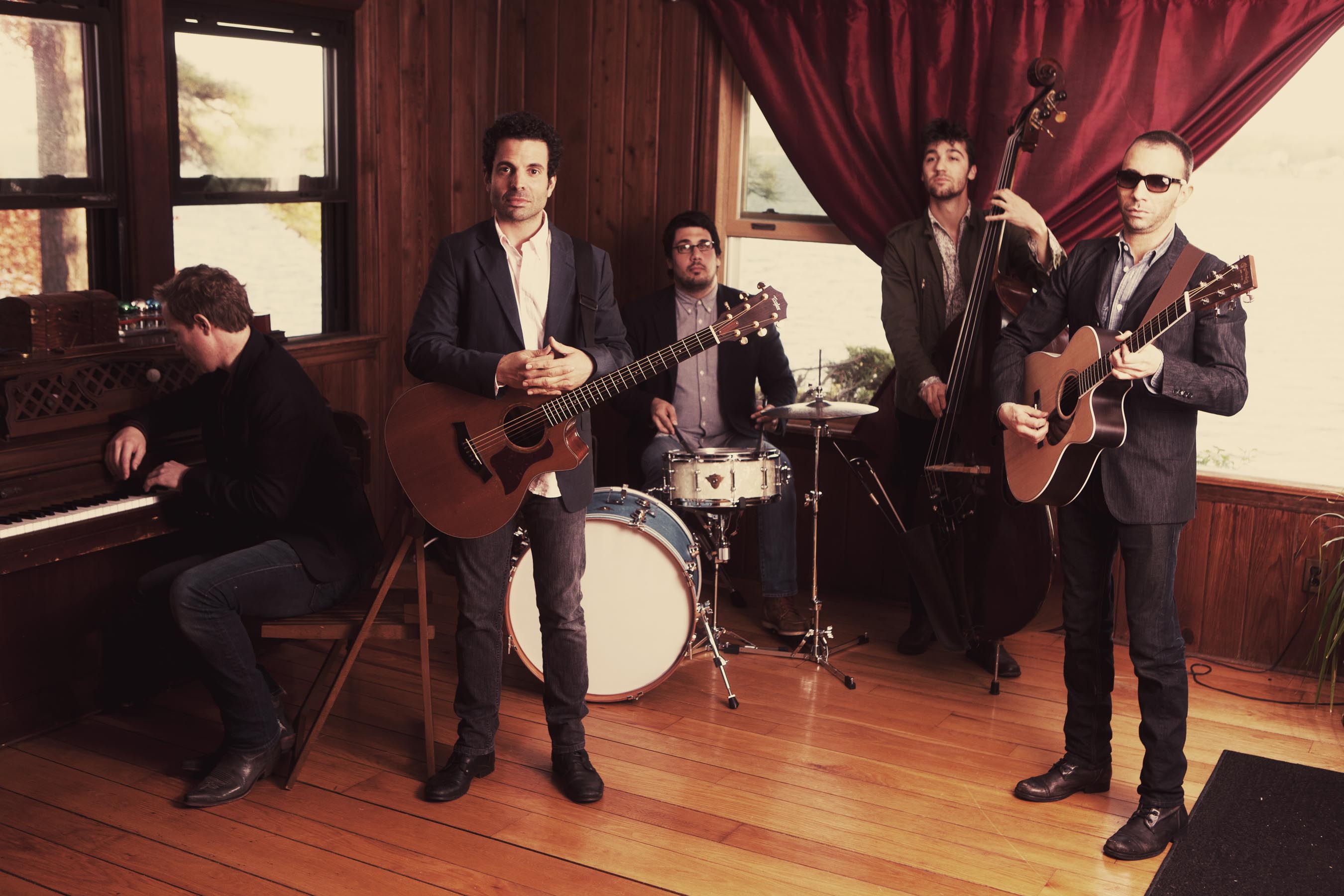
Back when I worked for a little indie newspaper in Los Angeles County, I had the incredible opportunity of interviewing the band Burlap to Cashmere.  They were one of my favorite bands at the time, making the whole experience of calling them up to chat — I remember I interrupted percussionist Scott Barksdale’s breakfast — and seeing them play live at Hollywood’s Key Club intensely exciting.  I was a real journalist, reporting on real stars!

I felt an immediate connection to Burlap to Cashmere.  The fast guitar, the earthy drumbeats, the yelps, the ethnic undertones — it was all so reminiscent of the Greek folk music I grew up listening to at family gatherings … and yet it was modern and lyrical too, preceding the whole indie folk rock movement.  The two founding members, cousins Steven Delopoulos and John Philippidis, were Greek like me.  Not only that, they were from New Jersey like me.  Their songs were poetry.  Their songs were full of Truth and Beauty and Love.

That was more than a decade ago, and they hadn’t put out an album since their Dove Award-winning Anybody Out There? (1998) until now.  Today, they release their new self-titled album.  The line up of the band has changed a bit, but Delopoulos, Philippidis, and Theodore Pagano are still in it.  The new album, Burlap to Cashmere, features songs like the heavily Greek-influenced “Santorini,” the sixties folk rock-sounding “Love Reclaims the Atmosphere,” and the hopeful and faithful “The Other Country.”  Watch videos here.

Hopefully, they’ll be at the Bitter End this summer!