Tag Archives: Jack Kerouac

Jonathan Collins’ Beat-Inspired Paintings on View at the Paterson Museum

2 Sep

visions-of-lowell

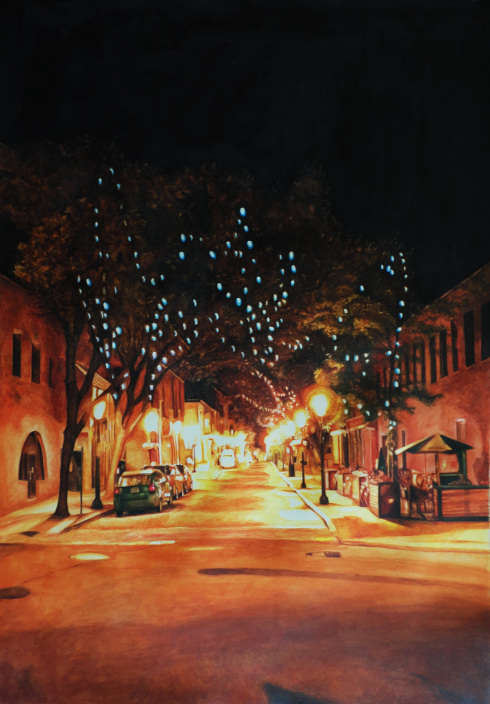
Remember a while back when I did an interview with painter Jonathan Collins, who created stunning works of art featuring Kerouac’s hometown of Lowell, Massachusetts? Well, starting this weekend, he has an exhibit up at the Paterson Museum!

Here’s the press release:::

The Paterson Museum is pleased to present “Beat Traveller: New Landscapes By Jonathan Collins.” This collection of works will be his first solo show at the Museum. The opening reception of Beat Traveller will be held the museum on Sept. 7 from 7 to 10 p.m. The exhibition will be on view through Oct. 6.

The works of Beat Generation novelist Jack Kerouac and poet and Paterson native, Allen Ginsberg, inspired the paintings. Collins journeyed to San Francisco, California, Lowell Massachusetts, and Paterson, New Jersey and returned depicting striking landscapes, glowing in bold sunlight, hazy sunsets, and moody night scenes.

According to Collins, “Both Ginsberg and Kerouac spawned from supposedly dreary mill towns, but I found each place to have areas of great natural beauty, vast historical interest, and even mystical qualities. Also, my father was from New England, my mother from Paterson, and they met at the foot of the Great Falls in 1951. Consequently these areas have great familial and artistic significance for me.”

Collins’ paintings are highly detailed watercolors that have won him numerous grants and scholarships, enabling extensive travel throughout the United States and Europe.

The Paterson Museum is located at 2 Market St. in the former erecting shop of the Rogers Locomotive Works in the heart of the Paterson Great Falls National Park. The Museum’s visiting hours are Tuesday to Friday from 10 a.m. to 4 p.m. and Saturday and Sunday from 12:30 to 4:30 p.m. For more information contact the Museum at (973) 321.1260 or thepatersonmuseum@gmail.com.

Check it out!

Friday Links: Tennis

30 Aug

tennisSir John Lavery’s Played!

We writers aren’t known for being the sportiest bunch. Oh, sure, there are exceptions to the rule, and if you read my blog regularly you know that I write about one such writer: Jack Kerouac, who went to Columbia on a football scholarship. I don’t know how it is that of all the writers I’ve read—and mind you I was a voracious reader from childhood on, reading both male and female authors—I grew most attached to one that was a jock. I guess that’s just irony.

Growing up in New Jersey, I was the cliché example of the girl in the glasses picked last in gym class. Most of my friends lived for the days we had gym, which was only maybe twice a week when I was in elementary school. I hated it. I would’ve rather sat in science class or written an essay than be forced to participate in a rousing game of What Time Is it Mr. Fox? or kickball.

In high school, I started taking tennis lessons. This was very much encouraged by my father, who thought it was great for my future—that it would help me succeed in life and business. I’m sure even in today’s economy there are corporate types who discuss mergers over a competitive game of tennis or golf. I mean, I did see it on an episode of Friends so it must be true. I’d bet there are even publishing types who do so. The reputation of writers and editors, though, is more akin to writing a book contract on a cocktail napkin during our three martini lunches. And so it surprised me that I actually liked tennis. I didn’t like it enough to actually exert too much energy running for the ball, but I liked it enough to make a bit of an effort to endure physical activity. I only took lessons for about a year—there were other things to do with my time, things like study for the SATs and hang out at diners—but I held onto my racket for quite some time. It made the move with me from New Jersey to my first apartment in New York. But it didn’t make it to my second apartment. I hadn’t made friends with the type of people who belonged to tennis clubs. I’d made friends with the type of people who were also picked last for gym class.

In celebration of the US Open, today’s Friday links are tennis related:::

Jason Diamond writes about David Foster Wallace and tennis literature (Flavorwire)

Harvest Books even put out an anthology called Tennis and the Meaning of Life

I myself am a bit partial to the use of tennis in Philip Roth’s Goodbye, Columbus

The Great Gatsby came out around the time tennis was becoming popular in the US; Greg Victor offers a few thoughts on this (Parcbench)

I once sat behind this tennis star and author at Z100’s Jingle Ball

One of the earliest paintings to depict tennis was recently sold at auction (BBC)

Love this fashion spread depicting The Royal Tenenbaums, which of course featured a tennis prodigy (This Is Glamorous)

Althea Gibson broke the color barrier in 1950 when she entered the U.S. Championships

Have a sporty Labor Day weekend! Let me know if you’re doing anything fun.

Writing Wednesday: 10 Reasons Memoirists Should Make Time to Keep a Diary

28 Aug

I wrote recently about how Jack Kerouac kept a dream journal and have been blogging a lot about social media. In a recent Salon article, Michele Filgate wonders “Will social media kill writers’ diaries?: Now Facebook and Twitter are business necessities, they may be losing writers’ journals. Is something lost?”

Filgate writes that authors’ personal diaries offer a key into their literary development and intentions. She says authors’ social media posts can do the same thing, but that it’s not as authentic:

Even if there is a level of acting involved in authors who use social media, it isn’t anything new. Brian Morton (author of “Starting Out in the Evening” points out: “I’ve read that Tolstoy used to keep two diaries, one that he left lying around for other people to read, the other a more intimate record for himself alone. I think self-exposure on social media is probably like the diary we leave out for others. There’s probably always an element of performance in it, even when it seems most naked.”

The pressure to build a platform and use social media is real for authors. Finding time to write isn’t always easy to begin with, but not it’s a constant juggle between writing (and researching, editing, and pitching) and social media (blogging, tweeting, facebook-ing, and pinterest-ing). In addition to big writing projects, many writers are also taking on small projects, like writing articles for various lit mags.

Diary keeping is last on my literary to-do list, and I miss it! Not only do I miss it for personal reasons, but I miss having a record of what I was going through and what I was feeling at various points in my life. Especially as a memoirist, I think it’s essential to keep a diary.

Here are

  1. It is a log for when and where we were on exact days
  2. It reminds us of precise events in our life
  3. It reminds us of little details that we forget over time
  4. It is a more accurate record of our emotions than our social media entries
  5. It is a raw space to create
  6. It’s a reminder of our growth in life
  7. It’s a reminder of our literary accomplishments
  8. It’s a place to dream and make goals
  9. It’s a good way to warm up our writing muscles
  10. Technology changes over time, so having a tangible diary preserves our day-to-day thoughts

How do you juggle journal-keeping with your other writing and social media? How has keeping a diary helped your writing?


New Trailer for “Kill Your Darlings” Released

23 Aug

KillYourDarlingsPoster photo via imdb

The new Kill Your Darlings trailer released! You can check it out here.

Kill Your Darlings is the film about the 1944 murder in which Jack Kerouac and William S. Burroughs were named as accessories.

Just like in the film adaptation of On the Road where the Marylou/LuAnne character got a lot of publicity because she was played by Kristen Stewart even though LuAnne wasn’t the focus of the book, the buzz around Kill Your Darlings is Harry Potter‘s Daniel Radcliffe playing Allen Ginsberg even though Ginsberg was not the murderer, not the person murdered, and not named as an accessory.

The film is directed by Greek American John Krokidas and stars Daniel Radcliffe as Allen Ginsberg, Ben Foster as William Burroughs, Elizabeth Olsen as Edie Parker, Dane DeHaan as Lucien Carr, David Cross as Louis Ginsberg, Jack Huston as Jack Kerouac, and Michael C. Hall as David Kammerer.

It premiered at Sundance this year, where it was nominated for the Grand Jury Prize, and is set for limited release here in the US on October 18, 2013.

I set up a Kill Your Darlings Pinterest page if you’re interested in seeing photos of the real-life people involved in the murder and of the actors and people involved in the film.

Will you watch Kill Your Darlings when it comes out?


If “Everything Is Possible,” Our Milestones Need to Change

21 Aug

singles-620x412Image from Singles via Salon

In the second paragraph of Sara Scribner’s recent Salon article about Generation X, the journalist says:

Few have even noticed that this small, notoriously rebellious clan – those born roughly between 1965 and 1980, which means about 46 million Xers versus 80 million boomers — has entered middle age.

The article itself is entitled “Generation X gets really old: How do slackers have a midlife crisis?”

Let’s stop right there for a moment. The date range provided here for Generation X refers to people who are currently between 48 and 33 years old. Is 33 middle age? Is 33 “really old”? Hyperbole aside, is 48 even “really old”?

The rest of the article refers to people in their 40s. I get it. The writer is using the median age. Treatises on generations are always rift with broad-swept generalities, however the attention to age in this particular article is telling for the article goes on to bring up issues of delayed adulthood, parents, and leadership.

Scribner quotes historian and generational expert (side note: how does one get to be a generational expert? That sounds like an awesome job) Neil Howe saying:

“Xers experience agoraphobia — everything is possible.”

The article goes on to say:

That’s where this generation gets its reputation as reluctant to grow up. “It’s very hard to mature,” [Howe] says. “In order to mature and become an adult, you have to shut off options. The way Xers were raised, there were always options — their parents told them to keep options open.”

Further on in the article, Scribner explains the result of this:

[Sheryl] Connelly, the Ford futurist, says that some of the postponing of the traditional midlife period may come down to a pushing back of all the major life milestones: “Some of that [midlife questioning] would be fueled by empty nesters – the kids are grown,” she says, explaining a feeling of “now what?” “Demographics have shifted such that with each passing generation, people are postponing marriage.” With dependent kids at home, everything has been pushed back. “There’s nothing midlife about my situation right now.  I think that’s why you don’t hear this conversation.”

Maybe, but that’s assuming that we’re talking about a Gen Xer born closer to the 1965 date. Let’s take someone smack dab in the middle of Gen X. If we’re using the range 1965 to 1980, let’s pick someone born in 1972. That person today (well, depending on when their birthday falls) would be 41 years old. Let’s now assume this person married right out of college and then had a kid the following year, when they were about 24 years old. (Keep in mind, that’s younger than the median age for getting married which is closer to 27.) That child would be about 17 years old. It’s therefore not at all shocking that many—even half of—Gen Xers would have “dependent kids at home.” It would actually be rather traditional and, dare I say, old-fashioned.

More interesting is not that life’s “major life milestones” are happening later but that they’re happening at different times for Gen X.

And, just as interesting is that, even with these societal changes, Scribner still upheld conservative viewpoints of adulthood when she paired the phrase “major life milestones” with Connelly’s quote about “empty nesters,” “postponing marriage,” and “dependent kids at home.”

This is where the article gets fascinating but isn’t fully explored. Yes, perhaps on the whole, people are postponing marriage and children and many who did have children now can’t get rid of their boomerang kids, creating a period of limbo. However, just like the age range of Gen X varies, so does the age that they’re getting married and having kids. That’s apparent even in looking at the celebrities the article mentions. Kurt Cobain (born in 1967) had a baby, and that baby is now 20 years old. Winona Ryder is 41 and has never been married or had children. Liz Phair, who is now 46, married a film editor in 1995 and had a child with him the following year; in 2001 the couple divorced.

I have friends I graduated college with who afterwards got married and now have two or three children. I have other friends I graduated high school with who are still very single—and by “very,” I simply mean that they are not only unmarried but also not in a steady relationship. I have a cousin who is about two years older than me who has a seventeen-year-old son. And I have other cousins who are about a decade older than me and have children the same age and younger than the cousin closer to my age.

At a writing conference, I had an interesting conversation with one of my colleagues. On so many levels we connected. We’d had very similar upbringings. We had comparable goals with our writing. We  shared parallel interests. Only about two years older than me, she is a mother of adolescent children and confessed to fearing empty-nest syndrome. At that moment in the conversation, my unmarried, childless self felt like a complete child next to her.

Going back to the statements about Gen X’s reluctance to grow up and the difficulty of maturing in this day and age, I think Howe’s concept of “agoraphobia” is worth more attention. I wouldn’t necessarily agree with Howe’s assessment that we have a phobia, an irrational fear, of “shut[ting] off options,” but the fact that we have those options is significant. We have the option to get married right out of college or to wait until we’ve experienced more of life, know ourselves better, and have amassed a nest egg to support a family. There’s no longer the same social stigma there once was to have a child out of wedlock and so we have the option to have a child with a significant other who we may already be living with. With the advancement of medicine, we also have the option of waiting until we’re in our 40s to have children.

As Howe says, “everything is possible.” But what does that mean for our identities and for the concept of maturity and adulthood?

Does a Gen Xer who is single and childless at 48 years old have more in common with a single and childless 33 year old Gen Xer than with a 48-year-old Gen Xer with a toddler? Does a Gen Xer who is an empty nester have more in common with the Gen Xer who never had children? Does a divorced Gen Xer in their early 30s have a more similar lifestyle to a Gen Xer in their late 40s who never got married? Is the 48 year old who never got married and never had children less mature, less of an adult, because they haven’t reached certain “milestones”?

Maybe it’s time our concept of maturity shifted to match the time period in which we’re living. Maybe it’s time to recognize that today’s milestones have changed.

The Salon article says “Many Xers seem nostalgic for the serene ‘50s,” but the “serene ’50s childhood” is a myth. One, in fact, that we explore in Burning Furiously Beautiful: The True Story of Jack Kerouac’s “On the Road” when talking about how illness killed off children, how war fractured families, how gender roles were back then, and how supposed countercultural icon Jack Kerouac longed for a wife and a ranch. Marilyn Monroe died at 36, never having a child. Ella Fitzgerald never had a child of her own but adopted one. Allen Ginsberg had a lifelong partner but his relationship was not considered traditional at the time. Clearly, there were people in the 1940s and ’50s who reached adulthood, reach midlife, without achieving traditional milestones. So why do we continue to use the same markers for maturity today that weren’t even accurate in the 1940s?

You may also like:

Blame Parents for Millennials Acting Entitled: Helicopter Parents Have Trophy Kids Who End Up Boomerang Kids

Shunning Cars … and Life

Parallel Generations

Hipsters Hate Driving


Bea Franco (October 13, 1920 – August 15, 2013)

20 Aug

I learned yesterday via Tim Z. Hernandez that Bea Franco, the woman who inspired Jack Kerouac to write one of his most beautiful passages in On the Road, passed away at the age of 92.

Bea Franco was the real-life woman behind Terry, “the Mexican girl,” in On the Road. Hernandez tracked her down in California when he was doing research for a book on her life and had the great opportunity to interview her and get to know her and her family over time. He wrote a beautiful book entitled Manana Means Heaven (University of Arizona Press) celebrating her relationship with Kerouac and her life afterwards which is due out later this month. I got to read an advance, and I’ll write more on that soon, but what I will say for now is that it’s an inspired work of literature that stands on its own as well as an important book bringing light to one of the women who impacted the Beat Generation. Although the book is not out yet, Hernandez got an advance copy to Franco, which she was able to see a week before she passed away. You can read about that on Hernandez’s blog.

Related links from around the Web:

Beatrice Kozera, known as ‘Terry’ in Kerouac’s ‘On the Road,’ dies at 92 by the Associated Press

On the Road — The Original Scroll — Bea on Retracing Kerouac

On the Road: Columbia Studios, Hollywood, California on Littourati

Evan Karp’s article “Tim Hernandez: Book inspired by Jack Kerouac” for the SFGate

Actress Alice Braga as Terry in the film adaptation

The Daily Beat’s review of Hernandez’s book about Franco, Manana Means Heaven

Friday Links + More Than a Thousand People Like Our Book!

16 Aug

528764_288645227899680_240973182_n

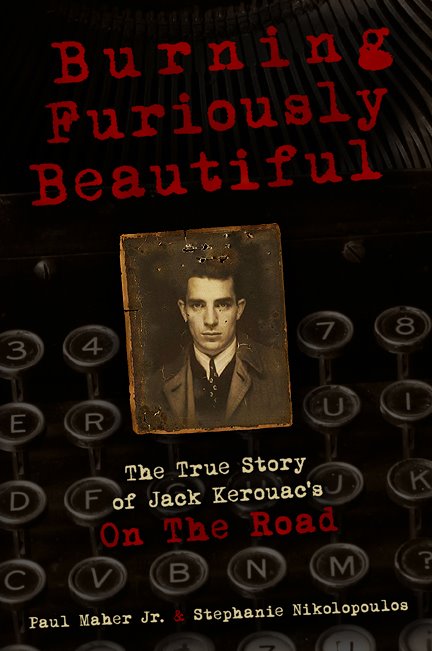
Paul emailed me the other day that we’d crossed the thousand-“like” threshold on our Facebook page for Burning Furiously Beautiful: The True Story of Jack Kerouac’s “On the Road.” I wrote him back: “!!!!!!!!!” …Give or take a few exclamation points.

I cannot thank all of you enough for your support. It means so much to me and for so many reasons. I’m not really a numbers person. Friends have asked me about my writing in the past, and I’ve said that all those Friday nights I spent at home in front of my computer instead of hanging out with friends and all that time I spend frustrated as I edit and rewrite will all be worth it if I reach just one person with my writing. I wasn’t speaking specifically about this book, but it holds true in the sense that if I can enlighten even one person on the fact that Jack Kerouac was a literary artist and not just some beatnik cartoon or if I can give hope to one writer out there who is struggling with yet another draft and thinks they’re rubbish because they mistakenly believe the myth that Kerouac wrote On the Road in just three weeks then I know I’ve done my job. Having a thousand people excited about the book, though, now that’s cake with a whole lot of icing on it!

I feel fortunate to have Paul as a coauthor. He’s so knowledgeable and experienced when it comes to writing about Jack Kerouac. He’s also really easygoing, and I think we’ve been able to work together well. Sometimes we get sidetracked and talk about things like woodland creatures and hot dog vendors and really bad sitcoms, and it’s all quite fun.

We also lucked out to have Igor Satanovsky as our cover designer. We get so many compliments on the cover. It’s usually the first thing people see when it comes to our book, so it was really important to us to have a strong cover and Igor nailed it.

We’ve been really privileged to have some people who have rallied around us and inspiring, encouraging, supporting, and even promoting us.

Most importantly, our families have given us time and space to write. My sister has attended almost every single reading I’ve ever given, Kerouac-related or not. My mom goes around sticking the postcards for our book anywhere she can. My father always made sure I got the best education I could get, which furthered my writing skills.

Many moons ago, before I even began working on this book, David Amram spent time talking to me about Kerouac and dispelled the whole idea of the so-called Beat Generation mythology. Since then, he’s invited me to read with him, has promoted my work in his own shows, and continually pushes me to think about life and art in new ways.

George Koumantzelis has gone out of his way to support our work. Oftentimes getting people to agree to an interview is like pulling teeth, but George actually invited me and arranged for me to interview his uncle Billy, who was Kerouac’s pallbearer. Billy and George have been tremendously gracious toward me. George often sends me helpful news links and posts my blog entries on Facebook.

The first time I ever got to read from Burning Furiously Beautiful was thanks to poet RA Araya, who invited me to read at The Sidewalk Café. He has since invited me many more times to read at various venues, and even when I haven’t read he’s passed out postcards for the book. He also frequently posts my work on Facebook.

One of the goals with our Burning Furiously Beautiful Facebook page was to create an inviting space for Kerouacians, those interested in Beat literature, road trippers, people who dig the history and culture of the ’40s and ’50s, writers, fans of the On the Road film, and the curious. We wanted a page that was informative and entertaining but also a safe place where people could ask questions and connect with each other. We don’t have a thousand people commenting on every single post, but we do have some regular posters as well as people who are actively engaged in leaving comments and forwarding posts. I’ve had the pleasure of even meeting a few of these people in person, which has been super fun. I never really had any friends that were into the Beats so it’s exciting to connect with others who are passionate about their literature.

There are so many people who have helped us get where we are today, in both small and big ways, specific to this book or in more general ways. The post would go on forever if I listed out each and every name, but the support is meaningful and doesn’t go unnoticed. It makes all the difference.

If you aren’t on our Facebook page yet, please do feel to join us. This isn’t some exclusive hipster club. People don’t try to one up each other on our page. We’re just super passionate and want to connect with others.

* * *

Reaching over a thousand “likes” by no means happened overnight. A lot of work goes into finding interesting things to post, responding to people’s comments, commenting on other Facebook pages, and getting lost in the time suck of social media. I’ve also done my fair share of going to talks on social media and scouring the internet for the latest hot tips. So, for today’s Friday Links, I wanted to leave you with a few helpful links for growing your social media. I’m by no means a pro, but some of these people certainly are.


Alt SLC registration just opened up! It’s a great way to learn about blogging

Dave Charest writes How to Get Facebook Likes for Your Page (The Easy Way!)

Author Laura Vanderkam writes about how to Grow your blog readership overnight! (or slowly over 3.5 years)

Conduit offers Ten Tips for Growing Your Target Audience Using Social Media

Photos tend to get more likes than just text, and Lark and Linen provides a Tutorial: Editing Your Photos

Samantha Murphy says that using “I” gets more thumbs up in How to Get More Likes, Shares on Facebook

In case you missed them, here are some of my previous links on social media:::

The true, true story behind the Facebook fauxlore of the Kerouac-Burroughs fight

I am one in a million

My Goodreads To-read list

How many stars should a book get on Goodreads?

Playing around on Google+ I found an article about, well, me

Why I Tweet and post on Facebook

Building your book before you write it

My takeaways from Cup of Jo’s advice on blogging as a career

Social media lessons from last year’s SWSX

I heart social media

Galley Cat’s advice for writers on Pinterest … and I’m on Pinterest

What are YOUR tips for growing your social media?

Dream Journal: Travels with Chuck D.

15 Aug

Voyage

Jack Kerouac kept a dream journal. This log of nightly dreams was later published by City Lights Press in 1960 as Book of Dreams. Even before it was published, though, Kerouac encouraged others to pay attention to their dreams. He told Allen Ginsberg to infuse his poetry with his dream life.

When I was a high school student, my psychology teacher assigned us the task of keeping a dream journal. Isn’t that the most fantastic homework assignment you can think of?! According to psychology, we dream every night, but only some nights we remember our dreams. Keeping a dream journal was supposed to help us better remember our dreams. I know some people who hardly ever dream, but I have wild dreams—especially after eating pizza!

This past Friday night I had a doozy of a literary dream! I dreamt that I was writing a book entitled Travels with Charlie, which was a riff on John Steinbeck’s Travels with Charley. Steinbeck’s book is a chronicle (it was purported to be nonfiction but it’s since come out that portions of it were made up) of the American road trip he took with his standard-sized poodle. My book, however, was about Charles Darwin’s travels. Incidentally, in real, waking life I once edited a reissue of his travelogue The Voyage of the Beagle. I didn’t make the connection in the dream, but perhaps there was some connection between Steinbeck’s poodle and Darwin’s Beagle. In the dream, I was retracing Darwin’s footsteps for a book about his “road trip.” I kept referring to Charles Darwin as Chuck D. or Chuckie D.—like the rapper!

I definitely need to start a dream journal!

Do you keep a dream journal? What is the wildest dream that you’ve had lately?

20 Reasons to Read “On the Road” in Your 20s

14 Aug

kerouac2

It recently came to my attention that Buzzfeed posted an article called “65 Books You Need to Read In Your 20s,” and I immediately knew Jack Kerouac would make the cut. After all, so many people have told me Kerouac is for young people.

First, though, at number 18 came Ernest Hemingway’s The Sun Also Rises. The write up states:

Another English syllabus special, Hemingway’s tight prose and peerless storytelling are somehow more resonant when you are reading it on your own. Or as my colleague Matt put it: “I couldn’t keep my eyes open for more than five pages of Hemingway growing up, but for some reason I picked this up in my post-graduation haze and was mesmerized.”

I can see that. I was none too fond of Hemingway when I had to read The Snows of Kilimanjaro in class but post-grad enjoyed The Sun Also Rises. It’s been quite some time since I’ve read it and have been thinking I should reread it.


So what do we hear when we get to Kerouac, at number 34? A solitary, cynical line:


So that you’ll realize the way you felt about this book in high school has totally changed.


Really? Kerouac made the list just so that the blogger could diss On the Road? I’m all for personal growth and maturity, and I can certainly understand how some books are more relatable when you’re young, but, even if one thinks that’s the case with On the Road, why suggest someone “waste” valuable reading time rereading it then? Furthermore, why single out On the Road and not, say, Catcher in the Rye? And, if On the Road is deemed a book for teenagers, what are we to make of all the legions of adults who read Harry Potter?


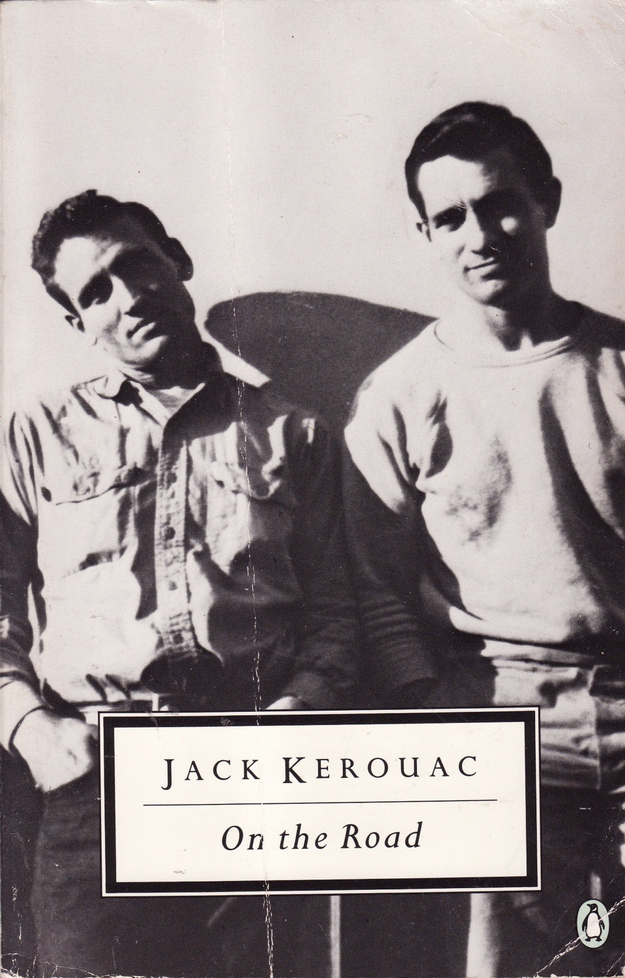
I first read On the Road when I was a teenager, and I read it again when I was in my twenties. And guess what? I continue to pick it up and find inspiration from it. In fact, I think I appreciate certain aspects of it more now than I did when I read it in my teens. Therefore, I’d like to propose reasons why you should read On the Road in your twenties:

  1. Jack Kerouac who? You were busy with homework, video games, and the mall, and never read anything but assigned reading—which never included Jack Kerouac. That’s okay, you can read On the Road now.
  2. You understand more about history and politics now that you’re older and consequently can better understand the significance of this novel being written by an author who served in the Merchant Marine during World War II.
  3. You had heard about the Great Depression, but you didn’t know back then how that was tied to literary movements, and now you can see how money has shaped the art from The Great Gatsby to The Grapes of Wrath to On the Road.
  4. Much of contemporary literature uses a conversational voice so it never occurred to you that Jack Kerouac’s voice, diction, and stream of consciousness were revolutionary for his time period.
  5. You’ve delved into Allen Ginsberg, William S. Burroughs, Gregory Corso, amongst others, and now can make your own judgment about whether or not the term “The Beat Generation” is useful and appropriate.
  6. The main characters in On the Road are in their twenties. The struggles they face growing up and becoming mature adults are the same ones you now face.
  7. You weren’t allowed to take a bus across the country when you were a teenager. But now you can!
  8. You lived a quiet life in the suburbs as a teenager and weren’t exposed to people who’d been in jail, habitually did drugs, married and divorced, and didn’t hold down steady jobs as adults. Those characters may feel less foreign to you as you get older, and you may see them differently now.
  9. When you read the novel as a teenager, you thought Dean Moriarty was the hero. You’re not so sure anymore. This makes Kerouac’s portrayal of him even more intriguing.
  10. You skipped past all those setting descriptions, but now you realize they are pure poetry.
  11. The frenetic travels in the novel seemed exhilarating but confusing or pointless the first time you read the novel. Now, you can examine that as an intentional plot device.
  12. You didn’t think much of the religious aspects of the novel, but now, having heard more about Kerouac’s Catholicism and Buddhism, you can’t help but analyze their significance. This could change your perception.
  13. You enjoyed the romance of “the Mexican girl,” but you didn’t think too much about Kerouac’s portrayal of Mexican and Mexican American field workers, and now you can draw parallels to today’s discussions on the treatment of certain ethnic groups in America.
  14. You want to learn how to write better dialogue.
  15. You read the characters through a contemporary lens when you were younger, but now that you know more about the 1940s and ‘50s you have a greater understanding of the social norms of the time and how they relate to masculinity and gender roles. This can allow you to reexamine issues of identity, misogyny, and power in a novel that includes heterosexuals, bisexuals, homosexuals, male leads, and female minor characters.
  16. You realize in many ways the novel is a love story of America.
  17. You have actually listened to jazz by your twenties and read a little about music theory and now understand its role in the novel and its influence on Kerouac’s prose stylings.
  18. Cars have always been a part of your life, but now that more people your age are eschewing driving, you have a greater appreciation for the socio-economic dynamics of car culture.
  19. You realize that maybe in your younger years you were a bit of a follower, like Sal Paradise, and are now seizing the moment and establishing your own life.
  20. You want to learn how to experiment with syntax.

What would you add to this list?

2013 Lowell Celebrates Kerouac Festival Lineup Announced

13 Aug

Lowell Celebrates Kerouac recently announced the 2013 festival line up! It’s tentative at the moment, but this is what’s listed:

Lowell Celebrates Kerouac Festival

2013: 50th Anniversary of Visions of Gerard and 25th Anniversary of Kerouac Commemmorative

“Everybody goes home in October.” –Jack Kerouac, On the Road

[Draft schedule, 26 July 2013]

Pre-Festival Events

Sunday, September 29

Jack Kerouac Road Race
Time: 12:00 pm
Location: Old Worthen House, 141 Worthen St.
For more information and race registration: jackkerouac5k.com

Lowell Celebrates Kerouac! Festival

Thursday, October 10

Traditional Kerouac Pubs Tour
Time: 5:30-8:00 pm
Location: Start at Old Worthen House, 141 Worthen St.
Old Worthen to Ricardo’s Café Trattoria (110 Gorham St.) to Ward Eight (280 Central St.) to Cappy’s Copper Kettle (245 Central St.).

LCK Celebrates Amram! Traditional LCK kick-off
Time: 8:00-???? pm
Location: Cappy’s Copper Kettle, 245 Central St.
LCK kick-off music-and-readings event. Alan Crane and friends will perform with David Amram. Readers of Kerouac passages will do the interludes. Always a kick!

Friday, October 11

Annual Jack Kerouac Poetry & Prose Competition
Time: 9:30 am
Location: Lowell HS Freshman Academy theater, 40 Paige St.
“The Annual Jack Kerouac Poetry & Prose Competition” at Jack Kerouac’s alma mater, Lowell High School. Students will read their poems and prose entries. David Amram will share his memories of collaborating with Jack Kerouac while the judges deliberate. All are welcome.

A Walk in Doctor Sax’s Woods
Time: 12:30 pm
Location: Lowell-Dracut-Tyngsboro State Forest
“A Walk in Doctor Sax’s Woods” through the Lowell-Dracut-Tyngsboro State Forest or at your leisure throughout the weekend. Maps will be available via the LCK facebook page, LCK website, and at merchandise tables. Contact leader Nomi at nomi1219@verizon.net or 617-775-8155 for car-pooling info and alternate times.

Talking Jack readings and discussion
Time: 3:30 pm
Location: UML Inn & Conference Center lobby, 50 Warren Court

The Divine and Perfect Ecstasy
Time: 5:00 to 8:00 pm
Location: Ayer Lofts Gallery, 172 Middle St
The Divine and Perfect Ecstasy: encaustic paintings and prints inspired by Jack Kerouac’s Visions of Gerard; artist Barbara Gagel; exhibition opening at Ayer Lofts Gallery, 172 Middle St. Exhibition will be open on weekends through November 3. Hours for the LCK weekend are 11 to 4; on other weekends, 12 to 5.

Grave Matters
Time: 7:30 pm
Location: TBD
Showing of Grave Matters film with director Brent Mason, 30-minute film explores Kerouac places in Lowell, culminating at his gravesite.

Jamming Jack
Time: 8:00 pm
Location: White Eagle Pub, 585 Market St.
listen to Jack himself read and sing in recordings with interludes by David Amram, Steve Dalchinsky, and friends.

Saturday, October 12

Commemorative at the Commemorative
Time: 9:00 am
Location: Kerouac Commemmorative, corner of French and Bridge Streets
This year will focus on “Early Memories.” Join us at the Jack Kerouac Commemorative, an internationally renowned literary landmark that is 25 years old this year. Early founders and leaders of LCK will speak about their first encounters with Jack Kerouac’s work and share their personal inspiration to create and support “Lowell Celebrates Kerouac!” over the last 25 years. We will read from Jack’s letters about his earliest memories of his hometown of Lowell, accompanied by David Amram.

Kerouac’s Lowell
Time: 10:15 am
Location: Leaves from Kerouac Commemmorative, corner of French and Bridge Streets
“Kerouac’s Lowell” birthplace-to-gravesite bus tour, visiting his homes and other important Kerouac sites, finishing at gravesite. Led by Roger Brunelle. Leaves from Commemorative. Required $10 donation. Reservations at 978-970-5000.

Welles Emporium’s Kerouac Open House
Time: 10:30 am to 12:00 noon
Location: Welles Emporium, 175 Merrimack St.
For those not on the bus tour, come by the shop to browse Kerouac and LCK merchandise while enjoying music, readings, and discussion with coffee and pastries.

Homage to “Ti Jean” at Kerouac gravesite
Time: 12:00 noon
Location: Edson Cemetery, 1375 Gorham St.
All commemorators of Kerouac are welcome to share his spirit and readings, especially from Visions of Gerard on its 50th anniversary!

Discovering Jack’s Vision
Time: 1:00 pm
Location: Ayer Lofts Gallery, 172 Middle St.
Roger Brunelle will lead a discussion of the visual interpretation of the abstract work of artist Barbara Gagel, using Jack Kerouac’s words from Visions of Gerard

Parker Lecture: Celebrating Kerouac In Film and Word
Time: 2:00 pm
Location: Visitor Center Theater, 246 Market St.
Parker Lecture: Celebrating Kerouac In Film and Word with Lowell native Jim Sampas, the founder of Reimagine Studios. Among his numerous film and recording projects are several that relate to the life and work of Jack Kerouac. They include the audio CD set of Doctor Sax and the Great World Snake, and the widely acclaimed documentary One Fast Move or I’m Gone which highlights Kerouac’s experience at California’s Big Sur and the novel of the same name. Jim was also a part of the production team for the new movie Big Sur, also based on the Kerouac novel. Another current project is his tribute, Kerouac—Joy, Kicks, Darkness. His work has gained him the citation by the Los Angleles Times as “The thinking man’s producer who has a reputation for sticking out of the pack.”

Kerouac’s Library Haunts and Hooky tour
Time: 3:30 pm
Location: Pollard Memorial Library, 401 Merrimack St.
Kerouac’s Library Haunts and Hooky tour, led by Bill Walsh. Meet at the Merrimack St. entrance.

Open Mike at the Old Worthen
Time: 4:00 pm
Location: Old Worthen Upstairs, 141 Worthen St.
Poets, musicians, and readers are welcome!

Merrimack and Moody Street Regulars
Time: 5:30 to 7:30 pm
Location: Starts from City Hall, 375 Merrimack St.
“Merrimack and Moody Street Regulars” walking tour led by Roger Brunelle. Visit sites that Kerouac visited and walked past almost daily along Moody and Merrimack Streets with some remnants of Little Canada.

Jack’s Roots: From Canada to Lowell
Time: 8:00 pm to ???
Location: Old Court Pub upstairs, 29-31 Central St.
Jack’s Roots: From Canada to Lowell, with Michele Choiniere, Brent Mason, Bob Martin, David Amram, and poet Steve Dalachinsky. Kerouac-influenced musicians from Canada, Lowell, and New York will perform individually and jam together in exploring his cultural roots. There will be poems and readings mixed in from Kerouac’s novels.

Sunday, October 13

Kerouac’s Nashua Connection tour
Time: 10:00 am
Location: Meet at Visitor Center, 246 Market St., Lowell
Visit the Kerouac family sites and graves in Nashua, NH, led by Steve Edington, author of “Kerouac’s Nashua Connection.” Meet at Visitor Center, 246 Market St., Lowell, to ride in van or car pool. $10 donation requested. Reservations at 978-970-5000.

Serious Amram Jam!
Time: 1:00 to 5:00 pm
Location: Lowell Beerworks, 203 Cabot St.
Featuring David Amram performing with a cast of many volunteer readers, poets, and musicians. You can feel the spirit of Kerouac moving here!

Sun Sets over Jack’s Bridge
Time: 5:30 pm
Location: University Ave. between VFW Highway and Pawtucket St.
Adieu Again to Textile Memorial Bridge, Moody Street Bridge, Watermelon Man Bridge, University Ave. Bridge; to be demolished SOON! Poems, readings, flowers, and a watermelon will be dropped from the bridge. Group walk from Amram Jam at Beerworks starting at 5.

Ghosts of the Pawtucketville Night tour
Time: 6:00 pm
Location: Group leaves from Textile Memorial Bridge, University Ave.
Ghosts of the Pawtucketville Night tour, led by Roger Brunelle. Visit Kerouac sites in Pawtucketville neighborhood and possibly the mystical Grotto.

A Night of Poetry and Music
Time: 8:00 pm
Location: 119 Gallery, 119 Chelmsford St.
Featuring LCK guest poet Steve Dalachinsky with Yuko Otomo and friends.

Monday, October 14

LCK group walk from Kerouac Commemorative
Time: 10:00 am
Location: Leaves from Kerouac Commemmorative, corner of French and Bridge Streets

Mystic Jack tour
Time: 10:30 am
Location: St. Louis Church, 221 W. 6th St.
Led by Roger Brunelle. Visit the church, school, and home that were so important in his early years as described in Visions of Gerard.

Walking Jack
Time: 12:00 to 4:00 pm
Location: St. Louis Church, 221 W. 6th St.
Continuing the Kerouac Loop Walk from St. Louis School past Kerouac homes and landmarks in Centralville and Pawtucketville, finishing at Old Worthen Tavern for toasting to Jack.

Post-Festival Events

Sunday, October 20

Waking Jack: Jack Kerouac Memorial Walk & Wake
Time: 4:00 pm to ???
Location: Meet at Grotto behind Franco-American School, 357 Pawtucket St.
LCK group will walk with volunteer readings from the Grotto, music & readings to follow Upstairs at the Worthen; in memoriam of the death of Jack Kerouac on October 21, 1969.

Thank you

Merchandise sales and donations by attendees help keep these Kerouac events alive and growing! Note that Kerouac and LCK merchandise can be bought throughout the year at Welles Emporium, 175 Merrimack St. Thank you for your support!

Special thanks for a variety of assistance from Enterprise Bank, Darrell’s Music Hall of Nashua, UMass Lowell Center for Arts & Ideas, Moses Greeley Parker Lecture Series, Lowell National Historical Park, and all the venues hosting LCK events.

Lowell Celebrates Kerouac is a super fun festival with lots of good people involved, and this year’s line up is impressive. Steve Dalachinsky and Yuko Otomo were at LCK the first time I attended, and they are not to be missed. I think it’s no secret that I’m a big fan of David Amram’s work as well. Also, I’ve done a write up on Roger Brunelle’s tours, and recommend them. I would love to hear Jim Sampas speak! I’ve never gotten to make it to the Nashua tour, so I think that would be worthwhile. It seems important to make it to the Watermelon Man Bridge too before it is just a recorded memory in one of Jack’s books.

Are you going to LCK this year? What are you most excited for??

You can find my previous entries on LCK here.