Tag Archives: Jack Kerouac

The Great Valhouli Fauxlore: Atlantic Uncovers Truth Behind Kerouac-Burroughs Fight

9 Aug

No5

Those of us who devote our time studying the life and work of Jack Kerouac and yet who simultaneously spend a lot of our time on Facebook already called “hoax” on that photograph that was being circulated around about a plaque on how Kerouac and William S. Burroughs got into a drunken fight over the Oxford comma. I assumed it was a digitally manipulated photograph. As it turns out, though, it has a fascinating back story. Alexis C. Madrigal uncovered the truth behind the plaque — which actually exists — in the story “Facebook Fauxlore: Kerouac, Burroughs, and a Fight Over the Oxford Comma That Never Was” in The Atlantic.

It’s a great piece — minus the odd portrayal of the Greek American behind the plaque. But we’ll get to that in a minute.

Hot on the trail of something fishy, Madrigal contacted sources Paul Marion; The Morgan Center; Martha Mayo, head of the Center for Lowell History; and Tony Sampas. Marion, author and employee at UMass Lowell Center for Arts and Ideas, had seen the plaque and knew that it was created to promote Mill No. 5 at 250 Jackson Street in Kerouac’s hometown of Lowell, Massachusetts.

Marion referred Madrigal to Ted Siefer’s article “Mill No. 5 brings transformation to Lowell” in The Boston Globe, which explained that developer Constantine Valhouli, with business partner Jim Lichoulas III, was transforming the former textile mill into an office building:

with a kind of fun-house brio to attract the eclectic, off-beat, and hip: boutique movie theater, yoga studio, farm-to-table restaurant, a lounge/library in the style of an English manor — the whole thing decorated with architectural materials salvaged from the likes of Dr. Seuss’ house.

It would appear that Valhouli ascribes to the same Beat philosophy of improvisation as Kerouac. Siefer says:

Valhouli likens the development of the project to how jazz musicians build a song. “We’ve not built from a plan,” he said. “You play a theme, and you just keep playing improvisations over it.”

Madrigal points to the pivotal paragraph in The Globe story for proving the plaque is a fake:

And there, in the 13th paragraph, was proof that we were looked at a false sign: “Inside the entry hall will be a reconstructed early 19th-century New England schoolhouse,” the Globe wrote, “an exhibit that will be part of what Valhouli calls the Lowell Atheneum [AHA!], which will also feature a collection of hand-painted pseudo-historical plaques from New England history [DOUBLE AHA!].”

Madrigal, who went on to interview Valhouli, then explained that Valhouli and Lichoulas thought up the idea of creating “a series of plaques commemorating events that never happened” to support Mill No. 5. They hired Ould Colony Artisans‘ Robert and Judy Leonard to paint the plaque by hand. The artists had created many other historical signs in the Massachusetts area.

I found Madigral’s investigative reporting enthralling.

Still, I was put off by this aside:

I had to get in touch with this Valhouli character, who was, no doubt, swirling his mustache near some railroad tracks looking for damsels.

Okay, I’ll concede that Constantine Valhouli certainly sounded like a “character” for faking people out — although I’m not sure we generally refer to conceptual artists or those who come up with brilliant marketing schemes as “characters.” Instead, I think we tend to use terms like “inspired” and “business-savvy” to describe people who manage to get others talking about their work. A quick look at Mill No. 5’s Facebook page, and the tongue-in-cheek branding is evident:

We’re working on the bathrooms at Mill No. 5 today. Which made us think of the central question of paleontology:
Q: Why can’t you hear a pterodactyl go to the bathroom?
A: Because the P is silent.

Brilliant Subway Panhandling Prank Flips the Script

Hahahahahaha. This. Oh this. The Hipster Logo Design Guide.

But there was “no doubt” in Madrigal’s mind that Valhouli had a mustache and that he swirled it, like some sort of old-timey Western villain? Is the mustache assumption because he’s Greek American or because The Boston Globe article referred to his work as “Disneyland for hipsters”? Where did the leap from real-estate developer to someone who hung out at a train station get made? Was this supposed to tie him closer to Kerouac — or make him sound like some sort of train-hopping hobo? He was out “looking for damsels”? What??

With today’s access to personal information on the Internet, it took only seconds to find Valhouli’s LinkedIn page, and — unless it too is a hoax — discover he (fittingly) received his BA in English and fine art from Georgetown University, where he went on to get his MA in interactive technology. From there, he got his MBA from Columbia University’s Business School. He received the Charles G. Koch Fellowship and was a Peter Agris Fellow. He did equity research for Morgan Stanley and was director of business development for Incogniti before becoming principal at The Hammersmith Group, which describes itself as “a boutique strategy consulting firm with concentrations in real estate and technology.” His LinkedIn summary reads, in part:

Constantine has been featured in the BBC, Businessweek, CNN, Forbes, Fortune, Newsweek, and the Wall Street Journal. He has guest lectured at Columbia Business School, MIT, New York University, and has served as a panelist on internet industry events and at the U.S. Department of State.

There wasn’t a profile picture to verify him peeking out of a train tunnel to leer at women. The Atlantic has created its own “fauxlore” about Constantine Valhouli. Oh, how the tables have turned.

* * *

This post has been updated to correct the publication to The Atlantic.

Photos from the 2013 New York City Poetry Festival

31 Jul

Po2

Po1

po3

po4

po5

I feel incredibly honored to have been invited to read at the 2013 New York City Poetry Festival. I had such a blast hearing so many great poets read at last year’s festival, and it never occurred to me that just a year later I would be joining them on stage. I have poet RA Araya to thank for continually supporting my writing. He invited me to read Homer in the ancient Homeric Greek and from the literary biography I’m coauthoring with Paul Maher Jr. entitled Burning Furiously Beautiful: The True Story of Jack Kerouac’s “On the Road,” so I read two road trip pieces.

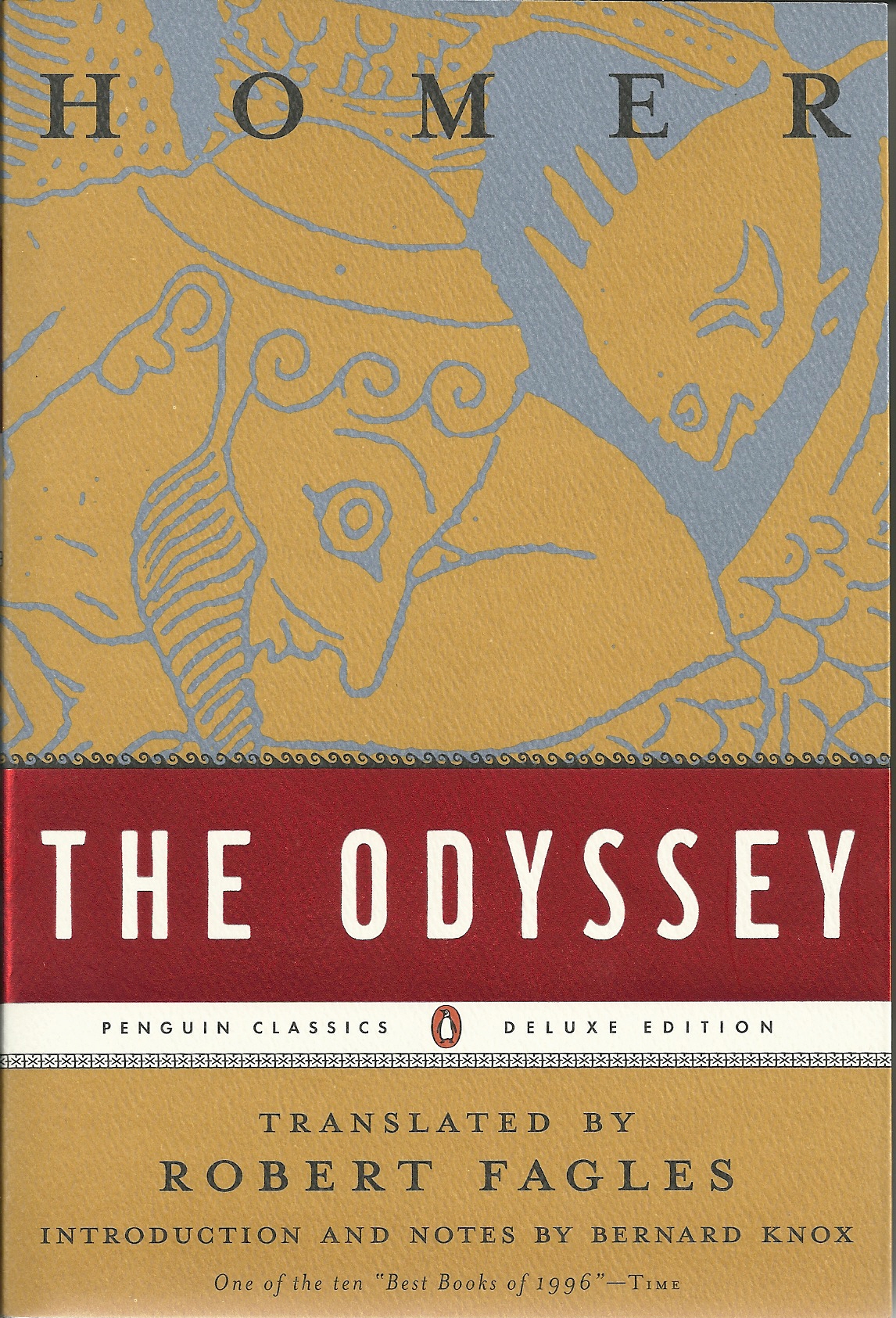
For my Homer selection, I chose the opening passage from The Odyssey. Growing up in the Peloponnesus, my father had to memorize part of the epic poem in school. To this day, he still can recite the lines! I studied Classical Greek at Pomona College (while a student at Scripps), which is different than Homeric Greek. We never really read aloud in class because it’s a “dead” language, one that is no longer spoken but read by scholars. There are debates about how ancient Greek dialects were spoken, as the pronunciation is, according to some scholars, different than modern Greek. I am therefore definitely not adept at reading in the ancient tongue, but if someone asks me to read something specific, I do my best. Fortunately, there are many great English translations of The Odyssey out there too!

It was a no brainer to choose one of the passages about poetry from Burning Furiously Beautiful. In telling the story of the making of the novel On the Road, it was important that the literary biography also explored Kerouac’s poetry and his friendship with other poets. Although he is mainly remembered as a novelist, Kerouac wrote poetry throughout his life, including the period when he was on the road. There’s a really strong section in the book about how Kerouac and Allen Ginsberg influenced each other’s writing, and I wanted to read that, but in the end I found a passage in Burning Furiously Beautiful that seemed to better encapsulate the mood of the Poetry Festival. In the passage, Kerouac has been walking along the highway, hitchhiking, and finds himself composing a poem about everything he sees around him. It reminded me of how out on Governors Island we were all a bunch of writers lofting in the grass and translating the world around us into poetic language.

I read directly after RA, who opened up the event with his famously short-but-sweet poem, and then came Hillary Keel, Sarah Sarai, Carmen Bardeguez-Brown, Kate Levin, Carlos Manuel Rivera, Sparrow, Bonafide Rojas, and Keith Roach. They were amazing! Seriously. Hilary read in German and a couple of the other poets read in Spanish, and I suspect our reading—under the name Miguel Algarin’s Brooklyn Poetry—was the most linguistically diverse at the Festival. I had traveled over the Governors Island with Kate, and I think this was her best reading yet. In addition to poetry about Manhattan and our value as people, she read from her punk novel, which I would’ve thought was a poem if she hadn’t said otherwise. I always enjoy hearing Sarah read, and in particular enjoyed her poem about meeting an angel at a bus stop. The poet who had me in stitches, though, was Sparrow. I’d heard him sing at RA’s birthday party last year, and I loved hearing his one-liner poems this time around.

Special thanks too to our stage manager Liz von Klemperer, who did an excellent job. There were a lot of volunteers who kept the entire event running smoothly. The New York City Poetry Festival is put on by The Poetry Society of New York and is organized by Stephanie Berger and Nicholas Adamski. For the full lineup of the two-day event, check out NYCPF 2013.

I also want to thank my family and friends who trekked out to the island—some coming from as far as Jersey and Brooklyn—to support my reading. The photos here were taken by Leslie Marks, except the last one which is a self portrait. For more photos of me and all the other amazing poets, check out asterix611’s flickr.

Friday Links: Homer and Kerouac

26 Jul

the-odyssey

Happy Friday! Any exciting plans for the weekend? I’ll be at the New York City Poetry Festival. Poet RA Araya invited me to read as part of the line up for Miguel Algarin’s Brooklyn Poetry happening on Saturday at 11:40 at the Algonquin stage on Governor’s Island. If you want to come, take the first ferry out of Battery Park. It’s free! The ferry’s free, the poetry reading is free. If it’s anything like last year, you can envision yourself lofting in the grass and losing yourself to the Siren-pull of beautiful words. Speaking of Sirens, I’ll be reading from The Odyssey in its original Homeric Greek (help!) and from the book I’m coauthoring with Paul Maher Jr., Burning Furiously Beautiful: The True Story of Jack Kerouac’s “On the Road.”

In light of this, here are a few Friday links on the topic.

Literary Elitism vs. Populism (Is Homer much better than Kerouac?)

The New Yorker rejects Homer and Kerouac

Paul Maher Jr.’s Jack Kerouac’s American Journey: The Real-Life Odyssey of “On the Road”

“Like Odysseus in Homer’s poems, Kerouac in The Duluoz Legend is a restless adventurer that embarks on an epic journey — an Odyssean archetype of the indomitable wanderer in modern guise,” writes LewRockwell.com

“Dean Moriarty was the Odysseus of Tennyson not Homer, sailing away again from his island-kingdom not because he loved his family less, but because he loved more the drumbeat of heroic adventure in his breast,” writes HistoryJournal.org

Steve McCurry looks at Travelers’ Tales

“[T]he Odyssean archetype of the indomitable wanderer has persisted down to modern times in works as diverse as James Joyce’s “Ulysses,” Jack Kerouac’s “On the Road,” Charles Frazier’s “Cold Mountain,” and even in the film “O Brother, Where Art Though?” in 2000,” writes Lubbock Avalanche-Journal

Everything since the Greeks has been predicted wrong, he says, because geometrical systems of thinking are fundamentally flawed. On the Road, then, is not just a travel memoir, a series of successive “kicks” from travel and all its accompaniments; it is Kerouac’s aesthetic manifesto that he sets up in opposition to the dominant idea of beauty-as-geometrical-harmony. This is why On the Road arrives out of nowhere and goes nowhere. That is why if you look for structure, for symmetry, for a narrative with a categorical beginning, a clear ending and internal consistency throughout, you will be disappointed,” writes anenduringromantic

“I listened to Snyder attentively. I wanted to understand more. In preparing to write the nonfiction saga of our long walk across Turtle Island –  Odyssey of the 8th Fire – I’d been informed by books telling of our human journey: Homer’s Odyssey, Chaucer’s Canterbury Tales, Steinbeck’s Travels with Charlie, William Least Heat Moon’s Blue Highways,  Cervantes’ Don Quixote, and Paolo Cohelo’sThe Pilgrimage. Inevitably, Kerouac’s On the Road also touched me with its entraining cross-America accounts of reaching outward, inward, downward, upward,” writes Steven McFadden


Clip: New Abstraction News

24 Jul

Invite2

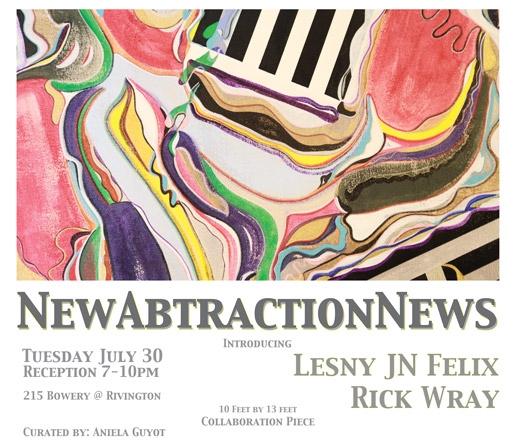
Back in 2008, I had the fun experience of doing PR for Lesny JN Felix‘s art exhibit at Gallery Bar down on the Lower East Side. I got to see his paintings, wrote up his press release, and helped him with set up for the opening reception. We also attended other artists’ shows and had a lot of conversations about the art world. I was thrilled when he asked me to write the catalog copy for his upcoming new exhibition.

Painter Lesny JN Felix is starting his own one-person school of art: the New Abstraction News. The Haitian’s show Instant Identification will debut at the Lower East Side’s pop-up gallery 215 Bowery (215 Bowery St., Manhattan) on Tuesday, July 30, 2013, with a free opening reception from 7 to 10 p.m. There will be one hour of hands-on silkscreen making.

The exhibition includes a collaborative painting with artist Rick Wray that emphasizes JN Felix’s unique New Abstraction News style and, in contrast with Wray’s style, explores the diversity found within abstract art. Fans and collectors will have the opportunity to meet both artists.

Since JN Felix’s last major show in New York, his work has matured into more complex abstractions. Read more here.

In the catalog copy itself, I explore how JN Felix works in a similar method as Jack Kerouac and how he is different than the abstract expressionists of the 1940s and ’50s. You can pick up a copy of the catalog at the show. Hope to see you there! It’s going to be a lot of fun!

Should Women Dismiss Beat Literature?

18 Jul


funnyfacebookstorewdsdsdsdsdsImage via Dangerous Minds
Google+ was all the talk at BEA this year and last. I’ve been on the social media platform for a while now, but just the other day decided to see how it compares with Facebook for finding the latest conversations on the Beat Generation. I did a keyword search and immediately found an article that was right up my alley: “The Feminist Backlash Against the Beat Generation.”
Kimberly J. Bright writes for Dangerous Minds about her experience viewing the now legendary scroll of Jack Kerouac’s On the Road and having another person there remark in surprise that she was there of her own volition. Bright writes:
Their teacher asked me a question about the scroll, obviously assuming that I was a museum employee. When I explained that I was just a visitor, she apologized and said, “But I didn’t think women read Kerouac.”
That was news to me.
The backlash against the Beats in general, and Kerouac in particular, is becoming more evident and is mostly coming from Feminists.
Oh, how I could relate—which Bright noted, referencing my apparently controversial Millions article. Just like Bright, I never knew some works of literature were supposedly for men and others were for women. How silly of me to not realize there was an entire list of writers whom I should ban without reading them to decide for myself or that I should dismiss the literary and cultural merits of a highly innovative and influential body of literature just because certain aspects of it might offend my sensibilities.
I attended a women’s college, where we read a wide breadth of literature and learned to think critically about works—literature that included Allen Ginsberg, Ernest Hemingway, Michel Foucault, Karl Marx, Isaac Asimov, Kathy Acker, comic books, Sigmund Freud, Jean-Jacques Rousseau, Samuel Richardson, and Jane Austen. In my MFA program, we specifically discussed the distinction between the author and the work as well as the literary merit versus our individual preferences.
Bright went on to write:
Personally if I purged my bookshelves, real and virtual, of all the alcoholics and misanthropes – let alone all the manic-depressives, opium addicts, suicides, eccentric asexuals, adulterers and misogynists – I would hardly have any books left.
It seems a bit hypocritical, to me, for people to lambast the Beats while still reading other authors whose personal lives and even the content of their work are not any less controversial. This summer everyone rushed out to watch The Great Gatsby, read or reread the novel, and plan their weddings around the theme of F. Scott Fitzgerald’s story that placed women as secondary characters, kills off one of the women, glorifies a criminal, includes affairs, and exalts illegal substances. It should also be noted that Fitzgerald is widely known to have plagiarized his wife’s work for some of his own books. If we’re dismissing authors on so-called moral grounds, perhaps we should then also dismiss:
  • Miguel de Cervantes (prison time after the money he collected as a tax collector went missing)
  • Paul Verlaine (prison time after shooting Rimbaud)
  • O. Henry (prison time for embezzlement)
  • Jean Genet (prison time for lewd acts)
  • Leo Tolstoy (secretly abandoned his wife in the middle of the night)
Of course, choosing whose work is “worth” reading becomes problematic because whose morals must we go by? Furthermore, which attributes of a person are more or less important when deciding whether we should read their literature? Should we praise Betty Friedan’s entire body of work because she is pro-choice? Should we dismiss her entire body of work because she did not further lesbian politics? Or vice versa? Should we dismiss her altogether? What about Bill Clinton? Should we not read the former president’s books because he cheated on his wife? Because he wielded his position of power over a twenty-two-year-old intern? Should we dismiss Jack Kerouac’s work because of the way he treated his daughter? Should we praise his work because of the way he treated his mother?
I don’t mean to make light of any of these issues or to excuse anyone from anything. My point is simply that we need to take a closer look as to why we excuse some authors but not others. Why have the writers who have been marketed together as the Beat Generation been targeted while others get a free pass?
And why don’t those so-called feminists who target the so-called Beats acknowledge the many women writers associated with the generation? Here were women who faced tougher socio-political times than we do today who got their own apartments, who studied at well-known undergrads and went on to work toward their MAs, who didn’t just sit around cooking dinner for their husbands but created works of their own. Should we forget their body of work or negatively lump it into a category we don’t read because of their associations?

Clip: Jazz and the Beat Generation

11 Jul

beatsofsummer-button

I’m super excited::: Roof Beam Reader invited me to participate in the Beats of Summer series!

The literary blog is named after a J. D. Salinger novella and is run by a cum laude graduate of California State University, who earned an MA in English with an emphasis on American lit. He is now an academic adviser for two universities while pursing a PhD in English.

The Beats of Summer series so far has included:

Women of the Beat Generation in 3 Easy Steps from Jackie Mania

Jack Kerouac

William S. Burroughs

a giveaway

You can read my article — Jazz and the Beat Generation — here.

Stuff Jack Kerouac Hates

10 Jul

Erin La Rosa wrote a piece for BuzzFeed called “12 Things Famous Authors Absolutely Hated.” You know who hates something? Jack Kerouac. This, according to La Rosa:

Anyone who read On The Road and thought Kerouac was suggested to take up a beatnik lifestyle… you were so epically wrong. Kerouac hated his time searching for answers, and it’s pretty clear from the book that he didn’t find any. Kerouac was a conservative Catholic and always resented that his writing inspired a revolution.

Sucks for Kerouac!

She links to S. Peter Davis’ and David A. Vindiola’s 2010 Cracked article “6 Books Everyone (Including Your English Teacher) Got Wrong. The article says in part:

First of all, Kerouac hated beatniks; he thought they were a bunch of posers. Anyone who wanted to be a part of “The Beat Generation” completely missed the point. In his mind, those who were “Beat” were beaten down by society’s demands and struggled to find their place in the world. It was not something you chose to be because it would help you meet chicks.

“Hate” is such a strong word! Still, I think the articles further the important point that there’s a huge disconnect between the literature of the so-called Beat Generation and the subcultures of beatniks.
Not much has changed. Just look at the way Madison Avenue has marketed the heart out of the arts and music scene of Williamsburg.

Granta Publishes Travel Issue

2 Jul

My inbox got a recent happy surprise with the subject header:

‘The Road Is Life’ Celebrate the launch of Granta 124: Travel

In case you don’t recognize the quote, it’s from Jack Kerouac’s On the Road. In part 3, chapter 5, he writes:

Our battered suitcases were piled on the sidewalk again; we had longer ways to go. But no matter, the road is life.

The lit mag will have its New York launch for the issue on July 24th at 7pm at Bookcourt (163 Court Street; Brooklyn). Granta editor John Freeman will supposedly be there–despite May’s news that he is leaving the lit mag. Contributor Phil Klay will also be there. Readings, drinks, and conversation to ensure!

If you’re not in the New York area, you should be! But even if you’re not, Granta also has launches in San Francisco and London.

Book Court has a plethora of other events coming up that include poetry, nonfiction, fiction, photography, and music.

In case you missed it, here’s my recap of hearing Freeman speak about Granta.

Cat Hitchhikes for 10 Months

25 Jun

Hipsters love cats. But apparently cats don’t love the hipsterfied city of PDX.

A cat by the name of Mata Hairi hitchhiked its way out of Portland, Oregon, in September after her owner, Ron Buss, let him out. Michael King, a homeless man, found Mata Hairi and rescued her, taking the cat on his hitchhiking travels to California and Montana. Mata Hairi would ride on top of his rucksack.

As soon as he was able to take her to the vet and a microchip revealed her owner, King was able to get in touch with Buss about Mata Hairi’s safe return.

I don’t know about you, but I’d love to see Mata Hairi get her own meme, a la LOLCats and Grumpy Cats.

You know who loved hitchhiking and cats? Jack Kerouac. Jerry Bauer took this photograph around 1965.

Here’s another photograph of Kerouac with a cat, plus a 1959 poem about his cat.


Kristen Stewart Hits the Road

19 Jun

Kristen-Stewart-On-the-Road

Kristen Stewart, who played Marylou in the film adaptation of Jack Kerouac’s On the Road, is reportedly on a summer road trip in the South. According to several sources, she’s been hanging out at bars and shooting pool in Amarillo, Texas, and Memphis, Tennessee, and is on her way to New Orleans, Louisiana. Among the hotspots stops on her visits: Coyote Ugly Saloon.

Prior to filming On the Road, Stewart had taken a four-week Beatnik Book Camp and taken a road trip. According to Hollywood Life, at a 2012 screening at SVA, she told reporters she avoided the “grimiest” aspects of road tripping.

In March of this year, she and then-boyfriend Robert Pattinson were planning a road trip in Europe for this summer. They were talking about traveling around Italy, Germany, and France in a van. So will they or won’t they? The rumor mill can’t decide.

Here’s my review of the film adaptation of On the Road.