Tag Archives: Jack Kerouac

Jack Kerouac’s Birthday Celebrations Happening Across the Country

7 Mar

Jack Kerouac’s birthday is coming up on the 12th, and there are a couple of celebratory events happening.

Lowell Celebrates Kerouac has several days of fantastic events centered around what might be my favorite (it’s hard to choose just one!) Kerouac book, Visions of Gerard. They will also be honoring David Amram, who has been a great mentor in my life and work:

Lowell Celebrates Kerouac! will be spotlighting Jack Kerouac’s deeply spiritual and Lowell-based book, Visions of Gerard, throughout this 50th anniversary year of its publication, starting with the birthday events of March 2013. March will feature music by celebrated world musician David Amram, musical collaborator and friend of Kerouac, an art exhibition, educational programs, walking tours, poetry, readings, and other cultural events that celebrate the life and writings of Jack Kerouac.

Friday 8 March 2013

Kerouac: People, Places, and Things
Time: 6:00 to 10:00pm
Location: Lowell Telecommunications Center Gallery, 246 Market St.
Kerouac-influenced art exhibition opening reception

The Magnificent Pigtail Shadow
Time: 6:30 to 7:45pm
Location: Lowell Telecommunications Center Gallery, 246 Market St.
A film by Steven Cerio with the director to present, plus a reading from Big Sur played against the director’s newest short

Music for Jack
Time: 8:00 to 9:30pm
Location: Lowell Telecommunications Center Gallery, 246 Market St.
David Amram and friends. A $10 donation is requested.

Saturday 9 March 2013

Amram and Marion
Time: 10:30am to 12:00pm
Location: Welles Emporium, 175 Merrimack St.
Help Lowell Celebrates Kerouac celebrate its new merchandise home at the Welles Emporium. Musician-author David Amram and poet Paul Marion help Lowell Celebrates Kerouac celebrate its new merchandise home at the Welles Emporium. David and Paul will do readings from their books and poetry as well as Kerouac passages with musical interludes by David. They will sign books and CDs.

Jack and Woody: Two American Originals
Time: 1:00pm
Location: Pollard Memorial Library, 401 Merrimack St.
Woody Guthrie and Jack Kerouac life parallels, talk by author Steve Edington.

Mystic Jack Tour
Time: 3:30 to 5:00pm
Location: Meet at St. Louis Church, 221 West Sixth St.
Led by master Kerouac interpreter Roger Brunelle, specially presented this year in honor of 50th anniversary of publication of Visions of Gerard. A $10 donation is requested.

Lowell Celebrates Kerouac Celebrates Amram!
Time: 8:00pm to ?
Location: White Eagle Cafe, 585 Market St.
Musical event with David Amram, the Part-Time Buddhas, and guest musicians. A $10 donation is requested.

Sunday 10 March 2013

Walking Jack Loop Walk
Time: 12:00 to 5:00pm
Location: Meet at Jack Kerouac Commemorative at Jack Kerouac Park, intersection of French and Bridge Streets
End at Old Worthen Tavern at 5:00 for toasting the birth of Jack Kerouac in March of 1922

Tuesday 12 March 2013

Kerouac Birthday Walk
Time: 6:00pm
Location: Starts at Centralville Social Club, 364 W. 6th St.
On Jack Kerouac’s 91st birthday, walk with LCK group to Lupine Road birth house for readings. The walk will start and end at Centralville Social Club (364 W. 6th St.) parking lot by the prominent Ace Hardware sign on Lakeview Ave., Centralville neighborhood.

Tuesday 19 March 2013

Reading of Visions of Gerard
Time: 7:00pm
Location: Pollard Memorial Library, 401 Merrimack St.
Tour of “Jack’s Library” followed by selected readings and discussion of Visions of Gerard on the 50th anniversary of its publication. This is Kerouac’s possibly most spiritual book as he remembers his childhood years and the deep impacts of his brother Gerard’s death. Sponsored by UMassLowell and Pollard Memorial Library. Funded in part by the Massachusetts Council on the Humanities.

Thanks to Welles Emporium, the Pollard Memorial Library, the White Eagle Pub, the Old Worthen Tavern, Lowell Telecommunications, and the St. Louis de France School for hosting our events.

I also learned via LCK that the Northport Historical Society is hosting a birthday celebration for Kerouac:

Writer/Playwright, Pat Fenton will be reading from his play “Jack’s Last Call, Say Goodbye to Kerouac”, as part of the March is Kerouac Month at the Northport Historical Society. Mr. Fenton will also discuss Kerouac’s Northport years as well as his importance to American literature.

It’s the end of summer in 1964. A major cultural shift is starting to happen in the U.S., and on his last night in Northport, Long Island the America Jack Kerouac saw through a rear view mirror riding along side his “On the Road” partner Neal Cassady is slowly playing again in his mind.

Long after a small going away party that he has thrown for himself is over; Jack keeps on drinking as he prepares to move to Florida with his mother. He reflects back on his fame, his youth as a football star in Lowell, Massachusetts, and the worry that his time has come and gone. As he sums up parts of his life to the audience in a bittersweet narrative, he receives a series of soul-searching phone calls from his daughter Jan.

An obligatory stop at Gunther’s Bar down the block on Main Street, where Jack Kerouac spent much of his Northport Years, will be made by the writer, and the conversation will continue over pints of tap beer.

The birthday celebration will take place on Sunday, March 10th at 3 P.M., at the Northport Historical Society, 215 Main Street, Northport, Long Island.

The Laughing Goat, a coffeehouse and performance space in Colorado, is hosting a poetry reading on March 11:

”So, You’re a Poet,” presents Jack Kerouac’s 91st Birthday Reading & On the Road film screening: The ”So, You’re a Poet” reading series by Boulder’s ”beat book shop” has several Kerouac events on its poetry calendar. Poets who have performed in this venerable, decades-old series include the late Allen Ginsberg, Bernadette Mayer (who will be in Boulder this summer for the Summer Writing Program), Diane di Prima, Janine Pommy Vega, Anselm Hollo, and many more. The series has always been hosted by poet and Kerouac School alumnus Tom Peters, owner of the Pearl Street landmark ”beat book shop.” The series was hosted for many years by the famous Penny Lane Cafe. In the introduction to Poems from Penny Lane Anne Waldman writes ”One thinks of the legendary Cabaret Voltaire in Zurich where the Dadaist movement was born, or the cafes and bars in San Francisco which spawned the Beat Literary Movement, also the cafe Metro and the Nuyorican Cafe, both in New York City’s East Village.” The series currently takes place in the new Laughing Goat Coffeehouse, which has strong ties to the original Penny Lane. Amiri Baraka, Miguel Algarin, Lewis MacAdams, and other poets read there during last year’s Summer Writing Program. The Laughing Goat is surely a Boulder literary institution in the making.

Are there any other Kerouac birthday celebrations we should know about?

How will you be celebrating? If you can’t make it to one of the events, maybe you could write a poem or read a passage from one of Kerouac’s books or stop by the Beat Museum in San Francisco.

 

Writing Wednesday: Publication Therapy

30 Jan

The other day I was updating my submissions spreadsheet. Yes, I’m that big of a nerd. The spreadsheet tracks the articles, essays, and other creative works I’ve written, so at a quick glance I can tell what I have to pitch, where I’ve submitted it, and when—if at all—I’ve heard back from a publication.

There are a lot of blank rectangles on the spreadsheet.

In the past, the blank rectangles used to indicate that I had yet to submit my work. Rejections seemed scary so I wouldn’t even submit to journals because I was so worried the editors wouldn’t be interested in my work. This meant my work had zero chance of getting published. When I became an editor myself I realized how much editors depend on writers. It’s not this terrible power struggle I’d imagined. Editors really want to like writers’ work. They want to publish us. Getting a rejection doesn’t mean they hate us. If you want to have your work published, you have to send it out.

After a while, though, it was the “accepted” column that had the blank rectangles. I carefully sent queries or unsolicited manuscripts out and then suffered to hear from someone—anyone! Opening my mailbox and refreshing my inbox became subtle forms of self-torture, as I never knew when I’d hear back from a publication and what the news would be.

But more frequently I’ve been getting rejections. This is not a bad thing! I’ve come to realize that the greatest writers have gotten rejections. Jack Kerouac couldn’t get On the Road published for years. Stephen King nailed all his rejection letters to the wall, the stack growing larger and larger before he found fame.

I just read an article in Bloomsberg Businessweek about a guy named Jia Jiang who is doing a project called 100 Days of Rejection Therapy, in which he opens himself up to rejection at least once a day in order to desensitize himself to the pain of rejection so that he can go after his dream. The concept is attention-grabbing, and I think there are some valuable lessons to learn from it about courage and perseverance. There are also fundamental flaws to this approach, though. It’s easier to not get hung up on a rejection when you’re not invested, and in this case the rejections Jiang is receiving have nothing to do with his real dream. Furthermore, the project title itself suggests and attracts self-defeat. Although Jiang hasn’t gotten rejected from everything he’s tried, he believes he will be rejected. Although his rejection therapy is supposed to give him the courage to not let fear of rejection keep him from pursuing his dream, it essentially is saying that he thinks he will get rejected. Otherwise, why not call it Achievement Therapy? Or Success Therapy? Or Acceptance Therapy?

Also, as the article itself points out, there are valid reasons for rejection and we can learn from them:

But career coach Nemko suggests Jiang focus on what made the initial investor balk. “I have clients who apply for a number of jobs [and] who get rejected a bunch. They like to brush it off, like, ‘Oh, it’s the economy,’ but I say: ‘Take a look at yourself. Do you need more skills? What’s your employment track record? Are you obnoxious?’”

Back in 2011, I blogged about how Kathryn Stockett’s The Help was rejected sixty times. Here was someone who was truly invested in her work, and yet she didn’t start asking donut makers to do strange things to her donuts in an effort to build her confidence in her writing abilities and achieve success. She actually took a good long look at why she was getting rejected and revised her work accordingly.

Sometimes you need criticism, even if it comes in the form of a rejection, to improve your work. Other times, there may be nothing wrong with your work, but it’s just not the right fit for that publication at that time. It happens. It’s worth being part of a writing group and getting honest feedback on your work from more than one person who is not your mom.

Lately, the rejections I’ve been getting have come with personalized notes that say things like “great story but it’s not timely enough” or “great writing but it’s not for us. Feel free to submit again in the future.” I don’t like getting rejections, but I have learned from them. I’ve taken the comments I’ve received from editors and revised my works. I’ve grown as a writer, and even when my work isn’t what the editor wants, I know it’s getting closer to hitting the mark.

The other day when I was updating my spreadsheet, I smirked at the callousness with which I treated my rejections. There was a time when I would’ve taken them so personally, but now I realize that rejections come with the territory.

This applies to life too. No one ever did anything great in life without taking a risk.

Anne Waldman Speaks on How Beat Poets Selling Out Helped Naropa

28 Jan

If you have about an hour to spare, this interview with poet Anne Waldman at the University of Texas at Austin touches on Jack Kerouac’s awareness of the arts world at the time, the New York School poets and Black Mountain poets, Beatnik-inspired clothing and selling out, how the Jack Kerouac School of Disembodied Poetics at Naropa got its name and why it’s not named after Gertrude Stein, the passing of Gregory Corso and Allen Ginsberg, William S. Burroughs’ cut-up techniques, women of the Beat Generation, the Bowery Poetry Club, and her mother’s time in Greece. It’s a thoughtful interview that’s well worth listening to.

The interview was in conjunction with the Harry Ransom Center’s 2008 exhibit On the Road with the Beats.


Jack Kerouac Dropped Out of College. So What?

27 Jan

Is genius born or created?  By now everyone has read, or at least heard, about how Steve Jobs dropped out of Reed College and went on to become the cofounder of Apple and one of the most important entrepreneurs of our time.  Perhaps less known is the fact that Jobs continued to audit classes at Reed.  He actually credited a calligraphy course he took as having a major impact on the Mac.  When I was taking a shuttle from the San Francisco airport to my hotel out in Walnut Creek, I had a midnight conversation with a businessman who had read the biography on Jobs and told me about how the computer genius’ interest in art was fundamental to his vision for building a successful brand.

Back in September, Flavorwire posted an article called “10 Famous Authors Who Dropped Out of School.”  This is what they wrote about Jack Kerouac:

In high school, Beat hero Jack Kerouac was no poet — he was a jock, star of the football team. His athletic skills won him a scholarship to Columbia University, but he and the coach didn’t get along. The two argued constantly and Kerouac was benched for most of his freshman year. Then, he cracked his tibia and, his already tenuous football career over, dropped out of school.

I love Flavorwire, and I understand that the writer was trying to keep the text short and irreverent, but I think it’s worth dissecting the often repeated line that Kerouac dropped out of Columbia University.  Implicit in remarks about his football scholarship and dropping out is the suggestion that Kerouac was neither intelligent nor studious—the same way that many critics like to point to how quickly he supposedly wrote his novels.  If he were a computer genius, like Steve Jobs, perhaps his craft would not be questioned, but because the arts are subjective, Kerouac’s dropping out of college is often reported more as a jab than as evidence toward his natural gifts.

To say that Kerouac was a jock and not a poet in high school undermines his academic achievements.  In reality, Kerouac, who didn’t even feel completely comfortable speaking English when he went off to school (he spoke his parents’ French Canadian dialect), did so well in school that he skipped a grade.  He spent a lot of time at the public library in his hometown of Lowell, Massachusetts, voraciously reading the classics.  When he was not on the football field, Kerouac was part of a roundtable discussion group on philosophy and literature.  His father was a printer, and so even at a young age, Kerouac produced his own writing.  Like Jobs, Kerouac did not come from money, and the scholarship he earned helped him attend the university, where he studied English under the tuition of great professors.

Kerouac left Columbia, then he returned to resume his studies, and then dropped out for good.  However, like Steve Jobs, Kerouac continued his studies even after he dropped out of college.  He enrolled at The New School, where he studied literature.


After Kerouac moved to Ozone Park, Queens, and holed himself up writing, his friends jokingly referred to him as “The Wizard of Ozone Park.”  Do you know “The Wizard of Menlo Park” (New Jersey) was?  Thomas Edison, who after only three months of formal schooling, dropped out.


***

This post has been updated. I wrote “college” when I meant to write “school,” when referring to Kerouac’s ease with English.


92-Year-Old Greek Diner Shut Its Doors in Literary Neighborhood

24 Jan

Ninety-two-year-old Greek diner St. Clair has closed down, reports Grub Street, after learning the news from Brownstoner.

Owned by five Cypriot brothers, according to New York magazine, offered various Greek dishes such as the Greek Delight Platter, Corfu Salad, and Greek Moussaka alongside classic American dishes like The Best Baked Meatloaf and 14 Oz. new York Cut Sirloin Steak Sandwich. Brooklyn Daily provided a little history that when the diner was revamped in 1967 it was opened up as the New St. Clair by the Costa family. In 2007, they sold it to Spiro Katehis, who also owns the Carroll Gardens Classic Diner. The Greek diner was at the corner of Smith and Atlantic in the Boerum Hill neighborhood of Brooklyn.

In The Town and the City, Jack Kerouac housed the parents of his main character in Brooklyn and mentioned the Boerum Hill neighborhood. Of course back then, the neighborhood hadn’t gone through its yuppie gentrification—Kerri Russell and Michelle Williams have called it home—and was known as South Brooklyn or North Gowanus.

Considering the establishment had already opened in 1920 and Kerouac was in the area in the 1940s and ‘50s, it’s possible—though not proven—that he could have stopped in the St. Clair Diner.

The neighborhood is famously home to another writer: Jonathan Lethem, who told the New York Sun,  “’My image of the writer came from people like Henry Miller and Jack Kerouac.’” When he was younger, Letham hitchhiked to California and worked at used bookstores. In 2011, he was the Roy E. Disney Professor in Creative Writing at Pomona College, where I studied literature and Classical Greek.

Big Sur Debuts Today at Sundance Film Festival

23 Jan

Big Sur debuts today at Sundance Film Festival in Park City, Utah:

When I first saw the trailer for Big Sur I felt a sense of relief. While I enjoyed the film adaptation of On the Road, the Sal Paradise character (based on Jack Kerouac and played by Sam Riley) fell flat for me. Jean-Marc Barr plays the Kerouac character in Big Sur and at least from the trailer seems to embody him much better.

The film is directed by Michael Polish and the cinematography is by M. David Mullen, who worked together on Stay Cool and The Astronaut Farmer, and it is gorgeously lush.

The story of Big Sur is in many ways On the Road‘s opposite. On the Road brings to life Kerouac’s early adventures roadtripping across the country. His zeal for life explodes across the page. Big Sur, on the other hand, shows the writer in the later years of his life, after fame and alcohol had taken a toll on his life.

The first time I read Big Sur it depressed me greatly, reading how Kerouac struggled and obsessed over death, but I read it again last fall when I was roadtripping down the California coast and saw how Kerouac really was a master at style. There’s a repetition and rhythm of the book that echoes the cyclical nature of the ocean.

This isn’t the first time Kerouac’s time in Big Sur has been the subject of a film. In 2008 there was One Fast Move Or I’m Gone: Kerouac’s Big Sur.

Here’s a synopsis of Polish’ Big Sur from the Sundance website:

Big Sur focuses on a moment in Jack Kerouac’s life when, overwhelmed by the success of his opus On the Road and struggling with alcoholism, he retreats to his publisher Lawrence Ferlinghetti’s cabin in the small, coastal California town of Big Sur, which eventually inspires his 1962 novel of the same name. Kerouac’s time begins with quiet moments of solitude and communing with nature. But, struck by loneliness, he hightails it to San Francisco, where he resumes drinking heavily and gets pushed into a relationship with his best friend Neal Cassady’s mistress, Billie.

While writer/director Michael Polish (Twin Falls Idaho) explores a less glamorous moment in Kerouac’s legacy—one of alienation and mental breakdown—Big Sur equally examines the beauty of this time in the writer’s life, witnessed in the romance of friendship and the purity of nature. Jean-Marc Barr embodies Kerouac’s intelligence and masculinity, but also portrays him at his most contemplative and vulnerable. Luscious and breathtaking, Big Surapproaches a religious cinematic experience.

Director: Michael Polish

Screenwriter: Michael Polish

Executive Producers: Mark Roberts, Eddie Vaisman, Jim Sampas

Producers: Ross Jacobson, Orian Williams, Adam Kassen, Michael Polish

Cinematographer: M. David Mullen

Production Designer: Max Biscoe

Sound Designer: Chris Sheldon

Costume Designer: Bic Owen

Principal Cast: Jean-Marc Barr, Kate Bosworth, Josh Lucas, Radha Mitchell, Anthony Edwards, Henry Thomas


Liking “On the Road” Makes You Undatable

15 Jan

A while back The Huffington Post, run by Greek American Arianna Huffington, posted an article entitled “9 Books That Make You Undatable.” Among the books was Jack Kerouac’s On the Road.

The reason?  Well, according to The Huffington Post, liking On the Road signals commitment issues and money woes.

Apparently no one ever reads a book for its literary merits or for pure escapism.

You may also like:

On the Highway of Love, Jack Kerouac Divides Men and Women


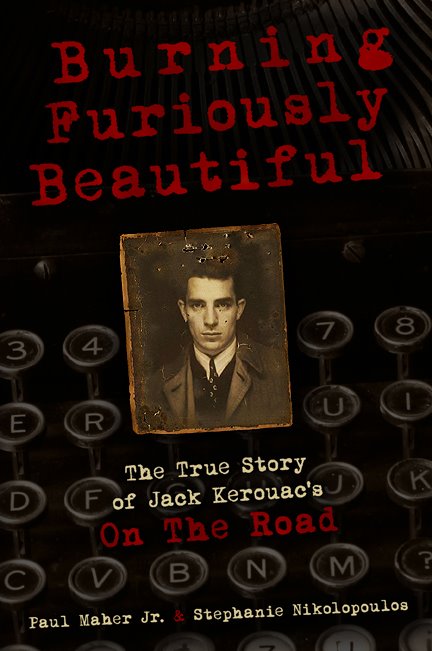
Sneak Peek of Burning Furiously Beautiful: Early Draft of “On the Road” Reveals Tragic Life Story of Kerouac’s Dad

14 Jan

From chapter 1 of Burning Furiously Beautiful: The True Story of “On the Road,” the book I’m coauthoring with Paul Maher Jr.:

Life was no easier for the paternal side of Jack Kerouac according to this retelling of the Kerouac lineage. Leo Duluoz, a pseudonym for Jack’s father Leo Kerouac, was six years old when Gaby was born. He had a dark countenance inclined toward sadness. His father, Jacques, was a carpenter from St. Hubert, Quebec. He possessed superlative skills at this trade to such a degree that he built his own home. Though Gaby was of Norman strain, Duluoz was Breton. The Duluoz family was marked by tragedy and pegged by doom. Over time Leo had eight siblings that were narrowed down to four. Kerouac catalogued the state of the Duluozes via madness and crippling diseases. Uncle Joe, Leo’s brother, was always shouting in his parlor, “La Mort, la mort!” This fatalist stamp manifested itself throughout the corpus of Jack Kerouac.


This sneak peek was first unveiled on our Facebook page. Join the conversation here!

Blogiversary: Greeks Beat Kerouac in 2012

10 Jan

greek-greece-flag_pink

January 1 marked the anniversary of my blog! Thank you all for your support and encouragement of my writing and blogging. It means so much to me that you take the time to read and comment on my blog entries.

I just reviewed a report of my year in blogging, and it’s been a good year!

Here’s a recap of my most viewed posts of 2012:

Notice anything interesting? They all have to do with Greece, and four out of five of them have to do with Greek beauty and fashion. Despite the fact that most of my blogging efforts this past year were about Jack Kerouac, not a single Kerouac-related entry made it into the top 5.

Two out of the above-mentioned blog posts didn’t receive any comments, despite being popular views. My most commented on post of the year was:

That just goes to show you that comments and views aren’t necessarily correlated.

What were your favorite posts from 2012?

Sneak Peek of Burning Furiously Beautiful: Early Version of “On the Road” Tells Kerouac’s Mom’s Story

8 Jan

528764_288645227899680_240973182_n

From chapter 1 of Burning Furiously Beautiful: The True Story of Jack Kerouac’s “On the Road,” the book I’m coauthoring with Paul Maher Jr.:

In an unpublished prose fragment, Jack Kerouac incorporated his mother and father’s French-Canadian heritage into one version of his road novel. It was centered on his mother’s birth using the pseudonym of Gaby L’Heureux. Gaby’s pregnant mother unwisely took a long journey by train to visit relatives in St. Pacome in the Quebec province of Canada. Gaby’s mother, though poor, was pure at heart, according to Kerouac. She gave birth to a set of twins before dying in her bed. Gaby survived but her twin did not. Gaby’s widowed father, Louis L’Heureux, who stayed home in Nashua, tended a gloomy bar. Outside, staring at the canopy of stars reeling over him, he adjusted his collar, securing himself unwittingly for one more cruel “blow” to his life.

The mother’s body was brought back to Nashua accompanied by her Aunt Alice and the infant Gaby. Kerouac captured in this bit of wrtiting how the train moved through the New England countryside, and how the Merrimack River wended its way through New Hampshire, a land once inhabited by Algonquin Indians waiting for “life.”

Gaby’s piercing cries irritated the travelers, and she was unaware of the life all around her. At the train station, her father took her in his arms, and he looked down to her adoringly. Alice predicted that they would never be without troubles: “Life is sad, O my love….”

This was first posted on the book’s Facebook page. For the latest, check out our page!