Tag Archives: Paul Maher Jr.

Limited Time Offer: 10% Off the Paperback of Burning Furiously Beautiful

10 Oct

528764_288645227899680_240973182_n

Exciting news!

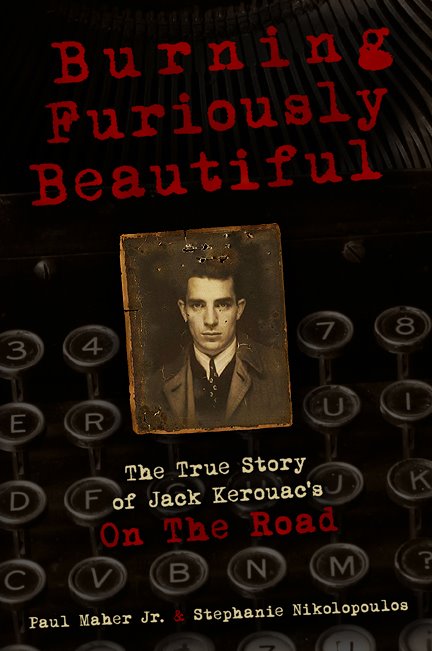
Pop the champagne! The paperback edition of Burning Furiously Beautiful: The True Story of Jack Kerouac’s “On the Road” is now on sale.

Limited-time offer

We’re giving you an extra 10% off now through the end of Lowell Celebrates Kerouac. (Unfortunately, the books won’t arrive in time for us to sell physical copies at the festival, but at least you’ll get a discount!)

What’s the book about, you ask?

Burning Furiously Beautiful: The True Story of Jack Kerouac’s “On the Road” is the most up-to-date and accurate account of the development of American writer Jack Kerouac’s groundbreaking 1957 novel, On the Road. Using archival resources as the foundation of this book, Kerouac scholars Paul Maher Jr. and Stephanie Nikolopoulos have fashioned a gripping account of the internal and external experiences of Kerouac’s literary development.
Fueled by coffee and pea soup, Jack Kerouac speed-typed On the Road in just three weeks in April 1951. He’d been traveling America for the past ten years and now, at last, the energy of his experiences flowed through his fingertips in a mad rush, pealing forth on a makeshift scroll that he laboriously taped together. The On the Road scroll became literary legend, and now Burning Furiously Beautiful sets the record straight, uncovering the true story behind one of America’s greatest novels.
Burning Furiously Beautiful explores the real lives of the key characters of the novel—Sal Paradise, Dean Moriarty, Carlo Marx, Old Bull Hubbard, Camille, Marylou, and others. Ride along on the real-life adventures through 1940s America that inspired On the Road. By tracing the evolution of Kerouac’s literary development, this book explains how it took years—not weeks—to write the seemingly sporadic 1957 novel. Through new research and exclusive interviews, this revised and expanded edition of Jack Kerouac’s American Journey (2007) takes a closer look at the rise of Jack Kerouac and the Beat Generation, giving insight into Kerouac’s family roots, his time at sea, the shocking murder that landed Kerouac in jail, his romances, and his startlingly original writing style.
Who is my coauthor?

Paul Maher Jr. is the author of the critically acclaimed biography Kerouac: His Life and Work and Empty Phantoms: Interviews and Encounters with Jack Kerouac
Check out my exclusive interview with Paul here.
You can judge our book by its cover
We’ve gotten a lot of compliments on our cover. Credit goes to Igor Satanovsky. He’s an award-winning cover designer that I’ve worked with for many years now on various publishing projects. Igor also is a poet (buy his book here!) and studied with Allen Ginsberg.

* * *

Burning Furiously Beautiful: The True Story of Jack Kerouac’s “On the Road” is now available as an ebook and paperback!

Kalo Mina! October 2013!

1 Oct


OLYMPUS DIGITAL CAMERA

“Life starts all over again when it gets crisp in the fall.”

~ F. Scott Fitzgerald

Kalo mina! Happy October 1st! The first day of fall was September 22, but the weather today feels more like late spring. The sky is a bright, bright blue, the color of parakeet feathers. I walked down to Union Square at lunch today and was tempted to play hookey just so I could sit in the grass and look up at the sky and dream.

September brought routine back to the city, and it was a busy month. A few highlights:

  • Attending Greek American Fashion Week and seeing the latest collections by Tatiana Raftis, Angelo Lambrou, Nikki Poulos, and Stratton, with hair by Christo Curlisto
  • Seeing Jonathan Collins’ Beat Traveller art exhibit in Paterson with Larry Closs
  • Conducting a live interview with Tim Z. Hernandez about his book Manana Means Heaven at the Spanish Harlem bookstore La Casa Azul and getting to meet all the great people who work at the bookstore as well as Tim’s insightful agent
  • Reading one of my personal essays about road trips, homelessness, and God as Jason Harrod softly strummed guitar at his album release party
  • Retreating to Connecticut for the Scripps TriState alumni book club
  • Attending the Brooklyn Book Festival with friends whom I co-lead a monthly writing workshop with and getting to hear Justin Torres read from We the Animals again. He’s brilliant. I’m obsessed
  • Watching Into the Wild. I know I’m late to the game on this one, but at least I had read the book by Jon Krakauer before. The film devastated me. It was beautiful and painful and haunting and true, and I couldn’t stop thinking about it for days….
  • Brunching with author Isobella Jade
  • Hearing Davy Rothbart read from My Heart Is an Idiot. I once wrote that a story of his made me “wonder if Rothbart might be my generation’s Jack Kerouac.” Yep, he’s that good. I was too shy to talk to Davy, but I met his dad and, despite my efforts to become invisible at the mere mention of audience participation, Brett Loudermilk selected me out of the audience to pull a sword out of him. Yes, you read that right
  • Reading Kristiana Kahakauwila’s story collection This Is Paradise — this is Literature. I am savoring it
  • Discovering H&M Home — whoops! There went all my money!
  • Finally getting Internet set up at my new place
  • Talked to my sister for the first time since she moved out of New York City
  • Imbibing my first pumpkin spice latte of the fall
  • Attending A Global Conversation: Why the UN Must Focus on Women’s Leadership
  • Oh and launching the e-book edition of Burning Furiously Beautiful: The True Story of Jack Kerouac’s “On the Road” with Paul Maher Jr!!!

So yeah, that was my September. What about you? Did you read any good books? See any movies that moved you?

Tim Z. Hernandez Gives a Behind-the-Scenes Look at Manana Means Heaven

16 Sep

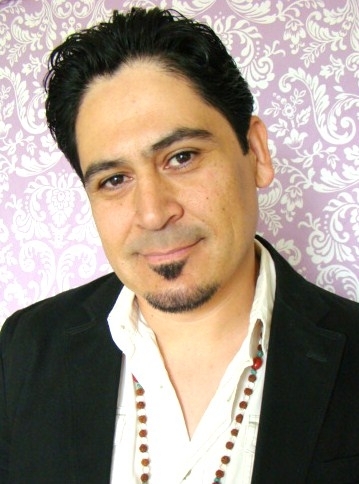
TimTim Z. Hernandez photo courtesy of the University of Arizona Press

I’ve often thought that poets make the best prose writers, and I was reminded of this once again as I read award-winning poet Tim Z. Hernandez’s novel Mañana Means Heaven. The story is about Bea Franco, the real-life woman who inspired Jack Kerouac to write one of the most poignant passages in On the Road—the story of “the Mexican girl,” Terry. Mañana Means Heaven is by no means a work of fan fiction. It is beautifully crafted and painstakingly researched, and stands on its own. Even as I got caught swept up in the story, I kept wondering how Hernandez did it—how was he able to write such a captivating story about a real person, one he’d met and interviewed, one whose children he’d met, who for so long seemed mythical herself yet was perhaps overshadowed by Beat mythmaking?

When the University of Arizona Press asked me if I’d be interested in participating in a blog hop with Tim Hernandez, I jumped on the opportunity. Special thanks to the University of Arizona Press for arranging this interview and for being great to work with. And, of course, a big thanks to Tim for so thoughtfully answering all my questions.

* * *

TimCover

How did you first come across Jack Kerouac’s On the Road and how old were you?

I first read it when I was around 17. I believe a friend of mine from Sweden, Jonas Berglund, turned me onto it. He was the poet back then, while I was mostly into painting. He was trying to get me to go backpacking with him in Europe, and he kept telling me how cool it would be. He told me I should read “On the Road,” so I did. That summer I split with him to Europe.

What did you think of it at the time and how has your perspective on the novel changed over time?

I’ve read OTR three times now. At age 17, and then in my early twenties, and then later at around 30. At age 17 I identified with the desire to break free, to adventure and take risks, to get away from the place I called home. In my early twenties I began questioning whether or not these guys, Kerouac and his crew (The Beats), were just completely insane. Also, the idea of a threshold appeared. I related more with the underlying question Sal Paradise was seeking to answer, that is, do I continue on this path of wild abandon, this path as perpetual seeker of truths, by whatever means, OR, do I fall in line with the rest of the world and live a “normal” life clocking in day to day and having a family? It was a matter of maturation. Not that I decided to let go of that desire “to seek” but just that I would go about it differently, in my own way. And then by age thirty, I was reading the book less for its subject and more for the writing itself, the technique and process, and also the idea of lineage. This is what sparked the initial seed for Mañana Means Heaven.

In the introduction to Manana Means Heaven, you say that you became interested in the story of “the Mexican girl” Terry/Bea Franco because it was the part of Kerouac’s novel that you could relate to. I understand that your parents were migrant workers near where Bea’s family worked as migrant workers. I know you also worked for the California Council for the Humanities interviewing immigrants about their lives and struggles. Were your parents immigrants? Can you talk a little about your relationship to and interest in the migrant worker experience and how it relates to your writing?

Yes, all of this was very influential to my wanting to write about Bea Franco. My work with CCH, and even the Colorado Humanities today, has been very instrumental in the research and process for the making of this book. It’s the experience of working for them that has emboldened me to walk up porches and knock on the front doors of total strangers, for the sake of stories. Not to mention, having these two entities as a resource throughout my research has been invaluable. As for the other part of your question, my parents were migrant farmworkers, but they were born in Los Angeles and Texas, so they weren’t immigrants. I’m the third generation in my family to be born here in the United States, and I think this is also why I related to Bea so much once I finally met her. My first question to her was, “What do you think about being called the Mexican Girl?” She laughed and replied, “I’m not from Mexico, I was born in L.A..” So she was very conscious of her own identity in this way too. She was not an immigrant by any means, and I believe that it’s possible this assumption about her is what kept Kerouac biographers from finding her, or even looking. In any case, having come from the same background as Bea Franco, the farmworker experience, living among the labor camps of the San Joaquin Valley, this was all part of my growing up. My parents and grandparents used to travel all over picking crops, grapes, hoeing sugar beets, so I knew the people from this place very well. When Sal Paradise entered the San Joaquin Valley in “On the Road” I felt he was now entering my world, a distinct place that is in every fiber of who I am, and I knew I could write about this with some authority.

Similar to your experience with Bea Franco, part of what continues to draw me to Kerouac is his ethnic experience and how he writes about feeling a duality within him. I was born here in New York City, but my father is an immigrant. He moved here from Greece when he was in his thirties, and he felt embarrassed because sometimes people couldn’t understand him because of his accent. Kerouac’s parents were immigrants from Quebec, and although he spoke English as a child he really didn’t feel comfortable with the language until he was a teenager. I think our immigrant experience was much different, though, because of our skin color. Kerouac is seen as a quintessential American novelist while Bea got pegged as “the Mexican girl” even though they were both born here in the States. Was Kerouac’s portrayal of the immigrant experience something you were interested in or were you mainly interested in telling Bea’s story?

Yes, all valid points here. Bea too was in that strange purgatory of “immigrant born in the U.S.,” and she too was very light skinned with green eyes, and because of it was sort of an insider-outsider, similar to Kerouac’s and your own situation. In some of our conversations she talked about how she was treated differently, sometimes cruelly, while growing up because of her complexion. In many ways, hers was a real “Chicana” experience, before the term was popular. She was balancing between two cultures at once, was educated in Los Angeles public schools, spoke fluent English and Spanish. She loved both the Mexican classic songs, and the big bands of her time. In 2010 she still had stacks of records by Tommy Dorsey and Glenn Miller, folks like that. When I first met her she had a portrait of Ronald Reagan in her dining room. It took my aback for a moment, until I asked her about it. I was afraid she’d say something like, “He was our greatest President.” But instead, she said, “He was a great actor and I loved his movies,” and then she chuckled. Bea loved being American, and even though her father was from Mexico she clearly identified with aspects from both sides of the border. In regards to the last part of your question, yes, I was mostly after Bea’s story, about who she was/ is. As a fan of Kerouac’s writing, in the beginning it was tough for me to distance the two, but it was necessary to do so. If I was to write about Bea’s life, to fill in that “missing link” about who “The Mexican Girl” was, I had to start from scratch. That is, I had to, in some ways, reject what other biographers had written about her, and even reject what Kerouac himself had written about her, and go straight to the source—Bea and her family—and start there. So then the question of what she remembered of her time with Jack was no longer significant. Instead I would ask her, Tell me who you are? Where were you born? Who did you love? Approaching it this way would allow readers to enter the book on her terms, not based on anything else written about her previously. This is what I was after.

The Beats have often been criticized for the way they treated and portrayed women. In fact, I have been criticized in the media for being a woman who likes Beat writing. You’ve given voice to one of the most influential women connected to the Beats. The story of “The Mexican Girl” was the first part of On the Road Kerouac got published in a lit magazine. Some might argue that Kerouac used her for her body or for gaining experience for his book. Your depiction of their relationship was quite tender and sympathetic toward both of them. It reads like a beautiful love story. What was your thought process in writing about Bea striving to make a change in her life and cheating on her husband, and Jack leaving and never reconnecting with her?

Yes, my initial idea, as I started to envision the book, was that I’d somehow have the opportunity to “even the score.” That I would make Jack out to be this womanizer only after his own “kicks” or “experiences.” Of course, this was still before I had ever met Bea. Too, I think in order to write a good story, an honest or authentic story, at least in this case, one has to suspend those kind of judgments about their own characters. This occurred to me after I had met Bea and began speaking with her. She never viewed herself as the “damsel in distress,” and in fact, was a woman who took responsibility for her own decisions, in her early years and even now, yet was also very much a romantic. After speaking with her I quickly saw that she was not the naive “Mexican Girl” that Kerouac made “Terry” out to be in “On the Road.” Nothing in our conversations told me that for Bea, at least in her own mind and heart, ever doubted their relationship was a real possibility. Of course, she was aware that this could also mean a new start for her and her children. And this is the sense I get too from reading her love letters to him. In the end, the relationship had to feel like a very real possibility, for her mostly, but for Kerouac too. Because if he didn’t believe in it, then going by what I know about her, she would not have wasted her time.

You tracked down the real Bea Franco and got to know her. How did she feel about being a character in Kerouac’s novel and how open was she when answering questions for your book?

When I located her in September 2010, she nor her children had any clue about the legacy of “The Mexican Girl.” She was just about to turn 90 years old, and when I did tell her, I said something to the effect of, “Did you know you are a famous character in a famous American novel?” Her children, Albert and Patricia, laughed out loud. Bea just sort of nodded and said, “Oh really. I didn’t do nothing so special.” The next thing I did was take out a list of over 20 Kerouac biographies that mention her name. She just shrugged, like it was no big deal. Her son though, Albert Franco, who Kerouac dubbed “Little Johnny” in On the Road, he opened up his laptop and started typing stuff into the search engine. There he was now at age 70, blown away by it all. I can’t describe the feeling of it, but the word “surreal” comes to mind. I just sort of sat there praying they wouldn’t kick me out of the house. A couple of visits later, while interviewing Bea, Albert asked me, “After all these years…how can so many people mention my mother’s name in their books and never tell us about it?” I didn’t have an answer for them. But I knew right then that I had already done a couple of interviews and still had not formally asked their permission. I felt, symbolically at least, that this was necessary. So I asked her point blank, “Bea, can I write the book about your life?” She said, “Sure.” I replied to her, “What would you like the world to know about you?” She answered, “Oh, I guess that I tried hard to be a good person.” Albert was sitting with us too. At the time he looked reluctant with the idea of yet another book. I told him, “People will continue to learn about your mother from all these books, or I can write the only book with her input, her own words, from her perspective, and after that everyone will no longer guess at who she is.” I think it was after he did his research on me and saw that I was a kid from Fresno whose parents were also migrant farmworkers, did he finally begin to trust me. Of course, Albert and I are now great friends.

How did her children react? You uncovered Bea’s affair and described her and Jack’s relationship in pretty sensual terms. Did you feel any awkwardness writing about any of this or any responsibility toward her and her family for how you portrayed the events?

Patricia and Albert are both very proud of the book. As are the rest of their family and friends, many of who are the children or grandchildren of some of the background characters in my book. As for the “sensual” aspect, this is probably where I had the toughest time writing the book. Which seems weird coming from me, since both of my first two books have been called “raw,” “graphic,” “sexual,” in past reviews. But here I was dealing with someone else’s life, not purely my own imagination. My first attempts with the love-making scenes were horrible. A good friend who was a first reader told me, “You’re writing as if Bea herself is standing over your shoulder.” And this was true. I was worried about losing the trust of her and her children. I didn’t want it to come across as distasteful. But still, in order for anyone to be convinced of this romance, an affair where two adults holed up in a hotel room for several days, then the range of intimacy had to be present—everything from long talks in the wee hours of the night, to the ebb and flow of emotions, sex, regret, risk, liberation, all at once. I’ve long considered myself to be the kind of writer who doesn’t shy away from “the real,” and in fact, this is what I returned to as the book was being written.

Manana Means Heaven is categorized as a work of fiction. How much of it is true? In literature, where do you think the lines are drawn between fiction and creative nonfiction?

This is the kind of question that would require many pages to even scratch the surface, so I’ll try and give you the brief version. “Fiction” and “Creative Non-Fiction” are genres, and I treat them as such. Neither are qualified substitutes for “the actual.” Isn’t this part of what Kerouac’s own legacy is built on? The idea of writing it as he lived it? If I had to put it into a percentage I would say about 75% of Manana Means Heaven is “true” from Bea’s perspective. The other 25% is authored by me, but also rooted in truth, about the life of farmworkers in the 1940’s, about the history of that part of California and the people who worked the land. Like I told Bea herself, even though it’s called “fiction” it’s still closer to the truth about who you are than anything else out there. Which is odd when considering that most of what is out there can be found in the “Non-fiction” books shelves. Reason being is that biographers have only counted on Kerouac’s version of events. One of the first biographers I contacted when my research began was Paul Maher Jr. This was because his book, “Jack Kerouac’s American Journey” had the most unique pieces of information about Bea than any other book out there at the time. I wondered how he knew certain things, so I asked him. Turns out he had read Bea’s letters to Kerouac, which were housed in Kerouac’s archives at the New York Public Library. So Maher had dug a little deeper than most in regards to Bea. And now only recently, Joyce Johnson’s new book “The Voice is All” has echoed some of what Maher had discovered. I imagine now that my book is out we’ll start to see more accurate information about Bea Franco, which is also a big part of why I wrote this book.

You’re also an award-winning poet. I think poets often make the best writers. Can you talk a bit about how you approached this novel as a poet or how the writing process differed?

Yes, ultimately, I feel at home with poetry. For me, prose is like going to work, slinging a hammer from 6am–5pm. Poetry is like the ice cold beer you crack open when the day is done. Poetry was my focus throughout my undergrad and graduate degrees. But I do love telling stories too. Why can’t both happen? In writing I don’t begin by saying “I’m going to write a poem today.” Or, “I’m going to make this a story.” I write and allow the muse to tell me what it is. Even then I’m skeptical, or open about it. I keep writing until I get to a point where I go, okay, now I have to make a decision here. In the end, my main goal is tell a damn good story. It so happens that for me a good story is one that works on multiple levels. Not merely subject, but on the line level. For me a good story also has language that sings, that isn’t afraid to dig deep in the crates, use fresh turns of phrase, make rhythm, use imagery that evokes emotion.

Can you talk a little about the literary device you used in opening and closing the book in the same way?

Yes, there are two ends to the book, Bea’s story, and then my search for Bea. The idea of starting the book at the second ending emerged somewhat organically. I had to figure out how to let the reader know that this book is rooted in my interviews with Bea, and I had to address the one thing that I knew would be on the minds of Kerouac fans, that is, what did she remember of her time with Kerouac. And then there was one big wrench in the machine that I also had to figure out how to get around. By starting from the very end of what is considered the “non-fiction” portion I was able to set these three things up so that when the reader finally enters the “fictional” portion of Bea’s story, they have suspended their idea of “fiction.” The book went through something like twelve drafts before I could figure this part out. There was a lot of shuffling chapters around and reconfiguring the whole thing…in fact, there were times when I thought to myself, who am I kidding? It’ll never work. But I finally found a combination that did work.

* * *

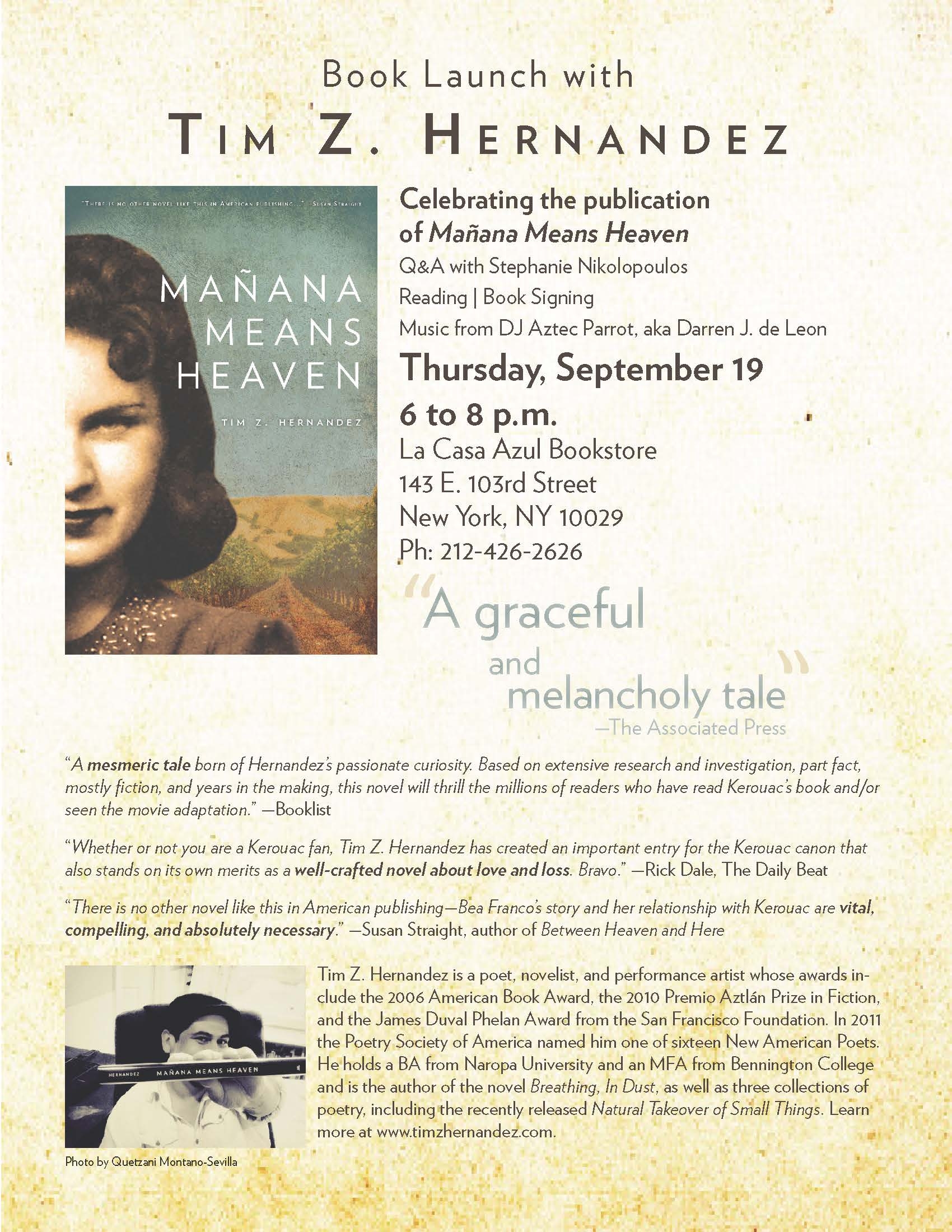
Tim and I will be continuing this conversation this Thursday night at La Casa Azul.
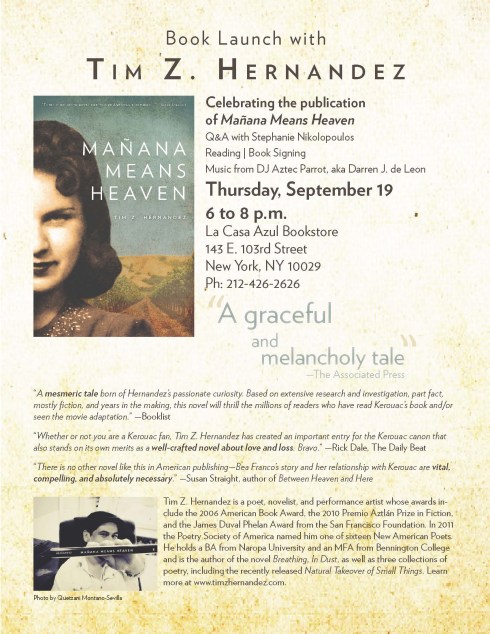
New Image

* * *

Meanwhile, join Tim Z. Hernandez on the rest of his blog-hop!

Tim Z. Hernandez Blog Tour:

Tuesday, September 17 | The Daily Beat http://thedailybeatblog.blogspot.com/

Wednesday, September 18 | La Bloga http://labloga.blogspot.com/

Thursday, September 19 | The Big Idea http://www.jasonfmcdaniel.com/

Friday, September 20 | The Dan O’Brien Project http://thedanobrienproject.blogspot.com/

Saturday, September 21 | Impressions of a Reader http://www.impressionsofareader.com/

See You Tonight at the Album Release Party

13 Sep

Harrod

Just a reminder that I’ll be reading TONIGHT at Jason Harrod’s album release party!

Here are the essentials:::

When: September 13 @ 7:30pm

Where: IAM (International Art Movement), located at 38 West 39th Street, 3rd Floor, NYC.

Cost: There’s a $10 suggested donation. Wine, beer, and hors d’oeuvres will be available.

Bonus: Musicians Paul and Bets will also be performing.


I’ll be reading from Burning Furiously Beautiful: The True Story of Jack Kerouac’s “On the Road,” which I’m coauthoring with prolific biographer Paul Maher Jr.

I’ll also be reading a personal essay about a road trip I took across the country. The essay was published by Burnside Writers Collective, a website founded by Donald Miller (author of Blue Like Jazz) and Jordan Green.

Both of the stories I’ll be sharing about feeling beat, down and out, yet still searching, wrestling, clinging to God.

Hope to see you there!

* * *

Also, save the date: Thursday, September 19, at 6pm, I’ll be in conversation with Tim Z. Hernandez, author of the beautiful book Manana Means Heaven, at La Casa Azul in Spanish Harlem.

I’ll post on that next week, but in the meantime you can find out more in Appearances.

Friday Links + More Than a Thousand People Like Our Book!

16 Aug

528764_288645227899680_240973182_n

Paul emailed me the other day that we’d crossed the thousand-“like” threshold on our Facebook page for Burning Furiously Beautiful: The True Story of Jack Kerouac’s “On the Road.” I wrote him back: “!!!!!!!!!” …Give or take a few exclamation points.

I cannot thank all of you enough for your support. It means so much to me and for so many reasons. I’m not really a numbers person. Friends have asked me about my writing in the past, and I’ve said that all those Friday nights I spent at home in front of my computer instead of hanging out with friends and all that time I spend frustrated as I edit and rewrite will all be worth it if I reach just one person with my writing. I wasn’t speaking specifically about this book, but it holds true in the sense that if I can enlighten even one person on the fact that Jack Kerouac was a literary artist and not just some beatnik cartoon or if I can give hope to one writer out there who is struggling with yet another draft and thinks they’re rubbish because they mistakenly believe the myth that Kerouac wrote On the Road in just three weeks then I know I’ve done my job. Having a thousand people excited about the book, though, now that’s cake with a whole lot of icing on it!

I feel fortunate to have Paul as a coauthor. He’s so knowledgeable and experienced when it comes to writing about Jack Kerouac. He’s also really easygoing, and I think we’ve been able to work together well. Sometimes we get sidetracked and talk about things like woodland creatures and hot dog vendors and really bad sitcoms, and it’s all quite fun.

We also lucked out to have Igor Satanovsky as our cover designer. We get so many compliments on the cover. It’s usually the first thing people see when it comes to our book, so it was really important to us to have a strong cover and Igor nailed it.

We’ve been really privileged to have some people who have rallied around us and inspiring, encouraging, supporting, and even promoting us.

Most importantly, our families have given us time and space to write. My sister has attended almost every single reading I’ve ever given, Kerouac-related or not. My mom goes around sticking the postcards for our book anywhere she can. My father always made sure I got the best education I could get, which furthered my writing skills.

Many moons ago, before I even began working on this book, David Amram spent time talking to me about Kerouac and dispelled the whole idea of the so-called Beat Generation mythology. Since then, he’s invited me to read with him, has promoted my work in his own shows, and continually pushes me to think about life and art in new ways.

George Koumantzelis has gone out of his way to support our work. Oftentimes getting people to agree to an interview is like pulling teeth, but George actually invited me and arranged for me to interview his uncle Billy, who was Kerouac’s pallbearer. Billy and George have been tremendously gracious toward me. George often sends me helpful news links and posts my blog entries on Facebook.

The first time I ever got to read from Burning Furiously Beautiful was thanks to poet RA Araya, who invited me to read at The Sidewalk Café. He has since invited me many more times to read at various venues, and even when I haven’t read he’s passed out postcards for the book. He also frequently posts my work on Facebook.

One of the goals with our Burning Furiously Beautiful Facebook page was to create an inviting space for Kerouacians, those interested in Beat literature, road trippers, people who dig the history and culture of the ’40s and ’50s, writers, fans of the On the Road film, and the curious. We wanted a page that was informative and entertaining but also a safe place where people could ask questions and connect with each other. We don’t have a thousand people commenting on every single post, but we do have some regular posters as well as people who are actively engaged in leaving comments and forwarding posts. I’ve had the pleasure of even meeting a few of these people in person, which has been super fun. I never really had any friends that were into the Beats so it’s exciting to connect with others who are passionate about their literature.

There are so many people who have helped us get where we are today, in both small and big ways, specific to this book or in more general ways. The post would go on forever if I listed out each and every name, but the support is meaningful and doesn’t go unnoticed. It makes all the difference.

If you aren’t on our Facebook page yet, please do feel to join us. This isn’t some exclusive hipster club. People don’t try to one up each other on our page. We’re just super passionate and want to connect with others.

* * *

Reaching over a thousand “likes” by no means happened overnight. A lot of work goes into finding interesting things to post, responding to people’s comments, commenting on other Facebook pages, and getting lost in the time suck of social media. I’ve also done my fair share of going to talks on social media and scouring the internet for the latest hot tips. So, for today’s Friday Links, I wanted to leave you with a few helpful links for growing your social media. I’m by no means a pro, but some of these people certainly are.


Alt SLC registration just opened up! It’s a great way to learn about blogging

Dave Charest writes How to Get Facebook Likes for Your Page (The Easy Way!)

Author Laura Vanderkam writes about how to Grow your blog readership overnight! (or slowly over 3.5 years)

Conduit offers Ten Tips for Growing Your Target Audience Using Social Media

Photos tend to get more likes than just text, and Lark and Linen provides a Tutorial: Editing Your Photos

Samantha Murphy says that using “I” gets more thumbs up in How to Get More Likes, Shares on Facebook

In case you missed them, here are some of my previous links on social media:::

The true, true story behind the Facebook fauxlore of the Kerouac-Burroughs fight

I am one in a million

My Goodreads To-read list

How many stars should a book get on Goodreads?

Playing around on Google+ I found an article about, well, me

Why I Tweet and post on Facebook

Building your book before you write it

My takeaways from Cup of Jo’s advice on blogging as a career

Social media lessons from last year’s SWSX

I heart social media

Galley Cat’s advice for writers on Pinterest … and I’m on Pinterest

What are YOUR tips for growing your social media?

Photos from the 2013 New York City Poetry Festival

31 Jul

Po2

Po1

po3

po4

po5

I feel incredibly honored to have been invited to read at the 2013 New York City Poetry Festival. I had such a blast hearing so many great poets read at last year’s festival, and it never occurred to me that just a year later I would be joining them on stage. I have poet RA Araya to thank for continually supporting my writing. He invited me to read Homer in the ancient Homeric Greek and from the literary biography I’m coauthoring with Paul Maher Jr. entitled Burning Furiously Beautiful: The True Story of Jack Kerouac’s “On the Road,” so I read two road trip pieces.

For my Homer selection, I chose the opening passage from The Odyssey. Growing up in the Peloponnesus, my father had to memorize part of the epic poem in school. To this day, he still can recite the lines! I studied Classical Greek at Pomona College (while a student at Scripps), which is different than Homeric Greek. We never really read aloud in class because it’s a “dead” language, one that is no longer spoken but read by scholars. There are debates about how ancient Greek dialects were spoken, as the pronunciation is, according to some scholars, different than modern Greek. I am therefore definitely not adept at reading in the ancient tongue, but if someone asks me to read something specific, I do my best. Fortunately, there are many great English translations of The Odyssey out there too!

It was a no brainer to choose one of the passages about poetry from Burning Furiously Beautiful. In telling the story of the making of the novel On the Road, it was important that the literary biography also explored Kerouac’s poetry and his friendship with other poets. Although he is mainly remembered as a novelist, Kerouac wrote poetry throughout his life, including the period when he was on the road. There’s a really strong section in the book about how Kerouac and Allen Ginsberg influenced each other’s writing, and I wanted to read that, but in the end I found a passage in Burning Furiously Beautiful that seemed to better encapsulate the mood of the Poetry Festival. In the passage, Kerouac has been walking along the highway, hitchhiking, and finds himself composing a poem about everything he sees around him. It reminded me of how out on Governors Island we were all a bunch of writers lofting in the grass and translating the world around us into poetic language.

I read directly after RA, who opened up the event with his famously short-but-sweet poem, and then came Hillary Keel, Sarah Sarai, Carmen Bardeguez-Brown, Kate Levin, Carlos Manuel Rivera, Sparrow, Bonafide Rojas, and Keith Roach. They were amazing! Seriously. Hilary read in German and a couple of the other poets read in Spanish, and I suspect our reading—under the name Miguel Algarin’s Brooklyn Poetry—was the most linguistically diverse at the Festival. I had traveled over the Governors Island with Kate, and I think this was her best reading yet. In addition to poetry about Manhattan and our value as people, she read from her punk novel, which I would’ve thought was a poem if she hadn’t said otherwise. I always enjoy hearing Sarah read, and in particular enjoyed her poem about meeting an angel at a bus stop. The poet who had me in stitches, though, was Sparrow. I’d heard him sing at RA’s birthday party last year, and I loved hearing his one-liner poems this time around.

Special thanks too to our stage manager Liz von Klemperer, who did an excellent job. There were a lot of volunteers who kept the entire event running smoothly. The New York City Poetry Festival is put on by The Poetry Society of New York and is organized by Stephanie Berger and Nicholas Adamski. For the full lineup of the two-day event, check out NYCPF 2013.

I also want to thank my family and friends who trekked out to the island—some coming from as far as Jersey and Brooklyn—to support my reading. The photos here were taken by Leslie Marks, except the last one which is a self portrait. For more photos of me and all the other amazing poets, check out asterix611’s flickr.

Sneak Peek of Burning Furiously Beautiful: Early Draft of “On the Road” Reveals Tragic Life Story of Kerouac’s Dad

14 Jan

From chapter 1 of Burning Furiously Beautiful: The True Story of “On the Road,” the book I’m coauthoring with Paul Maher Jr.:

Life was no easier for the paternal side of Jack Kerouac according to this retelling of the Kerouac lineage. Leo Duluoz, a pseudonym for Jack’s father Leo Kerouac, was six years old when Gaby was born. He had a dark countenance inclined toward sadness. His father, Jacques, was a carpenter from St. Hubert, Quebec. He possessed superlative skills at this trade to such a degree that he built his own home. Though Gaby was of Norman strain, Duluoz was Breton. The Duluoz family was marked by tragedy and pegged by doom. Over time Leo had eight siblings that were narrowed down to four. Kerouac catalogued the state of the Duluozes via madness and crippling diseases. Uncle Joe, Leo’s brother, was always shouting in his parlor, “La Mort, la mort!” This fatalist stamp manifested itself throughout the corpus of Jack Kerouac.


This sneak peek was first unveiled on our Facebook page. Join the conversation here!

Sneak Peek of Burning Furiously Beautiful: Early Version of “On the Road” Tells Kerouac’s Mom’s Story

8 Jan

528764_288645227899680_240973182_n

From chapter 1 of Burning Furiously Beautiful: The True Story of Jack Kerouac’s “On the Road,” the book I’m coauthoring with Paul Maher Jr.:

In an unpublished prose fragment, Jack Kerouac incorporated his mother and father’s French-Canadian heritage into one version of his road novel. It was centered on his mother’s birth using the pseudonym of Gaby L’Heureux. Gaby’s pregnant mother unwisely took a long journey by train to visit relatives in St. Pacome in the Quebec province of Canada. Gaby’s mother, though poor, was pure at heart, according to Kerouac. She gave birth to a set of twins before dying in her bed. Gaby survived but her twin did not. Gaby’s widowed father, Louis L’Heureux, who stayed home in Nashua, tended a gloomy bar. Outside, staring at the canopy of stars reeling over him, he adjusted his collar, securing himself unwittingly for one more cruel “blow” to his life.

The mother’s body was brought back to Nashua accompanied by her Aunt Alice and the infant Gaby. Kerouac captured in this bit of wrtiting how the train moved through the New England countryside, and how the Merrimack River wended its way through New Hampshire, a land once inhabited by Algonquin Indians waiting for “life.”

Gaby’s piercing cries irritated the travelers, and she was unaware of the life all around her. At the train station, her father took her in his arms, and he looked down to her adoringly. Alice predicted that they would never be without troubles: “Life is sad, O my love….”

This was first posted on the book’s Facebook page. For the latest, check out our page!

My Year in Review: 2012

4 Jan

What a full year 2012 was! Here’s a quick little recap:::

aj_originalcov

In January I announced that the rumors were true. But it took the full year for it to finally look like this.

logored

In February I joined Pinterest to discover how it may help me as a writer and have been happily pinning ever since.

creatingspace

In March my personal essay was included in the book Creating Space.

p1015624

In April I was one of the editors representing the Burnside Writers Collective at the Festival of Faith & Writing. It was so special to get to catch up with the other editors and writers, whom I just adore. I also had the opportunity to teach a writing workshop while I was there.

reading

on_the_road

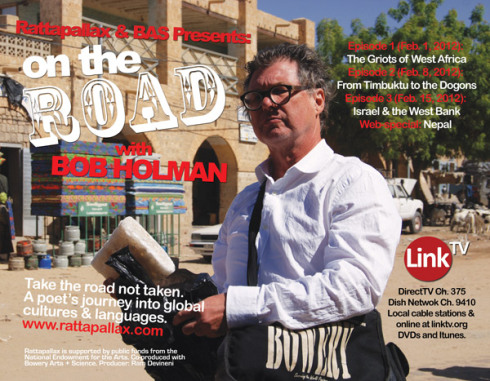
Image via On the Road with Bob Holman / Rattapallax

In April I also worked to create awareness about what we lose when we lose a language. My interview with poet Bob Holman appeared in BOMBlog.

In May I received my MFA in creative nonfiction from The New School. I had a fantastic thesis advisor and a beloved peer group, who challenged me to dig deeper in my memoir about growing up Greek American. After I read a snippet at our thesis reading, an instructor I’d never even had came up to tell me how much he liked my work!

2305th_flyer

Image via The Human Tower / Rattapallax

In June I witnessed the world record being broken for the tallest castell on a rooftop.

paris-review-issue-201-cover

In July I heard Amber Tamblyn read for The Paris Review at the Strand. Afterwards we somehow ended up on the elevator together, and I didn’t say anything to her. I never know in those situations if it’s polite to say something like “nice reading” or if the person just wants her privacy. I know she’s involved in the Beat literature community, though, so I should’ve probably talked to her about that.

570_Road

Image via The Millions

In August an article I wrote about a funny incident I had related to Jack Kerouac sparked a fiery debate and went viral, getting mentioned everywhere from The New Yorker to The Paris Review.

amramstef1

Photo via RA Araya

In September I had one of the most surreal moments of my life–reading with David Amram. I got to hear him perform again, this time as an enthralled audience member, in December.

miguel

Photo via RA Araya

That month I also read for poet Miguel Algarin‘s birthday bash.

p1016108

I also road tripped through northern and central California, visiting Cannery Row, City Lights Bookshop, The Beat Museum, and attending my college friend’s wedding.

p1015207

In October Hurricane Sandy hit New York, and I spent a lot of time in bed.

p10157001

In November I failed miserably at NaNoWriMo, but I had a lot of fun creating this ever-evolving Pinterest board for the book I never wrote.

I also gave a reading that got upstaged by a wedding proposal.

p1016239-e1355694672538

In December there was a flurry of Jack Kerouac-related activities to promote the film adaptation of On the Road, and I got to see author Ann Charters and film director Walter Salles in person at IFC. I also got to take a writing class with screenwriter Jose Rivera at 3rd Ward.

I also went out to Lowell and got to meet Jack Kerouac’s friend and pallbearer Billy Koumantzelis.


What were the highlights of 2012 for you?

New Year’s Eve with Jack Kerouac

1 Jan

9781101201572_p0_v1_s260x420

“The parties were enormous; there were at least a hundred people at Herb Benjamin’s basement apartment in the west nineties. People overflowed into the cellar compartments near the furnace. Something was gong on in every corner, on every bed and couch, not an orgy, but just a New Year’s party with frantic screaming and wild radio music.”

You can read the whole story beginning with Neal Cassady driving Jack Kerouac’s mom back to New York for New Year’s Eve, on page 225 of On the Road: The Original Scroll, published by Penguin Books in 2008.

The recent film adaptation of On the Road does a splendid job capturing the energy at the New Year’s Eve party. Burning Furiously Beautiful: The True Story of Jack Kerouac’s “On the Road,” the book I’m coauthoring with Paul Maher Jr., tells the true-life events that inspired this story.