Tag Archives: poetry

Happy Birthday, Amiri Baraka!

7 Oct

BluesPeople

Happy birthday to the great poet, playwright, critic, and activist Amiri Baraka!

Baraka was born on this day in 1934 in Newark, the same New Jersey city where eight years earlier Allen Ginsberg had been born. His given name was Everett LeRoi Jones, and he went by LeRoi, eventually changing his name in the late 1960s to Amiri Baraka. Baraka had studied at Rutgers University and Howard University before, like  Ginsberg and Jack Kerouac, studying at Columbia University. Also like Kerouac, he took classes at The New School. However, while Ginsberg and Kerouac could be found in the English departments, Baraka’s major fields of study were philosophy and religion. It is not surprising, then, that he became known for his social criticism.

As his website states:

Baraka started his professional career by joining the US Air Force in the early fifties.  Destined to be an accomplished author, he did not serve the military for long and switched to a completely different domain by opting to work in a warehouse for music records. This is where his social circle expanded and added the Black Mountain Poets, New York School Poets and the Beat Generation to it. Also, it developed his interest in Jazz music which later matured in making him one of the most sought after music critics. 

Around that same time, in 1958, he married Hettie Cohen. Together they founded the short-lived lit mag Yugen. He also edited the lit mag Floating Bear with Diane DiPrima. His first book of poems, Preface to a Twenty Volume Suicide Note, was published in 1961. Perhaps the book he is best known for is the 1963 jazz criticism Blues People: Negro Music in White America.

Baraka has gone on to receive the PEN Open Book Award, the James Weldon Johnson Medal for contributions to the arts, an Obie Award (for Dutchman), and the American Academy of Arts & Letters award, and become Professor Emeritus at the State university of New York at Stony Brook and the Poet Laureate of New Jersey.

This is barely even scraping the surface of who Baraka is and the importance of his work. My emphasis on his connection to Ginsberg, Kerouac,  DiPrima, and the Beat Generation is an artificial construct, simply to navigate my usual Kerouac readers. Baraka’s literature and activism is integral to our nation’s history and development. The Poetry Foundation offers a more thorough biography.

Read an excerpt from Blues People on Barnes & Noble.

Find out more on Amiri Baraka’s website.
Friday Links: …Punctuation!

27 Sep

In honor of it being National Punctuation Day earlier this week (the 24th, to be exact), here are some punctuation-related links:::

Mary Norris’ delightful piece on National Punctuation Day in The New Yorker

Literary agent Sterling Lord talks about how deeply Jack Kerouac thought about punctuation in his recent memoir Lord of Publishing

“Remove literary, grammatical and syntactical inhibition,” said Kerouac in his “30 Beliefs and Techniques for Prose and Life

Alexis C. Madrigal gets to the bottom of William S. Burroughs and Jack Kerouac duking it out over the Oxford comma in The Atlantic

I suggest The Atlantic is creating their own fauxlore in their beatnik punctuation story

Thoughts on punctuation in haiku, with references to Ezra Pound, Amy Lowell, Jack Kerouac, R. H. Blyth, Sora, Yaha, Richard Wright, James Hackett, Choshu, Hashin, L. A. Davison, David Coomler, and e. e. cummings

e. e. cumming’s liked to play with punctuation in poems like r-p-o-p-h-e-s-s-a-g-r

Roi Tartakovsky considers this topic in E. E. Cumming’s Parentheses: Punctuation as Poetic Device

“There are some punctuations that are interesting and there are some punctuations that are not,” says Gertrude Stein in Poetry and Grammar

Poet Bob Holman explains how to read a crossed out word out loud in The Brooklyn Rail

David Foster Wallace used endnotes to capture fractured reality

Check out “the greatest literary project of all time“: The punctuation-named lit journal The Ampersand Review

Punctuation impacts how readers perceive a work, I argue in this Writing Wednesday post

Which punctuation tattoo would you get?

Grammar Girl is the best go-to guide for “quick and dirty tips” on punctuation

Want exclamations in bed?! Check out the punctuation pillows from PB Teen

From the Ottoman Empire to Greenwich Village: Coffee Houses’ Literary History

23 Sep

It’s Coffee Week! Sunday, September 29, is International Coffee Day, so I’m devoting the entire week to all things coffee.

First, a bit about Coffee Day, via Squidoo:

After a comprehensive research, it looks like that people started to talk about this festival as early as 2005, but there has been virtually on mentioning of this term until 2009 when a few local coffee shops began offering free drinks and discount coupons. In 2010, there has been news on national newspaper that briefly talks about activities on the day.

My conclusion is that the history of this festival is relatively short and my own conspiracy theory is that some sort of a national coffee association started to promote it as a way to generate more business.

So why devote a whole week to International Coffee Day 2013?  Well, one of my missions here on this blog is “embracing the beatific.” For me, part of that means noticing and celebrating the little things in life. So often we get hung up on fancy restaurants that serve rich meals that we take the ordinary for granted, even though it sustains us. A cup of coffee can be a great comfort. A pot of coffee can be shared amongst friends. It can fuel a writer’s creativity.

As usual, I’ll be putting a literary spin on things.

Let me kick things off by first telling you a little about the history of coffee. From what I’ve read, coffee originated in Africa, and by the sixteenth century had found its way over to the Middle East. From there it reached Europe and Asia, only coming to the Americas later on. Having first been cultivated by Arabs, coffee shops were prevalent in the Ottoman Empire. In fact, they became so popular in Mecca—not simply because they served coffee but because they became gathering spots, where people could discuss politics—that they were banned in the early 1500s. Imagine coffee shops as speakeasies!

It was about 1645 when the first European coffee shop opened, and that was in Venice, Italy. Apparently, Greeks had an impact on coffee culture, which is no surprise really when you think about the Greek Empire’s impact on history. Johannes Theodat was a Greek who set up the first coffee shop in Vienna. In any regard, coffee houses became the place for artists and writers to meet in nineteenth-century Europe. Again, it wasn’t so much about the coffee—though certainly there was an art to making a good cup of coffee. Much like Starbucks is today, coffee houses back then were places writers could go in, order a cup of coffee, and spend hours writing or conversing. Low on cost, high on value.

Here in America, we can thank Italian Americans for setting up coffee shops in places like Greenwich Village and North Beach. And wouldn’t you know it, these were the places the writers commonly associated with the Beats hung out. Tiny tenements made for cramped quarters, so eager to socialize on the cheap these poets and novelists met up at coffee shops in the 1940s. By the ’50s, they were doing poetry readings there. Today, many cafes offer poetry readings and live music.

Writing Wednesday: There Will Be Twerking at Brooklyn Book Festival

4 Sep

310aVv9nW8L._SY300_

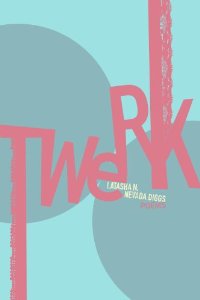
It may not be the VMAs, but the Brooklyn Book Festival isn’t your mother’s book club. The festival announced its schedule of events last week, and, yes, there will be twerking … or rather, the author of TwERK, LaTasha N. Nevada Diggs, will be on the panel Poetry in Performance. Here’s TwERK‘s overview, in case you aren’t familiar with it:

TWERK unveils an identity shaped by popular media and history, code switching and cultural inclusivity. The poems, songs, and myths in this long-awaited first book are as rooted in lyric as in innovation, in Black music as in macaronic satire. TWERK evokes paradox, humor, and vulnerability, and it offers myriad avenues fueled by language, idiom, and vernacular. This book asks only that we imagine America as it has always existed, an Americana beyond the English language.

“Here it is: a dope jam of dictions; a remixed, multicultural, polyphonic dance of vocabularies; a language of high stakes, hi-jinx, and hybridity. TWERK is subversive, vulnerable, and volatile. TwERK twists tongues. TwERK tweaks speech. Reading these amazing poems mostly makes me say, Wow! Open your ears to take this music in, open your mouth to say it out loud. And: Wow!”—Terrance Hayes

The Poetry in Performance panel will also feature Tyehimba Jess (leadbelly), Taylor Mali (The Last Time As We Are), and Quincy Troupe (ErranCities) and is moderated by Mary Gannon of the Academy of American Poets.

Performance has long been an essential part of poetry. The great ancient epics were told through oral storytelling or sung. It’s believed that Homer’s The Odyssey, for example, was brought to life by a professional performer known as a rhapsode, who improvised according to his audience.

Readings expose works to new audiences. They can make the words on a page feel more personal as the audience hears the intonation of the author’s voice and connects with him or her.

Allen Ginsberg’s “Howl” stands on its own as a great poem, but hearing him read it aloud makes it that much more powerful.

It’s sometimes been said, though, that writers are their own worst readers. This is because writing and performing are two very different skill sets.

Some poets love open mics and performing their works, but not all do. Many introspective writers envisioned a life of sitting alone in a room with a cup of steaming hot coffee as their fingers flew over a typewriter; not a life shuttling from bookstore to coffeehouses to give readings to bored patrons. Yet, many authors today are told to give readings, appear on radio shows, and sell their work.

The blogs have been abuzz about Miley Cyrus’ twerking at the VMAs, and some, like Pakalert Press, have blamed her handlers, like her father, Billy Ray Cyrus, did a few years ago. We like to think of poetry performance as being on a higher plane, but, to play devil’s advocate, is it always so different? Isn’t performance just another form of marketing?

Is the proliferation of burlesque poetry an example of literary twerking? Are these female poets subverting expectations or unwittingly playing into them? Does slam improve one’s improvisation and literary techniques or has it simply become its own cliche style? Must a writer give into the agent/publicist/handler’s pressure to perform his or her work to succeed in today’s literary landscape?


More Writing Wednesday posts here.


Photos from the 2013 New York City Poetry Festival

31 Jul

Po2

Po1

po3

po4

po5

I feel incredibly honored to have been invited to read at the 2013 New York City Poetry Festival. I had such a blast hearing so many great poets read at last year’s festival, and it never occurred to me that just a year later I would be joining them on stage. I have poet RA Araya to thank for continually supporting my writing. He invited me to read Homer in the ancient Homeric Greek and from the literary biography I’m coauthoring with Paul Maher Jr. entitled Burning Furiously Beautiful: The True Story of Jack Kerouac’s “On the Road,” so I read two road trip pieces.

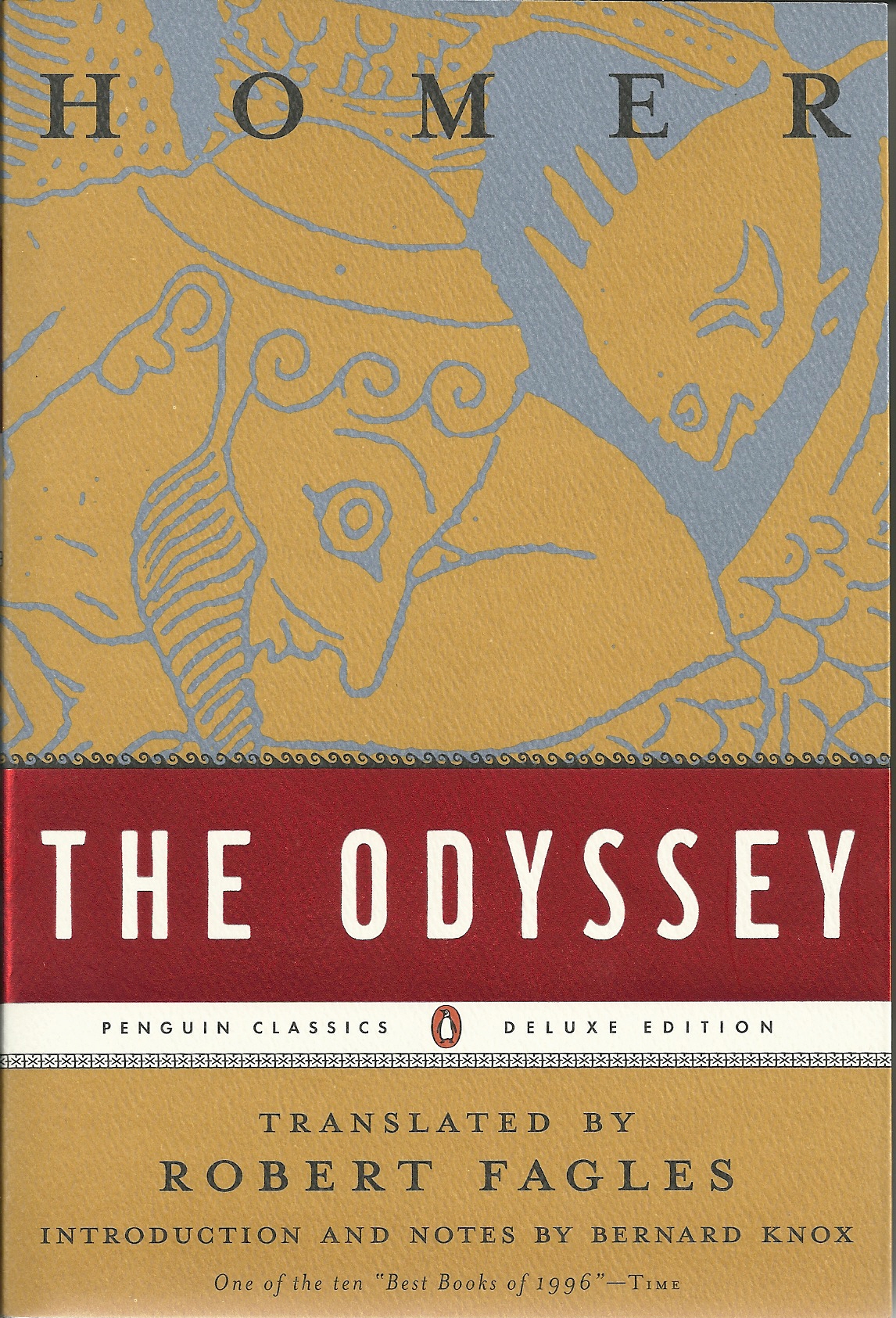
For my Homer selection, I chose the opening passage from The Odyssey. Growing up in the Peloponnesus, my father had to memorize part of the epic poem in school. To this day, he still can recite the lines! I studied Classical Greek at Pomona College (while a student at Scripps), which is different than Homeric Greek. We never really read aloud in class because it’s a “dead” language, one that is no longer spoken but read by scholars. There are debates about how ancient Greek dialects were spoken, as the pronunciation is, according to some scholars, different than modern Greek. I am therefore definitely not adept at reading in the ancient tongue, but if someone asks me to read something specific, I do my best. Fortunately, there are many great English translations of The Odyssey out there too!

It was a no brainer to choose one of the passages about poetry from Burning Furiously Beautiful. In telling the story of the making of the novel On the Road, it was important that the literary biography also explored Kerouac’s poetry and his friendship with other poets. Although he is mainly remembered as a novelist, Kerouac wrote poetry throughout his life, including the period when he was on the road. There’s a really strong section in the book about how Kerouac and Allen Ginsberg influenced each other’s writing, and I wanted to read that, but in the end I found a passage in Burning Furiously Beautiful that seemed to better encapsulate the mood of the Poetry Festival. In the passage, Kerouac has been walking along the highway, hitchhiking, and finds himself composing a poem about everything he sees around him. It reminded me of how out on Governors Island we were all a bunch of writers lofting in the grass and translating the world around us into poetic language.

I read directly after RA, who opened up the event with his famously short-but-sweet poem, and then came Hillary Keel, Sarah Sarai, Carmen Bardeguez-Brown, Kate Levin, Carlos Manuel Rivera, Sparrow, Bonafide Rojas, and Keith Roach. They were amazing! Seriously. Hilary read in German and a couple of the other poets read in Spanish, and I suspect our reading—under the name Miguel Algarin’s Brooklyn Poetry—was the most linguistically diverse at the Festival. I had traveled over the Governors Island with Kate, and I think this was her best reading yet. In addition to poetry about Manhattan and our value as people, she read from her punk novel, which I would’ve thought was a poem if she hadn’t said otherwise. I always enjoy hearing Sarah read, and in particular enjoyed her poem about meeting an angel at a bus stop. The poet who had me in stitches, though, was Sparrow. I’d heard him sing at RA’s birthday party last year, and I loved hearing his one-liner poems this time around.

Special thanks too to our stage manager Liz von Klemperer, who did an excellent job. There were a lot of volunteers who kept the entire event running smoothly. The New York City Poetry Festival is put on by The Poetry Society of New York and is organized by Stephanie Berger and Nicholas Adamski. For the full lineup of the two-day event, check out NYCPF 2013.

I also want to thank my family and friends who trekked out to the island—some coming from as far as Jersey and Brooklyn—to support my reading. The photos here were taken by Leslie Marks, except the last one which is a self portrait. For more photos of me and all the other amazing poets, check out asterix611’s flickr.

Friday Links: Homer and Kerouac

26 Jul

the-odyssey

Happy Friday! Any exciting plans for the weekend? I’ll be at the New York City Poetry Festival. Poet RA Araya invited me to read as part of the line up for Miguel Algarin’s Brooklyn Poetry happening on Saturday at 11:40 at the Algonquin stage on Governor’s Island. If you want to come, take the first ferry out of Battery Park. It’s free! The ferry’s free, the poetry reading is free. If it’s anything like last year, you can envision yourself lofting in the grass and losing yourself to the Siren-pull of beautiful words. Speaking of Sirens, I’ll be reading from The Odyssey in its original Homeric Greek (help!) and from the book I’m coauthoring with Paul Maher Jr., Burning Furiously Beautiful: The True Story of Jack Kerouac’s “On the Road.”

In light of this, here are a few Friday links on the topic.

Literary Elitism vs. Populism (Is Homer much better than Kerouac?)

The New Yorker rejects Homer and Kerouac

Paul Maher Jr.’s Jack Kerouac’s American Journey: The Real-Life Odyssey of “On the Road”

“Like Odysseus in Homer’s poems, Kerouac in The Duluoz Legend is a restless adventurer that embarks on an epic journey — an Odyssean archetype of the indomitable wanderer in modern guise,” writes LewRockwell.com

“Dean Moriarty was the Odysseus of Tennyson not Homer, sailing away again from his island-kingdom not because he loved his family less, but because he loved more the drumbeat of heroic adventure in his breast,” writes HistoryJournal.org

Steve McCurry looks at Travelers’ Tales

“[T]he Odyssean archetype of the indomitable wanderer has persisted down to modern times in works as diverse as James Joyce’s “Ulysses,” Jack Kerouac’s “On the Road,” Charles Frazier’s “Cold Mountain,” and even in the film “O Brother, Where Art Though?” in 2000,” writes Lubbock Avalanche-Journal

Everything since the Greeks has been predicted wrong, he says, because geometrical systems of thinking are fundamentally flawed. On the Road, then, is not just a travel memoir, a series of successive “kicks” from travel and all its accompaniments; it is Kerouac’s aesthetic manifesto that he sets up in opposition to the dominant idea of beauty-as-geometrical-harmony. This is why On the Road arrives out of nowhere and goes nowhere. That is why if you look for structure, for symmetry, for a narrative with a categorical beginning, a clear ending and internal consistency throughout, you will be disappointed,” writes anenduringromantic

“I listened to Snyder attentively. I wanted to understand more. In preparing to write the nonfiction saga of our long walk across Turtle Island –  Odyssey of the 8th Fire – I’d been informed by books telling of our human journey: Homer’s Odyssey, Chaucer’s Canterbury Tales, Steinbeck’s Travels with Charlie, William Least Heat Moon’s Blue Highways,  Cervantes’ Don Quixote, and Paolo Cohelo’sThe Pilgrimage. Inevitably, Kerouac’s On the Road also touched me with its entraining cross-America accounts of reaching outward, inward, downward, upward,” writes Steven McFadden


Friday Links: Words in Motion

14 Jun

Penguin

Leaving you this weekend with a few fun links:::

I was just thinking the other day that there should be a library on every corner instead of a Starbucks … or maybe a library in every Starbucks? The Free Little Library might be the solution we need! Here’s to hoping the expand throughout New York City.

There’s a Secret Poet in Lynn, MA, who has been posting anonymous messages. (via Poets & Writers)

I want a Poet Tree outside my window! (via Poets & Writers)

Have you ever spotted the POEMobile?

Want to read poetry on the go? Poetry.org offers 2500 poems in mobile format.

Anakalian Whims posted last year about Parnassus on Wheels and the idea of a peddler’s caravan.

Walden on Wheels is a new book by Ken Ilgunas about how living on the open road helped the author find financial freedom.

In case you missed it, here’s my link to the Penguin Book Truck.

Something tells me I’ll be spending some time out on Library Lawn on Governor’s Island this summer.

What are you reading this weekend?

Clip: Trading Text for Visuals: Poets As Visual Artists

25 Apr

blake-300x211

I had a really fun time putting together an article for Burnside about poets who are also visual artists. From the time I was a little child, I have been drawn to both the literary and visual arts worlds. Even in undergrad these two loves of mine co-mingled, as I majored in English and minored in studio art. My undergrad thesis looked at the relationship between writers and artists in New York in the ’40s and ’50s. It didn’t end there. While obtaining my MFA in creative writing, I took a poetry class on the collaborations of the poets and artists of the New York School. My article touches on some of the poets I’ve studied over the years, with of course a focus on the people commonly associated with the Beat Generation, but I pushed myself to find other examples as well.

Our cannons are so steeped in “dead white males” that it was important to me in stretching my knowledge to seek out poet-artists who did not play into that categorization. I was delighted to discover that Elizabeth Bishop painted.  Two years ago it was the hundred-year anniversary of the former Poet Laureate of the United States’ birth, so there were many readings and events to honor her work. Somehow, though, I missed the fact that she was a painter. Maybe it’s because she herself did not take it all that seriously, as I point out in my article. I happen to think they’re delightful, though.

A contemporary poet-painter I am quite interested in researching more about is Babi Badalov. As my article touches on, he mixes languages in his works, a result of having moved a lot between cultures to avoid persecution for his controversial visual poetry. As a writer, language is something I hold dear. My vocabulary is a key to who I am: the words I’ve picked up come from my mother’s midwestern phrasing and my father’s Greek tongue as well as the vernacular of northern New Jersey and the jargon of the institutes of higher learning I attended. I’ve found the preservation of endangered languages so critical because language is about identity. The idea that a poet has no language and has many languages intrigues me. When does Badalov express himself in his native Azerbaijani language and when in Russian? Is his use of English a political act?

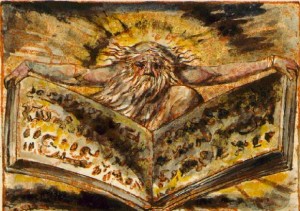
In my exploration of the Beats as visual artists, I could have easily waxed on and on. In fact, I did not go into any detail about Jack Kerouac’s artwork, even though he has been the subject of much of my studies. If this is something you’re interested in, leave a note in the comment section below, and I’ll write something up on this. What I did try to do for the Burnside article, though, was show that the Beats were following a rich tradition that came long before them. I point to William Blake and the Chinese and Japanese calligraphers as forerunners and influencers on the work of Allen Ginsberg and Phillip Whalen, for example.

My article was limited to just a few examples, a small taste of the artwork of poets. I’d love to hear who you think should be added to the list. Maybe I’ll make a part II!

Clip: Paintings in Praise of Poets

10 Apr

pushkin

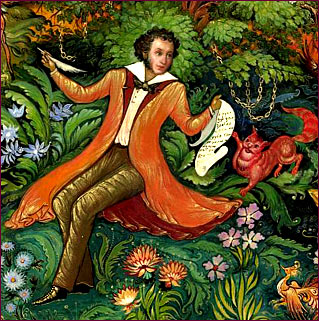
Back when I was in undergrad at Scripps, my thesis involved the relationship between poets and painters. Later, at grad school at The New School, I continued to study the way visual and literary artists influenced each other other and collaborated with one another. It’s endlessly fascinating and much more broad than the time periods of the ’40s, ’50s, and ’60s that I tend to focus on. Burnside Writers Collective just published a survey I did that shows painters honoring poets throughout the ages called “Painters in Praise of Poets.”

Gregory Corso’s Friends and Fans Give Him a Birthday Tribute

26 Mar

Michael Limnios is doing impressive work interviewing poets, scholars, and friends of the Beat writers over on Blues GR. For Gregory Corso’s birthday today, he’s compiled stories about the poet from those who had the pleasure of knowing him over the years and those who have read and been influenced by his work. The tribute includes memories and reflections from:

  • Ken Babbs
  • Hettie Jones
  • Harold Chapman
  • Dario Bellini
  • Andy Clausen
  • Eddie Woods
  • Nanos Valaoritis
  • Paul Fericano
  • Francis Kuiper
  • Helen Weaver
  • Elsa Dorfman
  • Marc Olmsted
  • Hank Harrison
  • Elliot Rudie
  • Levi Asher
  • Frank Beacham
  • Neeli Cherkovski,
  • Gordon Ball
  • Catfish McDaris
  • Tisa Walden
  • David Amram
  • Yannis Livadis
  • George Nicholas Koumantzelis
  • Gerald Nicosia
  • Robert Yarra
  • Ruth Weiss
  • Joe Ambrose
  • Cyclop Lester
  • John Sinclair
  • Michael Minzer
  • A. D. Winans
  • Kurt Lipschutz
  • Mark Sargent
  • Harvey Kubernik