Tag Archives: social media

Writing Wednesday: 10 Reasons Memoirists Should Make Time to Keep a Diary

28 Aug

I wrote recently about how Jack Kerouac kept a dream journal and have been blogging a lot about social media. In a recent Salon article, Michele Filgate wonders “Will social media kill writers’ diaries?: Now Facebook and Twitter are business necessities, they may be losing writers’ journals. Is something lost?”

Filgate writes that authors’ personal diaries offer a key into their literary development and intentions. She says authors’ social media posts can do the same thing, but that it’s not as authentic:

Even if there is a level of acting involved in authors who use social media, it isn’t anything new. Brian Morton (author of “Starting Out in the Evening” points out: “I’ve read that Tolstoy used to keep two diaries, one that he left lying around for other people to read, the other a more intimate record for himself alone. I think self-exposure on social media is probably like the diary we leave out for others. There’s probably always an element of performance in it, even when it seems most naked.”

The pressure to build a platform and use social media is real for authors. Finding time to write isn’t always easy to begin with, but not it’s a constant juggle between writing (and researching, editing, and pitching) and social media (blogging, tweeting, facebook-ing, and pinterest-ing). In addition to big writing projects, many writers are also taking on small projects, like writing articles for various lit mags.

Diary keeping is last on my literary to-do list, and I miss it! Not only do I miss it for personal reasons, but I miss having a record of what I was going through and what I was feeling at various points in my life. Especially as a memoirist, I think it’s essential to keep a diary.

Here are

  1. It is a log for when and where we were on exact days
  2. It reminds us of precise events in our life
  3. It reminds us of little details that we forget over time
  4. It is a more accurate record of our emotions than our social media entries
  5. It is a raw space to create
  6. It’s a reminder of our growth in life
  7. It’s a reminder of our literary accomplishments
  8. It’s a place to dream and make goals
  9. It’s a good way to warm up our writing muscles
  10. Technology changes over time, so having a tangible diary preserves our day-to-day thoughts

How do you juggle journal-keeping with your other writing and social media? How has keeping a diary helped your writing?


Friday Links + More Than a Thousand People Like Our Book!

16 Aug

528764_288645227899680_240973182_n

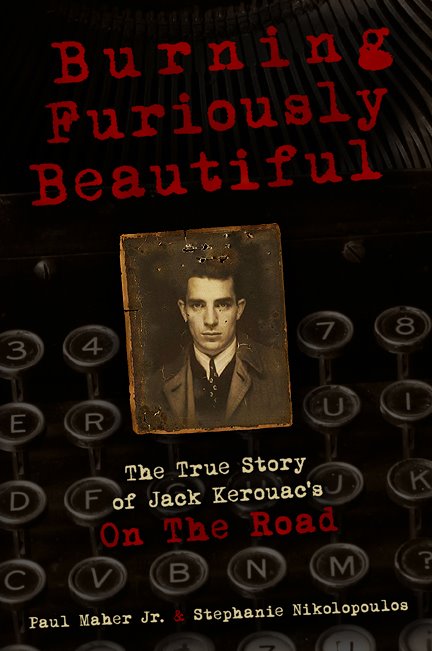
Paul emailed me the other day that we’d crossed the thousand-“like” threshold on our Facebook page for Burning Furiously Beautiful: The True Story of Jack Kerouac’s “On the Road.” I wrote him back: “!!!!!!!!!” …Give or take a few exclamation points.

I cannot thank all of you enough for your support. It means so much to me and for so many reasons. I’m not really a numbers person. Friends have asked me about my writing in the past, and I’ve said that all those Friday nights I spent at home in front of my computer instead of hanging out with friends and all that time I spend frustrated as I edit and rewrite will all be worth it if I reach just one person with my writing. I wasn’t speaking specifically about this book, but it holds true in the sense that if I can enlighten even one person on the fact that Jack Kerouac was a literary artist and not just some beatnik cartoon or if I can give hope to one writer out there who is struggling with yet another draft and thinks they’re rubbish because they mistakenly believe the myth that Kerouac wrote On the Road in just three weeks then I know I’ve done my job. Having a thousand people excited about the book, though, now that’s cake with a whole lot of icing on it!

I feel fortunate to have Paul as a coauthor. He’s so knowledgeable and experienced when it comes to writing about Jack Kerouac. He’s also really easygoing, and I think we’ve been able to work together well. Sometimes we get sidetracked and talk about things like woodland creatures and hot dog vendors and really bad sitcoms, and it’s all quite fun.

We also lucked out to have Igor Satanovsky as our cover designer. We get so many compliments on the cover. It’s usually the first thing people see when it comes to our book, so it was really important to us to have a strong cover and Igor nailed it.

We’ve been really privileged to have some people who have rallied around us and inspiring, encouraging, supporting, and even promoting us.

Most importantly, our families have given us time and space to write. My sister has attended almost every single reading I’ve ever given, Kerouac-related or not. My mom goes around sticking the postcards for our book anywhere she can. My father always made sure I got the best education I could get, which furthered my writing skills.

Many moons ago, before I even began working on this book, David Amram spent time talking to me about Kerouac and dispelled the whole idea of the so-called Beat Generation mythology. Since then, he’s invited me to read with him, has promoted my work in his own shows, and continually pushes me to think about life and art in new ways.

George Koumantzelis has gone out of his way to support our work. Oftentimes getting people to agree to an interview is like pulling teeth, but George actually invited me and arranged for me to interview his uncle Billy, who was Kerouac’s pallbearer. Billy and George have been tremendously gracious toward me. George often sends me helpful news links and posts my blog entries on Facebook.

The first time I ever got to read from Burning Furiously Beautiful was thanks to poet RA Araya, who invited me to read at The Sidewalk Café. He has since invited me many more times to read at various venues, and even when I haven’t read he’s passed out postcards for the book. He also frequently posts my work on Facebook.

One of the goals with our Burning Furiously Beautiful Facebook page was to create an inviting space for Kerouacians, those interested in Beat literature, road trippers, people who dig the history and culture of the ’40s and ’50s, writers, fans of the On the Road film, and the curious. We wanted a page that was informative and entertaining but also a safe place where people could ask questions and connect with each other. We don’t have a thousand people commenting on every single post, but we do have some regular posters as well as people who are actively engaged in leaving comments and forwarding posts. I’ve had the pleasure of even meeting a few of these people in person, which has been super fun. I never really had any friends that were into the Beats so it’s exciting to connect with others who are passionate about their literature.

There are so many people who have helped us get where we are today, in both small and big ways, specific to this book or in more general ways. The post would go on forever if I listed out each and every name, but the support is meaningful and doesn’t go unnoticed. It makes all the difference.

If you aren’t on our Facebook page yet, please do feel to join us. This isn’t some exclusive hipster club. People don’t try to one up each other on our page. We’re just super passionate and want to connect with others.

* * *

Reaching over a thousand “likes” by no means happened overnight. A lot of work goes into finding interesting things to post, responding to people’s comments, commenting on other Facebook pages, and getting lost in the time suck of social media. I’ve also done my fair share of going to talks on social media and scouring the internet for the latest hot tips. So, for today’s Friday Links, I wanted to leave you with a few helpful links for growing your social media. I’m by no means a pro, but some of these people certainly are.


Alt SLC registration just opened up! It’s a great way to learn about blogging

Dave Charest writes How to Get Facebook Likes for Your Page (The Easy Way!)

Author Laura Vanderkam writes about how to Grow your blog readership overnight! (or slowly over 3.5 years)

Conduit offers Ten Tips for Growing Your Target Audience Using Social Media

Photos tend to get more likes than just text, and Lark and Linen provides a Tutorial: Editing Your Photos

Samantha Murphy says that using “I” gets more thumbs up in How to Get More Likes, Shares on Facebook

In case you missed them, here are some of my previous links on social media:::

The true, true story behind the Facebook fauxlore of the Kerouac-Burroughs fight

I am one in a million

My Goodreads To-read list

How many stars should a book get on Goodreads?

Playing around on Google+ I found an article about, well, me

Why I Tweet and post on Facebook

Building your book before you write it

My takeaways from Cup of Jo’s advice on blogging as a career

Social media lessons from last year’s SWSX

I heart social media

Galley Cat’s advice for writers on Pinterest … and I’m on Pinterest

What are YOUR tips for growing your social media?

The Great Valhouli Fauxlore: Atlantic Uncovers Truth Behind Kerouac-Burroughs Fight

9 Aug

No5

Those of us who devote our time studying the life and work of Jack Kerouac and yet who simultaneously spend a lot of our time on Facebook already called “hoax” on that photograph that was being circulated around about a plaque on how Kerouac and William S. Burroughs got into a drunken fight over the Oxford comma. I assumed it was a digitally manipulated photograph. As it turns out, though, it has a fascinating back story. Alexis C. Madrigal uncovered the truth behind the plaque — which actually exists — in the story “Facebook Fauxlore: Kerouac, Burroughs, and a Fight Over the Oxford Comma That Never Was” in The Atlantic.

It’s a great piece — minus the odd portrayal of the Greek American behind the plaque. But we’ll get to that in a minute.

Hot on the trail of something fishy, Madrigal contacted sources Paul Marion; The Morgan Center; Martha Mayo, head of the Center for Lowell History; and Tony Sampas. Marion, author and employee at UMass Lowell Center for Arts and Ideas, had seen the plaque and knew that it was created to promote Mill No. 5 at 250 Jackson Street in Kerouac’s hometown of Lowell, Massachusetts.

Marion referred Madrigal to Ted Siefer’s article “Mill No. 5 brings transformation to Lowell” in The Boston Globe, which explained that developer Constantine Valhouli, with business partner Jim Lichoulas III, was transforming the former textile mill into an office building:

with a kind of fun-house brio to attract the eclectic, off-beat, and hip: boutique movie theater, yoga studio, farm-to-table restaurant, a lounge/library in the style of an English manor — the whole thing decorated with architectural materials salvaged from the likes of Dr. Seuss’ house.

It would appear that Valhouli ascribes to the same Beat philosophy of improvisation as Kerouac. Siefer says:

Valhouli likens the development of the project to how jazz musicians build a song. “We’ve not built from a plan,” he said. “You play a theme, and you just keep playing improvisations over it.”

Madrigal points to the pivotal paragraph in The Globe story for proving the plaque is a fake:

And there, in the 13th paragraph, was proof that we were looked at a false sign: “Inside the entry hall will be a reconstructed early 19th-century New England schoolhouse,” the Globe wrote, “an exhibit that will be part of what Valhouli calls the Lowell Atheneum [AHA!], which will also feature a collection of hand-painted pseudo-historical plaques from New England history [DOUBLE AHA!].”

Madrigal, who went on to interview Valhouli, then explained that Valhouli and Lichoulas thought up the idea of creating “a series of plaques commemorating events that never happened” to support Mill No. 5. They hired Ould Colony Artisans‘ Robert and Judy Leonard to paint the plaque by hand. The artists had created many other historical signs in the Massachusetts area.

I found Madigral’s investigative reporting enthralling.

Still, I was put off by this aside:

I had to get in touch with this Valhouli character, who was, no doubt, swirling his mustache near some railroad tracks looking for damsels.

Okay, I’ll concede that Constantine Valhouli certainly sounded like a “character” for faking people out — although I’m not sure we generally refer to conceptual artists or those who come up with brilliant marketing schemes as “characters.” Instead, I think we tend to use terms like “inspired” and “business-savvy” to describe people who manage to get others talking about their work. A quick look at Mill No. 5’s Facebook page, and the tongue-in-cheek branding is evident:

We’re working on the bathrooms at Mill No. 5 today. Which made us think of the central question of paleontology:
Q: Why can’t you hear a pterodactyl go to the bathroom?
A: Because the P is silent.

Brilliant Subway Panhandling Prank Flips the Script

Hahahahahaha. This. Oh this. The Hipster Logo Design Guide.

But there was “no doubt” in Madrigal’s mind that Valhouli had a mustache and that he swirled it, like some sort of old-timey Western villain? Is the mustache assumption because he’s Greek American or because The Boston Globe article referred to his work as “Disneyland for hipsters”? Where did the leap from real-estate developer to someone who hung out at a train station get made? Was this supposed to tie him closer to Kerouac — or make him sound like some sort of train-hopping hobo? He was out “looking for damsels”? What??

With today’s access to personal information on the Internet, it took only seconds to find Valhouli’s LinkedIn page, and — unless it too is a hoax — discover he (fittingly) received his BA in English and fine art from Georgetown University, where he went on to get his MA in interactive technology. From there, he got his MBA from Columbia University’s Business School. He received the Charles G. Koch Fellowship and was a Peter Agris Fellow. He did equity research for Morgan Stanley and was director of business development for Incogniti before becoming principal at The Hammersmith Group, which describes itself as “a boutique strategy consulting firm with concentrations in real estate and technology.” His LinkedIn summary reads, in part:

Constantine has been featured in the BBC, Businessweek, CNN, Forbes, Fortune, Newsweek, and the Wall Street Journal. He has guest lectured at Columbia Business School, MIT, New York University, and has served as a panelist on internet industry events and at the U.S. Department of State.

There wasn’t a profile picture to verify him peeking out of a train tunnel to leer at women. The Atlantic has created its own “fauxlore” about Constantine Valhouli. Oh, how the tables have turned.

* * *

This post has been updated to correct the publication to The Atlantic.

Sneak Peek at My Goodreads To-Read List

8 Aug

GraceNotes

If you’ve been following along for a while now, you know I’ve been doing a blog series on Goodreads. Today I want to talk about one of my favorite Goodreads features.

I like that I can keep track of what I’ve read in the past (though I’m sure there are lots I’ve left off), but even better is that I can compile a list of books I want to read. So often I’ll hear about a good book and then forget about if I don’t get to the library or bookstore right away or if another book comes along that I want to read. A couple books on my to-read list right now are:

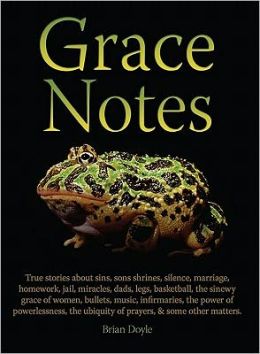
  • Brian Doyle’s Grace Notes. I heard him speak at the Festival of Faith & Writing in 2012 and loved his mix of humor, sentiment, and humanity.
  • Melinda MoustakisBear Down, Bear North: Alaska Stories. I came across her name when she was nominated in 2011 as a National Book Foundation 5 Under 35 fiction writer. On the one hand, she’s a young, female, Greek American author so I feel a kindred spirit; on the other hand, she’s from Alaska, which seems more foreign than Greece to me, yet, given my interest in the Lapland, intriguing.
  • Michael SimsThe Story of Charlotte’s Web: E. B. White’s Eccentric Life in Nature and the Birth of an American Classic. My love for literature bloomed when I read Charlotte’s Web, so when I heard about this book I knew I had to read it. I just haven’t gotten to it yet….

As you can see, I have very eclectic taste.

I’ve found a few books on Goodreads that I’ve added to my list, but mainly the books on my to-read list have come from stories I’ve heard on NPR, mentions on lit blogs, and random encounters with the authors.

Have you ever found a great book on Goodreads? How do you usually find out about books? What should I add to my ever-growing list of to-read books?

Shameless plug alert: If you’re looking for a book to add to your to-read list, perhaps you want to add Burning Furiously Beautiful: The True Story of Jack Kerouac’s “On the Road.”

How Many Stars Should a Book Get on Goodreads?

7 Aug

redpony

Yesterday I wrote about my experience on Goodreads. I think most people use it to write and read reviews of books, but truth be told I don’t do that. The only “review” I give is ranking a book through Goodreads’ star system, and I only do that because it seems sort of mandatory.

I actually feel a sense of anxiety in ranking books. I have very idiosyncratic tastes. I often read books that have gotten a lot of hype and dislike them. But give me a book that the general reading public finds “strange” or that “no one” has heard of and I smatter it with stars.

I think it’s important to acknowledge that we all have different tastes and that a book can be worthwhile even if we didn’t enjoy it. I know that sounds strange, crazy even, but hear me out: I don’t particularly love the story of Hamlet (I mean, come on, it has a ghost in it), but the dialogue, structure, and literary techniques are genius, pure genius.

Also, tastes change over time. I didn’t like David Guterson’s Snow Falling on Cedars the first time I read it. It was required summer reading when I was in high school, and I was decidedly not into love stories or books that heavily emphasized ethnicity issues, a topic my school focused on a lot. When I read it again in college, though, I was drawn into the story itself as if I were reading it for the first time. Sometimes I don’t even re-read a book and my opinion of it changes. I was looking over my Goodreads list and was surprised at how I’d rated some books. Books with three or four stars are the trickiest. I can really enjoy a book yet give it a lower ranking just because it’s not something I feel will stand the test of time or because it doesn’t have that extra little something. In contrast, sometimes I’ll give a book a slightly higher ranking than my gut reaction to it because it is a good book and I don’t want to discredit it even though in my mind there was something missing from it. See, this is why I should probably actually write reviews!

Anyway, here’s a bit of insight into the method of my ranking madness:

  • Five stars—the highest a book can get—are only for books that I feel have changed my life in some way, that are impressively written, and/or that I would reread. They’re the books I would own a copy of, have either marked up profusely or am careful to keep pristine, and would selfishly not lend out. Laurence Sterne’s Tristram Shandy is a book I gave five stars to. An eighteenth-century British novel, it still feels strikingly fresh and relevant to today’s postmodern literature. Read it. It’s wild.
  • Four stars are for books I enjoyed a lot and got absorbed in reading and would recommend to others. I would want to own a copy of the book. I gave J. D. Salinger’s The Catcher in the Rye four stars, for example, because I recognize it’s a well-written, thoughtful book with deep implications for our culture but it didn’t really move me. I read it when I was a teenager and I read it again a year or two ago for my alumnae book club and my reaction was the same.
  • Three stars are for books that are good—good in the sense that they are solid reading for on the subway, on a plane, or at the beach. Maybe the story was appealing or maybe there was something interesting about the writing style that got me thinking. I’d pass the book along to my mom or a friend without wanting it back. A book like Ethan Hawke’s Ash Wednesday gets three stars. It met my expectations but didn’t blow me away.
  • Two stars are for books that somehow miss the mark for me personally. They’re for books I couldn’t get into, that tried too hard, that maybe had an interesting concept but failed to execute it properly, or that didn’t use interesting diction. Oftentimes they’re for books I was excited to read but weren’t worth the hype. They’re for books where I tend to feel cheated for some reason. Louisa May Alcott’s Little Women gets two stars from me. I’d heard so much about this book I was really expecting it to be something special, but it was kinda a snooze fest. Sorry.
  • One star is for books that irritated me. John Steinbeck’s The Red Pony is an example of a book I only gave one star to. I read it back in high school and maybe I’d feel differently now but at the time I remember feeling tortured as I read it. (Conversely, I gave five stars to Steinbeck’s Travels with Charley and Cannery Row.)

Do you think I’m too harsh? Too fickle? How do you rank books on Goodreads? Do you ever go back and change your ranking?

I Am One in 20 Million

30 Jul

goodreads_logo072413

I just read in Shelf Awareness that Goodreads has reached 20 million readers. While that number itself is impressive, even more astonishing is the fact that in this past year alone they had doubled their numbers.

I joined Goodreads a while back after someone at a Mediabistro party raved about it as a great way to find out about books and connect with others in the publishing industry. What I like about Goodreads more than reading other people’s reviews is connecting with people who have like-minded literary interests. There are groups for people interested in the Beat Generation and for those interested in travel literature, and, although I’ll admit I don’t check in too frequently (so many social media sites, so little time…), I do enjoy connecting with readers and authors on the message boards.

I also have an author’s page up, where readers can find and review the books I’ve written or contributed to. It’s been encouraging to see people put one of the books I’m working on on their to-read list even before the book has been published! It motivates me to make the book worth their time.

If you’re on Goodreads, will you please add my book to your to-read list? Also, if you’re an author, let me know in the comments below how I can find your book to add to my to-read list.

Should Women Dismiss Beat Literature?

18 Jul


funnyfacebookstorewdsdsdsdsdsImage via Dangerous Minds
Google+ was all the talk at BEA this year and last. I’ve been on the social media platform for a while now, but just the other day decided to see how it compares with Facebook for finding the latest conversations on the Beat Generation. I did a keyword search and immediately found an article that was right up my alley: “The Feminist Backlash Against the Beat Generation.”
Kimberly J. Bright writes for Dangerous Minds about her experience viewing the now legendary scroll of Jack Kerouac’s On the Road and having another person there remark in surprise that she was there of her own volition. Bright writes:
Their teacher asked me a question about the scroll, obviously assuming that I was a museum employee. When I explained that I was just a visitor, she apologized and said, “But I didn’t think women read Kerouac.”
That was news to me.
The backlash against the Beats in general, and Kerouac in particular, is becoming more evident and is mostly coming from Feminists.
Oh, how I could relate—which Bright noted, referencing my apparently controversial Millions article. Just like Bright, I never knew some works of literature were supposedly for men and others were for women. How silly of me to not realize there was an entire list of writers whom I should ban without reading them to decide for myself or that I should dismiss the literary and cultural merits of a highly innovative and influential body of literature just because certain aspects of it might offend my sensibilities.
I attended a women’s college, where we read a wide breadth of literature and learned to think critically about works—literature that included Allen Ginsberg, Ernest Hemingway, Michel Foucault, Karl Marx, Isaac Asimov, Kathy Acker, comic books, Sigmund Freud, Jean-Jacques Rousseau, Samuel Richardson, and Jane Austen. In my MFA program, we specifically discussed the distinction between the author and the work as well as the literary merit versus our individual preferences.
Bright went on to write:
Personally if I purged my bookshelves, real and virtual, of all the alcoholics and misanthropes – let alone all the manic-depressives, opium addicts, suicides, eccentric asexuals, adulterers and misogynists – I would hardly have any books left.
It seems a bit hypocritical, to me, for people to lambast the Beats while still reading other authors whose personal lives and even the content of their work are not any less controversial. This summer everyone rushed out to watch The Great Gatsby, read or reread the novel, and plan their weddings around the theme of F. Scott Fitzgerald’s story that placed women as secondary characters, kills off one of the women, glorifies a criminal, includes affairs, and exalts illegal substances. It should also be noted that Fitzgerald is widely known to have plagiarized his wife’s work for some of his own books. If we’re dismissing authors on so-called moral grounds, perhaps we should then also dismiss:
  • Miguel de Cervantes (prison time after the money he collected as a tax collector went missing)
  • Paul Verlaine (prison time after shooting Rimbaud)
  • O. Henry (prison time for embezzlement)
  • Jean Genet (prison time for lewd acts)
  • Leo Tolstoy (secretly abandoned his wife in the middle of the night)
Of course, choosing whose work is “worth” reading becomes problematic because whose morals must we go by? Furthermore, which attributes of a person are more or less important when deciding whether we should read their literature? Should we praise Betty Friedan’s entire body of work because she is pro-choice? Should we dismiss her entire body of work because she did not further lesbian politics? Or vice versa? Should we dismiss her altogether? What about Bill Clinton? Should we not read the former president’s books because he cheated on his wife? Because he wielded his position of power over a twenty-two-year-old intern? Should we dismiss Jack Kerouac’s work because of the way he treated his daughter? Should we praise his work because of the way he treated his mother?
I don’t mean to make light of any of these issues or to excuse anyone from anything. My point is simply that we need to take a closer look as to why we excuse some authors but not others. Why have the writers who have been marketed together as the Beat Generation been targeted while others get a free pass?
And why don’t those so-called feminists who target the so-called Beats acknowledge the many women writers associated with the generation? Here were women who faced tougher socio-political times than we do today who got their own apartments, who studied at well-known undergrads and went on to work toward their MAs, who didn’t just sit around cooking dinner for their husbands but created works of their own. Should we forget their body of work or negatively lump it into a category we don’t read because of their associations?

Blame Parents for Millennials Acting Entitled: Helicopter Parents Have Trophy Kids Who End Up Boomerang Kids

12 Jun

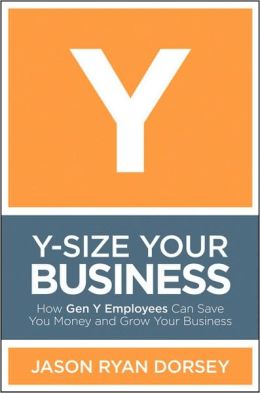
YSize

Remember my post from last July “Hipsters Hate Driving”? It was inspired by the Reuters report “America’s Generation Y Not Driven to Drive” that did not once use the word “hipster” but rather “millennials.” Well, apparently Ford—as in the car manufacturer—sponsored a panel discussion with my exact title on May 30, 2013.

Flavorwire’s Tom Hawking caught up with Hipsters Hate Driving keynote speaker and millennials expert Jason Dorsey  in the June 10, 2013, article “Flavorwire Interview: Millennials Expert Jason Dorsey Says Young People ‘Really Do Act Entitled.’” At the Ford panel, “The Gen Y Guy” had said: “[Millennials] don’t want commitment. They drop in and out of experiences. They can’t wear a shirt or blouse if it’s photographed. The worst fear of millennials is wearing the same dress twice on two different [social networks],” and Hawkings got to the bottom of whether Dorsey really did think millennials are that shallow.

Flavorwire’s title quote comes from one of Dorsey’s responses:

When you dig into it, you find that a lot of millennials really do act entitled. They really do show up and have these massive expectations and are not willing to work at [things].

The word “entitlement” has come up again and again in discussions about millennials, and Dorsey argues it’s important to delve into the “why.” Of the root causes, Dorsey mention aspects relating to higher education and employment. Valid points, but I want to highlight a few comments he made that may slip under the cracks. Dorsey says, he focuses on trends like when people of the current generation are “moving out [of parents’ homes]” and “the relationship you have with your parents” as well as “views about parenting, especially how they were raised.”

Now we’re getting somewhere! Think about it for a moment: who are the parents of Generation Y? The oldest of them are Baby Boomers, who are “the generation that received peak levels of income” and “are associated with a rejection or redefinition of traditional values,” as Wikipedia put it. The younger parents are of Generation X, often derided as the Slacker Generation, who, facing economic downfall, turned to entrepreneurship. In other words, the shift from Baby Boomers to Gen X itself set the stage for a new generation that would be less traditional in their career outlooks.

In terms of their parenting style, these Baby Boomer and Gen X parents of Millennials have been called “Helicopter parents.” Jennifer O’Donnell defines this phenomenon in her About.com article “What Are Helicopter Parents?”:

The term “Helicopter parents” is often used to define a group of parents who engage in the practice of over-parenting. Helicopter parents are accused of being obsessed with their children’s education, safety, extracurricular activities, and other aspects of their children’s lives. Critics have criticized helicopter parents for over protecting their children and for failing to instill them with a sense of independence and a can-do attitude. Helicopter parents are also accused of over programming their children, and for failing to allow them free time to play and explore on their own.

She goes on to explain the root causes:

But the practice of over-parenting came into its own sometime during the 1990s when parents were bombarded with news stories about child abductions, academic competition, and ultimately, competition in a global economy.

Wikipedia explained the definition further, giving light into how this parenting technique affected children’s habits:

[The term “helicopter parenting”] gained wide currency when American college administrators began using it in the early 2000s as the Millennial Generation began reaching college age. Their baby-boomer parents in turn earned notoriety for practices such as calling their children each morning to wake them up for class and complaining to their professors about grades the children had received. Summer camp officials have also reported similar behavior from parents.

The children of Helicopter parents became known as Trophy Kids. I very briefly touched on this concept in my post “Parallel Generations,” in which I discussed the commonalities between the Lost Generation, the Beat Generation, and Generation Y, when I said:

Since then we’ve seen Generation Y, also known as the Millennials or Generation Next, who are often thought of as privileged Trophy Kids.

Notice the word “privileged.” Ron Aslop wrote the book on the subject: The Trophy Kids Grow Up. As the book’s website explains:

The millennials are truly trophy kids, the pride and joy of their parents who remain closely connected even as their children head off to college and enter the work force.

As Aslop suggests, these helicopter parents have been extremely involved in their Millennial children’s careers. George’s Employment Blog writes:

Although the Millenials often seek out challenging work and high levels of responsibility, these applicants’ parents are highly involved in their kids’ job search.

In a story entitled “Helicopter Parents Hover in the Workplace” on NPR on February 6, 2012, Jennifer Ludden says parents are doing more than just sending their children wanted ads and helping them with their resumes:

With millennial children now in their 20s, more helicopter parents are showing up in the workplace, sometimes even phoning human resources managers to advocate on their child’s behalf.

She states the facts:

Michigan State University more than 700 employers seeking to hire recent college graduates. Nearly one-third said parents had submitted resumes on their child’s behalf, some without even informing the child. One-quarter reported hearing from parents urging the employer to hire their son or daughter for a position.

The result of helicopter parenting is that Generation Y is coming across as entitled whether it’s their fault—or their parents. The Wall Street Journal article “The ‘Trophy Kids’ Go to Work,” published in 2008, said:

More than 85% of hiring managers and human-resource executives said they feel that millennials have a stronger sense of entitlement than older workers, according to a survey by CareerBuilder.com.

But who’s to blame: the parents or the kids? In the September 12, 2012, BusinessNewsDaily article “What Gen Y Is Not Getting from Their Parents,” David Mielach, writes:

A new survey has found that 69 percent of those between the ages of 18 and 29 receive little financial support from their parents.

He goes on to say:

The research found that 75 percent of young adults would rather live independently of their parents even if it is a struggle to do so financially.

Oh really? Then what are we to make of the rise of the phrase “boomerang kid,” which refers to young adults moving back in with their parents? It’s a concept that had such resonance it got its own (ill-fated) sitcom: How to Live with Your Parents for the Rest of Your Life.  T. J. Wihera wrote in the 2009 Denver Post article “Gen Y: Returning to the Nest”:

The Census Bureau reports that 56 percent of 18- to 24-year-old men and 48 percent of women in the same age bracket were living at home with their parents in 2008, though it should be noted that these numbers also count college students living in the dorms as living at home.

A more recent 2010 article in The Atlantic summed it up in the title “1 in 10 Millennials Living With Parents Because of Recession.” This year, Bloomberg Businessweek launched a business to get boomerang kids out of their childhood bedrooms.

While millennials’ parents may have raised them to be confident, independent-thinkers, and may have done everything in their power to push their little Trophy Kids toward success from a young age, their helicopter parenting techniques may have backfired. Many millennials have become boomerang kids, relying on their over-protective, control-freak parents to continue giving them the direction they have always given them.

In my recent blog post “Shunning Cars … and Life” I touched on the cultural shift that took place around the time of the Beat Generation, saying that while Jack Kerouac went on the road, today’s Generation Y is living a virtual life. Could it be that part of the reason why so many millennials have turned to living life through a computer screen has something to do with helicopter parents who “fail[ed] to allow [their children] free time to play and explore on their own” because “the 1990s […] were bombarded with news stories about child abductions, academic competition, and ultimately, competition in a global economy,” as O’Donnell wrote? In other words, perhaps parents believed life behind the computer was safer and more educational than the alternative of playing carefree outdoors. Children were the gods of their computer worlds, they could control their domain, and they soon became celebrities of social media sites like MySpace [emphasis mine], which furthered the entitlement already instilled in them by their parents.

Of course, these are generalities. Even though he was from the so-called Beat Generation, Jack Kerouac, who used the term “hipster” in his writing, could fit the profile of a millennial. His mother, Gabrielle, hovered like a helicopter parent, and he was a boomerang kid, who was living with his mother even in his forties.

Nominated for the Blog of the Year Award 2012

9 Jan

I was nominated for the Blog of the Year Award 2012!

Special thanks to Tarisai from Writersfield for the nomination. It’s amazing how much social media has influenced my life and work, connecting me to other writers, bloggers, and readers.

My Year in Review: 2012

4 Jan

What a full year 2012 was! Here’s a quick little recap:::

aj_originalcov

In January I announced that the rumors were true. But it took the full year for it to finally look like this.

logored

In February I joined Pinterest to discover how it may help me as a writer and have been happily pinning ever since.

creatingspace

In March my personal essay was included in the book Creating Space.

p1015624

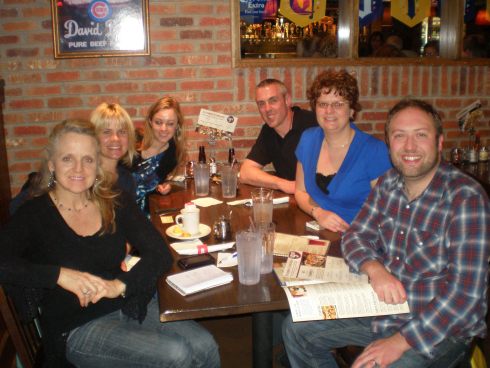
In April I was one of the editors representing the Burnside Writers Collective at the Festival of Faith & Writing. It was so special to get to catch up with the other editors and writers, whom I just adore. I also had the opportunity to teach a writing workshop while I was there.

reading

on_the_road

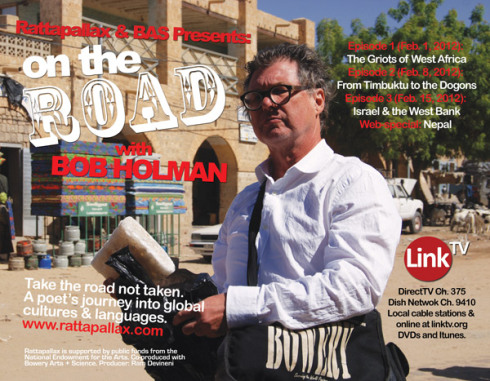
Image via On the Road with Bob Holman / Rattapallax

In April I also worked to create awareness about what we lose when we lose a language. My interview with poet Bob Holman appeared in BOMBlog.

In May I received my MFA in creative nonfiction from The New School. I had a fantastic thesis advisor and a beloved peer group, who challenged me to dig deeper in my memoir about growing up Greek American. After I read a snippet at our thesis reading, an instructor I’d never even had came up to tell me how much he liked my work!

2305th_flyer

Image via The Human Tower / Rattapallax

In June I witnessed the world record being broken for the tallest castell on a rooftop.

paris-review-issue-201-cover

In July I heard Amber Tamblyn read for The Paris Review at the Strand. Afterwards we somehow ended up on the elevator together, and I didn’t say anything to her. I never know in those situations if it’s polite to say something like “nice reading” or if the person just wants her privacy. I know she’s involved in the Beat literature community, though, so I should’ve probably talked to her about that.

570_Road

Image via The Millions

In August an article I wrote about a funny incident I had related to Jack Kerouac sparked a fiery debate and went viral, getting mentioned everywhere from The New Yorker to The Paris Review.

amramstef1

Photo via RA Araya

In September I had one of the most surreal moments of my life–reading with David Amram. I got to hear him perform again, this time as an enthralled audience member, in December.

miguel

Photo via RA Araya

That month I also read for poet Miguel Algarin‘s birthday bash.

p1016108

I also road tripped through northern and central California, visiting Cannery Row, City Lights Bookshop, The Beat Museum, and attending my college friend’s wedding.

p1015207

In October Hurricane Sandy hit New York, and I spent a lot of time in bed.

p10157001

In November I failed miserably at NaNoWriMo, but I had a lot of fun creating this ever-evolving Pinterest board for the book I never wrote.

I also gave a reading that got upstaged by a wedding proposal.

p1016239-e1355694672538

In December there was a flurry of Jack Kerouac-related activities to promote the film adaptation of On the Road, and I got to see author Ann Charters and film director Walter Salles in person at IFC. I also got to take a writing class with screenwriter Jose Rivera at 3rd Ward.

I also went out to Lowell and got to meet Jack Kerouac’s friend and pallbearer Billy Koumantzelis.


What were the highlights of 2012 for you?