Archive | Beat Generation RSS feed for this section

David Amram On Contributing Our Gifts

3 Dec

It was musician David Amram’s birthday last month, and he left the most inspiring message in the comments section on my blog. Since a lot of readers don’t go back and reread the comments on blogs, I want to draw attention to what he said because its worth paying attention to. It’s worth really meditating on. You can read his entire comment here, but I’ll highlight a few things in particular.

On what we should be doing with our time here on earth:

I am still searching for some wisdom, and recently realized that when you get as close to Methusala City as I am, and try to figure out what it all means, you realize that the most important thing for us to do in this life is to make SOME kind of contribution while we are here.

On our gifts:

And we all have something worth sharing with others, but often our dreams appear to be hopeless to experts who themselves have often given up hope.

[…] We are all born with gifts.

On persevering:

I hope my efforts will inspire young kids to hang in there FOR LIFE, especially when they are told by their career councilors that they should give up before they have had a chance to even get started.

On taking action:

So when young kids come to me and say “I wish i had been around when knew and worked with all these fantastic people. i wish i had lived during that time”, i always tell them what Charlie Parker told me in my basement apartment in 1952 in Washington D.C. when i asked him what it was like to have his song “Now’s the Time” (which he had composed seven years earlier in 1945)

“It’s just the way it should ” he said. “Now was and will always be the time because Now is the RIGHT time!”

My own birthday is coming up, and I’ve been thinking a lot about what I’ve done with my life and what I want to do with my life. I’ve been thinking about how I spend my time and what my goals and dreams are. Sometimes dreams feel impossibly unobtainable. Sometimes they feel like work. Work gets a bad rap. So does dreaming, for that matter. I think, though, that it’s essential to dream, and it’s crucial to work towards those dreams.

As David said, “We are all born with gifts.” Therefore I believe it is our responsibility to contribute them.

I think we often wait for a reason to change or start something new. After the holidays, we’ll exercise. At the New Year, we’ll make our resolutions. Next November, we’ll write our novel. In a different season of our lives, we’ll make time to volunteer more. And then when we fail to meet our own expectations, we wait for the next big marker to begin again. Every minute of every day is a gift. We have the chance to become who we want to be TODAY. We can start using our gifts RIGHT NOW. Sure, over time, our gifts will be honed that much more and we might look back and cringe at our past efforts, but without those past efforts we won’t get to where we need to be.

“Now’s the time.”

* * *

Burning Furiously Beautiful: The True Story of Jack Kerouac’s “On the Road” is now available as an ebook and paperback!

Gift Guide: 5 Unique Gifts for the Mad Ones

29 Nov

Happy Black Friday?! The writers associated with the Beat Generation generally avoided vapid commercialism, but if you have a friend, family member, or colleague who is into Beat literature — or if you’re looking to spoil yourself — you may want to bless them with a gift that values their literary interest this holiday season. But what do you get for the Beat reader who has a bookshelf full of dog-eared novels and biographies?

If your friends are “the mad ones, the ones who are mad to live, mad to talk, mad to be saved” — you know, people who religiously read Jack Kerouac — they’ll appreciate these unique literary-inspired gifts.

Then, again, as Kerouac said: “Offer them what they secretly want and they of course immediately become panic-stricken.”

1. A cappuccino cup from Caffe Reggio.

CappuccinoCupMediumImage via Caffe Reggio

Caffe Reggio one of the coffeehouses the Beats hung out at in Greenwich Village.

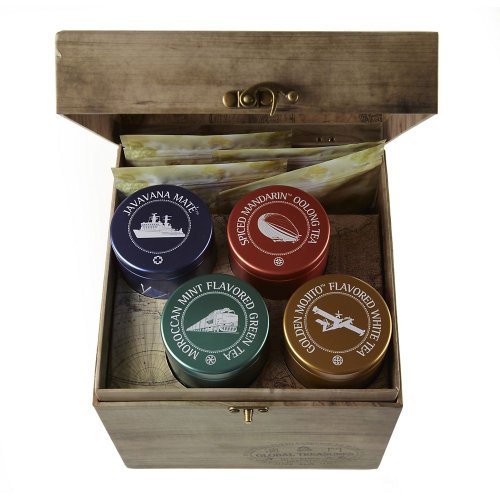
2. Teavana Global Treasures Tea Gift Set.

teaImage via JC Gourmet Gifts

“‘Now you understand the Oriental passion for tea,'” said Japhy. “‘Remember that book I told you about; the first sip is joy, the second is gladness, the third is serenity, the fourth is madness, the fifth is ecstasy.'” ~Jack Kerouac

3. Chronicle Books Bedside Dream Journal.

Bedside_Dream_JournalImage via Chronicle

“All human beings are also dream beings.” ~Jack Kerouac

4. On the Road key ring from Penguin.

pc_keyring_ontheroadImage via Penguin

Get your kicks on Route 66 with this On the Road key ring from Penguin.

5. Cinnamon Apple Pie Candle from SweetShoppeCandles.

pieImage via Etsy

“I ate apple pie and ice cream—it was getting better as I got deeper into Iowa, the pie bigger, the ice cream richer.” ~Jack Kerouac

You can get more ideas on my Gifts for the Mad Ones Pinterest page and from my blog post last year Gift Guide for the Beat Reader.

And you know what these all pair well with? You guessed it! A copy of Burning Furiously Beautiful: The True Story of Jack Kerouac’s “On the Road.” which is available in paperback through Lulu and Amazon and in ebook through Lulu.


* * *

Burning Furiously Beautiful: The True Story of Jack Kerouac’s “On the Road” is now available as an ebook and paperback!

Friday Links: Best Indie Bookstores

22 Nov

Happy Friday! Flavorwire’s recently been doing an indie bookstore roundup, which has been fun to peruse. I thought I’d share those with you and also offer a few of my own picks, which are mainly Beat-related or New York City-bound.

Roundups

Beat Bookstores

New York City Bookstores

What are the best indie bookstores in your neighborhood?

* * *

Burning Furiously Beautiful: The True Story of Jack Kerouac’s “On the Road” is now available as an ebook and paperback!

[2/12/14: edit made to this post to fix a spacing issue]

Contest: Show Us Your Burning Furiously Beautiful

21 Nov

Show us YOUR copy of Burning Furiously Beautiful for a chance to win Jack Kerouac memorabilia.

Paul is giving away his own personal copy of an audio cassette that Carolyn Cassady made for him, labeled with her handwriting (with also the mailer too, which bears her signature), of Jack and Neal Cassady reading into a tape recorder. It’s one-of-a-kind and can be yours.
Rules: Just buy yourself a copy and find a cool as Miles Davis place to take a picture of it or of you holding it and post it on the official Burning Furiously Beautiful Facebook page and then find everyone you know to LIKE it. Only “likes” on the Facebook page — not if you post the pic here or elsewhere on Facebook — will be counted. The entry with the most “likes” by November 28, 2013, will win

How to purchase:

We’ve already received some really creative entries, which I’m excited to share with you! Even if you’re not interested in entering the contest, you can cast your vote for your favorite photo.

Contest1Richard Marsh

Contest2Kate Levin

Contest3Roxanne Leinhauser-Brennan

Contest4Katie Ingegneri

Contest5Anne-Marie Giroux

Contest6Ben Stables

Vote or enter here!

Clip: Vox Poetica Published My Poem “In a Diner in America Circa 1956”

20 Nov

Vox-Transparent

I’m thrilled to be published in vox poetica. The lit mag was founded in 2009 by Annmarie Lockhart, a resident of Bergen County, New Jersey — where I’m from!

The poem featured, “In a Diner in America Circa 1956,” came to me one day as I was walking on Park Avenue during my lunch break. I was thinking about Jack Kerouac stopping in a roadside cafe for a little nourishment as he traveled across the country, and the awkwardness and opportunities that abound when one travels on one’s own.

It’s a pastiche of Jack Kerouac’s interview on The Steve Allen Show, his narration of what may be the only true Beat film Pull My Daisy, and an amalgamation of information from his novels and letters as well as biographies.

You can read it here.

Video: Joanne Kyger at The Poetry Project

19 Nov

I was excited to receive an email telling that this video of Joanne Kyger was recently uploaded to Youtube via The Poetry Project.

Poet Joanne Kyger is the author of Just Space: Poems 1979-1989, which includes such poems as “Bob Creeley Has Died And He Is To Have A Tibetan Ceremony,” “Day After Ted Berrigan’s Memorial Reading,” “Yesterday When Diana Drops Me Off On Evergreen,” and “You Believe This Stash Of Writing Is ‘scholarly’?” The book, published by Black Sparrow Press in 1991, is illustrated by Arthur Okamura. Kyger’s other works include The Tapestry and the Web (her first book); Strange Big Moon: The Japan and India Journals: 1960-1964 (foreword by Anne Waldman); God Never Dies; The Distressed Look; and her most recent, About Now: Collected Poems.

Joanne Elizabeth Kyger was born on November 19, 1934, in Vallejo, California. She studied at the University of California, Santa Barbara, and then moved to north, where the San Fransisco Renaissance was happening. In 1958 she met poet Gary Snyder, and when he moved to Japan she went too and married him on February 28, 1960. Together they later traveled to India, where they met up with Allen Ginsberg and Peter Orlovsky. By 1964, she was back in the US, and the following year she married painter Jack Boyce. They separated in the 70s. Kyger currently lives in Bolinas, California.

Check out her poetry online here.


Happy Birthday, David Amram!

17 Nov

Happy birthday to David Amram!

Michael Limnios of Blues.Gr put together a great tribute to David Amram featuring:

It is well deserved!

* * *

Burning Furiously Beautiful: The True Story of Jack Kerouac’s “On the Road” is now available as an ebook and paperback!


Friday Links: The UK & Beat Generation Connection

15 Nov

Hope you’ve enjoyed the week we spent exploring the connection between the UK and the Beat Generation! Do you like these sorts of thematic weeks?

I thought I’d kick off your weekend with a few related links:

Barry Miles wrote about Jack Kerouac’s Celtic roots in Jack Kerouac: King of the Beats, and you can read that section in the New York Times

I wrote about how Lawrence Ferlinghetti introduced Kerouac to a Breton (a Celtic language brought over to France) phrase here

Carolyn Cassady was living in Bracknell, England, at the time of her death in September

Bracknell is home to the Bracknell Jazz Festival, which has been running since the ’70s

Pat Fenton wrote an article for the Irish Echo entitled “Down memory lane into Paddy Reilly’s,” which explores the band the Black 47 taking inspiration from Jack Kerouac and Celtic music (I think you can read the article in the print edition, sorry!)

Reporters interview beatniks in Newquay, England, sometime around 1960, in this video on Papermag

London Living suggests the best beatnik hangouts

Proud Chelsea brought Paris’s “The Beat Hotel” to London via a 2010 exhibition a few years ago

When England got The Sea Is My Brother before we did, I wondered if the Brits love Kerouac more than the Yankees?

What did you think of Daniel Radcliffe’s American accent as Allen Ginsberg in Kill Your Darlings?


The British Are Coming!: Beat Influence on The Kinks

13 Nov

Books-hp-GQ_04Nov13_pr_b_642x390

Today I’m continuing my discussion of Olivia Cole’s fascinating thesis that American media had a profound impact on post-World War II England, argued in her article “Won over by the West: The irresistible allure of Americana for post-war Britons” for the November 2013 issue of British GQ.

Cole points to The Kinks’ frontman Ray Davies’ “love/hate relationship with America,” referencing a Kerouac-like affair with the road.

A little background info that doesn’t appear in her article but might be helpful: The Kinks are the British rock band behind the songs “You Really Got Me” and “Lola.” They were formed in North London in 1964 — also known as the year The Beatles landed in America and set off the British Invasion.

In reviewing Ray Davies’ new memoir Americana: The Kinks, The Road And The Perfect Riff, Cole explains how the British band leader’s youthful obsession with “the cowboy heroes of Fifties Westerns” and American comic books “got him daydreaming and writing songs.” Growing up the seventh out of eight children — the youngest being Dave Davies, his Kinks bandmate — Ray Davies had barely even traveled out of his hometown of Fortis Green and dreamed of America.

Cole reports that the freedom of the road was at first alluring to Davies. Using Amazon’s preview, I read in Davies’ chapter The Empty Room:

In recent years I had become a transient observer, never settling anywhere and, after a life on the road, never committing to a place or a person.

Davies’ romantic relationships could not be sustained on the road. Cole refers to his failed relationship with Chrissie Hynde, but following the dissolution of his first marriage he attempted suicide. Rockin’ Town town put it this way:

First, his wife of nine years, Rasa, split taking the kids. A week later, Davies was admitted to Highgate Hospital and treated for a drug overdose that looked suspiciously like a suicide attempt.

Cole reports that Davies felt the loneliness of the road. She writes that he:

wonders to what extent the rock-star/beatnik lifestyle lets anything meaningful stand a chance.

Ray Davies, born in 1944, would have been thirteen when On the Road was published in the US. It does not appear from Cole’s article that the Beat Generation’s influence on The Kinks was explicit. However, Davies discusses the same jazz musicians that captivated Kerouac, the adventure and disappointment of a life on the road, and Americana.

Here is Barnes & Noble’s overview of Ray Davies’ memoir Americana: The Kinks, The Road And The Perfect Riff:

As a boy in post-War England, legendary Kinks’ singer/songwriter Ray Davies fell in love with America—its movies and music, its culture of freedom, fed his imagination. Then, as part of the British Invasion, he toured the US with the Kinks during one of the most tumultuous eras in recent history—until the Kinks group was banned from performing there from 1965-69. Many tours and trips later, while living in New Orleans, he experienced a transformative event: the shooting (a result of a botched robbery) that nearly took his life. In Americana, Davies tries to make sense of his long love-hate relationship with the country that both inspired and frustrated him. From his quintessentially English perspective as a Kink, Davies—with candor, humor, and wit—takes us on a very personal road trip through his life and storied career as a rock star, and reveals what music, fame, and America really mean to him. Some of the most fascinating characters in recent pop culture make appearances, from the famous to the perhaps even-more-interesting behind-the-scenes players. The book also includes a photographic insert with images from Davies’s own collection from the band’s archive.

The book was published by Sterling Publishing on October 15, 2013.

Tune in tomorrow when I talk about Cole’s discussion of Iain Sinclair’s take on the Beat Generation in his forthcoming book American Smoke.

* * *

Burning Furiously Beautiful: The True Story of Jack Kerouac’s “On the Road” is now available as an ebook and paperback!

The British Are Coming!: The Beat Generation’s Influence on The Beatles

12 Nov

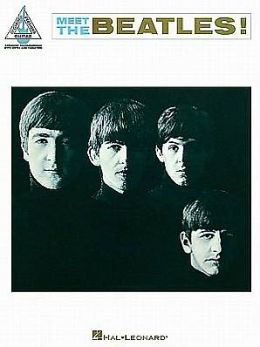
9781617804618_p0_v1_s260x420Check out the turtlenecks on the cover of Meet the Beatles

Yesterday, inspired by Olivia Cole’s article “Won over by the West: The irresistible allure of Americana for post-war Britons” for the November 2013 issue of British GQ, I kicked off a week-long series about the relationship between the Beat Generation and the British Invasion. I didn’t get too much into her article, but instead I wrote about the general history of each “group” (please take this term lightly; neither was an intended movement or formal group) and how and why they are connected. Today, I want to share a fun story with you about the two longest love affairs (Oh gosh, take that even lighter. People get so mad when I use hyperbole.) of my life: the Beatles and the Beats.

I was a HUGE Beatles fan back when I was in high school. I can’t quite remember how I got into the Beatles, but I know it’s not because of my parents. My dad didn’t listen to music. I was raised on smooth jazz, Prince, Lionel Ritchie, and Stevie Wonder, thanks to my mom. As I grew up and started discovering music on my own—Vanilla Ice, Boyz II Men, Snow, Positive K, Arrested Development, REM (should I go on? Ah, nostalgia)—she was the cool mom that listened to whatever I listened to on the radio. My mom was actually too young to be into the Beatles. In the craze of my own private Beatlemania, I pestered her for information, and she said she remembered her older sister getting a letter from their cousin in Sweden talking about this new band The Beatles and how popular they were.

One of the first exposures I had to Jack Kerouac and the Beat Generation came through The Beatles. I owned a VHS — yes, I’m that old! — documentary about The Beatles. It was a pretty low-quality documentary that I think I picked up at the K-Mart at the Closter Plaza. I don’t remember the name of it, but I used to watch it over and over again after school. I remember it saying that John Lennon named The Beatles, in part, because he was influenced by the Beat Generation. I didn’t know what the Beat Generation was at the time, nor did I bother to look it up — again, I’m old, and this was before I’d ever even heard the word “Internet,” so looking things up required going to the Closter Public Library and rifling through the encyclopedias. Still, when you watch something on repeat enough times, it gets ingrained in your memory, and when you suddenly learn something new, the threads of your brain weave everything together.

Wayne Mullins explored this in his essay “Long John Silver and the Beats” for Beatdom:

Several name changes occurred in the early life of the Beatles before John Lennon and Stuart Sutcliffe decided to honour the memory of Buddy Holly by changing the band name to the Beetles (as a play on Buddy Holly and the Crickets), but as John Lennon was a fan of clever word play he decided to change the spelling of The Beetles to Beatles as a way to suggest “beat” or “beat music”. As John Lennon said in a 1964 interview, “It was beat and beetles, and when you said it people thought of crawly things, and when you read it, it was beat music.”

Mullins goes on to prove the Beat–Beatles by discussion John Lennon’s art school education and the exposure he had to instructors who were fans of the Beats and the meeting of Lennon and Allen Ginsberg. He also makes notable claims about the parallel paths the Beats and the Beatles took toward enlightenment, coming from religious upbringings, looking toward the East, and returning (or at least considering) the religions of their youth. The article also points out that Jack Kerouac and Lennon both rejected the associations people made with them, preferring to remain autonomous.

Steve Turner’s book Jack Kerouac: Angelheaded Hipster also speaks to Kerouac’s influence on Lennon:

[John Lennon’s] fellow student Bill Harry specifically remembers Lennon reading “On the Road” and the short story “The Time of the Geek”, which was published in an anthology called ‘Protest’ in 1960. “He loved the ideas of open roads and travelling,” says Harry. “We were always talking about this Beat Generation thing.”

Mullins’ story about Lennon’s meeting Ginsberg was just one incident. The Allen Ginsberg Project post “Sunday 9th – John Lennon” recalls when Ginsberg invited The Beatles to his birthday party and Lennon and George Harrison showed up with their wives.

When the Nixon administration wanted to deport Lennon and Yoko Ono, Beat poet Gregory Corso wrote a letter, as did a whole lot of other famous people, according to John Weiner’s article “How Bob Dylan, Gregory Corso, Joyce Carol Oates and Others Helped Stop Nixon From Deporting John Lennon and Yoko Ono” in the Los Angeles Times.

The Beatles also had an affinity for William S. Burroughs, who appeared on the cover art of their Sgt. Pepper’s Lonely Hearts Club Band.

Not only that, in the Dangerous Minds article “The William S. Burroughs/Beatles connection,” Richard Metzger writes:

Over the weekend, I noticed the following passage in the book With William Burroughs: A Report From the Bunker by Victor Bockris:

Burroughs: Ian met Paul McCartney and Paul put up the money for this flat which was at 34 Montagu Square… I saw Paul several times. The three of us talked about the possibilities of the tape recorder. He’d just come in and work on his “Eleanor Rigby.” Ian recorded his rehearsals. I saw the song taking shape. Once again, not knowing much about music, I could see that he knew what he was doing. He was very pleasant and very prepossessing. Nice-looking young man, hardworking.

He goes on to elucidate the obvious connection: Barry Miles, whom The Allen Ginsberg Project also points to. Miles deserves his own post, but in short the thing to know is that he owned a bookshop in London that was frequented by the Beats when they were there, and he wrote about The Beatles and 1960s London underground culture.

Tune in tomorrow when I finally get into the meat of Cole’s article by discussing her commentary on The Kinks’ frontman Ray Davies’ new memoir.

* * *

Burning Furiously Beautiful: The True Story of Jack Kerouac’s “On the Road” is now available as an ebook and paperback!