Archive | Beat Generation RSS feed for this section

Limited Time Offer: 10% Off the Paperback of Burning Furiously Beautiful

10 Oct

528764_288645227899680_240973182_n

Exciting news!

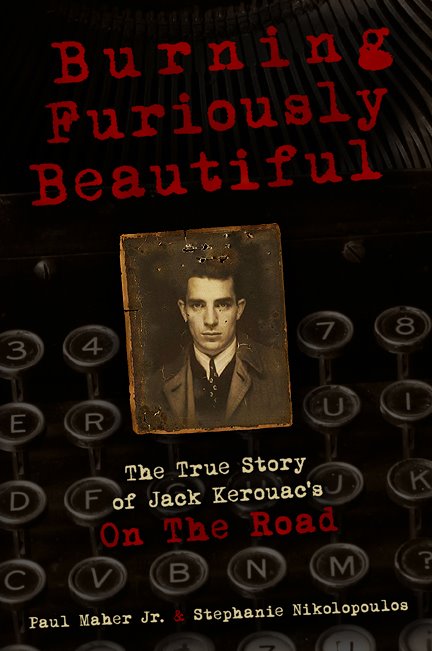
Pop the champagne! The paperback edition of Burning Furiously Beautiful: The True Story of Jack Kerouac’s “On the Road” is now on sale.

Limited-time offer

We’re giving you an extra 10% off now through the end of Lowell Celebrates Kerouac. (Unfortunately, the books won’t arrive in time for us to sell physical copies at the festival, but at least you’ll get a discount!)

What’s the book about, you ask?

Burning Furiously Beautiful: The True Story of Jack Kerouac’s “On the Road” is the most up-to-date and accurate account of the development of American writer Jack Kerouac’s groundbreaking 1957 novel, On the Road. Using archival resources as the foundation of this book, Kerouac scholars Paul Maher Jr. and Stephanie Nikolopoulos have fashioned a gripping account of the internal and external experiences of Kerouac’s literary development.
Fueled by coffee and pea soup, Jack Kerouac speed-typed On the Road in just three weeks in April 1951. He’d been traveling America for the past ten years and now, at last, the energy of his experiences flowed through his fingertips in a mad rush, pealing forth on a makeshift scroll that he laboriously taped together. The On the Road scroll became literary legend, and now Burning Furiously Beautiful sets the record straight, uncovering the true story behind one of America’s greatest novels.
Burning Furiously Beautiful explores the real lives of the key characters of the novel—Sal Paradise, Dean Moriarty, Carlo Marx, Old Bull Hubbard, Camille, Marylou, and others. Ride along on the real-life adventures through 1940s America that inspired On the Road. By tracing the evolution of Kerouac’s literary development, this book explains how it took years—not weeks—to write the seemingly sporadic 1957 novel. Through new research and exclusive interviews, this revised and expanded edition of Jack Kerouac’s American Journey (2007) takes a closer look at the rise of Jack Kerouac and the Beat Generation, giving insight into Kerouac’s family roots, his time at sea, the shocking murder that landed Kerouac in jail, his romances, and his startlingly original writing style.
Who is my coauthor?

Paul Maher Jr. is the author of the critically acclaimed biography Kerouac: His Life and Work and Empty Phantoms: Interviews and Encounters with Jack Kerouac
Check out my exclusive interview with Paul here.
You can judge our book by its cover
We’ve gotten a lot of compliments on our cover. Credit goes to Igor Satanovsky. He’s an award-winning cover designer that I’ve worked with for many years now on various publishing projects. Igor also is a poet (buy his book here!) and studied with Allen Ginsberg.

* * *

Burning Furiously Beautiful: The True Story of Jack Kerouac’s “On the Road” is now available as an ebook and paperback!

Hot Tip: 7 Kerouac-Related Places to Visit in Lowell Not Covered by Lowell Celebrates Kerouac

10 Oct

OLYMPUS DIGITAL CAMERA

Lowell Celebrates Kerouac (LCK) has done another fantastic job creating an itinerary that explores the town in which Kerouac was born and where he was laid to rest. If you’re spending time in Lowell and want to explore a few places off the beaten track, though, there are still many Kerouac-related places to check out. This is by no means an inclusive list, but it’s a few options if you’re staying in Lowell longer, creating your own tour, or looking to dig deeper into Lowell’s history.

1.  Kerouac’s typewriter is on display at the Mill Girls and Immigrants Exhibit at the Morgan Cultural Center … unfortunately, due to the government shut down you probably won’t be able to see it right now.

2.  It seems fitting that the National Streetcar Museum is in the hometown of the author of On the Road. Visiting the museum will give you context to the transportation history that played an important role in Kerouac’s life and literature.

3.  The  Pow-Wow Oak Tree is believed to have stood for 300 years! It was a sacred meeting place for Native Americans. Given Kerouac’s Native American ties, this may be a unique stop on your tour. Unfortunately, the tree was cut down just this year, but you can still visit the place where it stood.

4.  Kerouac’s birth home, which is on the LCK tour, has yet to be made into a museum, but painter James McNeill Whistler’s birthplace has been owned by the Lowell Art Association since 1908 and is now a museum. Kerouac would have walked past it and known about this famous artist. In 1993, John Suiter showed his photographs Rumors of Kerouac here.

5.  The Sun is important to Kerouac’s legacy. Kerouac worked for the newspaper, and journalist Charles Sampas reviewed Kerouac’s work in its pages. It used to be located in Kearney Square, but more recently moved to the American Textile History Museum.

6.  Visit Monument Square, and you’ll pass by the same statues Kerouac once did.

7.  Dana’s Fruit & Confectionery has been around since 1914. We all know Kerouac had a sweet tooth, so it wouldn’t be surprising if he stopped in here. …Just don’t try to take any pictures inside!

You may also like:

My photographs of places in Lowell from Kerouac’s time that are still around today


* * *

Burning Furiously Beautiful: The True Story of Jack Kerouac’s “On the Road” is now available as an ebook and paperback!

5 of the Most Famous People and Things to Come Out of Lowell

9 Oct

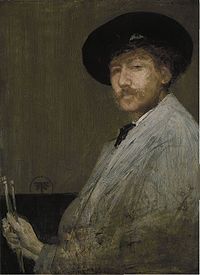
200px-Whistler_SelbstporträtWhistler’s self-portrait

You already know that Jack Kerouac was born in Lowell and set many of his books there, but the Massachusetts town is also the birthplace of several other famous people and inventions. With Lowell Celebrates Kerouac going on this week, I thought it would be fun to explore 5 fun facts about Lowell:

1.  The first AOL instant message was sent by a Greek American from Lowell

2.  Remember the drink Moxie? It was invented in Lowell. You can buy it here and visit the roadside attraction the Moxie Bottle House in Union, Maine

3.  The son of a railway engineer, painter James Abbott McNeill Whistler was born in Lowell and there you can visit the Whistler House Museum of Art

4.  The brilliant Greek American photographer Christopher Makos is from Lowell

5.  Lowell is also the birthplace of Bette Davis

* * *

Burning Furiously Beautiful: The True Story of Jack Kerouac’s “On the Road” is now available as an ebook and paperback!
Happy Birthday, Amiri Baraka!

7 Oct

BluesPeople

Happy birthday to the great poet, playwright, critic, and activist Amiri Baraka!

Baraka was born on this day in 1934 in Newark, the same New Jersey city where eight years earlier Allen Ginsberg had been born. His given name was Everett LeRoi Jones, and he went by LeRoi, eventually changing his name in the late 1960s to Amiri Baraka. Baraka had studied at Rutgers University and Howard University before, like  Ginsberg and Jack Kerouac, studying at Columbia University. Also like Kerouac, he took classes at The New School. However, while Ginsberg and Kerouac could be found in the English departments, Baraka’s major fields of study were philosophy and religion. It is not surprising, then, that he became known for his social criticism.

As his website states:

Baraka started his professional career by joining the US Air Force in the early fifties.  Destined to be an accomplished author, he did not serve the military for long and switched to a completely different domain by opting to work in a warehouse for music records. This is where his social circle expanded and added the Black Mountain Poets, New York School Poets and the Beat Generation to it. Also, it developed his interest in Jazz music which later matured in making him one of the most sought after music critics. 

Around that same time, in 1958, he married Hettie Cohen. Together they founded the short-lived lit mag Yugen. He also edited the lit mag Floating Bear with Diane DiPrima. His first book of poems, Preface to a Twenty Volume Suicide Note, was published in 1961. Perhaps the book he is best known for is the 1963 jazz criticism Blues People: Negro Music in White America.

Baraka has gone on to receive the PEN Open Book Award, the James Weldon Johnson Medal for contributions to the arts, an Obie Award (for Dutchman), and the American Academy of Arts & Letters award, and become Professor Emeritus at the State university of New York at Stony Brook and the Poet Laureate of New Jersey.

This is barely even scraping the surface of who Baraka is and the importance of his work. My emphasis on his connection to Ginsberg, Kerouac,  DiPrima, and the Beat Generation is an artificial construct, simply to navigate my usual Kerouac readers. Baraka’s literature and activism is integral to our nation’s history and development. The Poetry Foundation offers a more thorough biography.

Read an excerpt from Blues People on Barnes & Noble.

Find out more on Amiri Baraka’s website.

“Burning Furiously Beautiful” eBook Now Available!

30 Sep

528764_288645227899680_240973182_n


Happy Monday! I have BIG news to share today. Burning Furiously Beautiful: The True Story of Jack Kerouac’s “On the Road” is now available as an eBook! You can get it for $8.99 at Lulu.

Here’s a bit about the book from Lulu:

Burning Furiously Beautiful: The True Story of Jack Kerouac’s “On the Road” is the most up-to-date and accurate account of the development of American writer Jack Kerouac’s groundbreaking 1957 novel, On the Road. Using archival resources as the foundation of this book, Kerouac scholars Paul Maher Jr. and Stephanie Nikolopoulos have fashioned a gripping account of the internal and external experiences of Kerouac’s literary development.

And here’s our synopsis:

Fueled by coffee and pea soup, Jack Kerouac speed-typed On the Road in just three weeks in April 1951. He’d been traveling America for the past ten years and now, at last, the furious energy of his experiences flowed through his fingertips in a mad rush, pealing forth on a makeshift scroll that he laboriously taped together. The On the Road scroll has since become literary legend, and now Burning Furiously Beautiful sets the record straight, uncovering, among other things, the true story behind one of America’s greatest novels. Burning Furiously Beautiful explores the real lives of the key characters of the novel—Sal Paradise, Dean Moriarty, Carlo Marx, Old Bull Hubbard, Camille, Marylou, and others. Ride along on the real-life adventures through 1940s America that inspired On the Road. By tracing the evolution of Kerouac’s literary development and revealing his startlingly original writing style, this book explains how it took years—not weeks—to ultimately write the seemingly sporadic 1957 novel, On the Road. This revised and expanded edition of Jack Kerouac’s American Journey (2007) takes a closer look at the rise of Jack Kerouac and the Beat Generation.

The ebook can be read in the following formats: Windows, PC/PocketPC, Mac OS, Linux OS, Nook, Apple iPhone/iPod/iPad, Android, Kindle (Amazon), Sony Reader, Blackberry Devices, Palm OS PDAs, Cybook Opus, Bebook (Endless Ideas), Papyrus (Samsung) Jetbook (Ectaco), Windows Mobile OS PDAs.

A print book is forthcoming.

“Kerouac Opened a Million Coffee Bars”

26 Sep

Kerouac

In Wrestling with Starbucks: Conscience, Capital, Cappuccino, Kim Fellner writes:

You could, in fact, argue that it wasn’t Schultz [founder of Starbucks] but author Jack Kerouac who popularized these places in the U.S. psyche. As William Burroughs wrote in 1985, “Kerouac opened a million coffee bars and sold a million pairs of Levis to both sexes.”

I think he may be right.

Kerouac coffee links:::

Beatnik Coffee Shop (a photo)

Kafe Kerouac

Beatnik’s Coffee House and Breakfast Joint in Chico, CA

Beatnik Coffee in Fort Collins

Kerouac Coffee Shop

Beatnik’s Coffee in Roseville, MN


The Coffee Habit of Jack Kerouac

25 Sep

I’m on a coffee kick! Following up on my post about coffee and personality, I wanted to take a look at Jack Kerouac’s coffee habits.

Although people are quick to point to Jack Kerouac’s proclivity for alcohol, he downed coffee while writing On the Road. Okay, he may have also been hopped up on bennies—that’s Benzedrine—but his intake of coffee during that writing spree is notorious.

In the famous Paris Review interview between Kerouac and Ted Berrigan, Kerouac said that it wasn’t until Satori in Paris that he “wrote with drink at my side (cognac and malt liquor).”

Of writing, Book of Dreams, he explained how coffee entered into his writing process:

Bleary eyes, insaned mind bemused and mystified by sleep, details that pop out even as you write them you don’t know what they mean, till you wake up, have coffee, look at it, and see the logic of dreams in dream language itself, see?

As for how he took his coffee, Kerouac apparently drank it black.

From the Ottoman Empire to Greenwich Village: Coffee Houses’ Literary History

23 Sep

It’s Coffee Week! Sunday, September 29, is International Coffee Day, so I’m devoting the entire week to all things coffee.

First, a bit about Coffee Day, via Squidoo:

After a comprehensive research, it looks like that people started to talk about this festival as early as 2005, but there has been virtually on mentioning of this term until 2009 when a few local coffee shops began offering free drinks and discount coupons. In 2010, there has been news on national newspaper that briefly talks about activities on the day.

My conclusion is that the history of this festival is relatively short and my own conspiracy theory is that some sort of a national coffee association started to promote it as a way to generate more business.

So why devote a whole week to International Coffee Day 2013?  Well, one of my missions here on this blog is “embracing the beatific.” For me, part of that means noticing and celebrating the little things in life. So often we get hung up on fancy restaurants that serve rich meals that we take the ordinary for granted, even though it sustains us. A cup of coffee can be a great comfort. A pot of coffee can be shared amongst friends. It can fuel a writer’s creativity.

As usual, I’ll be putting a literary spin on things.

Let me kick things off by first telling you a little about the history of coffee. From what I’ve read, coffee originated in Africa, and by the sixteenth century had found its way over to the Middle East. From there it reached Europe and Asia, only coming to the Americas later on. Having first been cultivated by Arabs, coffee shops were prevalent in the Ottoman Empire. In fact, they became so popular in Mecca—not simply because they served coffee but because they became gathering spots, where people could discuss politics—that they were banned in the early 1500s. Imagine coffee shops as speakeasies!

It was about 1645 when the first European coffee shop opened, and that was in Venice, Italy. Apparently, Greeks had an impact on coffee culture, which is no surprise really when you think about the Greek Empire’s impact on history. Johannes Theodat was a Greek who set up the first coffee shop in Vienna. In any regard, coffee houses became the place for artists and writers to meet in nineteenth-century Europe. Again, it wasn’t so much about the coffee—though certainly there was an art to making a good cup of coffee. Much like Starbucks is today, coffee houses back then were places writers could go in, order a cup of coffee, and spend hours writing or conversing. Low on cost, high on value.

Here in America, we can thank Italian Americans for setting up coffee shops in places like Greenwich Village and North Beach. And wouldn’t you know it, these were the places the writers commonly associated with the Beats hung out. Tiny tenements made for cramped quarters, so eager to socialize on the cheap these poets and novelists met up at coffee shops in the 1940s. By the ’50s, they were doing poetry readings there. Today, many cafes offer poetry readings and live music.

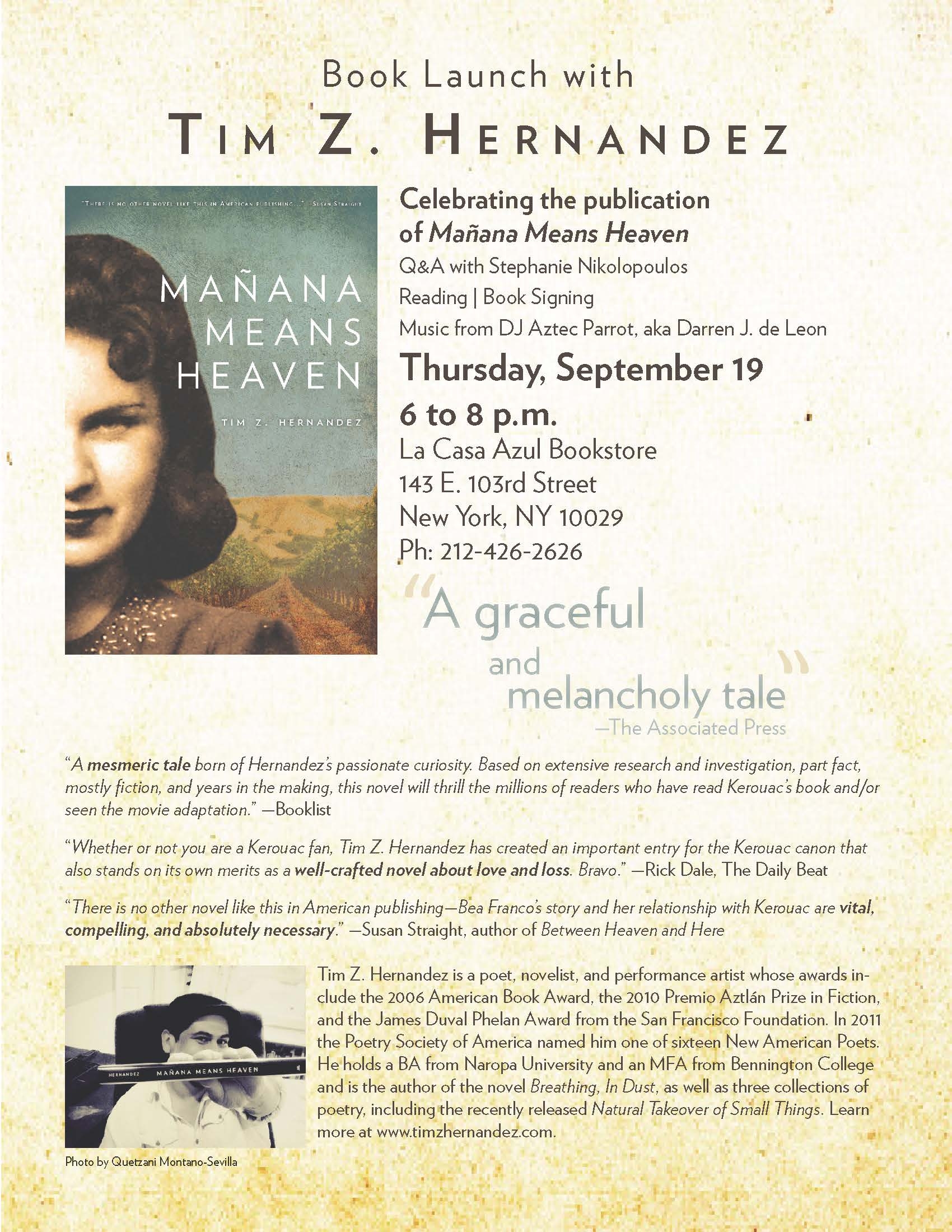
Tonite: I’m Talking with Tim Z. Hernandez

19 Sep

New Image

Just a quick reminder that I’ll be expanding upon my interview with award-winning poet Tim Z. Hernandez at La Casa Azul (143 E. 103rd, NYC) tonight at 6:00. We’ll be talking about his new book Manana Means Heaven, whether Jack Kerouac was a womanizer, what it’s like to write sex scenes about someone’s grandmother, the difference between fiction and creative nonfiction, and a whole lot more.

Tim will give a reading and will sign books — and DJ Aztec Parrot will be spinning music from the 1940s and ’50s.

I’m super excited! Hope to see you there!!

Mediabistro posted about the event here.

* * *

In the meantime, check out the awesome photos of Bea Franco and Tim’s guest post over on Rick Dale’s blog The Daily Beat, read an excerpt of Manana Means Heaven on La Bloga, and stop by to see Tim on The Big Idea. Then, follow along on the rest of Tim’s blog hop:

Friday, September 20 | The Dan O’Brien Project http://thedanobrienproject.blogspot.com/

Saturday, September 21 | Impressions of a Reader http://www.impressionsofareader.com/

If you happen to be in the New York area, Tim Hernandez will also be on a panel at the Brooklyn Book Festival this Sunday:

The Poet & the Poem: Natalie Diaz (When My Brother Was an Aztec), Alex Dimitrov (Begging For It), Lynn Melnick (If I Should Say I Have Hope) and Tim Hernandez (Mañana Means Heaven) will examine politics and identity in poetry, and the complex ways in which a poet’s work can become intertwined with the poets’ personal narrative. Moderated by Hafizah Geter, Cave Canem Foundation.


Adventuring with Author Larry Closs to See Jonathan Collins’ Beat-inspired Paintings

17 Sep

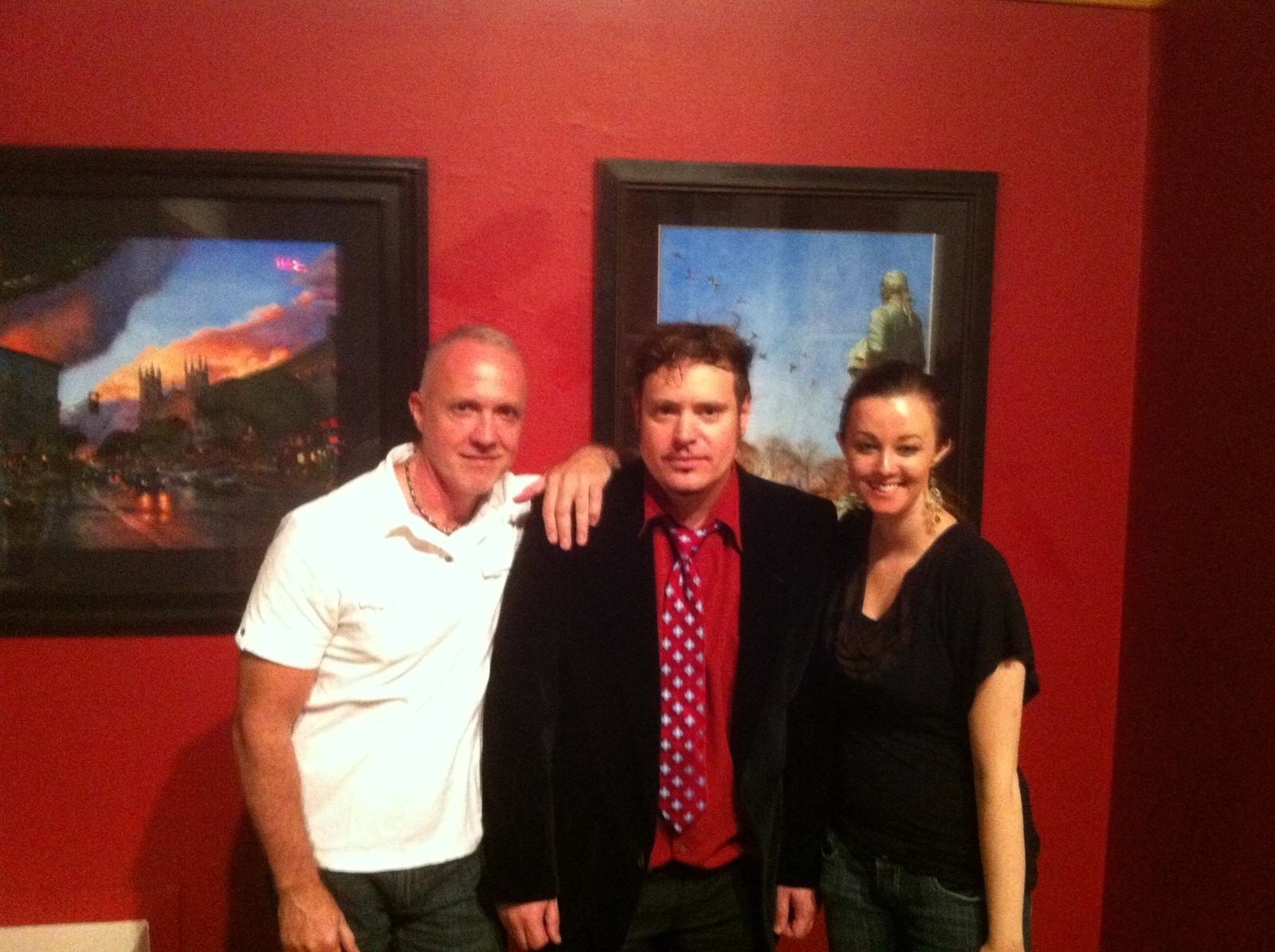
JonThat’s Larry Closs on the left, Jonathan Collins in the middle, and me on the right.

Collins2

Collins3

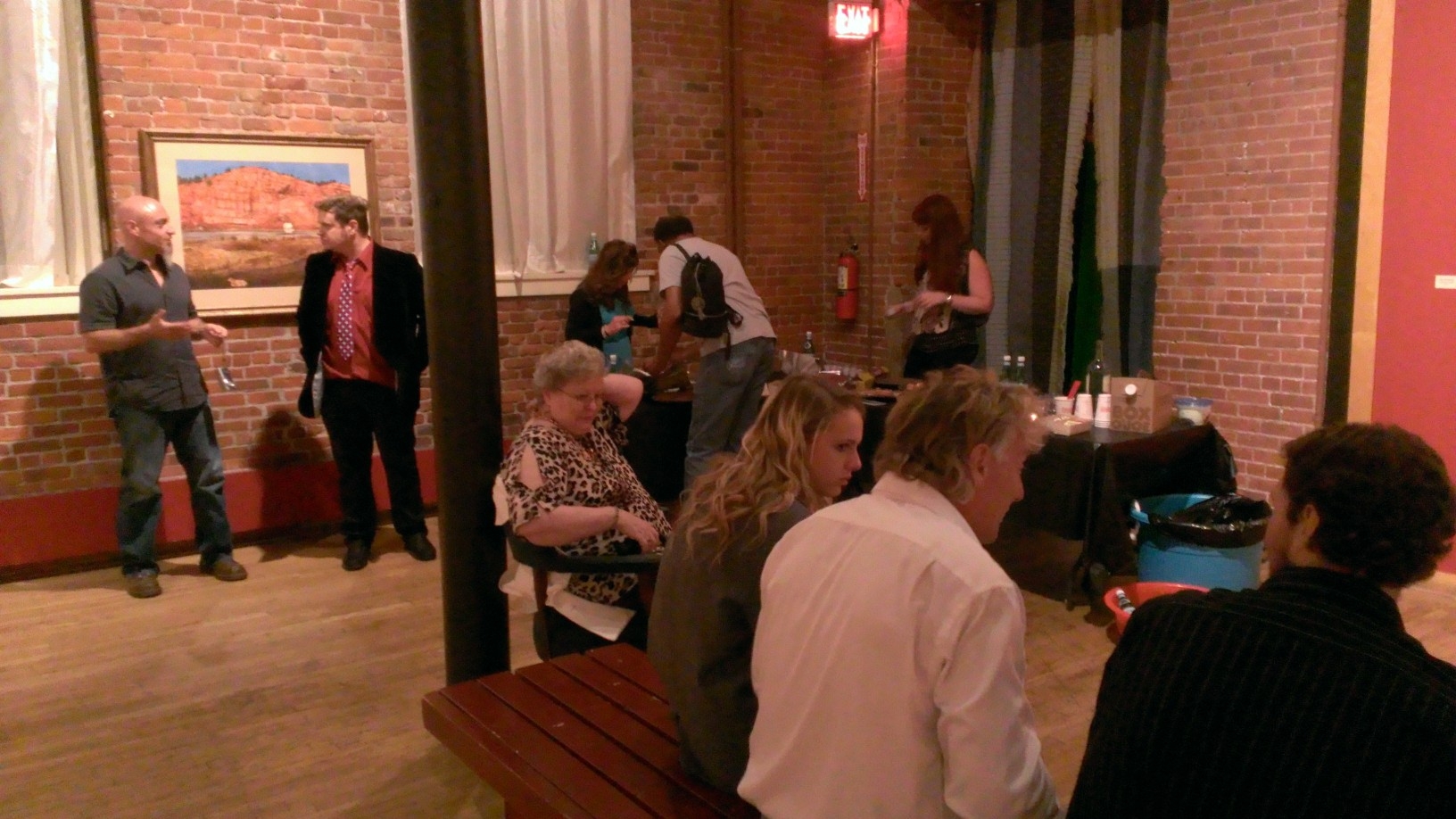
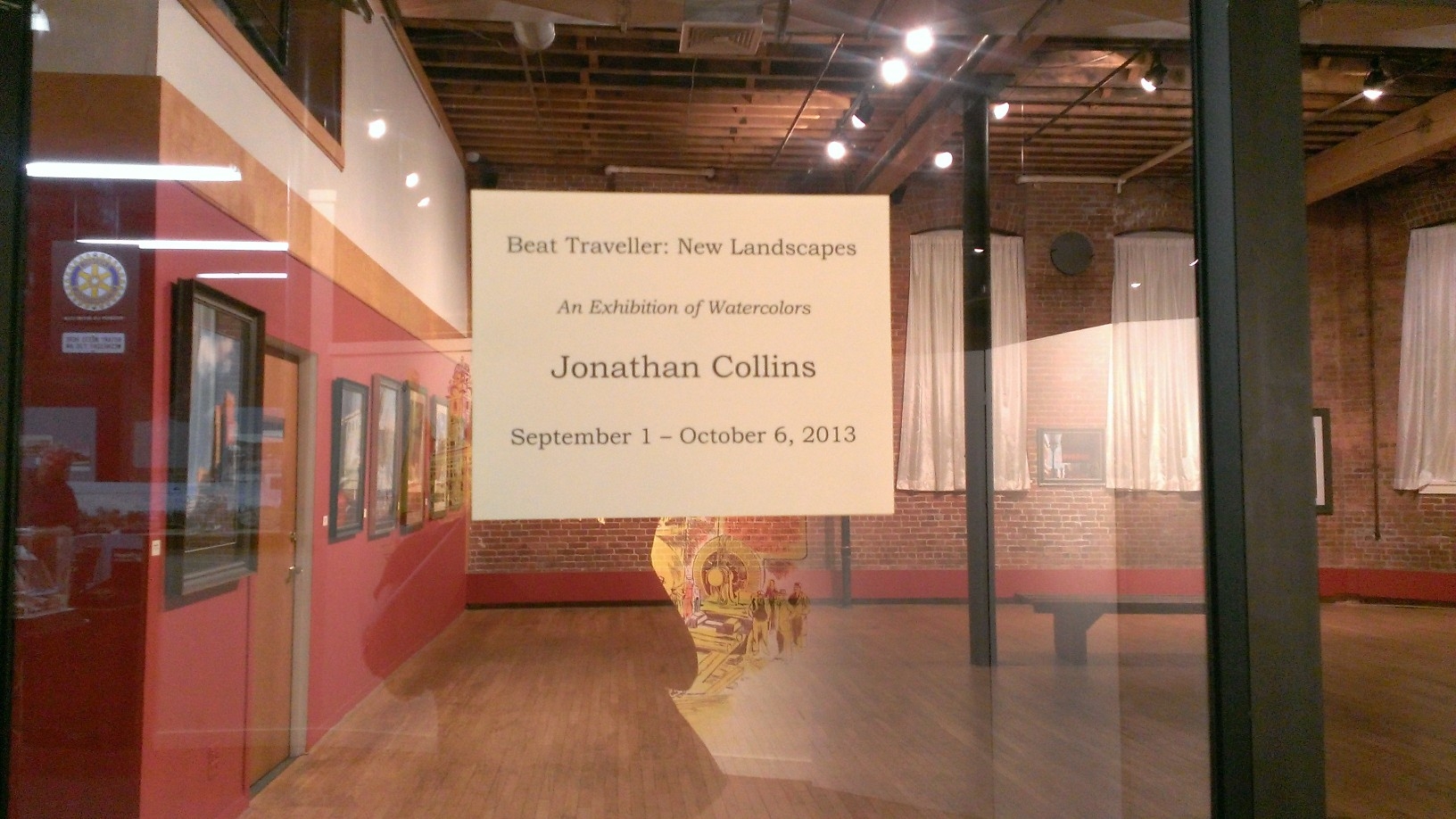
Larry Closs and I took a mini road trip to attend the opening of Jonathan Collins‘ Beat-inspired paintings at the Paterson Museum (2 Market Street, Paterson, NJ). It turned out to be quite the adventure. You may remember Larry as the author of Beatitude, a book I stayed in on a Saturday night to read because I was so captivated by the story I couldn’t put it down. Larry also happens to be a great conversationalist with fascinating stories about the writers’ life, bumping into Beat authors, and his own world travels. I got so caught up in our conversation on the way over to Jonathan’s show that I didn’t pay enough attention to the train directions, and, well, if you want to know what happened, check out Larry’s blog.

The first time I ever saw Jonathan’s paintings, when he’d brought his portfolio down to Cornelia Street Cafe when I was reading with David Amram, they were so realistic I thought they were photographs. Seeing them in person for the first time I was even more impressed by their beauty. From Kerouac’s Moody Street Bridge to neon-lit bars, Jonathan’s watercolors evoke nostalgia. Larry put it this way on his blog:

The paintings illuminate—and celebrate—the sometimes hidden beauty and “mystical qualities” often overlooked in the ordinary, the everyday and even the dreary.

The show runs at the Paterson Museum through October 6.

Collins1