Archive | Greekish RSS feed for this section

Blessed Theophany

7 Jan


I hope you had a blessed Theophany!  It’s truly a memorable site to see priests throwing crosses in the Hudson River here in New York City.

In case you missed my post from last year and have no idea what I’m talking about, here it is again:


I once saw a priest in Brooklyn throw a cross into the muddy waters of the Hudson.  It was a frigid January day, yet a bunch of boys jumped into the river to save the cross.

What would possess a priest to throw a cross into the river?

Theophany; or, as most westerners call it, Epiphany.

The word “Theophany” comes from the Greek “τα Θεοφάνια,” which means “appearance of God,” and January 6 is the feast day that commemorates the incarnation of Jesus.  It celebrates His birth and baptism.

When St. John the Baptist baptized Jesus in the Jordan River, the heavens opened up and the Holy Spirit descended like a dove.  God spoke from the heavens, saying, “This is my Son, whom I love; with him I am well pleased” (Matt 3:17, NIV).  It marked one of the very few times that all three characters of the Trinity—Jesus, the Holy Spirit, and God—revealed themselves at the same time to man.

Jesus’ baptism marks His first step toward Crucifixion, according to Orthodox theology.

And so, on January 6, Orthodox priests throughout the world throw crosses, symbolic of Jesus’ crucifixion, into bodies of water, symbolic of His baptism.  This is called the Blessing of the Waters.  Volunteers jump into the water to retrieve the cross.  The priest, according to tradition, prays a blessing on the person who gets to the cross first and brings it back to him.


Here’s the Troparion (tone 4) from the Eve and Afterfeast hymn, which has some powerful imagery:

The River Jordan receded of old by the mantle of Elisha when Elijah ascended into heaven; and the water was separated to this side and that, the wet element turning into a dry path for Him, being truly a symbol of Baptism, by which we cross the path of transient age. Christ appeared in the Jordan to sanctify its waters.


Military Tanks

22 Dec

It’s late in the morning, and I’m drinking a cup of black coffee that has turned cold because of how slowly I’ve been drinking it.  I’m sitting Indian style on my chair and editing a book on military tanks.

Normally, a weaponry book would get on my nerves.  I’d wonder what choices I’d made in my career that got me to the point that I’m editing books so far from my own gushy interests of literature and birds and art.

Today, though, I’m reminded of another morning.  I remember riding the bus into Manhattan with my dad, passing the Teaneck Armory, and my dad telling me about his days serving in the Greek army.  My dad’s rather private, a trait that runs deep in the family, and I had never really heard him talk about being in the army.  Even though it’s required of all Greek males to serve in the Greek army, the detail that my father served in the army never really cliqued in my mind.  It made me realize how some details in our lives slip away, forgotten until triggered by a source outside us.

Some stories we share over and over again, til the point our friends roll their eyes from having to hear it again.  Other stories we burrow away.  Maybe because they’re painful to remember.  Or maybe because they just seem insignificant.

Gift Guide: For the Hellenophile

20 Dec

Whether you’re giving a Greek American a taste of their homeland when they can’t make it back for the holidays or satiating a Hellenophile’s interest in Greek culture, there are countless foods, books, beauty products, and jewelry that will suit your needs.  Plus, select a gift made in Greece and you’ll also be supporting the struggling Greek economy.  Here’s just a small selection of Greek gift ideas, some made in the States, some in Greece, and others elsewhere, but all unique and lovely.

Gifts for the Greek food lover:::


Kokkari: Contemporary Greek Flavors by Janet Fletcher


How to Roast a Lamb: New Greek Classic Cooking by Michael Psilakis


A selection of delicious dressings and marinades from Sophia’s Gourmet Foods

A selection of three different flavors of honey from Odysea Shop

Traditional Greek preserves (rose petal and pergamot) by Monastiri

Kalamata olive oil

Ouzo candies

Pavlidis Dark Chocolate

Pastelli with honey

Bonus tip! – Gifts appear so much nicer when they come as a set.  You may want to give a cookbook with some Greek spices.  A duo or trio of a certain type of product (such as honey or olive oil) is a great way for the recipient to try out a few flavors.  Or, you may want to give a gift basket of assorted Greek candies.


Gifts for someone who loves Greek literature:::


The Greek Poets: Homer to Present by Peter Constantine


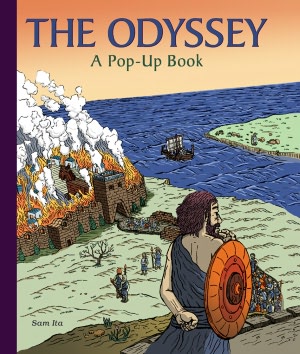
The Odyssey: A Pop-up Book by Sam Ita


Greek classics

Subscription to Greek America Magazine

Bonus tip! – Trying pairing the book with a book light, a notebook and pen, a bookmark with a quote by a Greek philosopher, or a coffee mug (maybe even with a bag of Greek coffee).


Gifts to make someone feel like a beautiful and pampered Greek goddess:::

Beauty products from Korres

Olive oil body lotion by Olivia

Jewelry by Konstantino

Bonus tip! – Include a lovely handwritten letter.  A bottle of Greek wine or some fine Greek chocolates would also make someone feel loved and pampered.


As the Greek proverb says, “A gift, though small, is welcome.”

Tasty Tuesday: Chew on These Greek Crisis Cooking Tips

13 Dec


My yiayia (grandma) never threw anything out.  She repurposed plastic bottles and sewed up the runs in cheap, drugstore pantyhose.

When she made chicken, the leftover bones got thrown into soups.

Raising her family in Greece during World War II, she had to stretch the drachma as far as it could go.  Now, with the economic crisis in Greece, Greeks are having to return to the thrifty ways of their yiayias.

The Associated Press takes a look at Eleni Nikolaidou’s book “Starvation Recipes,” a collection of recipes and “survival tips” based in Nazi-occupied Greece, and chef F. T. Bletsas’ budget-minded cooking tips in his Greek tv show “Mama’s Cooking” and English-language website www.cookingeconomy.com.

One tip from the article: You’ll feel like you’re eating more if you chew your food veeeeerrrrrrrryyyyyy sssssllllloooowwwwlllllyyyyy.

Follow Friday

18 Nov

Happy Friday!  Do you have any special plans this weekend?  Here are a few links to keep you occupied.

Writing

5 Alternatives to a Creative Writing MFA via MediaBistro

Success Stories via Literary Kicks

Greece

Greece debt crisis: Who is Lucas Papademos? via the Christian Science Monitor

Vignettes of Modern Greece via GreeceInPrint

Amid Greece’s Challenges, Kalamata Basks in the Sun via CNN

Beat Generation

Jay Farrar channels Kerouac, reaches the heart of America via Good Times

St. Petersburg bar pays tribute to Beat author Jack Kerouac via St. Petersburg Times

The Woman behind Jack Kerouac’s “On the Road” via Marin Independent Journal

Kate Linhardt on “Crazy Wisdom: The Jack Kerouac School of Disembodies Poetics” via IndieWire

The Simple Pleasure of Jasmine

15 Nov

The Simple Pleasure

of

Jasmine

After watching beauty guru Elle Fowler’s YouTube video on tea, I was inspired to drink more tea.  I ran out to Trader Joe’s and got a few variety of teas.  I’m now obsessed with Trader Joe’s delicious jasmine green tea.  It’s such a great alternative to the stale coffee at the publishing house, and it also dehydrates less than coffee does, which is important as we head into the colder, drier months.

I must be keyed into all things jasmine suddenly because I just opened an email from Korres, a Greek makeup brand that sells here in the States too, and they were promoting their jasmine product line.  Korres is Greece’s fastest-growing natural skincare company, and I really value the fact that they have an eco-conscious policy.

Fun fact from the Korres email: Greek monks used jasmine for giving thanks.

What are you thankful for today?  I’m thankful for life’s simple pleasures like a hot cup of tea on a cold day and the way a fragrant lotion can lift my mood.

“I Shared My Flags with Him!”

12 Nov

“I Shared My Flags with Him!”


Okay, so did anyone else catch the prevalence of the Greek flag in this week’s Model UN episode (actual title: “The Treaty”) of Parks & Rec?  Even after the camera panned away from the mini flags, where Greece’s blue-and-white-striped flag was decidedly present, Galanolefki was one of the few larger flags in the background of another scene.  I couldn’t help but think it was a cheeky way of commenting on the recent UN bailout of Greece.

The episode itself was had so many great, quotable lines:::

Ben: You know, I didn’t really do Model United Nations in high school, so– oh wait, I SUPER did!

Ben: Leslie and I aren’t dating anymore, but we’re friends so it’s fun… It’s just fun.  It’s fun.. It’s… fun. It is fun.

Ron: And teach kids that not only is government good but there should be a worldwide supergovernment?  I’d rather sand down my toenails.

Andy: I just traded Finland’s military to Kenya for 50 lions. That’s pretty good, right?

Leslie: Madame Ambassador, pourquoi?

At first I was a bit annoyed that Parks & Rec was doing a Model UN episode since Community just did one.  I mean, is Model UN something people are really into?  I’ve never heard of any high schooler doing Model UN outside of on sitcoms.  It turned out to be one of the best episodes in a while, though.  It’s fun.

Jeffrey Eugenides’ Vest Is Tweeting

11 Nov

In the City that Never Sleeps, I attend more events than I have time to tell you about.  One of these events was hearing Greek American author Jeffrey Eugenides speak at the New Yorker Festival.  His The Marriage Plot is on my read-when-the-semester-ends list.  Til then, I’ll be amusing mself with Tweets from Eugenides’ Vest.

Yeah, so have you seen that big billboard of Eugenides in Times Square?  Well, in the photograph the Pulitzer Prize-winning author is wearing a vest.  And now that vest has a Twitter account and is spouting off about what it’s like to be Eugenides’ vest.


Eugenides' VestEugenides’ Vest

Walter Isaacson is writing misleading books about me, claiming that Joan Baez and Jennifer Egan have worn me at the same time.
27 Oct
You can follow here.  And feel free to leave a comment about what item of mine you’d like to see Tweet, haha.  In the meantime, just follow me on Twitter at @StephanieNiko.

Oxi Day

28 Oct

No!


Happy Oxi Day!  No matter if you spell it “oxi,” “ohi,” or “ochi,” it is the Greek word for “no.”  On October 28, Greeks celebrate the day they stood up and said “no” to the Italian ultimatum in 1940.

At dawn on October 28, 1940, Emanuele Grazzi, the Italian ambassador in Greece, on orders from dictator Benito Mussolini, demanded that the Greek prime minister Ioannis Metaxas grant Axis forces access to “strategic locations” in Greece.

Metaxas’ response?

Oxi!

The citizens of Greece flocked to the streets, yelling “Oxi!”  It didn’t matter their political affiliation.  They stood united to protect their country.

At 5:30 that morning, the Italian troops stationed in Albania attacked the border of Greece.

And with that, Greece had entered World War II.


***


Today, Greeks are back in the streets.  Never fully recovered from World War II, Greece continues to face economic hardship.  The citizens of Greece are fighting back, they’re saying “no,” to the austerity measures.


***


Sometimes you need to take a stand.  Sometimes you need to say no.

What do you need to say no to today?

Do you need to say no to big business?  No to credit card debt?  No to working overtime … again?  No to another social event?  No to another night in?  No to junk food?  No to Uggs?

Saying no doesn’t make you a bad person.  It’s important to say no to some things so you can say yes to others.

What do you want to say yes to today?

Greek Journalists Strike against the War on Words

20 Oct

I believe in the power of words.  I believe words inform, enlighten.

I also believe in the power of silence.  Silence can sometimes be more powerful than words.

On Tuesday, October 17, about 2,000 Greek journalists went on strike.  The Greek journalists protested the layoffs resulting from Greece’s poor economy and the austerity bill stipulated by creditors.  Unemployment in Greece in general is up to 16%.  Unemployment in Greek media is up 25%.  The result of the strike was that internal Greek news coverage came to a halt.  (You can read more about the details here, where I obtained the statistics.)

The media professionals on strike in Greece sent a message about the critical role of news journalists in disseminating information.  Journalists are liaisons between the government and the general public, the protesters and the general public, the protesters and the government.  They go to the front lines of protests; they gain access to interviews with politicians; they give a voice to the villager whose pension has been cut to the point that he is having trouble making ends meet.  They are spokespeople.  They are advocates.

The 25% unemployment rate in the media sector of Greece is a war on words.  The pay cuts and layoffs indicate the devaluation of research and reporting.  We see similarities in the United States, as the media sector here has yet to find an effective way of monetizing content.  Try to find employment in journalism, and the majority of the ads you’ll read list “experience,” “exposure,” and “a byline” as your compensation.  If you’re lucky, you’ll find a job that pays 2 to 10 cents a word.  The result is that we read the work of bloggers who simply aggregate content, instead of conducting research and interviews, and spout opinions.  Those inclined toward professional journalism may see the low wages and long hours and redirect their editorial skills toward, say, writing advertising copy—because, you know, we live in a society that likes to consume and be entertained, not informed.

While I understand why the Greek journalists went on strike and shut down news, it is imperative that they find ways to report on the current events taking place in Greece.  The citizens in Greece need them.  Greece should not become like North Korea, where the government controls the distribution of “information.”