Archive | Life RSS feed for this section

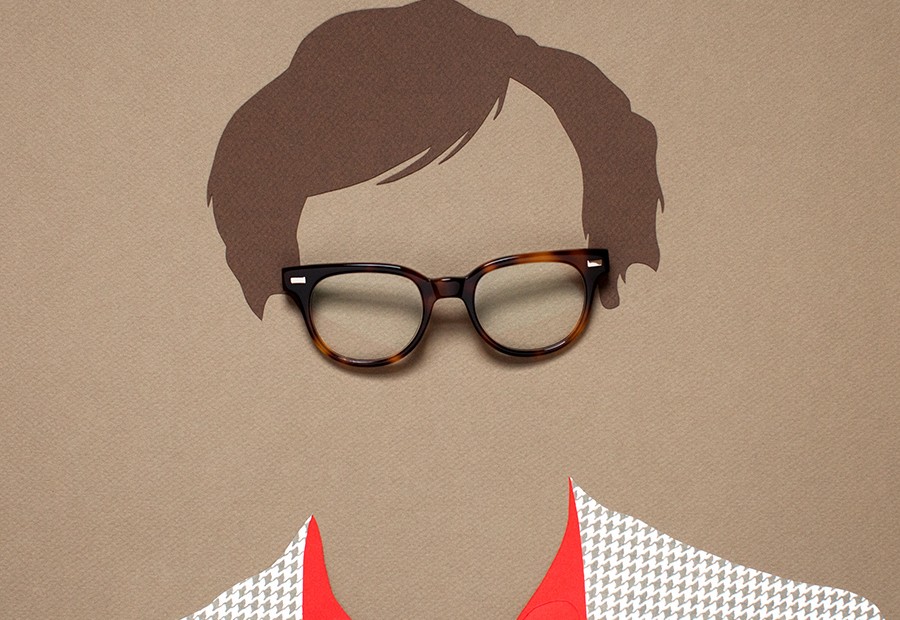
Warby Parker Glasses for Halloween

31 Oct

alvie_small-900x620via Warby Parker

Happy Halloween! Though I tortured my sleepover guests with classic horror films when i was a preteen, I’ve never been real big into the scary stuff of Halloween. I do, however, think it’s a super fun opportunity to play dress and reinvent one’s identity for a day.

Then again, I’m a bit of a chameleon when it comes to my style and personality even on an average day. You know how in The Breakfast Club there was the jock, the princess, the brain, the basket case, and the criminal? Or how when you ride the L train you can always tell who’s going to get off at Union Square versus who’s going to Bedford Avenue? I’ve never really identified with one social group or another. One day I might dress preppy in pearls and a button-down shirt with a sweater over it and the next day I might wear lots of dark eye shadow and all black. Likewise, some days I wear glasses and some days I wear contacts. It would be fun to own multiple pairs of glasses to switch out depending on my mood.

Glasses are such a defining accessory/medical need. Certain glasses styles have become synonymous with certain celebrities. Think John Lennon’s little circles. Buddy Holly’s thick frames.

Warby Parker says, “There are plenty of characters to be channeled with the right pair of glasses.” They’re featuring costume ideas like Tootsie, and Dr. Strangelove, Alvie Singer (Annie Hall) on their blog, complete with the prescription glasses they sell. Oh sure it’s a gimmick to get you to buy their merch, but — and I’m not at all affiliated with them and not getting anything for saying this — it’s a rather clever idea. Because sometimes it’s fun to channel someone else for a day!

Also, I really like Warby Parker’s business model: for every pair you buy, they donate to someone in need.

Oh, and get this: their name is a Jack Kerouac reference! Here’s the story:

We’ve always been inspired by the master wordsmith and pop culture icon, Mr. Jack Kerouac. Two of his earliest characters, recently uncovered in his personal journals, bore the names Zagg Parker and Warby Pepper. We took the best from each and made it our name.

So what I want to know then is why they don’t have a blog post for dressing like Allen Ginsberg?! You can’t help but think of his glasses when you visualize him. Plus, with all the Hollywood attention on the Beats lately — characters based on Ginsberg or Kerouac’s alias for him appear in On the Road and Kill Your Darlings — you’d think he’d be a fun person to dress up as for Halloween.

Or maybe I’m the only nerd who thinks dressing like authors and literary characters is a perfectly normal Halloween costume?

And, for a story about the time Allen Ginsberg lost his glasses, check out Burning Furiously Beautiful: The True Story of Jack Kerouac’s “On the Road.” It’s available as an ebook and paperback.


Kalo Mina! October 2013!

1 Oct


OLYMPUS DIGITAL CAMERA

“Life starts all over again when it gets crisp in the fall.”

~ F. Scott Fitzgerald

Kalo mina! Happy October 1st! The first day of fall was September 22, but the weather today feels more like late spring. The sky is a bright, bright blue, the color of parakeet feathers. I walked down to Union Square at lunch today and was tempted to play hookey just so I could sit in the grass and look up at the sky and dream.

September brought routine back to the city, and it was a busy month. A few highlights:

  • Attending Greek American Fashion Week and seeing the latest collections by Tatiana Raftis, Angelo Lambrou, Nikki Poulos, and Stratton, with hair by Christo Curlisto
  • Seeing Jonathan Collins’ Beat Traveller art exhibit in Paterson with Larry Closs
  • Conducting a live interview with Tim Z. Hernandez about his book Manana Means Heaven at the Spanish Harlem bookstore La Casa Azul and getting to meet all the great people who work at the bookstore as well as Tim’s insightful agent
  • Reading one of my personal essays about road trips, homelessness, and God as Jason Harrod softly strummed guitar at his album release party
  • Retreating to Connecticut for the Scripps TriState alumni book club
  • Attending the Brooklyn Book Festival with friends whom I co-lead a monthly writing workshop with and getting to hear Justin Torres read from We the Animals again. He’s brilliant. I’m obsessed
  • Watching Into the Wild. I know I’m late to the game on this one, but at least I had read the book by Jon Krakauer before. The film devastated me. It was beautiful and painful and haunting and true, and I couldn’t stop thinking about it for days….
  • Brunching with author Isobella Jade
  • Hearing Davy Rothbart read from My Heart Is an Idiot. I once wrote that a story of his made me “wonder if Rothbart might be my generation’s Jack Kerouac.” Yep, he’s that good. I was too shy to talk to Davy, but I met his dad and, despite my efforts to become invisible at the mere mention of audience participation, Brett Loudermilk selected me out of the audience to pull a sword out of him. Yes, you read that right
  • Reading Kristiana Kahakauwila’s story collection This Is Paradise — this is Literature. I am savoring it
  • Discovering H&M Home — whoops! There went all my money!
  • Finally getting Internet set up at my new place
  • Talked to my sister for the first time since she moved out of New York City
  • Imbibing my first pumpkin spice latte of the fall
  • Attending A Global Conversation: Why the UN Must Focus on Women’s Leadership
  • Oh and launching the e-book edition of Burning Furiously Beautiful: The True Story of Jack Kerouac’s “On the Road” with Paul Maher Jr!!!

So yeah, that was my September. What about you? Did you read any good books? See any movies that moved you?

Your Coffee Personality

24 Sep

How do you like your coffee? I read on Yahoo! On the Road that James Moore and Judi James published a book called The You Code: What Your Habits Say About You, which says that your coffee order may give insight into your personality.

This coffee-intertwined-with-one’s-personality hypothesis reminds me of Dean Bakopoulos’ My American Unhappiness. The novel’s protagonist, Zeke Pappas, “psychically” knows customers’ coffee orders at Starbucks. I put “psychically” in quotes because Zeke’s clairvoyance is in reality a parlor trick, educated guesses based on how the customers look and act. In other words, he can guess their coffee order based on their personality.

Moore and James’ The You Code suggests that your coffee order is about more than your taste buds. It’s about who you are deep down inside. For instance: Those who take their coffee black, according to the Yahoo article written by Vera H-C Chan, are “quiet and moody.”

I’m not too picky when it comes to how I take my coffee. When I first began drinking coffee in high school, I drank it black. I think I thought that made me a badass or something. I was far from a badass: the word “badass” makes me uncomfortable; I wouldn’t say it aloud. I actually really liked the taste of coffee, though. It wasn’t something I forced myself to drink to look cool. Coffee felt comforting. Maybe because I associate it with my mom. These days I often take my coffee with milk, putting the milk in first, then the coffee. But not always. Some days I still drink it black, no milk, no sugar. If I’m at Starbucks I usually order a latte—sometimes just a regular latte, but other times, as I consider ordering coffee out a treat, I’ll get a vanilla latte, pumpkin spice latte, or gingerbread latte. When the weather’s warm, I’ll switch to a Frappuccino. Some days, I just drink tea.

The article doesn’t say—though maybe the book does—what it means if you vary your coffee order. Perhaps multiple personality disorder? I’ve always been a bit of a chameleon, adapting to circumstances and refusing to be pigeonholed.

Or perhaps that’s just me being a writer.

Citing Ryoko Iwata’s research, Pooja Thakkar noted one’s profession is indicative of the type of coffee they order. Apparently, we writers like flavored coffee, which might be why I switch up my latte choices.

How do you take your coffee?

If “Everything Is Possible,” Our Milestones Need to Change

21 Aug

singles-620x412Image from Singles via Salon

In the second paragraph of Sara Scribner’s recent Salon article about Generation X, the journalist says:

Few have even noticed that this small, notoriously rebellious clan – those born roughly between 1965 and 1980, which means about 46 million Xers versus 80 million boomers — has entered middle age.

The article itself is entitled “Generation X gets really old: How do slackers have a midlife crisis?”

Let’s stop right there for a moment. The date range provided here for Generation X refers to people who are currently between 48 and 33 years old. Is 33 middle age? Is 33 “really old”? Hyperbole aside, is 48 even “really old”?

The rest of the article refers to people in their 40s. I get it. The writer is using the median age. Treatises on generations are always rift with broad-swept generalities, however the attention to age in this particular article is telling for the article goes on to bring up issues of delayed adulthood, parents, and leadership.

Scribner quotes historian and generational expert (side note: how does one get to be a generational expert? That sounds like an awesome job) Neil Howe saying:

“Xers experience agoraphobia — everything is possible.”

The article goes on to say:

That’s where this generation gets its reputation as reluctant to grow up. “It’s very hard to mature,” [Howe] says. “In order to mature and become an adult, you have to shut off options. The way Xers were raised, there were always options — their parents told them to keep options open.”

Further on in the article, Scribner explains the result of this:

[Sheryl] Connelly, the Ford futurist, says that some of the postponing of the traditional midlife period may come down to a pushing back of all the major life milestones: “Some of that [midlife questioning] would be fueled by empty nesters – the kids are grown,” she says, explaining a feeling of “now what?” “Demographics have shifted such that with each passing generation, people are postponing marriage.” With dependent kids at home, everything has been pushed back. “There’s nothing midlife about my situation right now.  I think that’s why you don’t hear this conversation.”

Maybe, but that’s assuming that we’re talking about a Gen Xer born closer to the 1965 date. Let’s take someone smack dab in the middle of Gen X. If we’re using the range 1965 to 1980, let’s pick someone born in 1972. That person today (well, depending on when their birthday falls) would be 41 years old. Let’s now assume this person married right out of college and then had a kid the following year, when they were about 24 years old. (Keep in mind, that’s younger than the median age for getting married which is closer to 27.) That child would be about 17 years old. It’s therefore not at all shocking that many—even half of—Gen Xers would have “dependent kids at home.” It would actually be rather traditional and, dare I say, old-fashioned.

More interesting is not that life’s “major life milestones” are happening later but that they’re happening at different times for Gen X.

And, just as interesting is that, even with these societal changes, Scribner still upheld conservative viewpoints of adulthood when she paired the phrase “major life milestones” with Connelly’s quote about “empty nesters,” “postponing marriage,” and “dependent kids at home.”

This is where the article gets fascinating but isn’t fully explored. Yes, perhaps on the whole, people are postponing marriage and children and many who did have children now can’t get rid of their boomerang kids, creating a period of limbo. However, just like the age range of Gen X varies, so does the age that they’re getting married and having kids. That’s apparent even in looking at the celebrities the article mentions. Kurt Cobain (born in 1967) had a baby, and that baby is now 20 years old. Winona Ryder is 41 and has never been married or had children. Liz Phair, who is now 46, married a film editor in 1995 and had a child with him the following year; in 2001 the couple divorced.

I have friends I graduated college with who afterwards got married and now have two or three children. I have other friends I graduated high school with who are still very single—and by “very,” I simply mean that they are not only unmarried but also not in a steady relationship. I have a cousin who is about two years older than me who has a seventeen-year-old son. And I have other cousins who are about a decade older than me and have children the same age and younger than the cousin closer to my age.

At a writing conference, I had an interesting conversation with one of my colleagues. On so many levels we connected. We’d had very similar upbringings. We had comparable goals with our writing. We  shared parallel interests. Only about two years older than me, she is a mother of adolescent children and confessed to fearing empty-nest syndrome. At that moment in the conversation, my unmarried, childless self felt like a complete child next to her.

Going back to the statements about Gen X’s reluctance to grow up and the difficulty of maturing in this day and age, I think Howe’s concept of “agoraphobia” is worth more attention. I wouldn’t necessarily agree with Howe’s assessment that we have a phobia, an irrational fear, of “shut[ting] off options,” but the fact that we have those options is significant. We have the option to get married right out of college or to wait until we’ve experienced more of life, know ourselves better, and have amassed a nest egg to support a family. There’s no longer the same social stigma there once was to have a child out of wedlock and so we have the option to have a child with a significant other who we may already be living with. With the advancement of medicine, we also have the option of waiting until we’re in our 40s to have children.

As Howe says, “everything is possible.” But what does that mean for our identities and for the concept of maturity and adulthood?

Does a Gen Xer who is single and childless at 48 years old have more in common with a single and childless 33 year old Gen Xer than with a 48-year-old Gen Xer with a toddler? Does a Gen Xer who is an empty nester have more in common with the Gen Xer who never had children? Does a divorced Gen Xer in their early 30s have a more similar lifestyle to a Gen Xer in their late 40s who never got married? Is the 48 year old who never got married and never had children less mature, less of an adult, because they haven’t reached certain “milestones”?

Maybe it’s time our concept of maturity shifted to match the time period in which we’re living. Maybe it’s time to recognize that today’s milestones have changed.

The Salon article says “Many Xers seem nostalgic for the serene ‘50s,” but the “serene ’50s childhood” is a myth. One, in fact, that we explore in Burning Furiously Beautiful: The True Story of Jack Kerouac’s “On the Road” when talking about how illness killed off children, how war fractured families, how gender roles were back then, and how supposed countercultural icon Jack Kerouac longed for a wife and a ranch. Marilyn Monroe died at 36, never having a child. Ella Fitzgerald never had a child of her own but adopted one. Allen Ginsberg had a lifelong partner but his relationship was not considered traditional at the time. Clearly, there were people in the 1940s and ’50s who reached adulthood, reach midlife, without achieving traditional milestones. So why do we continue to use the same markers for maturity today that weren’t even accurate in the 1940s?

You may also like:

Blame Parents for Millennials Acting Entitled: Helicopter Parents Have Trophy Kids Who End Up Boomerang Kids

Shunning Cars … and Life

Parallel Generations

Hipsters Hate Driving


Dream Journal: Travels with Chuck D.

15 Aug

Voyage

Jack Kerouac kept a dream journal. This log of nightly dreams was later published by City Lights Press in 1960 as Book of Dreams. Even before it was published, though, Kerouac encouraged others to pay attention to their dreams. He told Allen Ginsberg to infuse his poetry with his dream life.

When I was a high school student, my psychology teacher assigned us the task of keeping a dream journal. Isn’t that the most fantastic homework assignment you can think of?! According to psychology, we dream every night, but only some nights we remember our dreams. Keeping a dream journal was supposed to help us better remember our dreams. I know some people who hardly ever dream, but I have wild dreams—especially after eating pizza!

This past Friday night I had a doozy of a literary dream! I dreamt that I was writing a book entitled Travels with Charlie, which was a riff on John Steinbeck’s Travels with Charley. Steinbeck’s book is a chronicle (it was purported to be nonfiction but it’s since come out that portions of it were made up) of the American road trip he took with his standard-sized poodle. My book, however, was about Charles Darwin’s travels. Incidentally, in real, waking life I once edited a reissue of his travelogue The Voyage of the Beagle. I didn’t make the connection in the dream, but perhaps there was some connection between Steinbeck’s poodle and Darwin’s Beagle. In the dream, I was retracing Darwin’s footsteps for a book about his “road trip.” I kept referring to Charles Darwin as Chuck D. or Chuckie D.—like the rapper!

I definitely need to start a dream journal!

Do you keep a dream journal? What is the wildest dream that you’ve had lately?

Kalo Mina! August 2013

1 Aug

400122_10200220737743484_402115136_nThis is me at the beach. In December. In Florida. I haven’t been back to the beach since.

Kalo mina! Happy first day of August!!

Can you believe how fast the summer is flying by? I’ve been so busy I feel like I’ve barely even begun to embrace summer.

A few years ago, I read Laura Vanderkam‘s 168 Hours: You Have More Time Than You Think after hearing her read at a Mediabistro party. I’ve written before about how I was inspired by her suggestion to create a list of 100 Dreams and also by the idea of trying to do something twice a week instead of having all-or-nothing thought patterns. Another concept she writes about in her book is how we often squander our time by not planning ahead. She writes specifically about how entire weekends can fly by without us feeling like we’ve accomplished anything, feeling like we rested, or feeling like we had fun. She suggested it’s better to pre-plan and schedule even things like going to the park in our calendars so they don’t fall to the wayside.

With this in mind, I created a Pinterest board called “Summer in the City.” It’s partly a mood board of images that remind me of what I love so much about New York City summers. Outdoor concerts in the rain. Sculpture gardens. Fresh corn on the cob. Wine tasting on Long Island. It’s also a bit of a to-do list. It’s so easy to get caught up in work and errands and writing and blogging and this and that and then fall comes and wonder what happened to the summer. So, I created a visual inspiration board. I would have a spectacular summer. The only problem is I spent more time creating the Pinterest board than doing the events! I forgot Vanderkam’s golden rule to pencil the activities in. Now I’ve taken the initiative now to reach out to various friends and start living out the summer I want to have.

Here’s a few of the items I’ve already checked off my Summer in the City to-do list:

  • Move — Done and done. Yeah, I actually kinda sorta moved twice. It’s a long story.
  • Attend my college BFF’s wedding in Dallas — I’d missed her and her family so dearly. It was lovely. And, now I can say I’ve been to Texas.
  • Attend my sister’s wedding — There were lots of wedding festivities.
  • Go on the Crown Maple Syrup tour — Sooo much fun! And delicious!
  • Watch Before Midnight — I love this trilogy so bad, and this particular movie was filmed near my house in Greece so I had to see it. I saw it at the Angelika, my favorite theatre in New York.
  • Attend Howl Festival — I can’t believe I’ve been remiss in blogging about this. I went by myself and had an awesome time.
  • Check out the exhibit Punk: Chaos to Couture exhibit at the Met — I went with a friend who wrote a punk novel, and we had a good laugh at the CBGB installation.
  • Picnic in the park — My publishing friend treated me to a picnic of baguette and cheeses and wine in the Brooklyn Bridge Park, where we watched a Shakespeare production.
  • Eat fresh fruit from the farmers market — A friend made me dinner in Brooklyn one night and served up fresh Southern peach slices. Afterwards we went and danced in the rain.
  • Read in the park — I wrote instead.
  • Attend BEA — Always enjoy this.
  • Listen to the orchestra play in Central Park — Went with two friends and had a magnificent time.

Okay, so looking over the list, I realize I actually have done a lot this summer. Maybe I have high expectations, but I want to do so much more. Like eat a cronut.

What’s on your summer bucket list?

Strawberry-rubarb Bread and Books

17 Jul

Bread

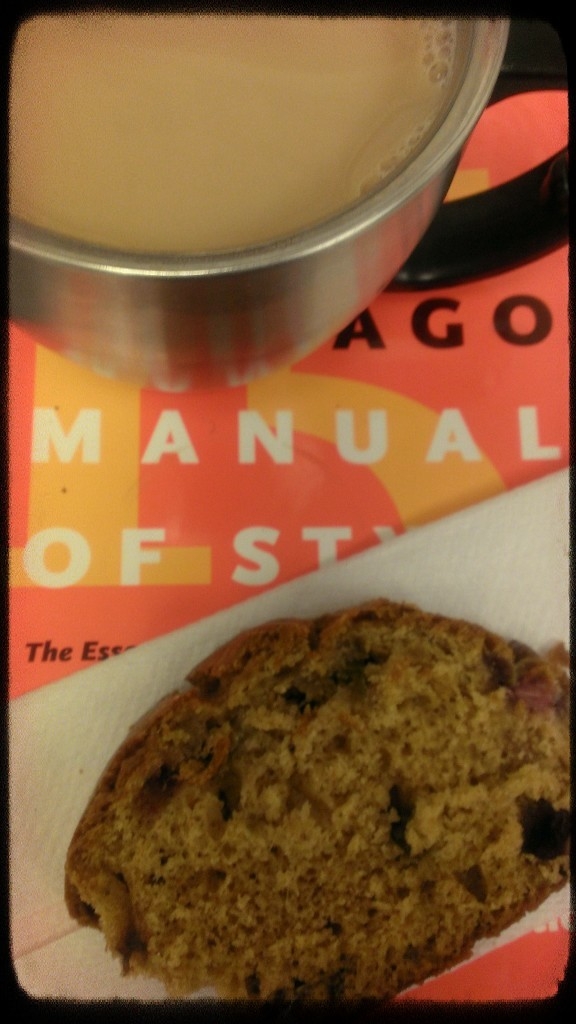
Came in to the publishing house and discovered my coworker had made a delicious strawberry-rhubarb bread. I love mornings of delicious pastries, hot coffee, and books!

How do you like to start off your day?

You may also enjoy these other strawberry breakfast posts:::

French toast at Supper

Fage yogurt with strawberries and bananas

Memoirists to Resent

16 Jul

FINALtoastlogo1

Mallory Ortberg’s post “The Top Ten Writers Whose Success You’ll Resent This Year” (via Poets & Writers) on The Toast is hilarious and spot on. I kind of resent her for it. I mean, I could’ve written it. You know, if I’d actually thought of it.

Here’s what she wrote about memoirists:

The Memoirist Who Is Your Age And Whose Life Eerily Parallels Yours

“Nobody should write a memoir before they’re fifty,” you announce to your friends over drinks. You are not fifty. “Everyone seems to think being 27 and unhappy in love is all you need to write a book about your life. You should have to get licensed before you can write one.” You are on your fourth glass of wine. It is Tuesday. “You should have to–be Gore Vidal, or a cultural attaché, or have invented genocide or something.” You spilled a little bit of your wine during that last remark, but it has landed on your napkin and you don’t think anyone noticed.

You have never been asked to write a memoir, but you would immediately if anyone seemed interested.

I’m pretty sure I’ve said something similar in the past about why MFA students in their twenties shouldn’t be allowed to enroll in memoir classes.

In other news, I haven’t worked on my memoir in about a year. But I’ve been thinking a lot about it, and I recently realized I have a whole new spin on the ending. That’s the funny thing about memoir. Just when you think you have an ending, something happens in your life that changes the ending … which, PS, reinforces my statement that you should write a memoir too young.

What writers do you resent?

Blame Parents for Millennials Acting Entitled: Helicopter Parents Have Trophy Kids Who End Up Boomerang Kids

12 Jun

YSize

Remember my post from last July “Hipsters Hate Driving”? It was inspired by the Reuters report “America’s Generation Y Not Driven to Drive” that did not once use the word “hipster” but rather “millennials.” Well, apparently Ford—as in the car manufacturer—sponsored a panel discussion with my exact title on May 30, 2013.

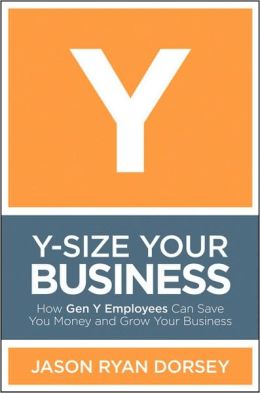
Flavorwire’s Tom Hawking caught up with Hipsters Hate Driving keynote speaker and millennials expert Jason Dorsey  in the June 10, 2013, article “Flavorwire Interview: Millennials Expert Jason Dorsey Says Young People ‘Really Do Act Entitled.’” At the Ford panel, “The Gen Y Guy” had said: “[Millennials] don’t want commitment. They drop in and out of experiences. They can’t wear a shirt or blouse if it’s photographed. The worst fear of millennials is wearing the same dress twice on two different [social networks],” and Hawkings got to the bottom of whether Dorsey really did think millennials are that shallow.

Flavorwire’s title quote comes from one of Dorsey’s responses:

When you dig into it, you find that a lot of millennials really do act entitled. They really do show up and have these massive expectations and are not willing to work at [things].

The word “entitlement” has come up again and again in discussions about millennials, and Dorsey argues it’s important to delve into the “why.” Of the root causes, Dorsey mention aspects relating to higher education and employment. Valid points, but I want to highlight a few comments he made that may slip under the cracks. Dorsey says, he focuses on trends like when people of the current generation are “moving out [of parents’ homes]” and “the relationship you have with your parents” as well as “views about parenting, especially how they were raised.”

Now we’re getting somewhere! Think about it for a moment: who are the parents of Generation Y? The oldest of them are Baby Boomers, who are “the generation that received peak levels of income” and “are associated with a rejection or redefinition of traditional values,” as Wikipedia put it. The younger parents are of Generation X, often derided as the Slacker Generation, who, facing economic downfall, turned to entrepreneurship. In other words, the shift from Baby Boomers to Gen X itself set the stage for a new generation that would be less traditional in their career outlooks.

In terms of their parenting style, these Baby Boomer and Gen X parents of Millennials have been called “Helicopter parents.” Jennifer O’Donnell defines this phenomenon in her About.com article “What Are Helicopter Parents?”:

The term “Helicopter parents” is often used to define a group of parents who engage in the practice of over-parenting. Helicopter parents are accused of being obsessed with their children’s education, safety, extracurricular activities, and other aspects of their children’s lives. Critics have criticized helicopter parents for over protecting their children and for failing to instill them with a sense of independence and a can-do attitude. Helicopter parents are also accused of over programming their children, and for failing to allow them free time to play and explore on their own.

She goes on to explain the root causes:

But the practice of over-parenting came into its own sometime during the 1990s when parents were bombarded with news stories about child abductions, academic competition, and ultimately, competition in a global economy.

Wikipedia explained the definition further, giving light into how this parenting technique affected children’s habits:

[The term “helicopter parenting”] gained wide currency when American college administrators began using it in the early 2000s as the Millennial Generation began reaching college age. Their baby-boomer parents in turn earned notoriety for practices such as calling their children each morning to wake them up for class and complaining to their professors about grades the children had received. Summer camp officials have also reported similar behavior from parents.

The children of Helicopter parents became known as Trophy Kids. I very briefly touched on this concept in my post “Parallel Generations,” in which I discussed the commonalities between the Lost Generation, the Beat Generation, and Generation Y, when I said:

Since then we’ve seen Generation Y, also known as the Millennials or Generation Next, who are often thought of as privileged Trophy Kids.

Notice the word “privileged.” Ron Aslop wrote the book on the subject: The Trophy Kids Grow Up. As the book’s website explains:

The millennials are truly trophy kids, the pride and joy of their parents who remain closely connected even as their children head off to college and enter the work force.

As Aslop suggests, these helicopter parents have been extremely involved in their Millennial children’s careers. George’s Employment Blog writes:

Although the Millenials often seek out challenging work and high levels of responsibility, these applicants’ parents are highly involved in their kids’ job search.

In a story entitled “Helicopter Parents Hover in the Workplace” on NPR on February 6, 2012, Jennifer Ludden says parents are doing more than just sending their children wanted ads and helping them with their resumes:

With millennial children now in their 20s, more helicopter parents are showing up in the workplace, sometimes even phoning human resources managers to advocate on their child’s behalf.

She states the facts:

Michigan State University more than 700 employers seeking to hire recent college graduates. Nearly one-third said parents had submitted resumes on their child’s behalf, some without even informing the child. One-quarter reported hearing from parents urging the employer to hire their son or daughter for a position.

The result of helicopter parenting is that Generation Y is coming across as entitled whether it’s their fault—or their parents. The Wall Street Journal article “The ‘Trophy Kids’ Go to Work,” published in 2008, said:

More than 85% of hiring managers and human-resource executives said they feel that millennials have a stronger sense of entitlement than older workers, according to a survey by CareerBuilder.com.

But who’s to blame: the parents or the kids? In the September 12, 2012, BusinessNewsDaily article “What Gen Y Is Not Getting from Their Parents,” David Mielach, writes:

A new survey has found that 69 percent of those between the ages of 18 and 29 receive little financial support from their parents.

He goes on to say:

The research found that 75 percent of young adults would rather live independently of their parents even if it is a struggle to do so financially.

Oh really? Then what are we to make of the rise of the phrase “boomerang kid,” which refers to young adults moving back in with their parents? It’s a concept that had such resonance it got its own (ill-fated) sitcom: How to Live with Your Parents for the Rest of Your Life.  T. J. Wihera wrote in the 2009 Denver Post article “Gen Y: Returning to the Nest”:

The Census Bureau reports that 56 percent of 18- to 24-year-old men and 48 percent of women in the same age bracket were living at home with their parents in 2008, though it should be noted that these numbers also count college students living in the dorms as living at home.

A more recent 2010 article in The Atlantic summed it up in the title “1 in 10 Millennials Living With Parents Because of Recession.” This year, Bloomberg Businessweek launched a business to get boomerang kids out of their childhood bedrooms.

While millennials’ parents may have raised them to be confident, independent-thinkers, and may have done everything in their power to push their little Trophy Kids toward success from a young age, their helicopter parenting techniques may have backfired. Many millennials have become boomerang kids, relying on their over-protective, control-freak parents to continue giving them the direction they have always given them.

In my recent blog post “Shunning Cars … and Life” I touched on the cultural shift that took place around the time of the Beat Generation, saying that while Jack Kerouac went on the road, today’s Generation Y is living a virtual life. Could it be that part of the reason why so many millennials have turned to living life through a computer screen has something to do with helicopter parents who “fail[ed] to allow [their children] free time to play and explore on their own” because “the 1990s […] were bombarded with news stories about child abductions, academic competition, and ultimately, competition in a global economy,” as O’Donnell wrote? In other words, perhaps parents believed life behind the computer was safer and more educational than the alternative of playing carefree outdoors. Children were the gods of their computer worlds, they could control their domain, and they soon became celebrities of social media sites like MySpace [emphasis mine], which furthered the entitlement already instilled in them by their parents.

Of course, these are generalities. Even though he was from the so-called Beat Generation, Jack Kerouac, who used the term “hipster” in his writing, could fit the profile of a millennial. His mother, Gabrielle, hovered like a helicopter parent, and he was a boomerang kid, who was living with his mother even in his forties.

Shunning Cars … and Life

24 May

Last summer I relayed the news that Generation Y hates driving. Now it turns out, everybody hates driving.

According to the recent The Exchange article “Why More Families Are Shunning Cars,” the CNW Research of Bandon, Ore., reported that in 2012 the percentage of US households without a car was the highest its been in the 22 years they’ve been tracking this data. The percentage? 9.3%.

Citing a cultural shift, The Exchange says that people today don’t rely on cars as much because:

  • more people live closer to cities and public transportation
  • since they now don’t need a car on a daily basis, these people simply rely on car rentals, which have become more flexible
  • retirees now live in retirement communities that they seldom leave
  • teens prefer to keep in touch virtually than in person
  • the economy is still in the gutter

The economic factor is a fascinating one when it comes to the history of motor vehicles. I’ve been proofreading (what feels like) a lot of books on cars and motorcycles lately and also thinking about cars and road trips while writing Burning Furiously Beautiful: The True Story of Jack Kerouac’s “On the Road,” and it’s been rather interesting to discover just how much the Great Depression and various wars have had on Americans’ driving habits.

An all-too-brief history:

  • cars and motorcycles are relatively new innovations, and they were making leaps and bounds until the Great Depression
  • there was an economic boom following WWII and suburbs became more popular–think Levittown–so the car became integral to family life
  • during the Cold War, the emphasis on patriotism no doubt led to Greyhound campaigns like this one, featuring a veteran who after fighting for the USA wants to travel to see the entire country, and the tv show/extended commercial See the USA in Your Chevrolet

Life in America hadn’t really changed all that much from that time when the economy improved, people moved out to the ‘burbs, and cars became a fact of life.

Until recently.

There were, of course, recessions here or there after the Great Depression, but it wasn’t until December 2007 that the US experienced the Great Recession or the Lesser Depression, whichever ominous phrase you want to use.

The same day that I read–while I was on the subway, mind you–that more people are “shunning” cars, I also read a Newsday article reprinted in amNewYork as “A growth spurt in NYC” that said, “New York City had the greatest numeric gain in population between 2011 and 2012, according to the U.S. Census Bureau estimates out Thursday.” Granted, the article seemed to be specifically comparing growth in cities (see this New York Times article as reference), but unless it’s indicating that people are simply moving from one city to another it seems to suggest that more people are taking to city life. And perhaps that’s the–ahem–driving force behind the decline in car ownership.

So… what do automotive trends have to do with literature?

Arguably the most popular of all authors who wrote about traveling by car and philosophized about the culture of his generation didn’t own a car: as I pointed out in my Hipsters Hate Driving post, Jack Kerouac was a hitchhiker, a bus rider, and a passenger, but rarely a driver, and yet he wrote the great American road-trip novel On the Road.

Now, let’s go back to that point The Exchange made that today’s generation–Generation Y, Millennial, whatever you want to call them–seemingly prefer virtual, rather than interpersonal, relationships. Here’s how The Exchange put it: “Teenagers using social media to keep in touch seem to feel less drawn to the open road than their parents did at the same age.”

The issue at hand is not that today’s generation doesn’t like driving or that they’re moving to the cities in droves. The cultural shift that needs to be more adamantly addressed for both the sake of our personal well-being and literature is that people prefer living life virtually than experiencing it first hand.

Kerouac lived life to the fullest. He famously told Steve Allen that he spent more time experiencing the content that would end up in his book than actually writing it:

ALLEN: Jack….How long did it take you to write On the Road?

KEROUAC: Three weeks….

ALLEN: Three weeks! That’s amazing! How long were you on the road itself?

KEROUAC: Seven years

Of course, as Burning Furiously Beautiful points out, it was only the scroll version on On the Road that Kerouac wrote in three weeks; it actually took him years to write the novel. But that doesn’t change the fact that Kerouac was out there living life, adventuring, experiencing, gathering tales to tell.

If today’s generation spends their life behind the computer screen or is too busy snapping photos for instagram to be present in the moment, that will shape our literature.