Chloris and the Greek Myth of the Rose

21 May


The Greek myth of the rose is one of my favorites.

Chloris, the goddess of the flowers, was in the forest one day when she tripped over a beautiful nymph lying lifeless.  Chloris was so overcome by the nymph’s fate that she reached out to the other gods to transform her into a flower.

Aphrodite gave her beauty.

Dionysus, the god of wine, gave her nectar for a sweet-smelling fragrance.

The three Graces—the Charites known as Thalia, Euphrosyne, and Aglaea—gave her charm, joy, and brilliance or splendor.

Roses from My Father

17 May

When I was a little girl, my father used to surprise me with roses.  Most of the gardening my father did was of a practical nature: cucumber and tomato plants, the occasional “karpouzi” (watermelon) if the raccoons didn’t get to it first (they always got to it first).  He had grown up on a farm in Greece, and gardening was not a hobby so much as a way of life and a means toward putting food on the table.  There were very few flowers in our garden in New Jersey.

In our backyard, there was a tattered fence that separated our yard from a little brook.  It was here that he planted roses.  In the spring, the thorny bushes climbed up the fence in a tangled mess.  Then one summer morning, while I was still asleep, they bloomed pink, yellow, white, and red, opening their petals up to the blue, blue sky.  My father would cut these beautiful roses and present them to me.  He told me I was a delicate flower.

I’ve been swirling in these memories of my father out in the garden, as I’ve been writing my memoir.

Picture of Me at My MFA Thesis Reading

16 May


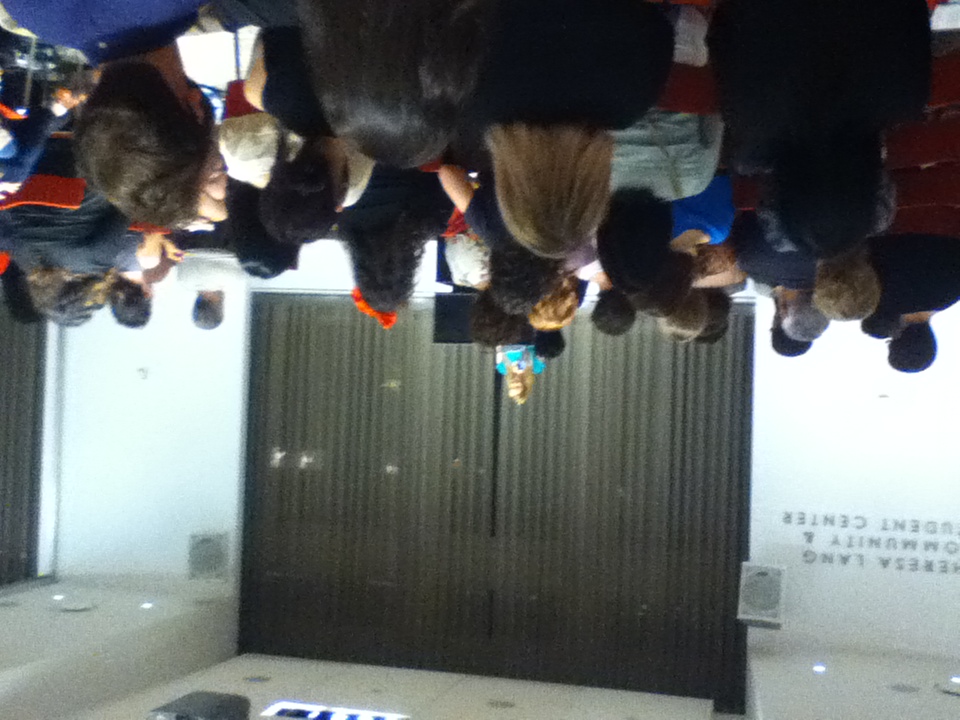
That’s me at the podium!  Thank you all for coming out to my reading at The New School last week!

Tasty Tuesday: Pindar Pythagoras Wine, Greek American Wine from Long Island

15 May


Since my thesis was due on a Monday, there wasn’t much opportunity for celebrating.  Instead, I went home after a normal day of work, ate leftover spaghetti and opened a bottle of wine I’d been saving.

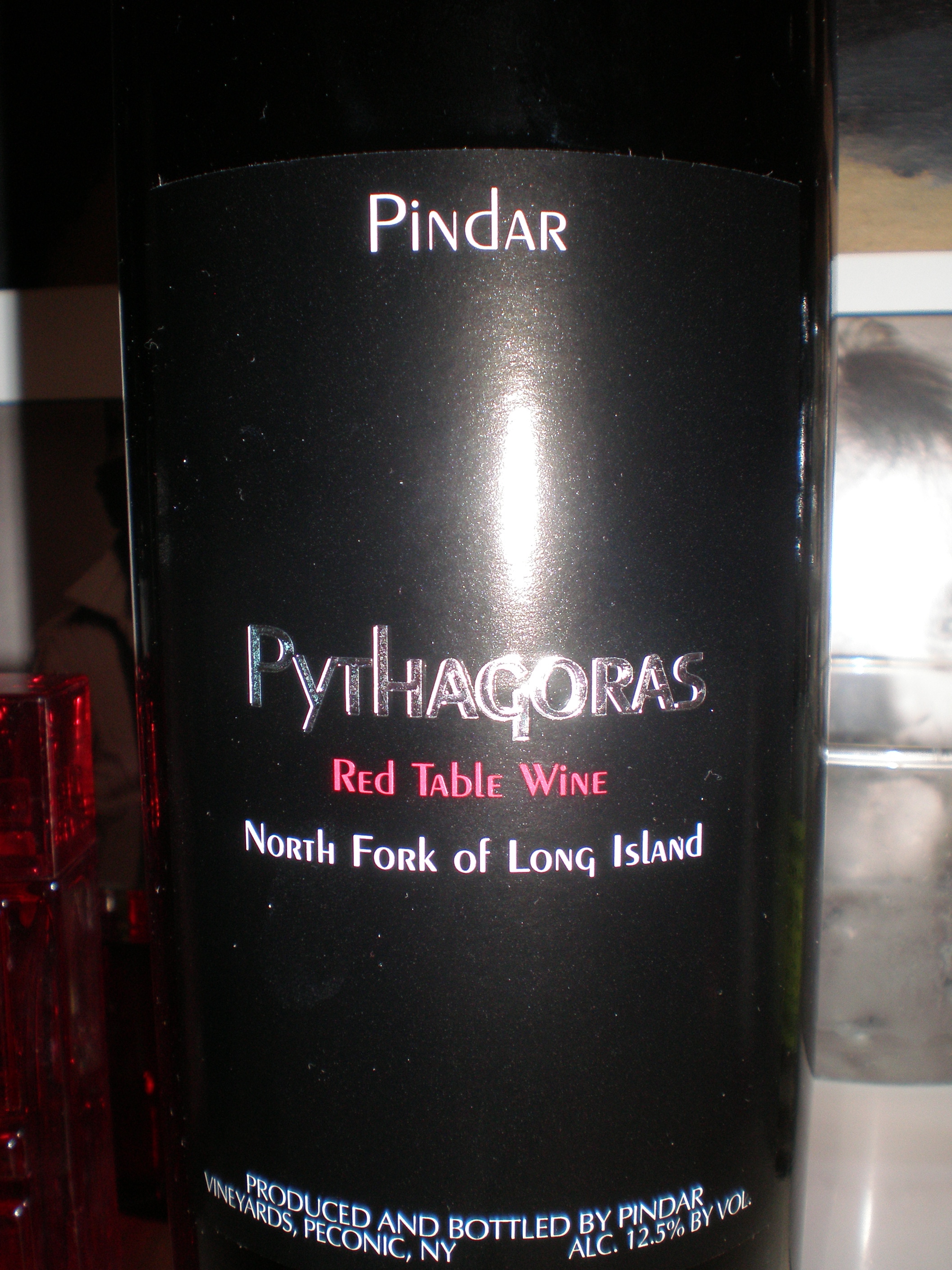
Last summer I had gone wine tasting at a couple vineyards on Long Island and picked up a bottle from Pindar Vineyards.  I’d been saving it for a special occasion and thesis submission seemed as good as time as any to crack it open.

The bottle I had picked up surprisingly wasn’t one that I had sampled at the vineyards so I didn’t know what to expect.  I picked it out for its name, Pythagoras.

Pythagoras (ca. 570 BC – 495 BC) was a Greek philosopher and mathematician from Samos, an island in the eastern Aegean Sea.  He later moved out of Greece an into Calabria, in southern Italy, where he lived in a Greek colony called Croton, by the Ionian Sea.  He is, of course, the founder of the Pythagorean theorem.   He set up a school in which music, sports, and diet were important elements.  This would go on to influence Plato.  There’s also a religion associated with Pythagoras, who believed in reincarnation.

The Pythagoras Pindar wine is a Greek wine, but not in the traditional sense.  It is not made in Greece but rather by Greek Americans on the North Fork on Long Island, New York.  Pindar Vineyards was founded by Dr. Herodotus “Dan” Damianos, who was born in New York City’s Hell’s Kitchen.  He began buying farmland in Peconic, North Fork, Long Island, in 1979, and started planting grapes the following year.  Today, seventeen different varieties of grapes grow on Pindar Vineyard’s 500 acres.

One of the special aspects of Pindar Vineyards is its commitment to environmental stewardship.  The vineyard practices sustainable agriculture.  You can read about its green initiative on its website.  It’s really quite impressive.

Dr. Dan drew his inspiration for winemaking from the Robert Louis Stevenson quote “wine is like poetry.”  It seems fitting that I should enjoy a wine inspired by literature as a celebration to turning in my thesis.

The Pindar Pythagoras is a red table wine.  It is light with a deliciously spicy bite.  While some reds coat your tongue with sinewy grapes, the Pythagoras has more of a white wine texture.  Delicate and effortless, it’s a good summer red.  Its buoyancy does not mean it’s watery though.  It’s flavorful, with a bit of a kick to it.

Here’s how Pindar describes the Pindar Pythagoras:

This special red was first crafted to celebrate our 20th anniversary. It has the round and full characteristics of Merlot with the slight herbaceousness of Cabernets. This award-winning blend has been named “Best US Red Blend” by the Beverage Testing Institute in Chicago and “Best Red Vinifera” in Vineyard & Winery Management’s “Best of the East” competition. Sure to please a wide range of palates.

It’s a good wine to round out a pasta dish with olives in it or some sinfully dark chocolate.

If you’re here in New York, you can purchase it online, but why not take a day trip to Long Island?  You can rent a car or take the Hampton Jitney bus.  It’s a great getaway from Manhattan.

On the Road with Bob Holman Airing Again This May

14 May

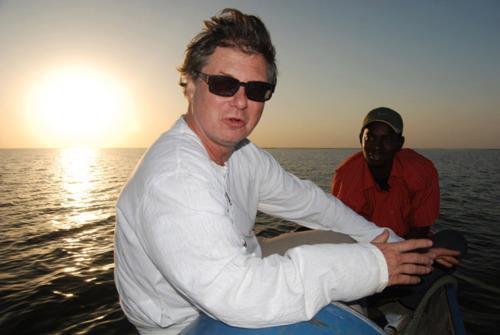
(photo via Bob Holman)

Just wanted to let you know that On the Road with Bob Holman is airing again!

The documentary series will be airing on LinkTV, found on local cable channels, online, and on DirectTV channel 375 and Dish Network channel 9410.

Monday, May 14th at 09:30 am
Saturday, May 19th at 10:00 pm
Monday, May 21st at 10:30 am
Tuesday, May 22nd at 07:00 pm

Here’s the teaser:::

What happens when a downtown New York poet of the hip hop and slam persuasion discovers that the roots of spoken word go back thousands of years and span the globe? If he’s Bob Holman, he goes On the Road to track them down! He trades stories, fun, recipes, insights, jokes, songs, and poems. Along the way, he gets passionately immersed in the Endangered Language crisis — over half the world’s 6500 languages will disappear before the end of this century. Holman guides us to the bottom-line question of survival of these systems of consciousness with respect, joy, and dedication to diversity. He throws himself into the life – shares the meals, participates in the ceremonies, dances and parties. His enthusiasm infects the series’ fast-paced style – Hip, but not hipper than thou. Serious fun! Ok everybody, get ready — let’s take the road not taken, with Bob Holman.

It is produced by Rattapallax in association with the Bowery Arts and Science.

I wrote the curriculum for it.  You can also read my interview with Bob Holman at BOMB and my article “You Can’t Put a Language in a Zoo” at Brooklyn Rail.

The Shy Person’s Guide to Giving a Reading

11 May


I used to be shy.  I don’t mean a little shy.  I mean the type of shy that held me back from different opportunities.  It wasn’t that I lacked confidence in my abilities.  I just felt uncomfortable having attention focused on me.  Writing therefore seemed like a great career choice—except that, as I soon discovered, writing involves a fair amount of speaking.  If you’re a journalist, for example, you’re tracking people down and asking them oftentimes personal questions.  However, even if you’re a creative writer, these days it seems like you have to be a speaker as well.

It’s all part of that wonderful word we’ve come to know all too well: “platform.”  A writer needs to build their following and promote their work through readings and interviews.  If you’ve been sitting alone in a dark makeshift home office, you might relish these opportunities to speak to someone other than your pet bird.  However, many writers, even if they’re not shy, are introverts.  Which means, even they’re not shy, they’re not necessarily the type to seek out big crowds of people.  When I was at the Festival of Faith and Writing last month, so many people who approached me (not something a shy person would necessarily do) afterwards told me that they’re introverts.

I remember giving my first big oral presentation in fourth grade.  As the shyest person in the class, I was certainly not looking forward to it.  However, the day of the oral presentations came, and I was just fine.  You know who fainted?  The popular kid in class.

These days I don’t dread public speaking.  It’s not an activity that gives me great pleasure, the way some people love karaoke or acting, but I generally don’t mind public speaking.  I’ve even been encouraged by it.

Here are a couple tips for public speaking I’ve learned through trial and error:::

Get plenty of sleep 48 hours in advance.  Being tired will make you feel anxious.  Try to get a decent amount of sleep the two nights before the reading.  I say two nights because you can’t just cram in sleep.

Drink plenty of water 48 hours in advance.  Don’t drink anything too close to your reading time.  When you’re nervous, you might feel like you need to pee more often.  However, you should be hydrated because speaking loudly can make your throat parched.  Also, lay off the caffeine and alcohol.  I know a lot of writers have notoriously drank to overcome their nerves.  Jack Kerouac was one of them.  And everyone knows it.  Do you really want to be that person?  While caffeine will make you anxious and make you sound like the Micromachines man, zooming through your reading, alcohol might make you slur your speech.  Stick with water.

Dress up.  When I was in undergrad, I used to dress up whenever I had a big test.  It may sound superficial, but dressing up gave me confidence.  When you give a reading, you’ll want to dress appropriately for the occasion.  I won’t mention the specific name of the awards ceremony, but I went to a book award ceremony a while back and was dismayed at the authors’ appearances.  They looked unkempt.  Yes, I know what matters more your inner character and your talents, however if you’re receiving an award or have been selected to give a reading, you should be respectful in your attire and dress for the occasion.  Besides, there are very few opportunities when we get to dress up.  Why let Hollywood stars have all the fun??

Be prepared.  Practice your reading several times.  Type your talk up in a large enough font that you don’t have to hold the paper close to your face to read it.  It may also be helpful to write little notes or add extra spaces reminding yourself to breathe, to look up, to smile.

Be thankful.  Being selected to give a reading is not a punishment.  It’s an honor.  People are celebrating your writing talents.  They’re making time in their busy schedules to hear you.  You’re already a star in their mind.  You don’t have to change who you are and pretend to be a stand-up comedian or loudmouth if that’s not who you are.  You just have to be yourself and be gracious.


If you happen to be in New York City, I cordially invite you to attend my reading this Friday, May 11.  It will be a super short reading sometime between 5pm and 9:30pm, at Lang Center, 2nd Floor, 55 W. 13th Street.

Mighty Aphrodite: Korres Wild Rose + Vitamin C Advanced Brightening Sleeping Facial

10 May

I’m in love with all the flowers that are blooming around the city right now.  Seeing delicate flowers push out of the ground and bloom in spite of in this concrete jungle inspires me.  It shows that even here in New York City, where you have to push for a spot on the subway and climb five flights of stairs to your overpriced, walk-up apartment, you can be tough and beautiful.  It’s like wearing a flower-print dress and a leather jacket.  Or like dark chocolate with rose hips.  It’s like having a fancy picnic in the shadow of skyscrapers in Central Park.  It’s like a wild rose.

Writing and editing around the clock, I haven’t exactly been getting a lot of sleep lately.   That’s the plight of a modern New York woman, though, isn’t it?  Sacrificing sleep to follow one’s passion.  I’m finally stepping out from behind my computer screen, to give a reading, though, and I don’t want to actually look like I’ve been burning the midnight oil.  I want to look picture-ready for my reading and graduation.  This is a time to celebrate!

I was so excited to discover Korres Wild Rose + Vitamin C Advanced Brightening Sleeping Facial.  It uses wild rose oil to give a natural, healthy glow to skin.  It’s facial in a jar!  That means saving the time of actually going to the dermatologist or beautician to get a facial.  Just put it on before you go to sleep and wake up the next morning moisturized and radiant.  When Korres offered to send me the Wild Rose + Vitamin C Advanced Brightening Sleeping Facial, I was so happy because they’re one of my favorite Greek beauty companies.  Founded out of Athens’ oldest homeopathic pharmacies, Korres creates products that are natural and certified organic.  The Wild Rose + Vitamin C Advanced Brightening Sleeping Facial doesn’t contain parabens, synthetic dye, or animal by-products and is not tested on animals.  Korres’ Greek homeopathic roots and the company’s commitment to both beauty and environmentalism make Korres Wild Rose + Vitamin C Advanced Brightening Sleeping Facial is indulgence one can feel good about!

After a long day of editing, a dinner meeting, and attending a reading, I was more than ready for bed by the time I got home the other night.  I felt so indulgent as I applied The Wild Rose + Vitamin C Advanced Brightening Sleeping Facial for the first time.  It smelled heavenly.  The facial is made with a fragrance, but it doesn’t smell overwhelmingly of rose.  More so, it has the intoxicating fragrance of beauty and sophistication.  It’s a bit powdery and old-fashioned, a luxurious aroma that drifted me off to sweet dreams.  Even though I have sensitive skin, the perfume did not irritate my skin.  Wild rose extract (Rose canina) is a natural source of Vitamin C, and so it actually soothes skin.

The Korres sleeping facial is made from a traditional recipe of Vitamin E, soybean oil, rosemary leaf extract, rose hip oil, and jojoba oil.  A clinical study showed that 100% of subjects who used Korres Wild Rose + Vitamin C Advanced Brightening Sleeping Facial had “improvements in skin’s moisture levels and texture” and “visible reduction in appearance of expression lines.”  Meanwhile, 84% saw “improved skin radiance” and 78% “had visibly improved skin smoothness.”  If you ever read the fine print of beauty and skincare products, you know that those are pretty astounding statistics.

In Greek mythology, roses were actually white until the goddess Aphrodite was pricked by a rose when she was hurrying to save her protege, Adonis, and her blood stained the white rose petals red.  Women have been rushing about since ancient times.  Hey, we’ve got proteges to look after!  But sometimes we need to slow down, indulge in an impromptu picnic in the park, and take care of ourselves.

Jack Kerouac, Music Journalist

9 May

When Jack Kerouac went off to Columbia University, he told people he was going to be a journalist.  His father, Leo Kerouac, was a printer in Lowell, who owned a print shop called Spotlight Print.  Leo handled printing for some of the big businesses in New England, and also did a bit of writing of his own.  This inspired Ti Jean, as little Jack was called.  He used to lay on the floor, creating his own little newspapers and comics.

In school in New York, first at Horace Mann prep school and then at Columbia, Kerouac contributed to the school newspapers.  The writing he did for the papers would best be described as music journalism.  He soaked in all the great 1940s bebop of Harlem and wrote jazz reviews.

There was no Pitchfork at the time.  Rolling Stone magazine wasn’t founded until 1967.  Even many of today’s popular jazz magazines weren’t in existence yet.  Music journalism didn’t have the esteem that it does today.

Jack Kerouac may not have gone on to become a famous music critic or any sort of journalist in the traditional sense of the word, but his jazz reviews were not in vain.  Writing music reviews, he honed his craft.  He learned to listen well, and he learned how to recreate the excitement of a live gig on the page.  This all went into his future novels.  In On the Road, Kerouac wrote about experiencing jazz firsthand.  Today, his books, even if they contain fictional elements, are testaments to the music of the 1940s and ‘50s.  Although he may have obscured the names of his friends, the names of musicians and famous jazz clubs remain intact.

Furthermore, bebop style influenced the way Kerouac wrote.  He learned about the notion of spontaneity and incorporated it into his own work.  His writing style echoes the rawness and the genius of live, spontaneous jazz.

In Burning Furiously Beautiful, Paul Maher Jr. and I write about some of the great jazz clubs of the 1940s and ‘50s that Kerouac visited while he criss-crossed the country.  The book tells the true story behind On the Road.  It is a portrait of Jack Kerouac, but it’s also a portrait of the United States.  In mentioning these jazz clubs that Kerouac visited, we examine a bit of America’s cultural history.

Tasty Tuesday: FAGE Yogurt Topped with Fresh Strawberries and Bananas

8 May


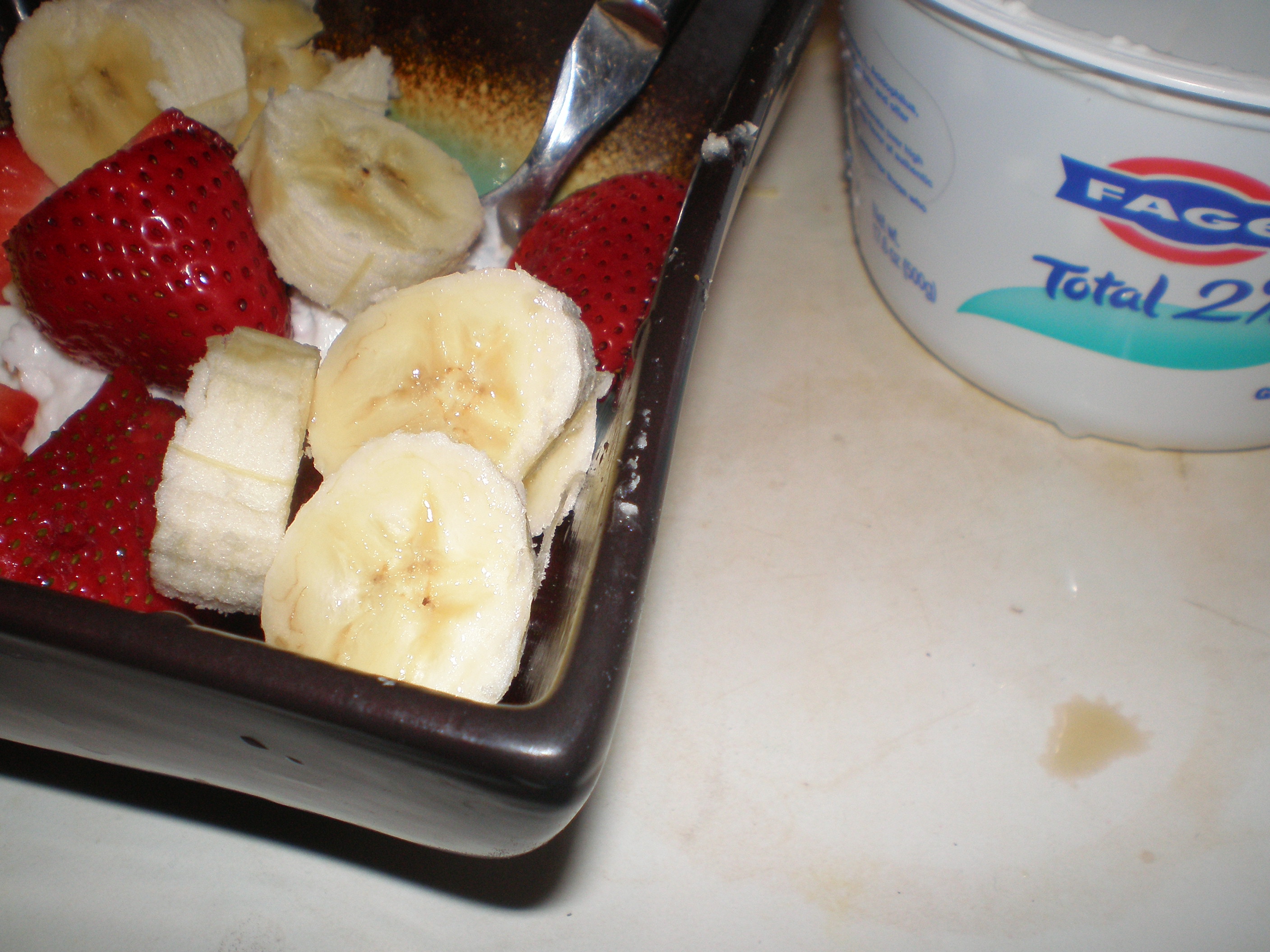
Now that spring is here I found strawberries at a good price!  I chopped them up along with a banana and sprinkled them over FAGE Greek yogurt.  So delicious!

I’m not really a morning person so I need a breakfast that is quick and easy to make.  This does the trick!  I love FAGE Greek yogurt.  I’ve tried switching it out for less expensive yogurts, but then I never want to actually eat the yogurt.  FAGE yogurt is just so much creamier.  It’s almost as indulgent as ice cream.  Almost.  The strawberries were a fun touch.  I hardly ever buy berries because they’re so expensive, but berries are so healthy and delicious.  My favorites are raspberries and blackberries, but they weren’t on sale.

I know that FAGE makes yogurt with a side of strawberry, strawberry gogi, and raspberry, but I’m not into the jelly-like consistency.  I much prefer the fresh fruit.  That said, FAGE is committed to making healthy foods.  The Philippou family motto in 1926 was “We would never make a product that we would not give to our children.”  The ingredients are 100% natural.  I just happen to prefer fresh fruit.

Yogurt and fruit are such a part of Greek culture.  I remember when I was a child, my father always had to have plain yogurt.  He ate it plain too.  The fruit came afterward and was eaten by itself.  I like to jazz it up.  I like fruit and yogurt together.  I guess that  makes me very American.

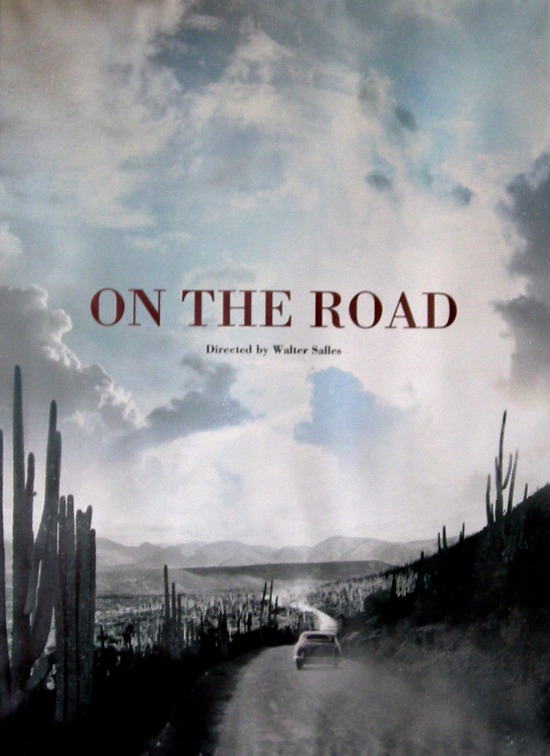
On the Road Soundtrack

4 May

You’ve seen the posters, the trailers, the movie stills, and the interviews for the On the Road film. Now discover the soundtrack for On the Road.

According to Indiewire, the film will mostly have an original score by Gustavo Santaolalla. The Academy Award-winning composer was behind the music for Babel and Brokeback Mountain.

“On The Road” Soundtrack Tracklist

1. Sweet Sixteen – Greg Kramer
2. Roman Candles
3. Yep Roc Heresy – Coati Mundi
4. Reminiscence
5. Lovin’ It
6. The Open Road
7. Memories / Up to Speed
8. I’ve Got the World on a String – Ella Fitzgerald
9. That’s It
10. Keep it Rollin’
11. Hit That Jive Jack – Slim Gaillard
12. God Is Pooh Bear
13. Death Letter Blues – Son House
14. I Think of Dean
15. Jack Kerouac Reads ‘On the Road’ – Jack Kerouac

Considering how important bebop was to Kerouac’s writing style and even the content of On the Road, music will probably—or at least it should—play a large role in this film. I’m curious if the film will actually incorporate the music that Kerouac listened to in Harlem jazz clubs and the musicians he wrote about in On the Road. Music rights can be hard to obtain, but given that many kids aren’t listening to jazz today, I’d think the estates of many jazz musicians would jump at the chance to get some publicity.

I’m excited to hear Santaolalla’s take on what the music for On the Road should sound like.