
Kill Your Darlings, a film about a murder, isn’t the first film I’d personally think of for a cartoon treatment, but Randeep Katari created a cartoon image for it that’s actually pretty thought-provoking. You can view it here.
Tag Archives: Beat Generation
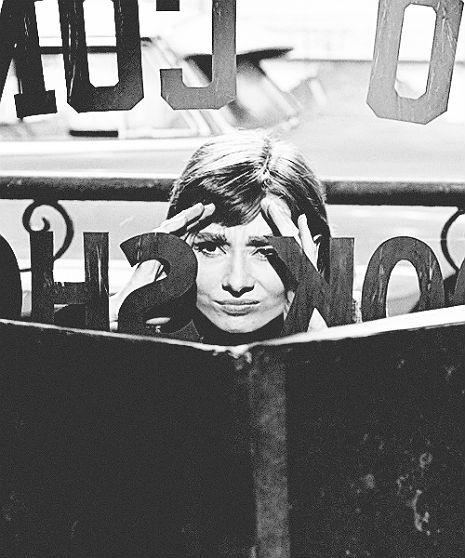 Image via Dangerous Minds
Jonathan Collins’ Beat-Inspired Paintings on View at the Paterson Museum
2 Sep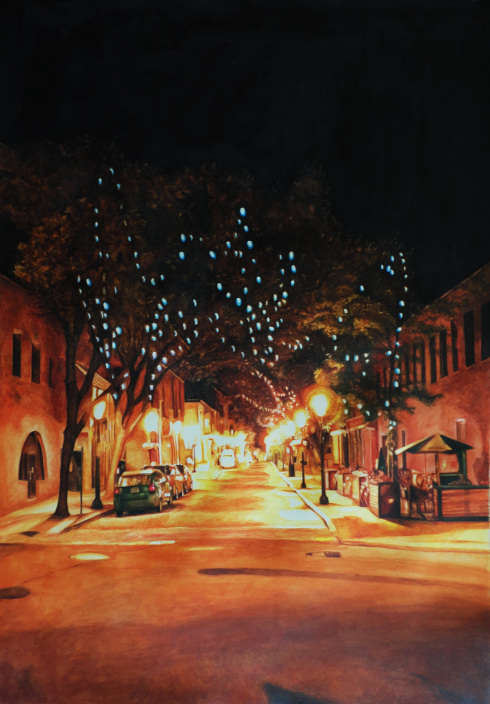
Remember a while back when I did an interview with painter Jonathan Collins, who created stunning works of art featuring Kerouac’s hometown of Lowell, Massachusetts? Well, starting this weekend, he has an exhibit up at the Paterson Museum!
Here’s the press release:::
The Paterson Museum is pleased to present “Beat Traveller: New Landscapes By Jonathan Collins.” This collection of works will be his first solo show at the Museum. The opening reception of Beat Traveller will be held the museum on Sept. 7 from 7 to 10 p.m. The exhibition will be on view through Oct. 6.
The works of Beat Generation novelist Jack Kerouac and poet and Paterson native, Allen Ginsberg, inspired the paintings. Collins journeyed to San Francisco, California, Lowell Massachusetts, and Paterson, New Jersey and returned depicting striking landscapes, glowing in bold sunlight, hazy sunsets, and moody night scenes.
According to Collins, “Both Ginsberg and Kerouac spawned from supposedly dreary mill towns, but I found each place to have areas of great natural beauty, vast historical interest, and even mystical qualities. Also, my father was from New England, my mother from Paterson, and they met at the foot of the Great Falls in 1951. Consequently these areas have great familial and artistic significance for me.”
Collins’ paintings are highly detailed watercolors that have won him numerous grants and scholarships, enabling extensive travel throughout the United States and Europe.
The Paterson Museum is located at 2 Market St. in the former erecting shop of the Rogers Locomotive Works in the heart of the Paterson Great Falls National Park. The Museum’s visiting hours are Tuesday to Friday from 10 a.m. to 4 p.m. and Saturday and Sunday from 12:30 to 4:30 p.m. For more information contact the Museum at (973) 321.1260 or thepatersonmuseum@gmail.com.
Check it out!
If “Everything Is Possible,” Our Milestones Need to Change
21 Aug Image from Singles via Salon
In the second paragraph of Sara Scribner’s recent Salon article about Generation X, the journalist says:
Few have even noticed that this small, notoriously rebellious clan – those born roughly between 1965 and 1980, which means about 46 million Xers versus 80 million boomers — has entered middle age.
The article itself is entitled “Generation X gets really old: How do slackers have a midlife crisis?”
Let’s stop right there for a moment. The date range provided here for Generation X refers to people who are currently between 48 and 33 years old. Is 33 middle age? Is 33 “really old”? Hyperbole aside, is 48 even “really old”?
The rest of the article refers to people in their 40s. I get it. The writer is using the median age. Treatises on generations are always rift with broad-swept generalities, however the attention to age in this particular article is telling for the article goes on to bring up issues of delayed adulthood, parents, and leadership.
Scribner quotes historian and generational expert (side note: how does one get to be a generational expert? That sounds like an awesome job) Neil Howe saying:
“Xers experience agoraphobia — everything is possible.”
The article goes on to say:
That’s where this generation gets its reputation as reluctant to grow up. “It’s very hard to mature,” [Howe] says. “In order to mature and become an adult, you have to shut off options. The way Xers were raised, there were always options — their parents told them to keep options open.”
Further on in the article, Scribner explains the result of this:
[Sheryl] Connelly, the Ford futurist, says that some of the postponing of the traditional midlife period may come down to a pushing back of all the major life milestones: “Some of that [midlife questioning] would be fueled by empty nesters – the kids are grown,” she says, explaining a feeling of “now what?” “Demographics have shifted such that with each passing generation, people are postponing marriage.” With dependent kids at home, everything has been pushed back. “There’s nothing midlife about my situation right now. I think that’s why you don’t hear this conversation.”
Maybe, but that’s assuming that we’re talking about a Gen Xer born closer to the 1965 date. Let’s take someone smack dab in the middle of Gen X. If we’re using the range 1965 to 1980, let’s pick someone born in 1972. That person today (well, depending on when their birthday falls) would be 41 years old. Let’s now assume this person married right out of college and then had a kid the following year, when they were about 24 years old. (Keep in mind, that’s younger than the median age for getting married which is closer to 27.) That child would be about 17 years old. It’s therefore not at all shocking that many—even half of—Gen Xers would have “dependent kids at home.” It would actually be rather traditional and, dare I say, old-fashioned.
More interesting is not that life’s “major life milestones” are happening later but that they’re happening at different times for Gen X.
And, just as interesting is that, even with these societal changes, Scribner still upheld conservative viewpoints of adulthood when she paired the phrase “major life milestones” with Connelly’s quote about “empty nesters,” “postponing marriage,” and “dependent kids at home.”
This is where the article gets fascinating but isn’t fully explored. Yes, perhaps on the whole, people are postponing marriage and children and many who did have children now can’t get rid of their boomerang kids, creating a period of limbo. However, just like the age range of Gen X varies, so does the age that they’re getting married and having kids. That’s apparent even in looking at the celebrities the article mentions. Kurt Cobain (born in 1967) had a baby, and that baby is now 20 years old. Winona Ryder is 41 and has never been married or had children. Liz Phair, who is now 46, married a film editor in 1995 and had a child with him the following year; in 2001 the couple divorced.
I have friends I graduated college with who afterwards got married and now have two or three children. I have other friends I graduated high school with who are still very single—and by “very,” I simply mean that they are not only unmarried but also not in a steady relationship. I have a cousin who is about two years older than me who has a seventeen-year-old son. And I have other cousins who are about a decade older than me and have children the same age and younger than the cousin closer to my age.
At a writing conference, I had an interesting conversation with one of my colleagues. On so many levels we connected. We’d had very similar upbringings. We had comparable goals with our writing. We shared parallel interests. Only about two years older than me, she is a mother of adolescent children and confessed to fearing empty-nest syndrome. At that moment in the conversation, my unmarried, childless self felt like a complete child next to her.
Going back to the statements about Gen X’s reluctance to grow up and the difficulty of maturing in this day and age, I think Howe’s concept of “agoraphobia” is worth more attention. I wouldn’t necessarily agree with Howe’s assessment that we have a phobia, an irrational fear, of “shut[ting] off options,” but the fact that we have those options is significant. We have the option to get married right out of college or to wait until we’ve experienced more of life, know ourselves better, and have amassed a nest egg to support a family. There’s no longer the same social stigma there once was to have a child out of wedlock and so we have the option to have a child with a significant other who we may already be living with. With the advancement of medicine, we also have the option of waiting until we’re in our 40s to have children.
As Howe says, “everything is possible.” But what does that mean for our identities and for the concept of maturity and adulthood?
Does a Gen Xer who is single and childless at 48 years old have more in common with a single and childless 33 year old Gen Xer than with a 48-year-old Gen Xer with a toddler? Does a Gen Xer who is an empty nester have more in common with the Gen Xer who never had children? Does a divorced Gen Xer in their early 30s have a more similar lifestyle to a Gen Xer in their late 40s who never got married? Is the 48 year old who never got married and never had children less mature, less of an adult, because they haven’t reached certain “milestones”?
Maybe it’s time our concept of maturity shifted to match the time period in which we’re living. Maybe it’s time to recognize that today’s milestones have changed.
The Salon article says “Many Xers seem nostalgic for the serene ‘50s,” but the “serene ’50s childhood” is a myth. One, in fact, that we explore in Burning Furiously Beautiful: The True Story of Jack Kerouac’s “On the Road” when talking about how illness killed off children, how war fractured families, how gender roles were back then, and how supposed countercultural icon Jack Kerouac longed for a wife and a ranch. Marilyn Monroe died at 36, never having a child. Ella Fitzgerald never had a child of her own but adopted one. Allen Ginsberg had a lifelong partner but his relationship was not considered traditional at the time. Clearly, there were people in the 1940s and ’50s who reached adulthood, reach midlife, without achieving traditional milestones. So why do we continue to use the same markers for maturity today that weren’t even accurate in the 1940s?
You may also like:
Bea Franco (October 13, 1920 – August 15, 2013)
20 AugI learned yesterday via Tim Z. Hernandez that Bea Franco, the woman who inspired Jack Kerouac to write one of his most beautiful passages in On the Road, passed away at the age of 92.
Bea Franco was the real-life woman behind Terry, “the Mexican girl,” in On the Road. Hernandez tracked her down in California when he was doing research for a book on her life and had the great opportunity to interview her and get to know her and her family over time. He wrote a beautiful book entitled Manana Means Heaven (University of Arizona Press) celebrating her relationship with Kerouac and her life afterwards which is due out later this month. I got to read an advance, and I’ll write more on that soon, but what I will say for now is that it’s an inspired work of literature that stands on its own as well as an important book bringing light to one of the women who impacted the Beat Generation. Although the book is not out yet, Hernandez got an advance copy to Franco, which she was able to see a week before she passed away. You can read about that on Hernandez’s blog.
Related links from around the Web:
Beatrice Kozera, known as ‘Terry’ in Kerouac’s ‘On the Road,’ dies at 92 by the Associated Press
On the Road — The Original Scroll — Bea on Retracing Kerouac
On the Road: Columbia Studios, Hollywood, California on Littourati
Evan Karp’s article “Tim Hernandez: Book inspired by Jack Kerouac” for the SFGate
Actress Alice Braga as Terry in the film adaptation
The Daily Beat’s review of Hernandez’s book about Franco, Manana Means Heaven
The Light and Life of Greek American Neon Artist Stephen Antonakos (1926–2013)
19 AugI learned via Gregory Pappas, founder of the Greek America Foundation, that artist Stephen Antonakos passed away this weekend. I had the great privilege of attending an exhibition of Antonakos’ neon sculptures at the Lori Bookstein Fine Art gallery here in New York City when the abstract artist was honored for the Gabby Awards Lifetime Achievement Award. You can read about that here. Antonakos attended the event, and I remember him being a quiet, humble artist. Yet his work speaks volumes.
Captivated by the neon lights of New York City, the Greek immigrant—Antonakos moved to the US when he was four years old—the artist began incorporating neon into his art in 1960. In an interview with Zoe Kosmidou, he explained the symbolism—or lack thereof—in his neon work:
My forms do not represent, symbolize, or refer to anything outside of themselves. Such specific correspondences would limit the work’s meaning, whereas pure abstraction, liberated from any external references, is capable of saying so much more. My neons relate formally to architecture and space, but they do not represent anything outside themselves.
Even so, raised in the Greek Orthodox Church, the artist’s work did have spiritual subtext. He created crosses and “chapels.”
Earlier, in the mid 1950s, Antonakos was creating collages. In a 2007 interview with Phong Bui for The Brooklyn Rail, Antonakos said:
And since oil painting was too slow for me to keep up with all of the ideas that were racing through my mind, I felt the physical and spontaneous process of putting various objects together was more suitable to what I needed to get done in those years.
His desire to work fast, engage in a spontaneous process, and collage disparate found objects together resonates with the postmodern aesthetic. We hear the same vision in the works of the abstract expressionist painters and the Beat Generation writers. Antonakos revealed that although he admired the work of the abstract expressionists, he felt he could “get more out of” the Italian artists Alberto Burri and Lucio Fontana.
Antonakos went on to have more than 100 solo shows around the work.
For artists of any discipline, one of the great takeaways from Antonakos’ life is that one can have a day job and still be an artist as long as one perseveres. Antonakos worked as a pharmaceutical illustrator during the day and then would work in his studio until 2 in the morning.
Here are a couple of links to celebrate the life and work of this inspired artist:
- Proscenium by Stephen Antonakos by Marjorie Welish in BOMB
- Oral history interview from 1975 with Paul Cummings on the Archives of American Art
- In conversation with Phong Bui in the Brooklyn Rail
- ART TOPOS
- The architecture of light and space, an interview with Zoe Kosmidou
Friday Links + More Than a Thousand People Like Our Book!
16 Aug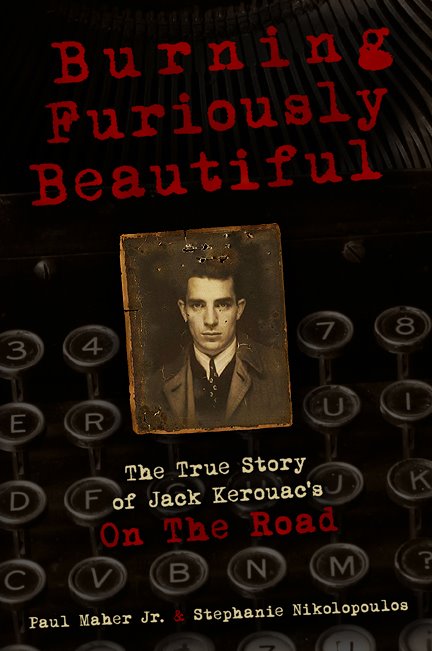
Paul emailed me the other day that we’d crossed the thousand-“like” threshold on our Facebook page for Burning Furiously Beautiful: The True Story of Jack Kerouac’s “On the Road.” I wrote him back: “!!!!!!!!!” …Give or take a few exclamation points.
I cannot thank all of you enough for your support. It means so much to me and for so many reasons. I’m not really a numbers person. Friends have asked me about my writing in the past, and I’ve said that all those Friday nights I spent at home in front of my computer instead of hanging out with friends and all that time I spend frustrated as I edit and rewrite will all be worth it if I reach just one person with my writing. I wasn’t speaking specifically about this book, but it holds true in the sense that if I can enlighten even one person on the fact that Jack Kerouac was a literary artist and not just some beatnik cartoon or if I can give hope to one writer out there who is struggling with yet another draft and thinks they’re rubbish because they mistakenly believe the myth that Kerouac wrote On the Road in just three weeks then I know I’ve done my job. Having a thousand people excited about the book, though, now that’s cake with a whole lot of icing on it!
I feel fortunate to have Paul as a coauthor. He’s so knowledgeable and experienced when it comes to writing about Jack Kerouac. He’s also really easygoing, and I think we’ve been able to work together well. Sometimes we get sidetracked and talk about things like woodland creatures and hot dog vendors and really bad sitcoms, and it’s all quite fun.
We also lucked out to have Igor Satanovsky as our cover designer. We get so many compliments on the cover. It’s usually the first thing people see when it comes to our book, so it was really important to us to have a strong cover and Igor nailed it.
We’ve been really privileged to have some people who have rallied around us and inspiring, encouraging, supporting, and even promoting us.
Most importantly, our families have given us time and space to write. My sister has attended almost every single reading I’ve ever given, Kerouac-related or not. My mom goes around sticking the postcards for our book anywhere she can. My father always made sure I got the best education I could get, which furthered my writing skills.
Many moons ago, before I even began working on this book, David Amram spent time talking to me about Kerouac and dispelled the whole idea of the so-called Beat Generation mythology. Since then, he’s invited me to read with him, has promoted my work in his own shows, and continually pushes me to think about life and art in new ways.
George Koumantzelis has gone out of his way to support our work. Oftentimes getting people to agree to an interview is like pulling teeth, but George actually invited me and arranged for me to interview his uncle Billy, who was Kerouac’s pallbearer. Billy and George have been tremendously gracious toward me. George often sends me helpful news links and posts my blog entries on Facebook.
The first time I ever got to read from Burning Furiously Beautiful was thanks to poet RA Araya, who invited me to read at The Sidewalk Café. He has since invited me many more times to read at various venues, and even when I haven’t read he’s passed out postcards for the book. He also frequently posts my work on Facebook.
One of the goals with our Burning Furiously Beautiful Facebook page was to create an inviting space for Kerouacians, those interested in Beat literature, road trippers, people who dig the history and culture of the ’40s and ’50s, writers, fans of the On the Road film, and the curious. We wanted a page that was informative and entertaining but also a safe place where people could ask questions and connect with each other. We don’t have a thousand people commenting on every single post, but we do have some regular posters as well as people who are actively engaged in leaving comments and forwarding posts. I’ve had the pleasure of even meeting a few of these people in person, which has been super fun. I never really had any friends that were into the Beats so it’s exciting to connect with others who are passionate about their literature.
There are so many people who have helped us get where we are today, in both small and big ways, specific to this book or in more general ways. The post would go on forever if I listed out each and every name, but the support is meaningful and doesn’t go unnoticed. It makes all the difference.
If you aren’t on our Facebook page yet, please do feel to join us. This isn’t some exclusive hipster club. People don’t try to one up each other on our page. We’re just super passionate and want to connect with others.
* * *
Reaching over a thousand “likes” by no means happened overnight. A lot of work goes into finding interesting things to post, responding to people’s comments, commenting on other Facebook pages, and getting lost in the time suck of social media. I’ve also done my fair share of going to talks on social media and scouring the internet for the latest hot tips. So, for today’s Friday Links, I wanted to leave you with a few helpful links for growing your social media. I’m by no means a pro, but some of these people certainly are.
Alt SLC registration just opened up! It’s a great way to learn about blogging
Dave Charest writes How to Get Facebook Likes for Your Page (The Easy Way!)
Author Laura Vanderkam writes about how to Grow your blog readership overnight! (or slowly over 3.5 years)
Conduit offers Ten Tips for Growing Your Target Audience Using Social Media
Photos tend to get more likes than just text, and Lark and Linen provides a Tutorial: Editing Your Photos
Samantha Murphy says that using “I” gets more thumbs up in How to Get More Likes, Shares on Facebook
In case you missed them, here are some of my previous links on social media:::
The true, true story behind the Facebook fauxlore of the Kerouac-Burroughs fight
I am one in a million
My Goodreads To-read list
How many stars should a book get on Goodreads?
Playing around on Google+ I found an article about, well, me
Why I Tweet and post on Facebook
Building your book before you write it
My takeaways from Cup of Jo’s advice on blogging as a career
Social media lessons from last year’s SWSX
I heart social media
Galley Cat’s advice for writers on Pinterest … and I’m on Pinterest
What are YOUR tips for growing your social media?
Dream Journal: Travels with Chuck D.
15 Aug
Jack Kerouac kept a dream journal. This log of nightly dreams was later published by City Lights Press in 1960 as Book of Dreams. Even before it was published, though, Kerouac encouraged others to pay attention to their dreams. He told Allen Ginsberg to infuse his poetry with his dream life.
When I was a high school student, my psychology teacher assigned us the task of keeping a dream journal. Isn’t that the most fantastic homework assignment you can think of?! According to psychology, we dream every night, but only some nights we remember our dreams. Keeping a dream journal was supposed to help us better remember our dreams. I know some people who hardly ever dream, but I have wild dreams—especially after eating pizza!
This past Friday night I had a doozy of a literary dream! I dreamt that I was writing a book entitled Travels with Charlie, which was a riff on John Steinbeck’s Travels with Charley. Steinbeck’s book is a chronicle (it was purported to be nonfiction but it’s since come out that portions of it were made up) of the American road trip he took with his standard-sized poodle. My book, however, was about Charles Darwin’s travels. Incidentally, in real, waking life I once edited a reissue of his travelogue The Voyage of the Beagle. I didn’t make the connection in the dream, but perhaps there was some connection between Steinbeck’s poodle and Darwin’s Beagle. In the dream, I was retracing Darwin’s footsteps for a book about his “road trip.” I kept referring to Charles Darwin as Chuck D. or Chuckie D.—like the rapper!
I definitely need to start a dream journal!
Do you keep a dream journal? What is the wildest dream that you’ve had lately?
20 Reasons to Read “On the Road” in Your 20s
14 Aug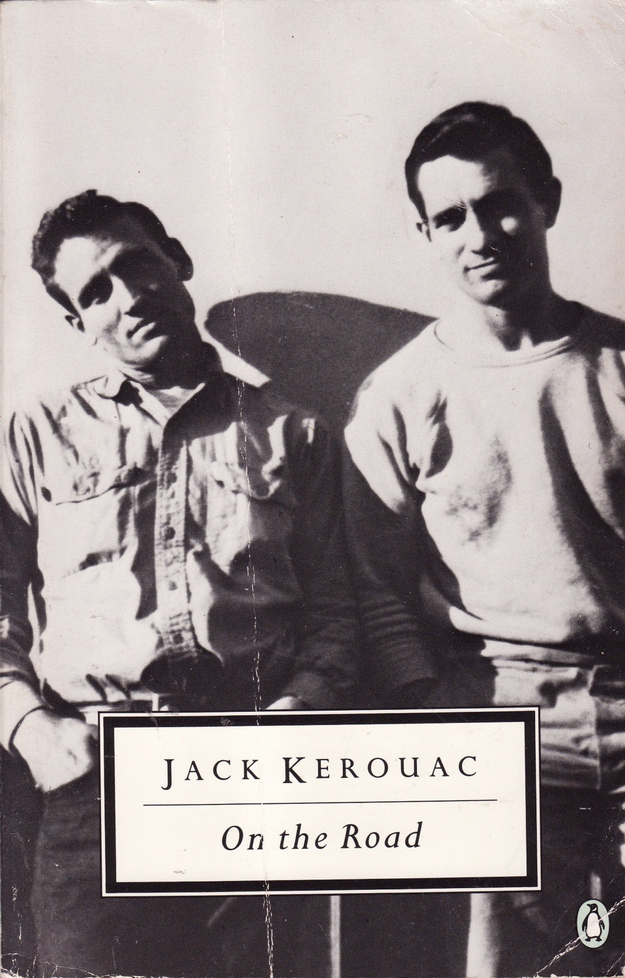
It recently came to my attention that Buzzfeed posted an article called “65 Books You Need to Read In Your 20s,” and I immediately knew Jack Kerouac would make the cut. After all, so many people have told me Kerouac is for young people.
First, though, at number 18 came Ernest Hemingway’s The Sun Also Rises. The write up states:
Another English syllabus special, Hemingway’s tight prose and peerless storytelling are somehow more resonant when you are reading it on your own. Or as my colleague Matt put it: “I couldn’t keep my eyes open for more than five pages of Hemingway growing up, but for some reason I picked this up in my post-graduation haze and was mesmerized.”
I can see that. I was none too fond of Hemingway when I had to read The Snows of Kilimanjaro in class but post-grad enjoyed The Sun Also Rises. It’s been quite some time since I’ve read it and have been thinking I should reread it.
So what do we hear when we get to Kerouac, at number 34? A solitary, cynical line:
So that you’ll realize the way you felt about this book in high school has totally changed.
Really? Kerouac made the list just so that the blogger could diss On the Road? I’m all for personal growth and maturity, and I can certainly understand how some books are more relatable when you’re young, but, even if one thinks that’s the case with On the Road, why suggest someone “waste” valuable reading time rereading it then? Furthermore, why single out On the Road and not, say, Catcher in the Rye? And, if On the Road is deemed a book for teenagers, what are we to make of all the legions of adults who read Harry Potter?
I first read On the Road when I was a teenager, and I read it again when I was in my twenties. And guess what? I continue to pick it up and find inspiration from it. In fact, I think I appreciate certain aspects of it more now than I did when I read it in my teens. Therefore, I’d like to propose reasons why you should read On the Road in your twenties:
- Jack Kerouac who? You were busy with homework, video games, and the mall, and never read anything but assigned reading—which never included Jack Kerouac. That’s okay, you can read On the Road now.
- You understand more about history and politics now that you’re older and consequently can better understand the significance of this novel being written by an author who served in the Merchant Marine during World War II.
- You had heard about the Great Depression, but you didn’t know back then how that was tied to literary movements, and now you can see how money has shaped the art from The Great Gatsby to The Grapes of Wrath to On the Road.
- Much of contemporary literature uses a conversational voice so it never occurred to you that Jack Kerouac’s voice, diction, and stream of consciousness were revolutionary for his time period.
- You’ve delved into Allen Ginsberg, William S. Burroughs, Gregory Corso, amongst others, and now can make your own judgment about whether or not the term “The Beat Generation” is useful and appropriate.
- The main characters in On the Road are in their twenties. The struggles they face growing up and becoming mature adults are the same ones you now face.
- You weren’t allowed to take a bus across the country when you were a teenager. But now you can!
- You lived a quiet life in the suburbs as a teenager and weren’t exposed to people who’d been in jail, habitually did drugs, married and divorced, and didn’t hold down steady jobs as adults. Those characters may feel less foreign to you as you get older, and you may see them differently now.
- When you read the novel as a teenager, you thought Dean Moriarty was the hero. You’re not so sure anymore. This makes Kerouac’s portrayal of him even more intriguing.
- You skipped past all those setting descriptions, but now you realize they are pure poetry.
- The frenetic travels in the novel seemed exhilarating but confusing or pointless the first time you read the novel. Now, you can examine that as an intentional plot device.
- You didn’t think much of the religious aspects of the novel, but now, having heard more about Kerouac’s Catholicism and Buddhism, you can’t help but analyze their significance. This could change your perception.
- You enjoyed the romance of “the Mexican girl,” but you didn’t think too much about Kerouac’s portrayal of Mexican and Mexican American field workers, and now you can draw parallels to today’s discussions on the treatment of certain ethnic groups in America.
- You want to learn how to write better dialogue.
- You read the characters through a contemporary lens when you were younger, but now that you know more about the 1940s and ‘50s you have a greater understanding of the social norms of the time and how they relate to masculinity and gender roles. This can allow you to reexamine issues of identity, misogyny, and power in a novel that includes heterosexuals, bisexuals, homosexuals, male leads, and female minor characters.
- You realize in many ways the novel is a love story of America.
- You have actually listened to jazz by your twenties and read a little about music theory and now understand its role in the novel and its influence on Kerouac’s prose stylings.
- Cars have always been a part of your life, but now that more people your age are eschewing driving, you have a greater appreciation for the socio-economic dynamics of car culture.
- You realize that maybe in your younger years you were a bit of a follower, like Sal Paradise, and are now seizing the moment and establishing your own life.
- You want to learn how to experiment with syntax.
What would you add to this list?
Photos from the 2013 New York City Poetry Festival
31 Jul


I feel incredibly honored to have been invited to read at the 2013 New York City Poetry Festival. I had such a blast hearing so many great poets read at last year’s festival, and it never occurred to me that just a year later I would be joining them on stage. I have poet RA Araya to thank for continually supporting my writing. He invited me to read Homer in the ancient Homeric Greek and from the literary biography I’m coauthoring with Paul Maher Jr. entitled Burning Furiously Beautiful: The True Story of Jack Kerouac’s “On the Road,” so I read two road trip pieces.
For my Homer selection, I chose the opening passage from The Odyssey. Growing up in the Peloponnesus, my father had to memorize part of the epic poem in school. To this day, he still can recite the lines! I studied Classical Greek at Pomona College (while a student at Scripps), which is different than Homeric Greek. We never really read aloud in class because it’s a “dead” language, one that is no longer spoken but read by scholars. There are debates about how ancient Greek dialects were spoken, as the pronunciation is, according to some scholars, different than modern Greek. I am therefore definitely not adept at reading in the ancient tongue, but if someone asks me to read something specific, I do my best. Fortunately, there are many great English translations of The Odyssey out there too!
It was a no brainer to choose one of the passages about poetry from Burning Furiously Beautiful. In telling the story of the making of the novel On the Road, it was important that the literary biography also explored Kerouac’s poetry and his friendship with other poets. Although he is mainly remembered as a novelist, Kerouac wrote poetry throughout his life, including the period when he was on the road. There’s a really strong section in the book about how Kerouac and Allen Ginsberg influenced each other’s writing, and I wanted to read that, but in the end I found a passage in Burning Furiously Beautiful that seemed to better encapsulate the mood of the Poetry Festival. In the passage, Kerouac has been walking along the highway, hitchhiking, and finds himself composing a poem about everything he sees around him. It reminded me of how out on Governors Island we were all a bunch of writers lofting in the grass and translating the world around us into poetic language.
I read directly after RA, who opened up the event with his famously short-but-sweet poem, and then came Hillary Keel, Sarah Sarai, Carmen Bardeguez-Brown, Kate Levin, Carlos Manuel Rivera, Sparrow, Bonafide Rojas, and Keith Roach. They were amazing! Seriously. Hilary read in German and a couple of the other poets read in Spanish, and I suspect our reading—under the name Miguel Algarin’s Brooklyn Poetry—was the most linguistically diverse at the Festival. I had traveled over the Governors Island with Kate, and I think this was her best reading yet. In addition to poetry about Manhattan and our value as people, she read from her punk novel, which I would’ve thought was a poem if she hadn’t said otherwise. I always enjoy hearing Sarah read, and in particular enjoyed her poem about meeting an angel at a bus stop. The poet who had me in stitches, though, was Sparrow. I’d heard him sing at RA’s birthday party last year, and I loved hearing his one-liner poems this time around.
Special thanks too to our stage manager Liz von Klemperer, who did an excellent job. There were a lot of volunteers who kept the entire event running smoothly. The New York City Poetry Festival is put on by The Poetry Society of New York and is organized by Stephanie Berger and Nicholas Adamski. For the full lineup of the two-day event, check out NYCPF 2013.
I also want to thank my family and friends who trekked out to the island—some coming from as far as Jersey and Brooklyn—to support my reading. The photos here were taken by Leslie Marks, except the last one which is a self portrait. For more photos of me and all the other amazing poets, check out asterix611’s flickr.
Should Women Dismiss Beat Literature?
18 Jul
 Image via Dangerous Minds
Google+ was all the talk at BEA this year and last. I’ve been on the social media platform for a while now, but just the other day decided to see how it compares with Facebook for finding the latest conversations on the Beat Generation. I did a keyword search and immediately found an article that was right up my alley: “The Feminist Backlash Against the Beat Generation.”
Kimberly J. Bright writes for Dangerous Minds about her experience viewing the now legendary scroll of Jack Kerouac’s On the Road and having another person there remark in surprise that she was there of her own volition. Bright writes:
Their teacher asked me a question about the scroll, obviously assuming that I was a museum employee. When I explained that I was just a visitor, she apologized and said, “But I didn’t think women read Kerouac.”That was news to me.The backlash against the Beats in general, and Kerouac in particular, is becoming more evident and is mostly coming from Feminists.
Oh, how I could relate—which Bright noted, referencing my apparently controversial Millions article. Just like Bright, I never knew some works of literature were supposedly for men and others were for women. How silly of me to not realize there was an entire list of writers whom I should ban without reading them to decide for myself or that I should dismiss the literary and cultural merits of a highly innovative and influential body of literature just because certain aspects of it might offend my sensibilities.
I attended a women’s college, where we read a wide breadth of literature and learned to think critically about works—literature that included Allen Ginsberg, Ernest Hemingway, Michel Foucault, Karl Marx, Isaac Asimov, Kathy Acker, comic books, Sigmund Freud, Jean-Jacques Rousseau, Samuel Richardson, and Jane Austen. In my MFA program, we specifically discussed the distinction between the author and the work as well as the literary merit versus our individual preferences.
Bright went on to write:
Personally if I purged my bookshelves, real and virtual, of all the alcoholics and misanthropes – let alone all the manic-depressives, opium addicts, suicides, eccentric asexuals, adulterers and misogynists – I would hardly have any books left.
It seems a bit hypocritical, to me, for people to lambast the Beats while still reading other authors whose personal lives and even the content of their work are not any less controversial. This summer everyone rushed out to watch The Great Gatsby, read or reread the novel, and plan their weddings around the theme of F. Scott Fitzgerald’s story that placed women as secondary characters, kills off one of the women, glorifies a criminal, includes affairs, and exalts illegal substances. It should also be noted that Fitzgerald is widely known to have plagiarized his wife’s work for some of his own books. If we’re dismissing authors on so-called moral grounds, perhaps we should then also dismiss:
- Miguel de Cervantes (prison time after the money he collected as a tax collector went missing)
- Paul Verlaine (prison time after shooting Rimbaud)
- O. Henry (prison time for embezzlement)
- Jean Genet (prison time for lewd acts)
- Leo Tolstoy (secretly abandoned his wife in the middle of the night)
Of course, choosing whose work is “worth” reading becomes problematic because whose morals must we go by? Furthermore, which attributes of a person are more or less important when deciding whether we should read their literature? Should we praise Betty Friedan’s entire body of work because she is pro-choice? Should we dismiss her entire body of work because she did not further lesbian politics? Or vice versa? Should we dismiss her altogether? What about Bill Clinton? Should we not read the former president’s books because he cheated on his wife? Because he wielded his position of power over a twenty-two-year-old intern? Should we dismiss Jack Kerouac’s work because of the way he treated his daughter? Should we praise his work because of the way he treated his mother?
I don’t mean to make light of any of these issues or to excuse anyone from anything. My point is simply that we need to take a closer look as to why we excuse some authors but not others. Why have the writers who have been marketed together as the Beat Generation been targeted while others get a free pass?
And why don’t those so-called feminists who target the so-called Beats acknowledge the many women writers associated with the generation? Here were women who faced tougher socio-political times than we do today who got their own apartments, who studied at well-known undergrads and went on to work toward their MAs, who didn’t just sit around cooking dinner for their husbands but created works of their own. Should we forget their body of work or negatively lump it into a category we don’t read because of their associations?
Yiasou!
Stephanie Nikolopoulos is a writer, editor, writing teacher, and speaker based in New York City.

She is the coauthor, with Paul Maher Jr., of "Burning Furiously Beautiful: The True Story of Jack Kerouac's 'On the Road.'"
You can email her at stephanie_701 {@} yahoo.com

 Stephanie Nikolopoulos