Tag Archives: Greek American

Photos from the Greek American Fashion Week Kick-Off Event

6 Sep

I’m about to head out to the Greek American Fashion Week Runway Event, so I’m leaving you with a few photos I snapped at the Greek American Fashion Week Kick-Off Event that was held on Wednesday night at the Lower East Side’s lush rooftop bar The DL.

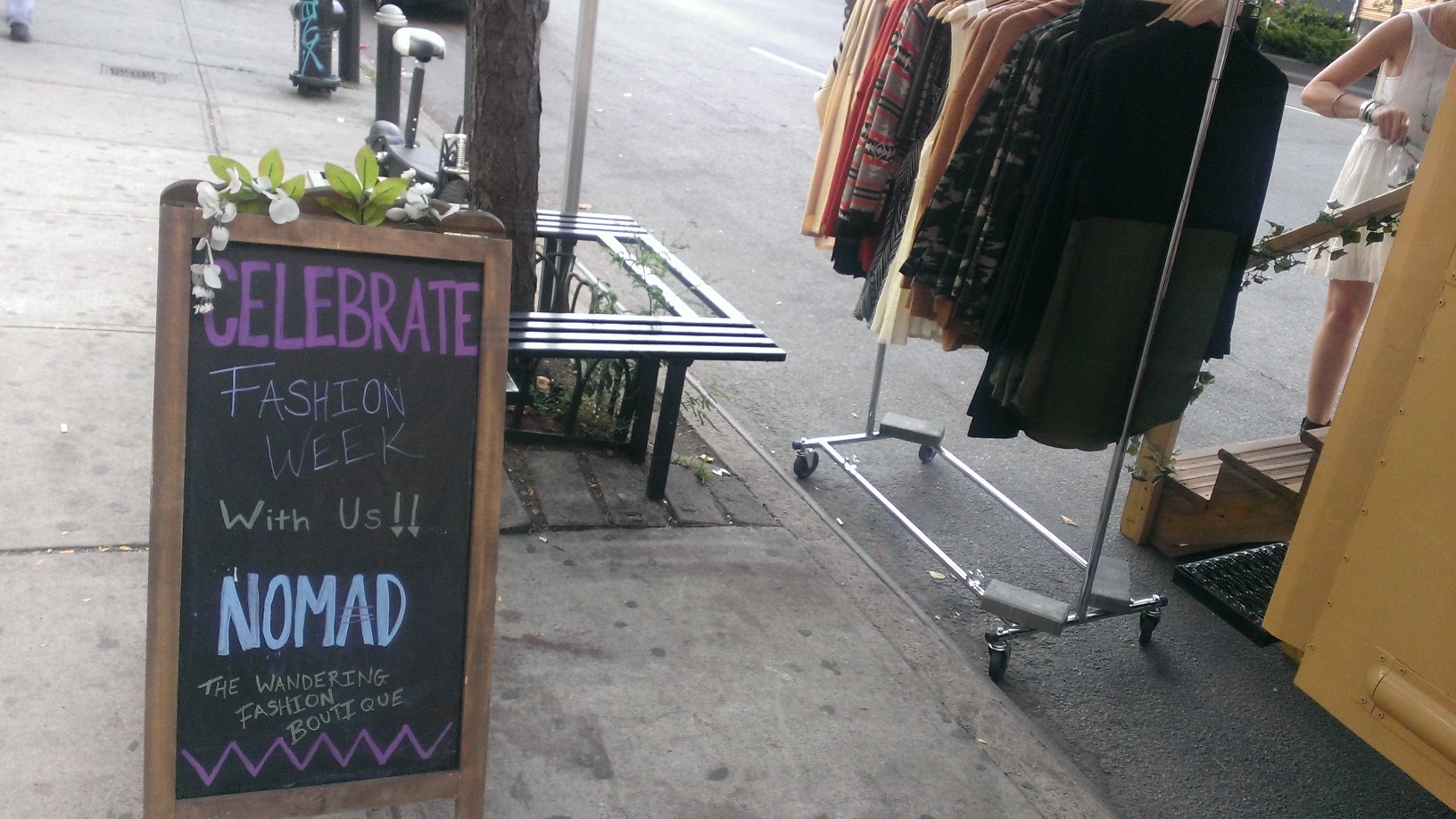
Parked outside was the aptly named Nomad truck, “the wandering fashion boutique” … and you know my obsession with sweet rides.

WP_20130904_005

WP_20130904_006

WP_20130904_007

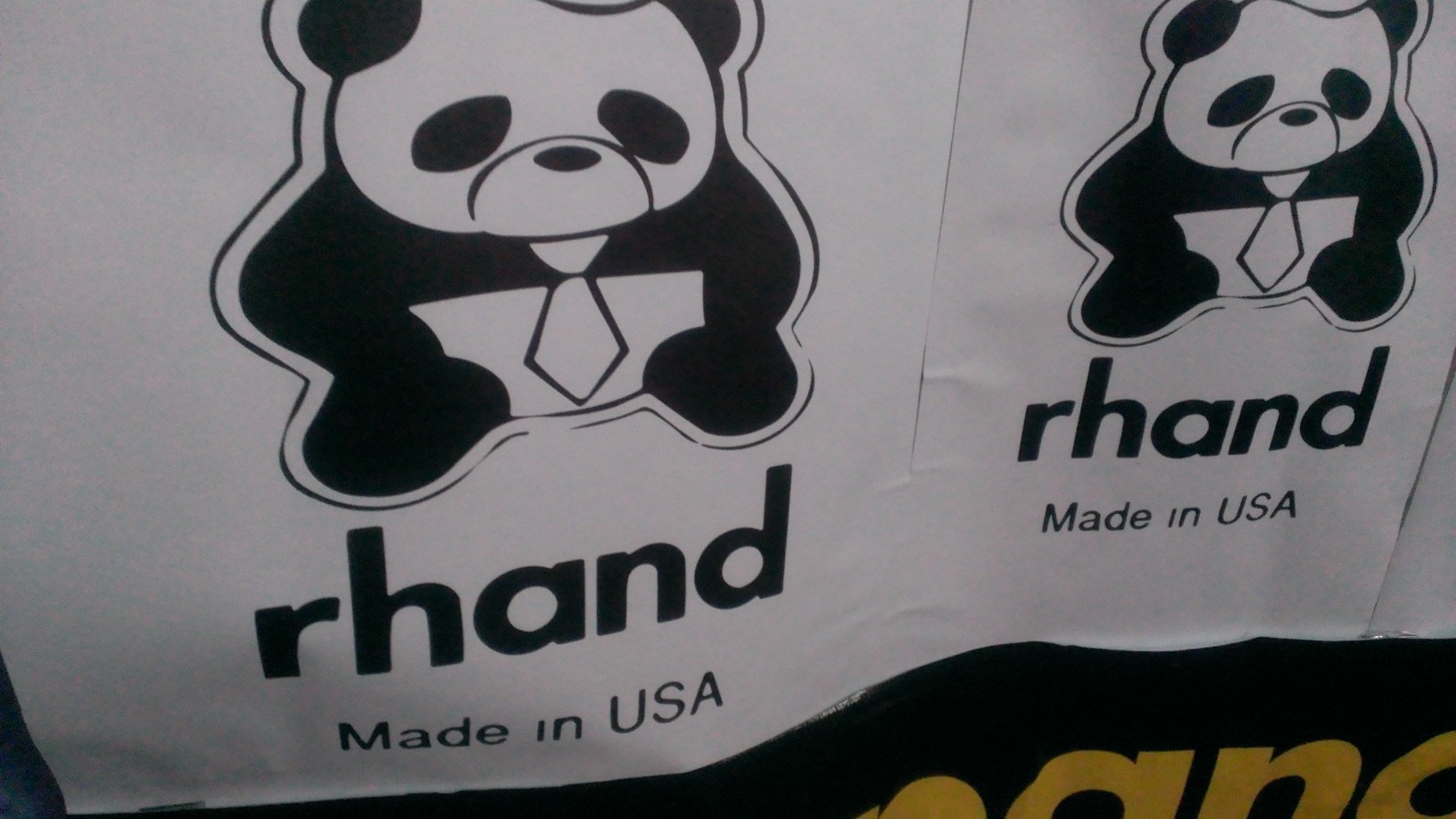
The rooftop of The DL was turned into a pop-up shop with fashion by the likes of Dani Djokic and Panda Rhand.

WP_20130904_009

WP_20130904_008

WP_20130904_011

In case you’re wondering, I wore a black shift with buttons down the side to the kick-off event. My hair was in a low side bun. I had neutral eye makeup with strong brows and dark, berry lips, inspired by Michelle Williams and Emma Watson.

Lomogram_2013-09-04_09-15-27-PM

I felt like I was at my house in Greece with all the palm trees on the rooftop!

WP_20130904_015

WP_20130904_019

WP_20130904_016

Pizza was provided by Patsy’s (so good with that fresh basil!) and dessert by A2 (the peanut-butter cupcakes were to die for!).

Lomogram_2013-09-04_09-20-54-PMIn full disclosure, the organizers of the Greek American Fashion Week invited me to cover the Greek American Fashion Week events.
 

Coming Soon: Greek American Fashion Week

22 Aug

GAF

Last year’s Greek American Fashion Show was so inspired that this year, they’re putting on an entire WEEK for Fashion Week:

The Greek America Foundation is hosting “Greek American Fashion Week” September 4-8, 2013 with events taking place throughout New York City.  The week culminates in a Greek American Runway Show at Studio450 and after party at Meli Restaurant on September 6, 2013.

Greek American Fashion Week events include “Greek Fashion’s Night Out” and multiple cocktail hours at venues such as Anassa Taverna. At the main runway event, guests will be dazzled by cutting-edge fashion designs with Greek and American entertainment, a high-end silent auction and gift bags to cap off the evening. All events showcase emerging and established North American fashion designers of Greek descent in an effort to help them forge relationships with those in the fashion industry, assisting them with advancement of their careers.

In addition, renowned menswear designer John Varvatos will be honored with an award for his exceptional contribution to the fashion industry.

A host of supporters and friends will be on hand for the weekend events, including several prominent members from the fashion and retail industry as well as celebrity fashion bloggers.

Proceeds from this program will benefit the programs of the Greek America Foundation, with a particular focus on the creation of a scholarship for a student pursuing fashion design. The Greek America Foundation is a 501(c)(3) non-profit organization dedicated to promoting, preserving and perpetuating the Greek culture, history and heritage in North America.

Tickets will go on sale August 12, available for purchase from the Greek America Foundation’s website (www.greekamerica.org).

More details to be released soon! For additional information, please visit http://www.greekamerica.org/projects/greek-american-fashion-week/.

Who’s coming with me?!

The Great Valhouli Fauxlore: Atlantic Uncovers Truth Behind Kerouac-Burroughs Fight

9 Aug

No5

Those of us who devote our time studying the life and work of Jack Kerouac and yet who simultaneously spend a lot of our time on Facebook already called “hoax” on that photograph that was being circulated around about a plaque on how Kerouac and William S. Burroughs got into a drunken fight over the Oxford comma. I assumed it was a digitally manipulated photograph. As it turns out, though, it has a fascinating back story. Alexis C. Madrigal uncovered the truth behind the plaque — which actually exists — in the story “Facebook Fauxlore: Kerouac, Burroughs, and a Fight Over the Oxford Comma That Never Was” in The Atlantic.

It’s a great piece — minus the odd portrayal of the Greek American behind the plaque. But we’ll get to that in a minute.

Hot on the trail of something fishy, Madrigal contacted sources Paul Marion; The Morgan Center; Martha Mayo, head of the Center for Lowell History; and Tony Sampas. Marion, author and employee at UMass Lowell Center for Arts and Ideas, had seen the plaque and knew that it was created to promote Mill No. 5 at 250 Jackson Street in Kerouac’s hometown of Lowell, Massachusetts.

Marion referred Madrigal to Ted Siefer’s article “Mill No. 5 brings transformation to Lowell” in The Boston Globe, which explained that developer Constantine Valhouli, with business partner Jim Lichoulas III, was transforming the former textile mill into an office building:

with a kind of fun-house brio to attract the eclectic, off-beat, and hip: boutique movie theater, yoga studio, farm-to-table restaurant, a lounge/library in the style of an English manor — the whole thing decorated with architectural materials salvaged from the likes of Dr. Seuss’ house.

It would appear that Valhouli ascribes to the same Beat philosophy of improvisation as Kerouac. Siefer says:

Valhouli likens the development of the project to how jazz musicians build a song. “We’ve not built from a plan,” he said. “You play a theme, and you just keep playing improvisations over it.”

Madrigal points to the pivotal paragraph in The Globe story for proving the plaque is a fake:

And there, in the 13th paragraph, was proof that we were looked at a false sign: “Inside the entry hall will be a reconstructed early 19th-century New England schoolhouse,” the Globe wrote, “an exhibit that will be part of what Valhouli calls the Lowell Atheneum [AHA!], which will also feature a collection of hand-painted pseudo-historical plaques from New England history [DOUBLE AHA!].”

Madrigal, who went on to interview Valhouli, then explained that Valhouli and Lichoulas thought up the idea of creating “a series of plaques commemorating events that never happened” to support Mill No. 5. They hired Ould Colony Artisans‘ Robert and Judy Leonard to paint the plaque by hand. The artists had created many other historical signs in the Massachusetts area.

I found Madigral’s investigative reporting enthralling.

Still, I was put off by this aside:

I had to get in touch with this Valhouli character, who was, no doubt, swirling his mustache near some railroad tracks looking for damsels.

Okay, I’ll concede that Constantine Valhouli certainly sounded like a “character” for faking people out — although I’m not sure we generally refer to conceptual artists or those who come up with brilliant marketing schemes as “characters.” Instead, I think we tend to use terms like “inspired” and “business-savvy” to describe people who manage to get others talking about their work. A quick look at Mill No. 5’s Facebook page, and the tongue-in-cheek branding is evident:

We’re working on the bathrooms at Mill No. 5 today. Which made us think of the central question of paleontology:
Q: Why can’t you hear a pterodactyl go to the bathroom?
A: Because the P is silent.

Brilliant Subway Panhandling Prank Flips the Script

Hahahahahaha. This. Oh this. The Hipster Logo Design Guide.

But there was “no doubt” in Madrigal’s mind that Valhouli had a mustache and that he swirled it, like some sort of old-timey Western villain? Is the mustache assumption because he’s Greek American or because The Boston Globe article referred to his work as “Disneyland for hipsters”? Where did the leap from real-estate developer to someone who hung out at a train station get made? Was this supposed to tie him closer to Kerouac — or make him sound like some sort of train-hopping hobo? He was out “looking for damsels”? What??

With today’s access to personal information on the Internet, it took only seconds to find Valhouli’s LinkedIn page, and — unless it too is a hoax — discover he (fittingly) received his BA in English and fine art from Georgetown University, where he went on to get his MA in interactive technology. From there, he got his MBA from Columbia University’s Business School. He received the Charles G. Koch Fellowship and was a Peter Agris Fellow. He did equity research for Morgan Stanley and was director of business development for Incogniti before becoming principal at The Hammersmith Group, which describes itself as “a boutique strategy consulting firm with concentrations in real estate and technology.” His LinkedIn summary reads, in part:

Constantine has been featured in the BBC, Businessweek, CNN, Forbes, Fortune, Newsweek, and the Wall Street Journal. He has guest lectured at Columbia Business School, MIT, New York University, and has served as a panelist on internet industry events and at the U.S. Department of State.

There wasn’t a profile picture to verify him peeking out of a train tunnel to leer at women. The Atlantic has created its own “fauxlore” about Constantine Valhouli. Oh, how the tables have turned.

* * *

This post has been updated to correct the publication to The Atlantic.

The Quotable Greek: Wide-Hipped, Sarcastic Greek Girl

1 Apr

“This worked out perfectly for me in college, because what nineteen-year-old Virginia boy doesn’t want a wide-hipped, sarcastic Greek girl with short hair that’s permed on top? What’s that you say? None of them want that? You are correct.”

~ Tina Fey in Bossypants

Vote for Your Favorite Greeks!: GABBY Voting

20 Mar

gab

You, yes YOU, have the power to select the winners of the 2013 GABBY Awards. What’s that? You’ve never heard of the GABBYs? Where have you been, my friend? The GABBY Awards celebrates Greek America’s best and brightest:

The Gabby Awards were created to celebrate those Greek North Americans who strive to be the very best at what they do. Whether in business, philanthropy, the arts, education or other areas of interest that our awards cover, we celebrate the pursuit excellence as a core Greek ideal and are inspired by people who pursue excellence.

The name “Gabby” comes from the acronym “Greek America’s Best and Brightest Stars” and the Gabby has quickly become the top achievement awards for Greek North Americans. The awards are based on a purely meritocratic system that involves a 100-member Academy that determines the nominees, followed by a popular vote via the internet.

I attended the 2011 GABBY Awards on Ellis Island, which were AMAZING. Here are my recaps.

This year, the star-studded festivities will take place in Hollywood.

And the nominees are….

…Drum roll, please!

Business & Entrepreneurism

  • Sophia Amoruso, Founder and Owner, Nasty Gal (fashion)
  • George Kalogridis, President, Walt Disney Resort
  • Arianna Huffington, Journalist and Founder of the Huffington Post

Politics & Public Service

  • Andromache Karakastanis, Justice of the Supreme Court of Canada
  • Reince R. Priebus, Attorney, Chairman of the Republican National Committee
  • John Sarbanes, Maryland Congressman

Philanthropy

  • John Paul DeJoria, Co-founder of Paul Mitchell Systems, Patron Spirits, and JP Selects
  • Michael Lazaridis, Founder of Blackberry, Philanthropist
  • John Pappajohn, Entrepreneur, Philanthropist

Athletics

  • George Kontos, Professional Baseball Player
  • Christina Loukas, Olympian, Diver
  • Nick Markakis, Professional Baseball Player

Education

  • Nicholas Economides, Professor of Economics
  • C. L. Max Nikias, President, University of Southern California
  • Nicholas Zeppos, Chancellor, Vanderbilt University

Arts & Culture

  • Alexander Payne, Screenwriter and Director
  • George Pelecanos, Novelist, Writer and Producer
  • Greg Yaitanes, Director and Innovator

Performing Arts

  • Chris Diamantopoulos, Actor
  • Tina Fey, Actress
  • Zachary Galifianakis, Actor and Comedian

Science & Medicine

  • Paul Alivisatos, Ph.D., Professor of Chemistry and Materials Science
  • Dr. Peter Diamandis, Founder, Chairman & CEO of the X Prize Foundation
  • Constantine Stratakis, M.D. D.Sc., Medical Investigator

You can officially vote here. Let me know in the comments section, though, who you’re voting for. Also, is there anyone that didn’t make the cut that you think should have been nominated?

“My life is not a story,” Wrote the Memoirist

28 Feb

9780547913995_p0_v1_s260x420

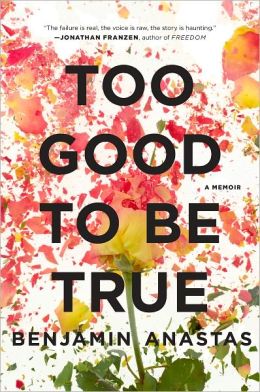
After reading about how Benjamin Anastas describes his father as “a brooding Greek beatnik” who is “potbellied from lentils and with a beard down to his solar plexus chakra,” I knew I had to read his memoir Too Good to Be True. After all, I write about  Greeks and so-called beatniks. Too Good to Be True is the story of the breakup of his marriage and the dissolution of his writing career.

Its not told in an overtly emotional manner, yet its frankness is almost unsettling. These days we’re used to people baring all when it comes to relationships, but to tell the truth about money? To admit that even though he’d taught at an Ivy League and published in big-name magazines, he had to dig around in couch cushions to come up with money for his son’s dinner? That’s the type of honesty that’s hard to read because you worry he’s sabotaging his career by admitting his writing isn’t going all that well and putting it out there for editors and agents to read without the distance of time.

But isn’t that the struggle of the memoirist? While many critics claim that memoir writing is egocentric, a memoirist must lay down his ego. He must sacrifice self and present the truth. And while a memoirist may be introspective by nature, the beauty of memoir is discovering the truth along with the author.

This section from the chapter “Old Friends” is worth considering in terms of both memoir writing and living life:

How much of our lives do we write, and how much of them are written for us? I’ve been thinking about this problem lately, looking back over the trail that brought me to this place, and reading my progress at every step along the way—as adrift as I have been from the usual compass points, as unaware of my direction—for signs of an author, for the fingerprints left behind by some great invisible hand. My life is not a story. It has never been a story, not for me, not even while I’ve been taking great pains with this testament to tell it truthfully on the page. I am in too deep to call it a story. It hurts too much for me to understand it. But I am trying.

The contents of the book may center around infidelity and a mid-career slump, but the deeper story, the one that Anastas circles around to, is the relationship between parents and children, the relationship he had with his parents and the relationship he has with his son.

If I could request a follow up to Too Good to Be True, I would ask Benjamin Anastas to write a memoir about his childhood.

92-Year-Old Greek Diner Shut Its Doors in Literary Neighborhood

24 Jan

Ninety-two-year-old Greek diner St. Clair has closed down, reports Grub Street, after learning the news from Brownstoner.

Owned by five Cypriot brothers, according to New York magazine, offered various Greek dishes such as the Greek Delight Platter, Corfu Salad, and Greek Moussaka alongside classic American dishes like The Best Baked Meatloaf and 14 Oz. new York Cut Sirloin Steak Sandwich. Brooklyn Daily provided a little history that when the diner was revamped in 1967 it was opened up as the New St. Clair by the Costa family. In 2007, they sold it to Spiro Katehis, who also owns the Carroll Gardens Classic Diner. The Greek diner was at the corner of Smith and Atlantic in the Boerum Hill neighborhood of Brooklyn.

In The Town and the City, Jack Kerouac housed the parents of his main character in Brooklyn and mentioned the Boerum Hill neighborhood. Of course back then, the neighborhood hadn’t gone through its yuppie gentrification—Kerri Russell and Michelle Williams have called it home—and was known as South Brooklyn or North Gowanus.

Considering the establishment had already opened in 1920 and Kerouac was in the area in the 1940s and ‘50s, it’s possible—though not proven—that he could have stopped in the St. Clair Diner.

The neighborhood is famously home to another writer: Jonathan Lethem, who told the New York Sun,  “’My image of the writer came from people like Henry Miller and Jack Kerouac.’” When he was younger, Letham hitchhiked to California and worked at used bookstores. In 2011, he was the Roy E. Disney Professor in Creative Writing at Pomona College, where I studied literature and Classical Greek.

Greek-American Tina Andreadis Promoted to Senior VP of Publicity at HarperCollins

18 Jan

HarperCollins Publishers promoted Tina Andreadis to senior vice-president of publicity, according to Publishers Lunch.  Hired in 2005 as vice president, director of publicity, Andreadis oversees publicity for many of the publishing house’s imprints.

The Greek America Foundation named Andreadis as part of the Class of 2010 winners of the Forty Under 40; she was thirty-nine at the time. They noted:

Andreadis is very involved in philanthropic and media efforts on behalf of the Greek Orthodox Archdiocese of America. In October 2009 she was a key member of the media team for Patriarch Bartholomew’s historic tour of the United States, working to promote his trip to America. Her influence helped secure an opinion piece by the Patriarch in the Wall Street Journal. Andreadis is an active member of Kimisis Tis Theotokou Greek Orthodox Church of the Hamptons. There she is media chair for the future expansion of the church and a committee chairperson for the church’s annual festival in Southampton.

Congratulations to Tina Andreadis on her new role at HarperCollins!

The New York-based publishing house’s origins go as far back as 1817 when Harper & Brothers was founded and is now one of the largest publishing houses in the world. Side note: like most publishing houses, they have a history of publishing Beat Generation-related books, including Rub Out the Words: The Letters of William S. Burroughs, 1959 – 1974  and Howl: A Graphic Novel.

Liking “On the Road” Makes You Undatable

15 Jan

A while back The Huffington Post, run by Greek American Arianna Huffington, posted an article entitled “9 Books That Make You Undatable.” Among the books was Jack Kerouac’s On the Road.

The reason?  Well, according to The Huffington Post, liking On the Road signals commitment issues and money woes.

Apparently no one ever reads a book for its literary merits or for pure escapism.

You may also like:

On the Highway of Love, Jack Kerouac Divides Men and Women


Blogiversary: Greeks Beat Kerouac in 2012

10 Jan

greek-greece-flag_pink

January 1 marked the anniversary of my blog! Thank you all for your support and encouragement of my writing and blogging. It means so much to me that you take the time to read and comment on my blog entries.

I just reviewed a report of my year in blogging, and it’s been a good year!

Here’s a recap of my most viewed posts of 2012:

Notice anything interesting? They all have to do with Greece, and four out of five of them have to do with Greek beauty and fashion. Despite the fact that most of my blogging efforts this past year were about Jack Kerouac, not a single Kerouac-related entry made it into the top 5.

Two out of the above-mentioned blog posts didn’t receive any comments, despite being popular views. My most commented on post of the year was:

That just goes to show you that comments and views aren’t necessarily correlated.

What were your favorite posts from 2012?