Tag Archives: On the Road

Life Continues to Be Absurd: Saul Bellow, Jack Kerouac, F. Scott Fitzgerald, and Joseph O’Niell

11 Apr

220px-HendersonTheRainKing

When I was a junior in high school, my English teacher gave our class a list of topics we could do our research papers on. We had never studied Saul Bellow before, but his name was on the list, and I chose to write about his absurd heroes. As Wikipedia states:

In philosophy, “the Absurd” refers to the conflict between the human tendency to seek inherent value and meaning in life and the human inability to find any.

When you’re an angsty teenager, life is Absurd. Writing out Spanish vocabulary words three times each in a row for homework was absurd. Learning square dancing in gym class while living in northern New Jersey was absurd. Having to do math long-hand when calculators existed was absurd. Parents were absurd. The routine of waking up, eating cold cuts for lunch, doing homework until bedtime was all absurd. Surely, there had to be more to life than this humdrum suburban life?

When I became an adult, working in a cubicle, my personal email address had the following quote from Saul Bellow’s The Dangling Man:

It may be that I am tired of having to identify a day as ‘the day I asked for a second cup of coffee,’ or ‘the day the waitress refused to take back the burned toast,’ and so want to blaze it more sharply, regardless of the consequences. Perhaps, eager for consequences.

It turned out, even when you’re an adult, life is Absurd. I was supposed to be over that the melodramatic apathy of a teenager, but I couldn’t shake that feeling that there had to be more to life. And I don’t think I was living a life more boring than most people. I was working in New York City. I had an enviable job. I had my own one-bedroom apartment. I had a boyfriend. I had a great group of friends. I was happy. But the routine of the day-in, day-out felt so mundane and ordinary … and meaningless. Being happy and successful wasn’t enough.

This is what Saul Bellow’s books capture so wonderfully. At the end of Henderson the Rain King–it came out in 1959; deal with the spoiler–the main character realizes that instead of searching to fulfill his own desires, he should have been helping others get what they want. It’s a long book, and it takes Henderson a long time to get there. Isn’t that just like life? He goes on a road trip of sorts to Africa. He sort of bumbles his way through adventures and has a lot of philosophical mad talk.

It’s because I first read and studied Saul Bellow that I was primed to understand Jack Kerouac. Even though I read it first, Henderson the Rain King actually came out two years after Kerouac’s On the Road, in which bumbling characters frenetically philosophized while road tripping across America. Both Bellow’s and Kerouac’s characters, sensing the alienation and Absurdism of life, have a longing that can best be described as spiritual. The dates of these books’ publications are important to note: Both Bellow and Kerouac had been in the merchant marine during World War II, and these are postwar novels dealing with the philosophical questions about the meaning and purpose of life.

Tonight, Joseph O’Niell is reading at the Saul Bellow Slam II at Housing Works. O’Niell is the author of  Netherland. This beautiful novel isn’t written in the aftermath of World War II, like Bellow’s and Kerouac’s works, but of September 11. James Wood, however, wrote in the New Yorker, that it has been “consistently misread as a 9/11 novel, which stints what is most remarkable about it: that it is a postcolonial re-writing of The Great Gatsby.” Astute as that revelation is, F. Scott Fitzgerald’s The Great Gatsby is a post-World-War-I novel, whose narrator is  war veteran swept up in Gatsby’s boozy parties that allow people to escape the mundaneness of their lives through social interaction. Netherlands, likewise, deals with the human need for connection.

We live in an Absurd world. We live in a sanitized, consumer, over-educated-and-underemployed culture. There are mass shootings and stabbings and an ongoing war. It is tempting to disengage, to “turn on, boot up, jack in,” as Timothy Leary said. Oftentimes, those who do choose to engage fashion themselves as critics and don a coat of irony. They comment on life from afar instead of risking to bumble through it.

I struggle with letting my walls down, with opening up. I don’t like the idea that people might think the most memorable thing about my day is that I had two cups of coffee or ate burnt toast. It’s hard to admit I long for something more, that I’m not satisfied. I keep turning to this literature, though, and I sense that this dissatisfaction or angst is a good thing. This world will never satisfy, and if I am too comfortable or too fulfilled or too put-together then I am probably deluding myself.


Happy 83rd Birthday, Gregory Corso!

26 Mar

bday

One of my very favorite poets was born on this day in 1930. That’s right: Gregory Corso. He was quite a few years younger than his friends—William S. Burroughs was born in 1914, Jack Kerouac in 1922, Allen Ginsberg in 1926—but was one of the first published. Kerouac had published The Town and the City in 1950, but the novel that would put him on the map—On the Road—wasn’t published for another seven years. Ginsberg’s Howl was published in 1956. Corso published his first poetry book, The Vestal Lady on Brattle, in 1955. He was only twenty-five years old. Speaking of which, Corso wrote a lovely poem called “I Am 25.” I remember back when I was in college, reading it and thinking how far off that seemed. Twenty five. What a magical age. I wrote a little poem emulating his about how old I was then, and instead of saying “I HATE OLD POETMEN!” like the line in his poem, I wrote “I LOVE OLD POETMEN!” And I do. Gregory Corso is brilliant. Both a classicist and a rule breaker.

If anyone could be called “beat,” it was Corso. Most of the people who came to be associated with the Beat Generation were middle-class suburbanites, or something close to that. Corso was born to a sixteen-year-old Italian immigrant in New York City, who later abandoned him to the Catholic Church Charities. He was sent to live with foster parents and ended up homeless on the streets of New York, eventually doing time in prison at thirteen years old for petty larceny. The story goes that while in The Tombs, the Mafia encouraged him to read, and he fell in love with poetry.

Writing Wednesday: Publication Therapy

30 Jan

The other day I was updating my submissions spreadsheet. Yes, I’m that big of a nerd. The spreadsheet tracks the articles, essays, and other creative works I’ve written, so at a quick glance I can tell what I have to pitch, where I’ve submitted it, and when—if at all—I’ve heard back from a publication.

There are a lot of blank rectangles on the spreadsheet.

In the past, the blank rectangles used to indicate that I had yet to submit my work. Rejections seemed scary so I wouldn’t even submit to journals because I was so worried the editors wouldn’t be interested in my work. This meant my work had zero chance of getting published. When I became an editor myself I realized how much editors depend on writers. It’s not this terrible power struggle I’d imagined. Editors really want to like writers’ work. They want to publish us. Getting a rejection doesn’t mean they hate us. If you want to have your work published, you have to send it out.

After a while, though, it was the “accepted” column that had the blank rectangles. I carefully sent queries or unsolicited manuscripts out and then suffered to hear from someone—anyone! Opening my mailbox and refreshing my inbox became subtle forms of self-torture, as I never knew when I’d hear back from a publication and what the news would be.

But more frequently I’ve been getting rejections. This is not a bad thing! I’ve come to realize that the greatest writers have gotten rejections. Jack Kerouac couldn’t get On the Road published for years. Stephen King nailed all his rejection letters to the wall, the stack growing larger and larger before he found fame.

I just read an article in Bloomsberg Businessweek about a guy named Jia Jiang who is doing a project called 100 Days of Rejection Therapy, in which he opens himself up to rejection at least once a day in order to desensitize himself to the pain of rejection so that he can go after his dream. The concept is attention-grabbing, and I think there are some valuable lessons to learn from it about courage and perseverance. There are also fundamental flaws to this approach, though. It’s easier to not get hung up on a rejection when you’re not invested, and in this case the rejections Jiang is receiving have nothing to do with his real dream. Furthermore, the project title itself suggests and attracts self-defeat. Although Jiang hasn’t gotten rejected from everything he’s tried, he believes he will be rejected. Although his rejection therapy is supposed to give him the courage to not let fear of rejection keep him from pursuing his dream, it essentially is saying that he thinks he will get rejected. Otherwise, why not call it Achievement Therapy? Or Success Therapy? Or Acceptance Therapy?

Also, as the article itself points out, there are valid reasons for rejection and we can learn from them:

But career coach Nemko suggests Jiang focus on what made the initial investor balk. “I have clients who apply for a number of jobs [and] who get rejected a bunch. They like to brush it off, like, ‘Oh, it’s the economy,’ but I say: ‘Take a look at yourself. Do you need more skills? What’s your employment track record? Are you obnoxious?’”

Back in 2011, I blogged about how Kathryn Stockett’s The Help was rejected sixty times. Here was someone who was truly invested in her work, and yet she didn’t start asking donut makers to do strange things to her donuts in an effort to build her confidence in her writing abilities and achieve success. She actually took a good long look at why she was getting rejected and revised her work accordingly.

Sometimes you need criticism, even if it comes in the form of a rejection, to improve your work. Other times, there may be nothing wrong with your work, but it’s just not the right fit for that publication at that time. It happens. It’s worth being part of a writing group and getting honest feedback on your work from more than one person who is not your mom.

Lately, the rejections I’ve been getting have come with personalized notes that say things like “great story but it’s not timely enough” or “great writing but it’s not for us. Feel free to submit again in the future.” I don’t like getting rejections, but I have learned from them. I’ve taken the comments I’ve received from editors and revised my works. I’ve grown as a writer, and even when my work isn’t what the editor wants, I know it’s getting closer to hitting the mark.

The other day when I was updating my spreadsheet, I smirked at the callousness with which I treated my rejections. There was a time when I would’ve taken them so personally, but now I realize that rejections come with the territory.

This applies to life too. No one ever did anything great in life without taking a risk.

Big Sur Debuts Today at Sundance Film Festival

23 Jan

Big Sur debuts today at Sundance Film Festival in Park City, Utah:

When I first saw the trailer for Big Sur I felt a sense of relief. While I enjoyed the film adaptation of On the Road, the Sal Paradise character (based on Jack Kerouac and played by Sam Riley) fell flat for me. Jean-Marc Barr plays the Kerouac character in Big Sur and at least from the trailer seems to embody him much better.

The film is directed by Michael Polish and the cinematography is by M. David Mullen, who worked together on Stay Cool and The Astronaut Farmer, and it is gorgeously lush.

The story of Big Sur is in many ways On the Road‘s opposite. On the Road brings to life Kerouac’s early adventures roadtripping across the country. His zeal for life explodes across the page. Big Sur, on the other hand, shows the writer in the later years of his life, after fame and alcohol had taken a toll on his life.

The first time I read Big Sur it depressed me greatly, reading how Kerouac struggled and obsessed over death, but I read it again last fall when I was roadtripping down the California coast and saw how Kerouac really was a master at style. There’s a repetition and rhythm of the book that echoes the cyclical nature of the ocean.

This isn’t the first time Kerouac’s time in Big Sur has been the subject of a film. In 2008 there was One Fast Move Or I’m Gone: Kerouac’s Big Sur.

Here’s a synopsis of Polish’ Big Sur from the Sundance website:

Big Sur focuses on a moment in Jack Kerouac’s life when, overwhelmed by the success of his opus On the Road and struggling with alcoholism, he retreats to his publisher Lawrence Ferlinghetti’s cabin in the small, coastal California town of Big Sur, which eventually inspires his 1962 novel of the same name. Kerouac’s time begins with quiet moments of solitude and communing with nature. But, struck by loneliness, he hightails it to San Francisco, where he resumes drinking heavily and gets pushed into a relationship with his best friend Neal Cassady’s mistress, Billie.

While writer/director Michael Polish (Twin Falls Idaho) explores a less glamorous moment in Kerouac’s legacy—one of alienation and mental breakdown—Big Sur equally examines the beauty of this time in the writer’s life, witnessed in the romance of friendship and the purity of nature. Jean-Marc Barr embodies Kerouac’s intelligence and masculinity, but also portrays him at his most contemplative and vulnerable. Luscious and breathtaking, Big Surapproaches a religious cinematic experience.

Director: Michael Polish

Screenwriter: Michael Polish

Executive Producers: Mark Roberts, Eddie Vaisman, Jim Sampas

Producers: Ross Jacobson, Orian Williams, Adam Kassen, Michael Polish

Cinematographer: M. David Mullen

Production Designer: Max Biscoe

Sound Designer: Chris Sheldon

Costume Designer: Bic Owen

Principal Cast: Jean-Marc Barr, Kate Bosworth, Josh Lucas, Radha Mitchell, Anthony Edwards, Henry Thomas


Liking “On the Road” Makes You Undatable

15 Jan

A while back The Huffington Post, run by Greek American Arianna Huffington, posted an article entitled “9 Books That Make You Undatable.” Among the books was Jack Kerouac’s On the Road.

The reason?  Well, according to The Huffington Post, liking On the Road signals commitment issues and money woes.

Apparently no one ever reads a book for its literary merits or for pure escapism.

You may also like:

On the Highway of Love, Jack Kerouac Divides Men and Women


Sneak Peek of Burning Furiously Beautiful: Early Draft of “On the Road” Reveals Tragic Life Story of Kerouac’s Dad

14 Jan

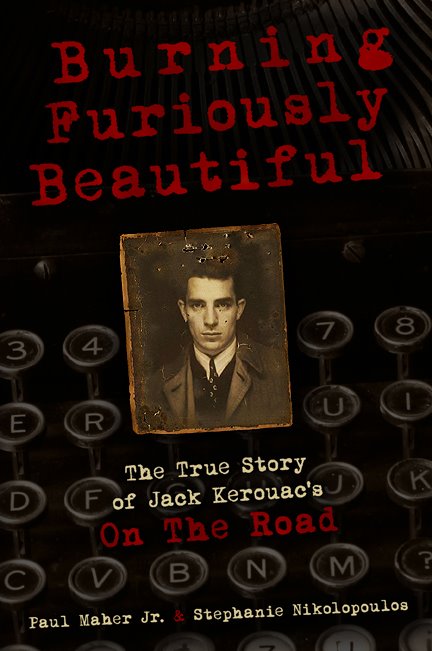
From chapter 1 of Burning Furiously Beautiful: The True Story of “On the Road,” the book I’m coauthoring with Paul Maher Jr.:

Life was no easier for the paternal side of Jack Kerouac according to this retelling of the Kerouac lineage. Leo Duluoz, a pseudonym for Jack’s father Leo Kerouac, was six years old when Gaby was born. He had a dark countenance inclined toward sadness. His father, Jacques, was a carpenter from St. Hubert, Quebec. He possessed superlative skills at this trade to such a degree that he built his own home. Though Gaby was of Norman strain, Duluoz was Breton. The Duluoz family was marked by tragedy and pegged by doom. Over time Leo had eight siblings that were narrowed down to four. Kerouac catalogued the state of the Duluozes via madness and crippling diseases. Uncle Joe, Leo’s brother, was always shouting in his parlor, “La Mort, la mort!” This fatalist stamp manifested itself throughout the corpus of Jack Kerouac.


This sneak peek was first unveiled on our Facebook page. Join the conversation here!

Blogiversary: Greeks Beat Kerouac in 2012

10 Jan

greek-greece-flag_pink

January 1 marked the anniversary of my blog! Thank you all for your support and encouragement of my writing and blogging. It means so much to me that you take the time to read and comment on my blog entries.

I just reviewed a report of my year in blogging, and it’s been a good year!

Here’s a recap of my most viewed posts of 2012:

Notice anything interesting? They all have to do with Greece, and four out of five of them have to do with Greek beauty and fashion. Despite the fact that most of my blogging efforts this past year were about Jack Kerouac, not a single Kerouac-related entry made it into the top 5.

Two out of the above-mentioned blog posts didn’t receive any comments, despite being popular views. My most commented on post of the year was:

That just goes to show you that comments and views aren’t necessarily correlated.

What were your favorite posts from 2012?

Sneak Peek of Burning Furiously Beautiful: Early Version of “On the Road” Tells Kerouac’s Mom’s Story

8 Jan

528764_288645227899680_240973182_n

From chapter 1 of Burning Furiously Beautiful: The True Story of Jack Kerouac’s “On the Road,” the book I’m coauthoring with Paul Maher Jr.:

In an unpublished prose fragment, Jack Kerouac incorporated his mother and father’s French-Canadian heritage into one version of his road novel. It was centered on his mother’s birth using the pseudonym of Gaby L’Heureux. Gaby’s pregnant mother unwisely took a long journey by train to visit relatives in St. Pacome in the Quebec province of Canada. Gaby’s mother, though poor, was pure at heart, according to Kerouac. She gave birth to a set of twins before dying in her bed. Gaby survived but her twin did not. Gaby’s widowed father, Louis L’Heureux, who stayed home in Nashua, tended a gloomy bar. Outside, staring at the canopy of stars reeling over him, he adjusted his collar, securing himself unwittingly for one more cruel “blow” to his life.

The mother’s body was brought back to Nashua accompanied by her Aunt Alice and the infant Gaby. Kerouac captured in this bit of wrtiting how the train moved through the New England countryside, and how the Merrimack River wended its way through New Hampshire, a land once inhabited by Algonquin Indians waiting for “life.”

Gaby’s piercing cries irritated the travelers, and she was unaware of the life all around her. At the train station, her father took her in his arms, and he looked down to her adoringly. Alice predicted that they would never be without troubles: “Life is sad, O my love….”

This was first posted on the book’s Facebook page. For the latest, check out our page!

My Year in Review: 2012

4 Jan

What a full year 2012 was! Here’s a quick little recap:::

aj_originalcov

In January I announced that the rumors were true. But it took the full year for it to finally look like this.

logored

In February I joined Pinterest to discover how it may help me as a writer and have been happily pinning ever since.

creatingspace

In March my personal essay was included in the book Creating Space.

p1015624

In April I was one of the editors representing the Burnside Writers Collective at the Festival of Faith & Writing. It was so special to get to catch up with the other editors and writers, whom I just adore. I also had the opportunity to teach a writing workshop while I was there.

reading

on_the_road

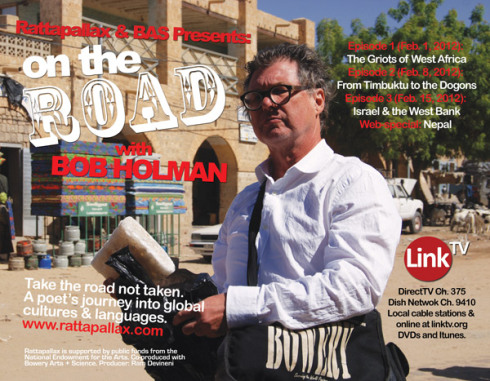
Image via On the Road with Bob Holman / Rattapallax

In April I also worked to create awareness about what we lose when we lose a language. My interview with poet Bob Holman appeared in BOMBlog.

In May I received my MFA in creative nonfiction from The New School. I had a fantastic thesis advisor and a beloved peer group, who challenged me to dig deeper in my memoir about growing up Greek American. After I read a snippet at our thesis reading, an instructor I’d never even had came up to tell me how much he liked my work!

2305th_flyer

Image via The Human Tower / Rattapallax

In June I witnessed the world record being broken for the tallest castell on a rooftop.

paris-review-issue-201-cover

In July I heard Amber Tamblyn read for The Paris Review at the Strand. Afterwards we somehow ended up on the elevator together, and I didn’t say anything to her. I never know in those situations if it’s polite to say something like “nice reading” or if the person just wants her privacy. I know she’s involved in the Beat literature community, though, so I should’ve probably talked to her about that.

570_Road

Image via The Millions

In August an article I wrote about a funny incident I had related to Jack Kerouac sparked a fiery debate and went viral, getting mentioned everywhere from The New Yorker to The Paris Review.

amramstef1

Photo via RA Araya

In September I had one of the most surreal moments of my life–reading with David Amram. I got to hear him perform again, this time as an enthralled audience member, in December.

miguel

Photo via RA Araya

That month I also read for poet Miguel Algarin‘s birthday bash.

p1016108

I also road tripped through northern and central California, visiting Cannery Row, City Lights Bookshop, The Beat Museum, and attending my college friend’s wedding.

p1015207

In October Hurricane Sandy hit New York, and I spent a lot of time in bed.

p10157001

In November I failed miserably at NaNoWriMo, but I had a lot of fun creating this ever-evolving Pinterest board for the book I never wrote.

I also gave a reading that got upstaged by a wedding proposal.

p1016239-e1355694672538

In December there was a flurry of Jack Kerouac-related activities to promote the film adaptation of On the Road, and I got to see author Ann Charters and film director Walter Salles in person at IFC. I also got to take a writing class with screenwriter Jose Rivera at 3rd Ward.

I also went out to Lowell and got to meet Jack Kerouac’s friend and pallbearer Billy Koumantzelis.


What were the highlights of 2012 for you?

New Year’s Eve with Jack Kerouac

1 Jan

9781101201572_p0_v1_s260x420

“The parties were enormous; there were at least a hundred people at Herb Benjamin’s basement apartment in the west nineties. People overflowed into the cellar compartments near the furnace. Something was gong on in every corner, on every bed and couch, not an orgy, but just a New Year’s party with frantic screaming and wild radio music.”

You can read the whole story beginning with Neal Cassady driving Jack Kerouac’s mom back to New York for New Year’s Eve, on page 225 of On the Road: The Original Scroll, published by Penguin Books in 2008.

The recent film adaptation of On the Road does a splendid job capturing the energy at the New Year’s Eve party. Burning Furiously Beautiful: The True Story of Jack Kerouac’s “On the Road,” the book I’m coauthoring with Paul Maher Jr., tells the true-life events that inspired this story.