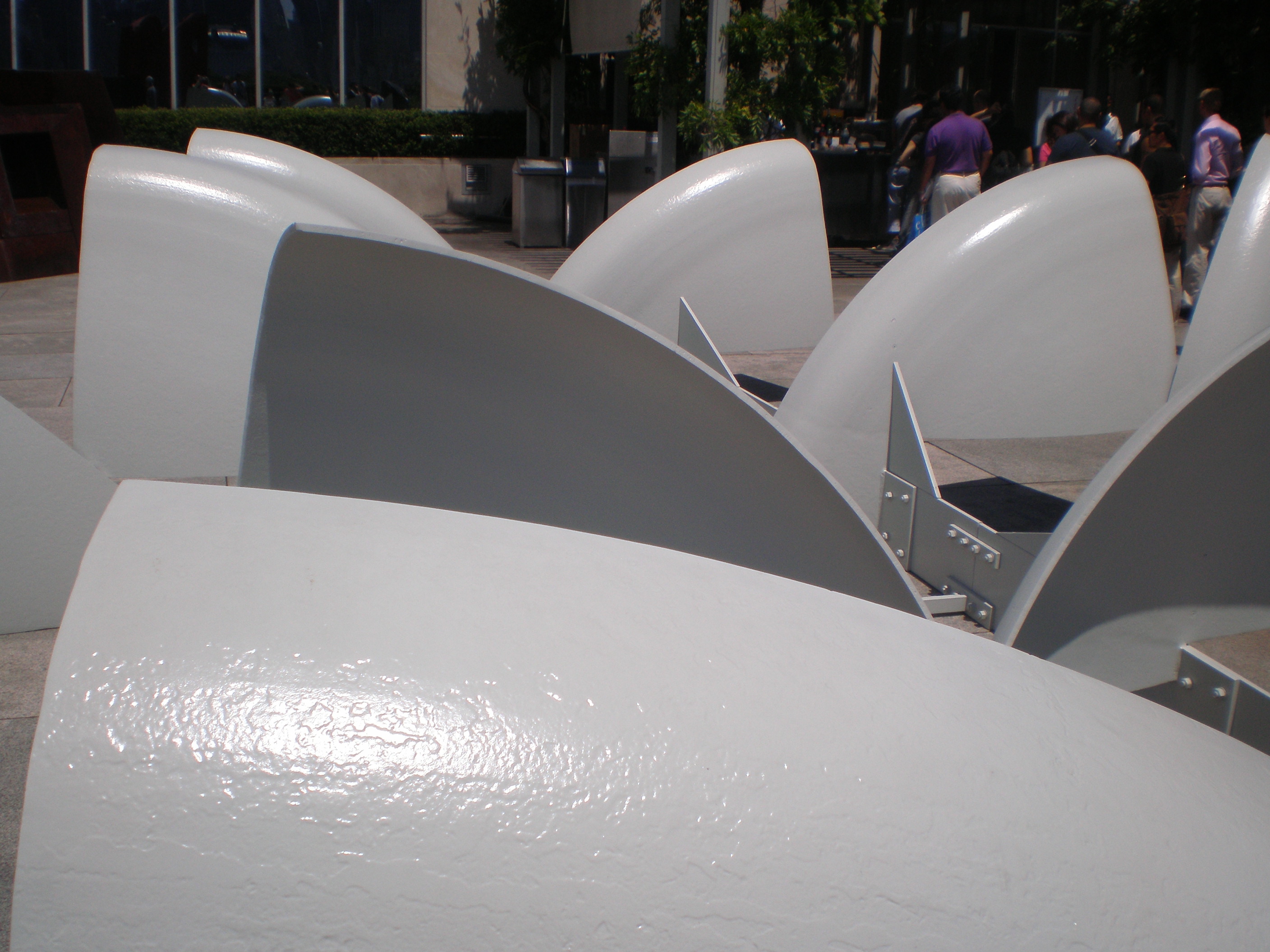

More scenes from the Met rooftop. These are sculptures by Sir Anthony Caro.
For a writing exercise, try describing these abstract shapes.
More scenes from the Met rooftop. These are sculptures by Sir Anthony Caro.
For a writing exercise, try describing these abstract shapes.
I’m becoming a regular at MediaBistro Book Club. It’s one of my favorite reading series, essentially because it’s targeted toward people specifically in book publishing, so I get an opportunity to hear some great literature and chat with fellow book publishing professionals.
Usually when I attend publishing networking events it’s just other editors there, and when I attend readings it’s just bibliophiles and aspiring writers there. MediaBistro Book Club is one of the rare readings that’s actually geared towards those who work in the publishing industry.
This time around the MediaBistro Book Club was held at the Union Square Lounge, which provided an intimate set-up and good drink specials. I attended with one of my co-leaders from the Redeemer Writers Group and Burnside Writers Collective’s new fiction editor Mihaela Georgescu, and met some other creative writers, editors, designers, and production editors while mingling. Here’s a photo of me at the event.
Everyone always talks about how small the industry is, and the more I attend readings and connect with people through social media the more I see this to be the case. I spied David Goodwillie, whom I heard read at the reading The Shrinks Are Away, chatting it up with MediaBistro Book Club reader Andrew Foster Altschul. It wouldn’t surprise me at all that they’re friends, given their cultural critiques.
Altschul’s Deus Ex Machina is a scathing look at reality tv. He’s also the author of Lady Lazarus.

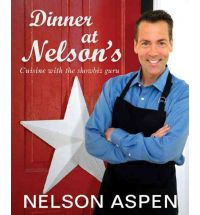
Nelson Aspen is the Ryan Seacrest of Down Under. He dished on being an exercise trainer to Princess Diana and meeting the official voice of Fred Flinstone (he even sang the Flinstones theme song!), as he told us about his celebrity cookbook Dinner at Nelson’s.
Margaret Floyd took the food talk in a more nutritional direction when she talked about her discovery of just how much food influences health and well-being. She tells all in Eat Naked Now.

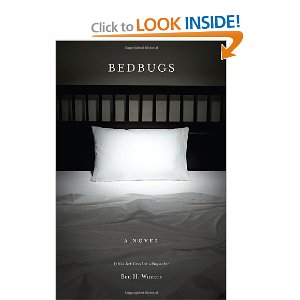
Ben H. Winters claims he never had bedbugs even though he says 1 out of 3 New Yorkers have had them—even though no one will admit to it. He wrote a whole fright-fest called Bedbugs.
After the readings there was a spirited Q&A, where Aspen said he believes self-publishing is the way to go and Winters said he hatched Bedbugs with his publisher, one of my favorite book publishers Quirk Books, and therefore never even had to submit a book proposal. Interestingly, the fiction writers, Altschul and Winters, knew they wanted to be writers (instead of lawyers, which their parents’ wanted them to be), while the nonfiction writers, Aspen and Floyd, said that getting published was something that happened organically because of their other passions. I think the lesson for nonfiction writers is that in addition to a desire to write you should have a passion for another subject.
See you at the next reading on November 17?
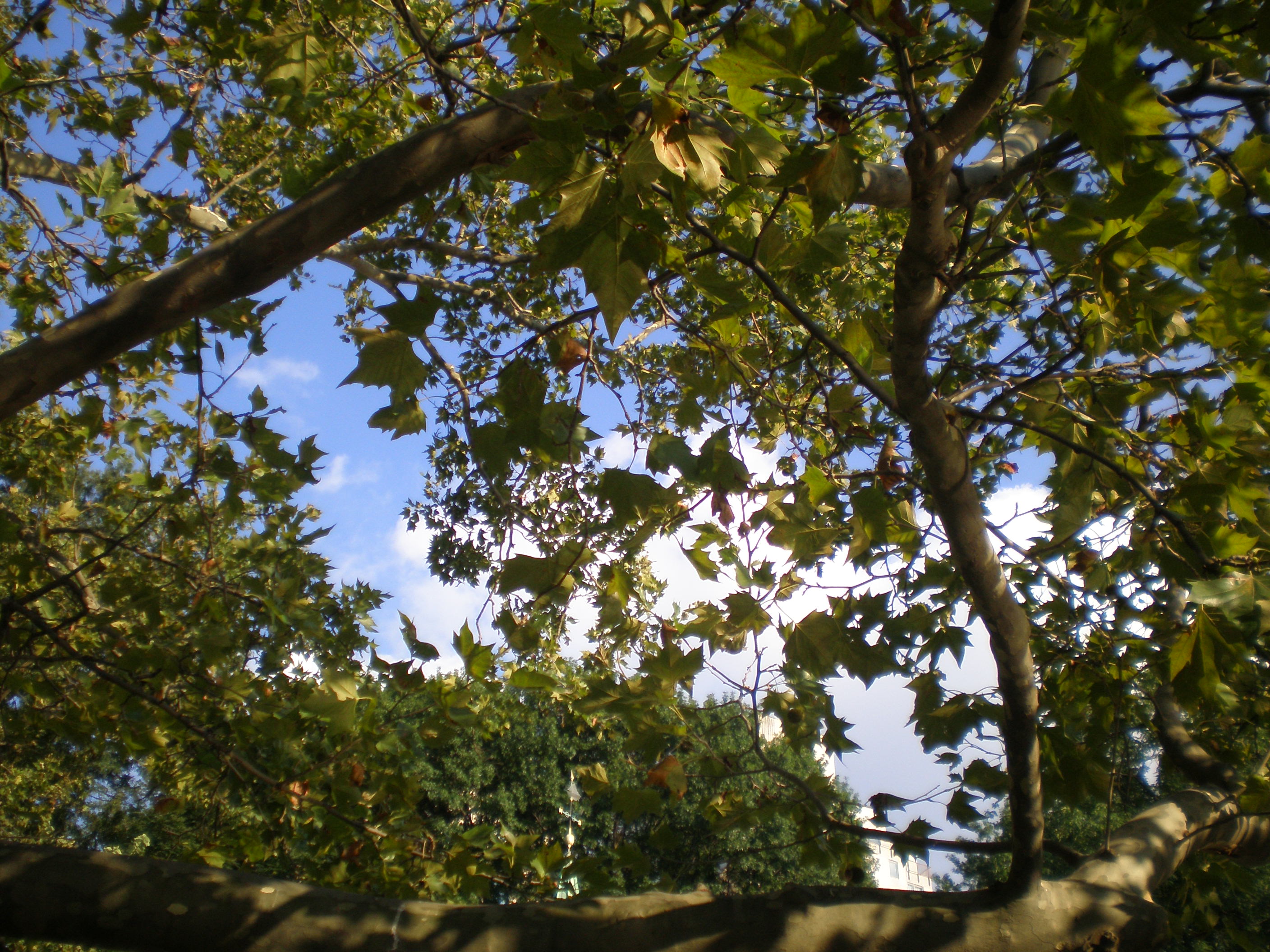
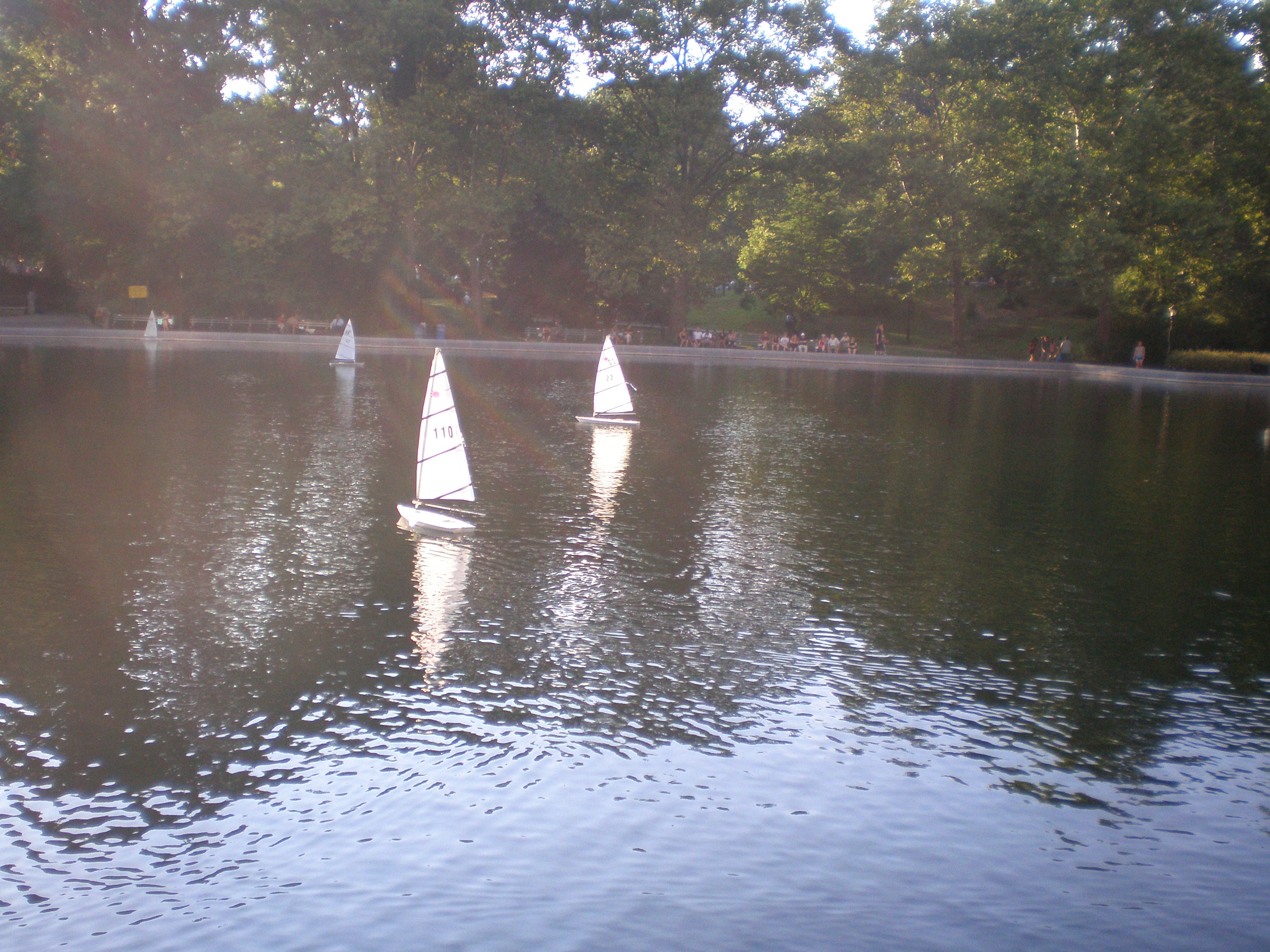
There are days when I’m in the mood to write, to let the words flow freely onto the paper, only to end up feeling all angsty sitting up in my room, all alone in front of the computer. Writing can feel so isolating sometimes. In the summer, when the weather’s warm, I want to sit outside in the grass or at the beach, instead of in my room or in a café. To remedy my desire to both write and enjoy some sunshine I’ve been taking my work outdoors.
The other day I packed up an essay I’d been working on and went to Central Park. If you enter in the East Seventies, there’s a man-made pond, where you can rent toy sailboats. There are a ton of benches and lots of sunshine even in the evening hours, so it makes for a great writing spot.
Being outside writing made me feel so productive! I felt like I was not only getting my writing done but that I was still taking advantage of the last month of summer and the beauty of living by Central Park.
I’ve been in publishing mode. I had a bunch of essays that aren’t necessarily part of my in-progress memoir that I’ve been sitting on so I’ve been sending them out to various publications. I have to admit, submissions/querying is a scary process. You work so hard on the writing, only to end up wondering if it will ever see the light of day….
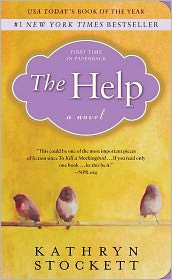
I was super encouraged to read that Kathryn Stockett’s best-selling novel, The Help, was rejected SIXTY times! It’s not so much schadenfreude as it is encouragement and motivation to not give up. Stockett shares her experience in this article on Shine.
While the premise of the article is to not give up on your dream and to keep sending out your writing, I think it’s important to note that Stockett kept revising and improving her novel whenever she got feedback from an agent or editor on why it was rejected. Perseverance is all good and well, but perseverance without a good product is pointless. Stockett worked like mad—even to the point a nurse had to tell her to put the book down because she was going into labor—to make her manuscript the best it could possibly be.
The moral: Find out why your writing got rejected and use the criticism to improve your work.
PS: This works in all areas of your life.
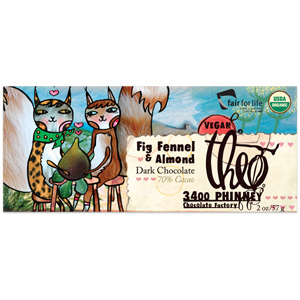
photo via http://www.theochocolate.com
The New York Times had an article back in July about what writers snack on while they work. In illustrator Wendy Macnaughton’s “Snacks of the Scribblers,” we discover Lord Byron drank vinegar to keep his weight down and Joyce Maynard eats lime popsicles, among other eccentric eating habits of writers.
Personally, I like to write early on Saturday mornings in the Barnes & Noble Café, where I’ll order a Starbucks caramel latte and whatever sweet strikes my fancy. Sometimes it gives me sugar-caffeine overload, though, so it’s better if I have a healthy breakfast before going there.
At home, I don’t usually eat when I write. Dark chocolate usually is a good motivator, though, so sometimes I start and end on a piece of Theo’s Fig, Fennel & Almond bar.
Dear writers, what do you snack on?
If you ever get a chance to take a writing class with Susan Shapiro, do it. I took a Saturday personal-essay workshop with her last semester, and even though it only met twice I got so much out of it. Unlike most of my classes, which have focused on the Art and Craft of writing, Shapiro understands that as much as we enjoy writing for writing’s sake, we also want to get published. She gives helpful tips on how to do so, and even provides editorial contacts for newspapers, magazines, and print publications. Talk about generous!
The Lighting Up author also puts together a reading series every August called The Shrinks Are Away. When Susan Shapiro mentioned it to me in an email, I knew it would be too good to miss.
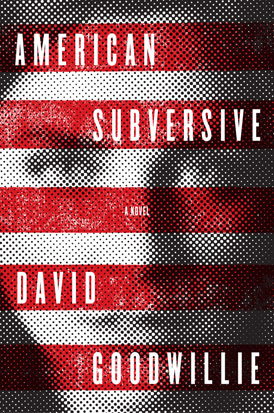
The lineup was impressive: Molly Jong-Fast (The Social Climber’s Handbook), David Goodwillie (American Subversive), Lindsay Harrison (Missing), and poet Harvey Shapiro (The Sights Along the Harbor). This is what serious literature looks like. It reinvigorated my hope for the current state of literature.




After all the writers had given a speedy reading, there were a few minutes left for Q&A. I always love hearing writers talk about their process because their honesty is so encouraging. I feel like in other industries there’s this unspoken rule of putting on a façade of perfectionism, but writers openly talk about their failed manuscripts, their false starts, their grappling with the industry. The writers in The Shrinks Are Away reading opened up on how their books came to be. Harrison revealed that she wrote about her mother’s passing not long after it happened, and that writing was part of the cathartic process. Goodwillie talked about being part of a generation that doesn’t find its career callings until late 20s or early 30s, and that it was only after trying on a number of jobs—and getting fired from them—that he took writing seriously, renting a maid’s room at the Chelsea Hotel to spend a year working on his manuscript. Harvey Shapiro, who worked for years and years at the New York Times, confessed that he’s seen that it’s not always the most talented writers who succeed—rather, it’s the ones with the most persistence.
The Shrinks Are Away event took place at McNally Jackson Books, a wonderful bookstore in Soho (52 Prince Street), where the literature section is broken up by country. For upcoming events at McNally Jackson, click here. To sign up for a class with Susan Shapiro, click here.

Photo courtesy of ©iStockphoto.com/tap10 / via Michael Hyatt
In a recent blog post, Michael Hyatt, chairman of Thomas Nelson Publishers, listed the “5 Steps to Building a Platform When You Hate Selling Yourself.” If you go to the blog post you can read the five steps, but I want to point out one line I especially liked. In one of the steps Hyatt says that writers should share relevant news about their writing. For example, we should share if we’re doing a reading or were recently published. He says:
This isn’t selling; it is informing.
So true. Self-promotion always feels like bragging, but the way I think of it is that I’d want to know if my favorite writer were doing something cool and wouldn’t think they were showing off if they informed me of their upcoming book or recent clip.
So, what would you like to inform me of?
Saw James Franco in Howl at the Angelika: amazing. Now you can watch it for free on Hulu.
Replace “Moloch” with “Murdoch” in Allen Ginsberg’s Howl and this is what you get
John Allen Cassady reveals why even though he’s named after Jack Kerouac (and Allen Ginsberg) he’s named John
The Bowery Poetry Club is hosting a Diane Di Prima film screening on August 7
The Beat Museum is blogging for HuffPo
Anyone get the Penguin On the Road app for iPad? Company loyalty means I have a Nook.
Wishing I was still living in LA County so I could see the Ed Ruscha and Jack Kerouac exhibit at the Hammer Museum
In my last Writing Wednesday post, I wrote about how memoirist Patricia Volonakis Davis discussed the role of marriage and moving in one’s sense of cultural identity in her deliciously titled memoir Harlot’s Sauce. In Jane Friedman’s Writer’s Weekly interview, “How to Find a Direct Line to Your Readers,” with Davis, the memoirst divulges some great tips on building a platform and reaching out to potential readers.
When thinking about her readership and trying to build an audience, Davis says:
I contacted Italian-American groups, and philhellenic groups (groups of people who love Greece).
I contacted websites, magazines, blogs that focused on female empowerment and personal growth.
In short, I made a list of the topics I visited in my story, and worked from that, writing articles to appeal to those readers in particular, and posting them on sites that had already cultivated a readership catering to those interests.
This is such great advice! When I was discussing my memoir with someone recently, the woman with whom I was speaking wondered why I was writing about growing up Greek American. She happens to know me very well and suggested that I have much more to share with the world than my ethnicity. She’s right, of course, and I tried to explain that my memoir is actually about so much more than just growing up Greek American. If I were to make a list similar to Davis’, the topics I touch on and the readers I would reach out to include:
Greek Americans
Swedish Americans
Expatriates: Americans (and other foreigners) living in Greece
First- and second-generation Americans: besides Greek and Swedish, also Korean and Japanese
Protestants
Greek Orthodox believers
People from northern New Jersey
Children of the 1980s
Graduates of women’s colleges
It’s my sincere hope that my memoir speaks to a wide variety of people, uniting readers of various upbringings.
Happily ever after wasn’t the case when first-generation Italian Patricia V.–as in Volonakis–Davis married a Greek national. The author calls her book Harlot Sauce: A Memoir of Food, Family, Love, Loss, and Greece “a tragedy written as a black comedy,” in her interview with Jane Friedman for the article “How to Find a Direct Line to Your Readers” in Writer’s Digest.
In the interview, Davis alludes that her sense of self shifted when she experienced another culture:
…Harlot’s Sauce was about how being raised first generation Italian-American affected my worldview and attitude about myself, then how these both changed as a result of my marrying a Greek national and moving to Greece with him, in an attempt to save our failing marriage.
As a memoirist writing about identity and culture, I’ve often reflected on how being raised Greek American affected my worldview. For me, though, it wasn’t just about being Greek–it was about being Other. Or rather, being Something. I wasn’t just plain Jane American. My family did not come over on the Mayflower. I was more than American. I was Greek American.
However, I did not fully understand this until I moved to California. I grew up in a pretty diverse town in New Jersey. Most people were “ethnic.” When I moved to California, I was suddenly surrounded by blonde-haired, blue-eyed, white Americans. They weren’t white like I was white, though. They were American. Their family had been here for generations. It was in moving that I came to a better understanding of who I am as a Greek American and who I am as someone who grew up in Northeast America.
I’ve never lived abroad, like Patricia Volonakis Davis did, but I did wander around Europe for about three months one summer, and I gained further understanding of my identity through these travels. People were quick to make assumptions about my American-ness. People didn’t really care that I was of Greek descent. Being raised in America trumped ethnicity in terms of my identity.
It seems to me that identity is fluid. Depending on where we are and who we’re “comparing” ourselves with, our identity can shift.
For women especially, identity changes with marriage. Most women still take on their husband’s name, and our names signal a lot about who we are. For instance, I saw the name Volonakis, and I immediately assumed the author of Harlot Sauce was Greek, even though as it turns out she’s Italian American. And yet in some ways she became more Greek than I simply by virtue of living in Greece.
I wonder how many women become culturally Other to what they were raised as because of marriage?
Check next week’s Writing Wednesday for more on Patricia Volonakis Davis.
Stephanie Nikolopoulos is a writer, editor, writing teacher, and speaker based in New York City.
She is the coauthor, with Paul Maher Jr., of "Burning Furiously Beautiful: The True Story of Jack Kerouac's 'On the Road.'"
You can email her at stephanie_701 {@} yahoo.com


 Stephanie Nikolopoulos