
Archive | Writing RSS feed for this section


Happy National Women’s History Month
7 Mar
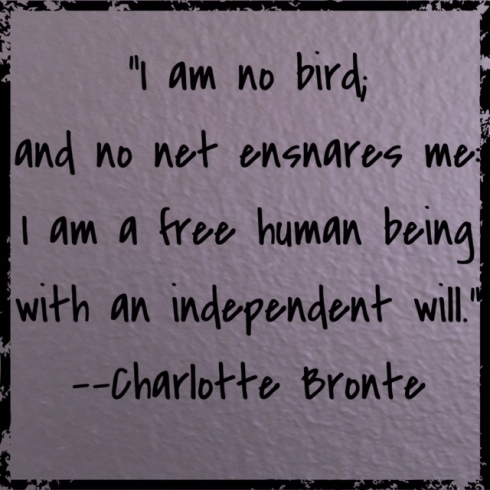
March is National Women’s History Month. I’ll be posting quotes by women writers each Monday of the month.
You might also like:::
- NY chapter of Scripps (the women’s college) book club reads Burning Furiously Beautiful
- How to murder a woman’s sense of worth
- VIDA does a great job tracking women writers
- Vice’s suicide poet: Elise Cowen
Book Marketing in Train Stations
2 Mar
I had a nightmarish situation at the train station the other night. I went out to Connecticut to visit a dear friend, and we got so wrapped up in conversation that I almost missed the last train of the night. She rushed me to the train station, where there were several others also waiting for the train.
Sigh of relief. I made it.
I ran to the ticket kiosk and purchased my ticket back to Grand Central. I thought I was just in the nick of time. The train would be pulling into the station any second.
But it didn’t.
Conversations with the several other confused bystanders led to various theories: the train had left early, the train was delayed. An app and the MTA website both said the train was delayed. We waited.
And waited.
No train. Some dude tried to get us to take an uber with him to Stamford. “It’ll get you a little closer,” he said. Not close enough, I thought. He left.
We waited some more.
Still, no train. A couple finally had enough of the waiting and also called an uber. They were going to Washington Heights and offered to split it with us. It was only going to be $80. Between 4 people that would be a bargain–especially considering the fact that I’d spent $22 purchasing the wrong ticket on the way out to Connecticut. My ever-hopeful friend believed that the train was just delayed, though, so we said we’d just wait.
And wait we did.
We waited over an hour for the train. We tried calling several numbers listed, but no one was working those late hours. There were no employees in the station. Was the train delayed over an hour? Was it canceled? Finally, an employee came by. She told us the train had come early and left without us. It was 1:45 in the morning, and the next train would come til 5am.
We tried to find an uber, but suddenly the prices had been raised to close to double of the original amount. That, and we no longer had anyone to split the cost with. The friend we were visiting told us we could crash at her place, but we hadn’t brought toothbrushes and new contacts and makeup. We endeavored to get home. We ubered back to the city, and I took a scary 3am subway ride home. I was the only woman in a train full of men. Not my wisest decisions, but I felt like I’d been leaking money and didn’t want to pay for a taxi home. I finally got in around 3:30am. I watched an episode of Frasier to unwind.
The good news in all of this is that I did a bit of free book marketing. The train station in Connecticut had a kiosk of free books, where straphangers were encouraged to take a book to read on the train. The selection was curious and random and lovely. Something for everyone. Maimonides. Edgar Cayce. Allison Pearson.
I’d heard of this take-a-book and leave-a-book trend before. And I’d experienced it years ago at hostels when I’d gone backpacking through Europe. It’s such a great way to meet new books.
I didn’t have a copy of Burning Furiously Beautiful on me, so I did the next best thing I could think of: I put a few postcards on the kiosk. What better author to read about on the train than Jack Kerouac, who was known for his intrepid travels?
You might also like:::
- Have you heard about the Amtrak residency?
- Walt Whitman understood selfies as a marketing tool
- Social-media lessons from SXSW
- How to get more “likes” on Facebook
Celebrate National Haiku Writing Month with Kerouac
27 Feb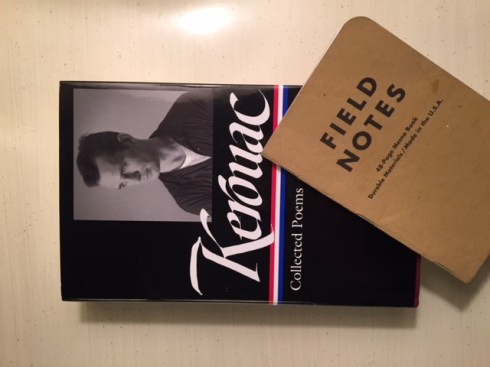
Most writers know about NaNoWriMo–National Novel Writing Month in November. But did you know that February is National Haiku Writing Month?
To celebrate NaHaikWriMo, I’ve been reading haikus by Jack Kerouac and writing a few of my own.
Interestingly, Jack Kerouac’s Book of Haikus was published in Persian before On the Road was translated.
Here are a few articles from around the blog on Kerouac and haiku:
- Read some of Kerouac’s haikus here
- Listen to Kerouac reading his haikus here
- American haiku by Kerouac
- What can we learn about haiku from Jack Kerouac?
- Megan Klein on Kerouac’s haiku
- Bridget McNulty on how Kerouac’s haiku changed her life
11 Ways to Create Tension
24 FebI’m trying to build more tension into my memoir and turned to the internet for advice on how to build tension. Here are eleven tips for creating tension in your book:
- Now Novel’s How to Create Tension in a Story: “Keep raising the stakes: Your story needs several points where tension reaches a peak.”
-
Writer’s Digest’s How to Build Tension and Heighten the Stakes: “Do the flashbacks contain tension, or do they meander backward in time?”
-
Grammarly’s Suspense: 4 Tips for Putting More Tension into Your Writing: “Talking the reader through the characters’ worrying thoughts, doubts, and feelings reinforces suspense because it becomes clear that the characters don’t know how they might make it out of the situations they are in. The element of unknowing keeps the audience hooked.”
- Ingrid Sundberg’s 12 Ways to Create Suspense: “We all wonder if we can we live up to the expectations around us. Build tension through what others expect of your main character. How do those expectations stress the character out? Self expectations can also be used as well.”
- The Creative Penn’s Writing Fiction: Creating Friction With Clashing Personalities: “Conflicting personalities rub against one another, allowing writers to maximize moments when characters come together. After all, if everyone in the scene “plays nice,” the story gets boring quickly. With a bit of character planning, matching up clashing personality traits offers a quick road to friction.”
- The Literary Lab’s How to Create Tension: “Basically, I think a skilled writer can somehow convince a reader to trust them enough to follow them anywhere. Then, they can present material that might seem random or disconnected, and it creates tension because a devoted fan will wonder how it’s all going to come together. They’ll read on to find out.”
- Be a Better Writer’s Writing Dialogue with Tension: “Readers should have no trouble distinguishing one character from another according to what each character says and how he or she says it, just as we can recognize our friends by their attitudes and speech mannerisms.”
- Margaret Moore’s Tension: “Foreshadowing — the author hints or implies future developments”
- Writers in the Storm’s Using A Crowd To Create Tension In Your Story: “A Crowd is a great tool to create tension, good and bad. It can also be used to highlight character personality quirks.”
- Terri Giuliano Long’s Setting and Atmosphere, Part 2: 3 Ways to Use Setting and Atmosphere to Create Narrative Tension: “Darkness, turbulent weather and other forces of nature put people on edge.”
- WikiHow’s How to Write Tension: “Don’t be scared, experiment with your writing, if you don’t like it, re-write.”Writer’s Digest’s How to Build Tension and Heighten the Stakes: “Do the flashbacks contain tension, or do they meander backward in time?”
Do you feel tense now???
You might be interested in these other #WritingWednesday posts:
- Oxford comma for the win!
- Is greatness sabotaging your writing?
- When two words become one
- 10 reasons memoirists should keep a diary
- Sneaking Netflix categorizations into your writing
My Literary Highlights of 2015
31 JanEven more than art, literature is fundamental to my life. Reading was so important to my development as a child and continues to expand my horizons to this day. I earn my living as a writer and an editor, but even my social calendar revolves around literary events. Literature is very much a part of my identity, and I make a priority for it in my life.
 Anne Waldman, Penny Arcade, Jan Herman, Steve Dalachinsky, and Aimee Herman read at Burroughs 101, hosted by Three Rooms Press, at Cornelia Street Cafe. (Anne Waldman pictured)
 Pam Belluck, Hettie Jones, Margot Olavarria, Marci Blackman, and Beth Lisick read at Women on Top, hosted by Three Rooms Press, at Cornelia Street Cafe. (Hettie Jones pictured)

Big Sur (an adaptation of Kerouac’s novel) on Netflix
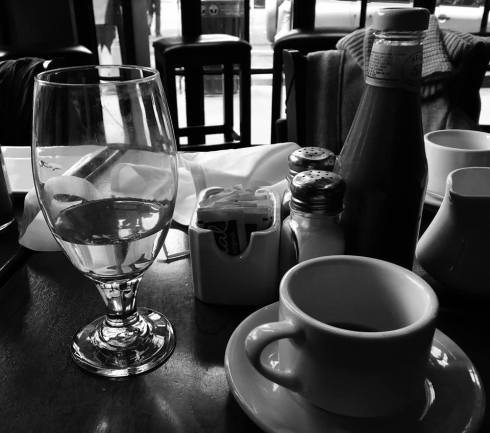 Epic four-hour brunch at The District with two writer friends, talking about “ethnic” literature, faith, and relationships.
 After Sunset: Poetry Walk on the High Line.
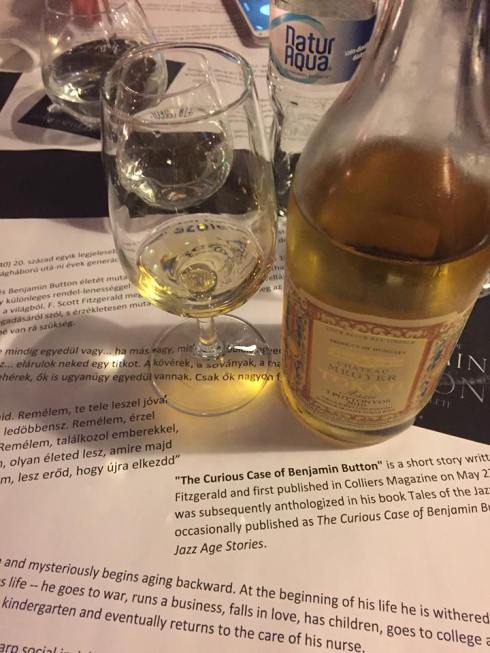 My friends surprising me by taking me to a book-themed restaurant on my first night in Budapest.
 Brunch with friends at the most exquisite bookstore, Book Cafe & Alexandra Bookstore, in Budapest.
 Reading Elena Ferrante’s My Brilliant Friend, a recommendation from my friend Jane.
 David Amram telling stories about Jack Kerouac and other literary figures and amazing us with his music at Cornelia Street Cafe.
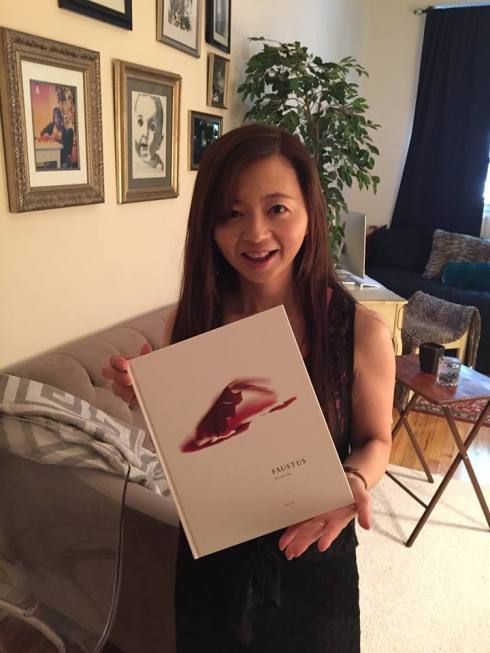 Brunch with my friend Misako Oba, whose new book of photography and memoir, which I helped edit, was published.
 Drinks with one of my favorite people at Durden, a bar based on author Chuck Palahniuk’s novel-turned-movie Fight Club.
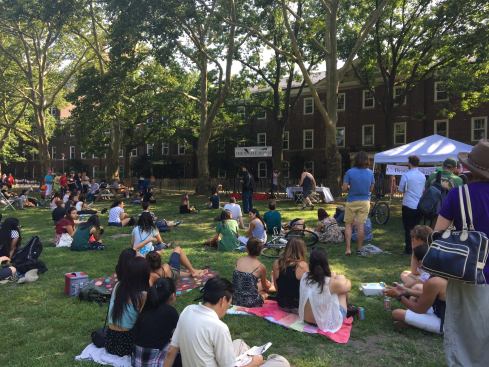 New York City Poetry Festival with my writing group partner.
 Watched Homer’s The Odyssey performed, put on by the Public Theater, in Central Park.
Reading from Burning Furiously Beautiful: The True Story of Jack Kerouac’s “On the Road” (coauthored with Paul Maher Jr.) at WORD Bookstore in Jersey City.
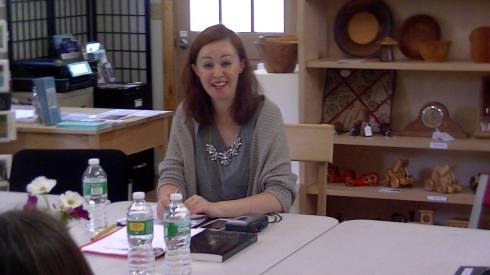 Teaching a writing class at the Hobart Festival of Women Writers.
 The Redeemed Writer: The Call and the Practice, a conference I co-led in organizing through the Center for Faith & Work. (Pastor David Sung pictured)
 Brunch at Caffe Reggio, where Jack Kerouac and friends used to hang out.
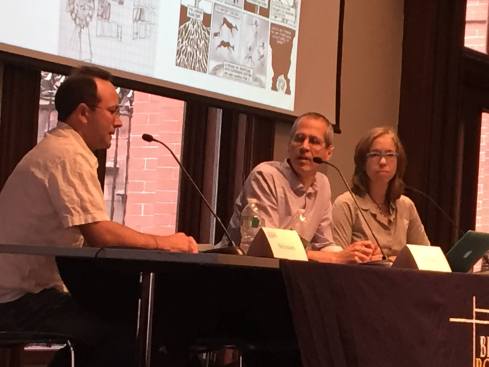
 Speaking on the panel Lessons Learned: Published Authors Share Hard-Earned Insights with Nana Brew-Hammond, Kerika Fields, Melissa Walker, Ruiyan Xu, and Jakki Kerubo at BinderCon.
 Meeting regularly with one of my best friends to read and write together at the New York Public Library.

Checking out the Ernest Hemingway: Between Two Wars exhibit at the Morgan Library & Museum with a friend who is a huge Hemingway fan.
 Spotting a first edition copy of Jack Kerouac’s On the Road at the LBJ Presidential Library in Austin.

Reading Anthony Doerr’s All the Light We Cannot See.
Like literature?
Burning Furiously Beautiful on sale at Barnes & Noble.
Burning Furiously Beautiful on sale at Amazon.
My Pinterest posts called Lit Life.
I’m on Twitter.
Learning to Say “No,” Without Needing an Excuse
28 Oct
The other evening, I was having dinner with my upstairs neighbor, E., a dear friend whom I don’t get to see as often as I’d like despite our close proximity. We were catching up on our lives, and I told her about a quasi-recent turn of events in which I’d told someone I wasn’t able to make the commitment they wanted from me and how I’d tried to explain to them why.
She stopped me mid-sentence.
“You don’t need to explain,” she said. At first, I thought she meant I didn’t need to explain to her. I know she often has a full calendar and as well understands how particular stages of life mean commitments are more difficult to make and keep. I knew she could relate to my experience. Then, I realized she meant that I didn’t need to explain myself to the other person. I didn’t need an excuse for my no. As she suggested, I didn’t have to justify my no.
I think this is true in many ways. It’s difficult to say no to others. And so often I say yes to the detriment of my own goals and dreams and time. I put other people’s wants and needs ahead of my own. I do believe there is value in this. I do think there are many times when we are called to go the extra mile for someone. There are times when it’s important to give back, to encourage, to help, to mentor, to volunteer our time and our talents. To set down our own desires in service of someone who really needs it. Still, there is a difference between someone’s real need and someone’s fleeting want. A difference between committing in a way that serves a greater good and getting locked into somethng that is so far removed from one’s own important needs that both parties end up suffering because of it. And there are times when saying no should come not with a justification but with thought and compassion. I know my friend would agree with me. She avidly devotes her free time to volunteer work, to spending time with those in need, to helping the disenfranchised.
Perhaps the difference and the balance comes in not saying an automatic yes to things that hurt one’s own self in the long run.
Often because I am a writer and an editor, people come to me with essays, full-length manuscripts, resumes, and book proposals, asking for my advice, my edits, my time. I love helping people. I love hearing their stories. But I do this work for a living. It’s how I earn my income. There are people who pay me to do this. It’s how I pay for my electricity and how I pay for my subway fare and how I pay for my dinner. And unless it is a real need, say someone who has been out of work for a year and needs their resume reviewed so they can get a job to feed their hungry baby, it is unfair of me to not charge them when I would normally charge others. It’s unfair for my other clients. And it’s unfair for me, as, in a way, I am my own client. I am working on a new book. I spend hours sitting at the computer, typing, deleting, revising. I do this on top of my full-time career. I do this on top of my freelance opportunites. I do this on top of the free readings I give to support the biography I coauthored. I do this on top of smaller creative projects. I do this on top of the volunteer position I have leading a writing group. I do this when others are watching tv. When others are getting together with friends. I don’t get paid to write my book. Not yet. And so when someone asks me to look over something they’re working on, I instinctually want to say yes, I want to help them. But it takes time away from my own writing. It would mean saying no to paying freelance opportunities. Or, perhaps it would mean saying no to spending time with friends I haven’t seen in a long. I am honored that someone would want me to review their work, but I shouldn’t have to justify why I can’t help everyone for free.
I stubled upon Austin Kleon’s tumblr the day after meeting with E. He’s the author of Steal Like An Artist, and he posted about authors and editors saying no. I think I may steal E. B. White’s line:
“I must decline, for secret reasons.”
Mary Karr Reveals Her Favorite Memoirs
28 Oct Mary Karr Credit Illustration by Jillian Tamaki via The New York Times
Mary Karr, memoirist extraordinaire, has a new book out. It’s not a memoir but a book about writing memoir: The Art of Memoir. I’m adding it to my ever-growing must-read list.
I’ve had the opportunity to hear Mary Karr speak at the Brooklyn Book Festival and at the Festival of Faith & Writing, and of course she is the author of The Liar’s Club, Lit, and Cherry.
I love Q&As and was thrilled to read her answers to The New York Times’ Sunday Book Review “By the Book” column. I got some great reading inspiration (Annie Liontas’ Let Me Explain You, about a Greek-American family), I loved her answers to whom she’d invite to a literary party (can I get an invite?!), and I was happy to discover her favorite memoir is St. Augustine’s Confessions, since I had recently discussed the book in my class “Writing Under the Influence of the Beat Generation” at the Hobart Festival of Women Writers.
I was especially intrigued by her question “Do Flannery O’Connor’s letters count?” to the question “Who are the best memoirists ever?” I used Kerouac’s letters for much of my research for Burning Furiously Beautiful. I think in some way, letters are a form of memoir. In another way, though, they don’t necessarily adhere to the intentional literary craft I discussed in my response to “In the Age of Memoir, What’s the Legacy of the Confessional Mode?” Though a great letter writer is better than a mediocre memoirist!
You can read the full interview with Mary Karr here.
Should We Judge the Quality of a Memoir by Its Confessions?
21 Oct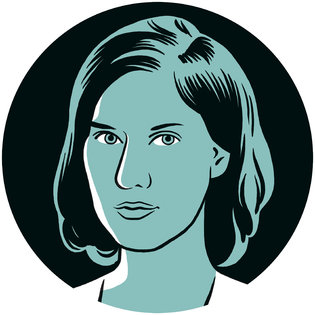 Leslie Jamison Credit Illustration by R. Kikuo Johnson via The New York Times
At the Hobart Festival of Women Writers, part of my class, “Writing Under the Influence of the Beat Generation,” was about confessional writing. As a class, we took a look back at the first examples of confessional writing in literary history before plunging into the poetry of Diane Di Prima, who is associated with the Beat Generation.
The New York Times’ Sunday Book Review posed the question “In the Age of Memoir, What’s the Legacy of the Confessional Mode?”
Leslie Jamison wrote:
These days, American literary culture features both a glut of so-called “confessional” work and an increasingly familiar knee-jerk backlash against it: This writing is called solipsistic or narcissistic; it gets accused of lacking discretion or craft. Its heritage is often traced to women writers, Sylvia Plath and Anne Sexton, and its critiques are insidiously — and subcutaneously — gendered. So many of the attacks against the confessional mode come back to the language of the body: An author is spilling her guts or bleeding on the page. Her writing whores itself out, exposing private trauma for public fame. (Or a four-figure advance and an adjunct job.)
Ouch! But, unfortunately, so true. Jamison says:
Because people have grown so obsessed with the drama of Plath’s life, they read the poems solely as reflections of its traumas….
In other words, readers get so caught up in the content that they forget the style. This is a huge tragedy. Commercial memoirs today are all about celebrity or about hard-won, momentous moments in life. There is certainly room for works that celebrate and motivate, but is that the whole or only point of the memoir?
I’ve often heard people sarcastically remark that memoir writing is egotistical. Or else, they denigrate their own lives by arguing there’s nothing in their life worth writing about. I disagree. Whole-heartedly. First of all, the process of writing a memoir is at its core about seeking a balanced truth that is far from self-promoting. At times, the memoirist may even feel self-loathing. But again, every life matters. Everyone has something to say. Everyone is complex and interesting.
Memoir is not just about a flat telling of one’s life. It’s storytelling. It’s choosing words that capture a moment so precisely that the reader can step into the author’s world even if their lives are vastly different. Memoir, in the end, is about craft. It’s an art form.
How to Get an Editor’s Attention
14 Oct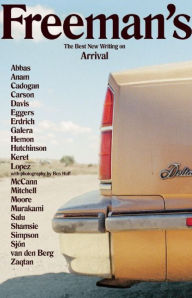
The other day I wrote about John Freeman’s new literary magazine, Freeman’s. I’d started that blog entry as an introduction to an article he’d written for Electric Literature, but it got unwieldy. At least in blogging terms. Internet readers like their posts pithy!
In “Anatomy of a Discovery: How a Literary Magazine Finds New Writers,” Freeman dives into the editorial selection process. In short, he say editors:
“Read the slush. Tell the ones we meet to try. Listen to a writer’s supporters.”
The essay reveals that sometimes it’s through meeting someone at a booth at AWP and oftentimes, it’s through the recommendation of an MFA writing instructor.
It’s an insightful article that shows the importance of networking, attending high-profile literary events, and enrolling in the right MFA program (that is, one where the instructor’s are well-connected) being such a standout writer that your writing professor is willing to mention your name to their editor.
As an introvert, I found hope in this sentiment from Freeman:
Fatin, who had seemed so shy in person and on email, was not at all shy on the page. She moves swiftly in and out of four or five different characters points of view like it was nothing, like it was what she was for.
If you want to get published, read the full article here.
You might also enjoy my blog posts:
Keep in Touch with Your Alumni Network
So You Want to Be in Publishing
Five Tips for How to Promote without Selling Out
Making the Most of My Writing MFA
Also! Next month, I’m slated to speak on the panel “Lessons Learned” about my experience publishing at BinderCon.
Yiasou!
Stephanie Nikolopoulos is a writer, editor, writing teacher, and speaker based in New York City.

She is the coauthor, with Paul Maher Jr., of "Burning Furiously Beautiful: The True Story of Jack Kerouac's 'On the Road.'"
You can email her at stephanie_701 {@} yahoo.com

 Stephanie Nikolopoulos