Archive | Writing RSS feed for this section

The Personal “I” in Literature: Narcissus & Literature at the Onassis Festival

12 Oct

CQzuKmdUwAQhiZ3

Is writing inherently narcissistic? Even when writing in the third person, can the writer ever fully disappear from the page? Is the personal “I” more trustworthy in journalism because it acknowledges the reporter’s presence? Is the personal “I” in literary fiction more prone to becoming an unreliable narrator than a third-person narrator?

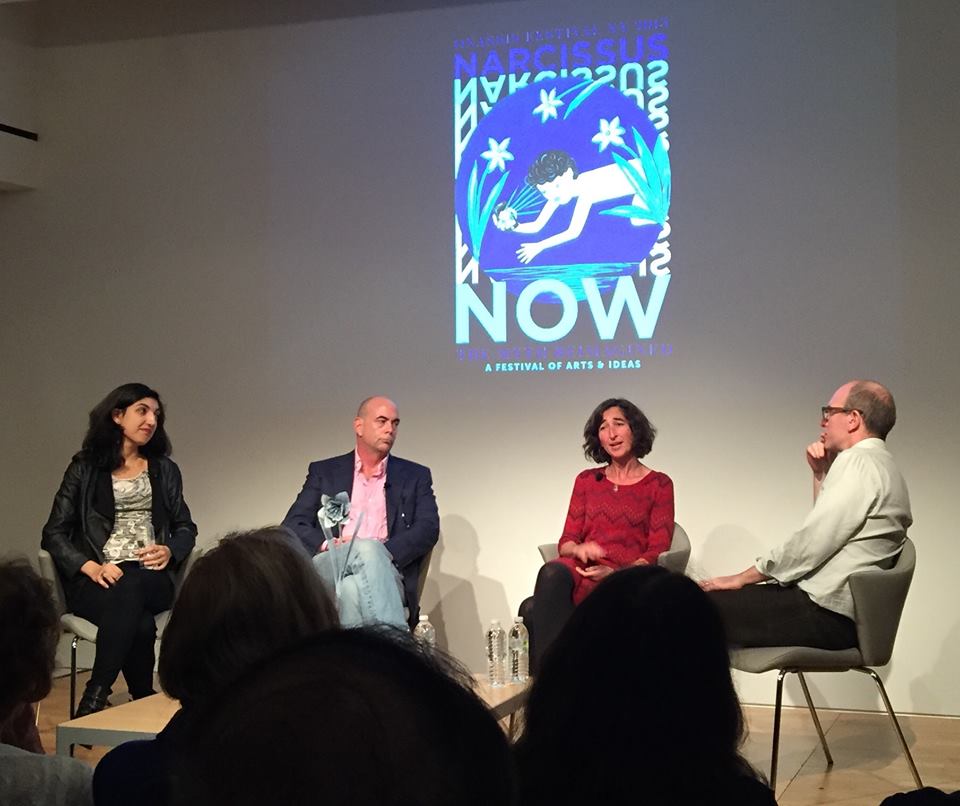
Lorin Stein, editor in chief of The Paris Review, sat down with Donald Antrim, Elif Batuman, and Jessica Moss to tackle the question of how writers interact with the mirror of the page in the panel Narcissism & Literature at the Onassis Festival‘s Narcissism Now: The Myth Reimagined on October 10, 2015.

Jessica Moss, professor of philosophy at NYU, opened the dialogue up by discussing Plato’s RepublicShe discussed Plato’s thoughts on writing in the first person versus the third person, literary concepts that didn’t quite yet have terms at the time. She revealed that Plato believed that a first-person narrator should be “a good, noble person.”

The author of The PossessedElif Batuman is also well-known for her journalism for n+1 and The New YorkerShe related that she likes putting herself into her journalism pieces because she feels she will be perceived as more trustworthy. Her editor, at times, disagrees, telling her to remove herself from the story. Batuman transitioned the conversation from the Greek Plato to the Russian Fyodor Dostoyevsky. She told how Dostoyevsky — or as Jack Kerouac would call him, Dusty — originally wrote Crime and Punishment in first-person diary form before switching to the third-person narrator of the published version. In discussing this, the panelists agreed that the third-person showed the story through more action.

Donald Antrim, who also frequently writers for The New Yorker, is the author of the memoir The Afterlife, which deals with his relationship with his mother, Louanne Antrim, and resulted in him writing in the third person to tell her life story. Antrim explained that one of the pitfalls of the first-person narrator is that he or she is constantly in the reader’s ear, justifying his viewpoint. Antrim said, “We’re not interested in a narrator who’s telling us all the time what to think.” Antrim brought the conversation from the Greek Plato and the Russian Dostoyevsky to the English Mary Wollstonecraft Shelley’s Frankenstein, an interesting exploration of narration, which starts out as a letter from a sea captain, transitions into Victor Frankenstein telling his story, and then transitions into the story of the monster.

Antrim said, “The third person doesn’t require having things figured out”; he explained that, in contrast, a first-person narrator either is telling the reader exactly how he or she feels in that moment or is reflecting on that moment. Stein said the first-person stories that interest him are the ones where there is dramatic irony because the narrator doesn’t know something. He suggested French novels use more immediate first person than American novels do. That reminded me of how Darcey Steinke once said French authors think American writers write “close to the house,” an expression, if I remember correctly, that suggested American authors over-explain themselves. As a memoirist, this is something I’ve spent significant time thinking about and working out in my writing. I once had someone in a workshop come up with what they thought was a revelation about why I acted and thought the way I did and she asked me if I realized that thing about myself, and I, frankly, was surprised that she’d asked me that because I had purposely written to reveal that very same thing. I had thought my subtlety was a sign of good writing, but their question made me wonder if people would think I’m not self-aware if I don’t spell things out for them. Unfortunately there wasn’t a Q&A for the panel because I would’ve been quite curious to hear the panelists thoughts on immediacy and self-awareness in memoir writing. I was surprised there wasn’t more talk about memoir, personal essay, semi-autobiographical writing, and the insertion of the personal “I” in journalism in a panel on narcissism. The discussion of narration in literature, however, was riveting.
12079279_10207673385575022_2805350310731032260_n

The Wall Street Journal Excludes Greek American Novels in Its List about the Immigrant Experience

7 Oct
9780312427733_p0_v4_s192x300
In a list of “10 Notable Novels about the Immigrant Experience,” there are bound to be many great and notable novels who don’t make the cut. This isn’t about just literature, though. This isn’t just about craft or sales numbers.
It’s nice to see a novel about a Swedish-American family on the list, as we Swedes are sometimes overlooked. However, I was disappointed not to see any novels about the Greek-American immigrant experience on the list.
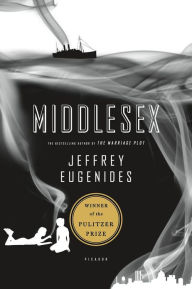
That being the case, I would like to offer up Jeffrey Eugenides’ Pulitzer Prize-winning Middlesex, which in portraying three generations of Greeks weaves a story of immigration and the American Dream.
What would you add to the list?
PS::: Remember that time Jeffrey Eugenides’ vest was Tweeting? And a great quote from the author.

John Freeman’s New Lit Mag Packs in High-Profile Writers

7 Oct

Freeman

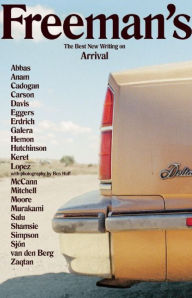
John Freeman has a new literary magazine. The eponymous Freeman’s already it has the literary world buzzing. In the internet age where everyone and their long-lost brother publishes a lit mag, it’s rare that a new publication garners this much attention.

But this is John Freeman we’re talking about. While on the board of the National Book Critics Circle, the author and literary critic had been at the front and center of drawing attention to the diminished coverage of books in print media. As editor of Granta, he edited everyone from Chimamanda Adichie, Peter Carey, Colum McCann, Mary Gaitskill, Herta Muller, Richard Russo, and Salman Rushdie to Joshua Ferris.

Back then, I blogged about a panel on magazines that he moderated at McNally Jackson.

For a little background on Freeman’s departure from Granta and what he’d been up to before launching his own literary magazine, check out this Vogue article.

Freeman’s boasts no shortage of literary talent. The premiere issue, out this month, includes Lydia Davis, Dave Eggers, Louise Erdich, Haruki Murakami, and many other literary superstars. Here’s how it’s described on the Barnes & Noble website:

We live today in constant motion, traveling distances rapidly, small ones daily, arriving in new states. In this inaugural edition of Freeman’s, a new biannual of unpublished writing, former Granta editor and NBCC president John Freeman brings together the best new fiction, nonfiction, and poetry about that electrifying moment when we arrive.

Strange encounters abound. David Mitchell meets a ghost in Hiroshima Prefecture; Lydia Davis recounts her travels in the exotic territory of the Norwegian language; and in a Dave Eggers story, an elderly gentleman cannot remember why he brought a fork to a wedding. End points often turn out to be new beginnings. Louise Erdrich visits a Native American cemetery that celebrates the next journey, and in a Haruki Murakami story, an aging actor arrives back in his true self after performing a role, discovering he has changed, becoming a new person.

Featuring startling new fiction by Laura van den Berg, Helen Simpson, and Tahmima Anam, as well as stirring essays by Aleksandar Hemon, Barry Lopez, and Garnette Cadogan, who relearned how to walk while being black upon arriving in NYC, Freeman’s announces the arrival of an essential map to the best new writing in the world.

Sounds like a collector’s edition to me!

How Is It Possible that Close to Half of College Graduates Don’t Read?

23 Sep
 9781476785653_p0_v7_s192x300
“I’m not as big of a reader as you,” my brother said to me over the phone.
Dismissive of his reading habits as he was, my brother is a reader. He was telling me about a book he by a woman he’d heard about on a podcast. Felicia Day‘s You’re Never Weird on the Internet (Almost). This wasn’t a once-in-a-blue-moon event. He’s not a prolific reader by any means, but he loves a good book. When I’d asked him the year before what he wanted for Christmas, he wanted a Malcolm Gladwell book. Back when he lived in Greece, he asked me to bring him books. He always wanted Dr. Pepper, but I couldn’t bring that on the plane.
These days I sent a lot of books to my mother since it’s difficult for her to get books in English where she lives in Greece. She reads them slowly, savoring them. My father, on the other hand, reads like I do: if he likes a book or thinks it’s important, he will sit and read it until he’s done. My sister, too, reads regularly. It’s a family trait. I come from a family of readers. A long line of readers, perhaps. My grandmother always had biographies laying about her home.
Last year a report came out that said that 42% of college students will never read another book after they graduate. Forty-two percent! I don’t know how that’s even humanly possible. I can certainly understand that there is a percentage of college graduates, depending on what they studied, who might not read literary fiction or nonfiction again. I can imagine some might read graphic novels or chick lit or Tom Clancy novels or self-help books, low-brow books.
The fact that close to half of college graduates don’t read books seems impossible to me. It seems like a deliberate, adamant choice not to read. It seems like they’re anti-book. Are they never, not even once, curious about a bestseller? Not even Harry Potter, Twilight, or Fifty Shades of Grey? Do they not feel the least bit embarrassed if they haven’t read classics like The Great Gatsby? Do they feel no shame in not being able to answer what the last book they read was? Or do their friends never mention books? Do these people never step inside bookstores? Do they never read a business book to advance their careers?
I just don’t get it.  

Nerdy Travelers Rejoice: A Bucket List of Literary Museums for Literary Travelers

21 Aug
HuntingTheGrisly
Bustle came out with a listicle entitled “9 Best Museum In The World for Book Lovers, Because There’s Nothing Like An Original Manuscript.” It has some fantastic recommendations that this nerdy traveler will undoubtedly be adding to her bucket list.
No list can ever be complete, so I’d like to add my recommendations:
The Beat Museum
It should come as no surprise that I’d recommend the Beat Museum in San Francisco. Not only can you see a huge collection of Beat Generation mementos, but there’s also a bookstore that sells first editions, signed copies, and other collectibles.
Walt Whitman Birthplace State Historical Site and Interpretive Center
Walt Whitman Birthplace State Historic Site and Interpretive Center out on Long Island is the place for fans of the Good Gray Poet. What I love about this museum is that it gives a snoopy look into the private home life of the poet and also keeps his tradition alive through contemporary poets. There’s also a wall in the museum that makes me think Whitman inspired Kim Kardashian….
Theodore Roosevelt Birthplace
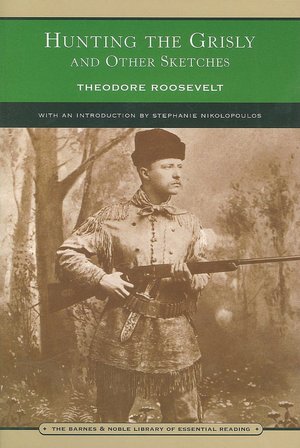
Speaking of birthplaces, the Theodore Roosevelt Birthplace is a must-see. (It’s currently closed but will reopen in a few months.) Oh, sure, he’s remembered today for being one of our presidents, but he was a prolific author, and his birthplace shows how he went from a sickly reader to a big-game hunter. I wrote about the museum in the introduction to his Hunting the Grisly.
Washington Irving’s Home
Washington Irving’s home, Sunnyside, in Sleepy Hollow, New York, is also a fun visit—particularly around Halloween! I went there a few years ago with a friend and to this day we still talk about it.
Junibacken Museum
I mentioned the Junibacken Museum, devoted to Astrid Lindgren’s works in Stockholm, Sweden, in a recent post. It’s particularly fun for children, but even adults may enjoy it.
The Writer’s Museum
I would also recommend The Writer’s Museum in Edinburgh, Scotland. My sister and I visited there quite a few years ago and saw the literary lives of Robert Burns, Sir Walter Scott, and Robert Louis Stevenson come to life. My sister does a mean Robert Burns impersonation.
Some people go to the beach on their vacations. I visit museums and bookstores.

This May Improve Your Mood about Your Social Media Presence

12 Aug

WereAllKerouacy02 copy

This is me reading at Ronnie Norpel‘s fantastic reading series Tract 187 Culture Clatch at The West End —/ photo by author Nana Ekua Brew-Hammond

Over the years, I’ve blogged about everything from twitter to pinterest, in the effort to help fellow writers think about their social media presence. Why? Because every conference and expo I’ve attended has drilled the need for social media into my head. Swirling around my brain, I hear platform, platform, platform.

But platform is about so much more than social media.

According to Rob Eagar’s article “Stop Grading an Author’s Social Media Presence” on Digital Book World, publishers are “misguided” in how they look at an author’s social media presence. He suggests what authors and publishers should focus on is:

  1. Email list and performance
  2. Monthly website visitors
  3. Speaking schedule or webinar participants
  4. Previous sales history

I’d highly, highly suggest reading the full article. What he says makes a lot of sense.

Does this mean we abandon social media?

By no means! It means social media is simply one tool in our toolbox. Okay, toolbox metaphors aren’t quite my lingo—nor my “brand”—but the point is that publishers, agents, librarians, and readers value the fact that an author uses social media, so we should maintain our online presence, but we should also look to diversify. Give a reading. Engage with people who leave comments. Send out a newsletter. Host a webinar. Maintain your backlist. Participate in a panel.

That’s what I’m doing at least. Or at least trying to do.

You can find the facebook page Paul Maher Jr. and I run for Burning Furiously Beautiful here.
My Twitter handle is @stephanieniko.
I pin about Jack Kerouac and the Beat Generation and lit life and 1950s fashion and nighttime road trips and the Greek beauty and deer on Pinterest.
I write articles for other publications.
I am reading at Word Bookstore in Jersey City.
I am teaching a writing class at the Festival of Women Writers.
I am participating on a panel at BinderCon.
I am co-organizing the faith and writing conference called The Redeemed Writer: The Call and the Practice.

There’s so much more to writing than, well, writing. I enjoy it, though. It’s stretching me as a writer, as an entrepreneur, and as a person.

Shamed for Self-Publishing? Just Tell Them Walt Whitman Did It

2 Jun

WaltsSelfie

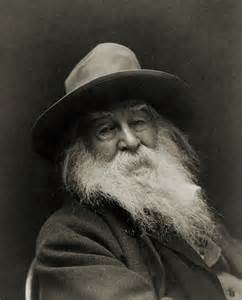
The Good Gray Poet in all his glory

Even though many successful — and I mean New York Times best-selling authors — authors have turned to self-publishing, self-publishing today still carries a certain stigma to it. Many readers think that if an author self-publishes, it means he or she failed at landing an agent or a publisher. That may be true for some authors.

However, there’s another truth.

There are some authors who self-publish and then get picked up by major publishers. There are other authors who never bother trying to place their work with so-called traditional publishers at all. Further, some authors have found critical and monetary success in traditional book publishing, and then have turned to self-publishing.

I am an editor at a book publishing house, so I’ll say that I have firsthand experience as to the many benefits of signing with a traditional publisher. That said, there are also benefits to self-publishing. I don’t think it’s an either/or situation. I think it’s a matter of knowing your strengths and knowing what works best for you and for your book.

There is no shame in making the decision to self-publish. It gives you complete creative control over your words. This includes selecting the title for your book. Many first-time authors don’t realize that, though they submit their book with a title idea, the editors, marketers, and publishers at traditional publishing houses have the final say and may completely alter your title. Same goes for cover. Most authors have little, if any say, as to their cover design. As a self-publisher, you make all the decisions. You also generally have a higher profit margin, though you personally will incur the cost of hiring an editor, hiring a cover designer, hiring someone to layout your interior pages, printing the book, marketing the book, shipping the book to retailers, and so forth. There’s an incredible amount of dedication and work that goes into self-publishing. It’s not the easier route.

And if someone still shames you for self-publishing, just tell them Walt Whitman did it.

Walt Whitman self-published the seminal poetry collection Leaves of Grass in Brooklyn in 1855. Bridges and schools have been named after him. His birth home is a pilgrimage for poets.

For the 150th anniversary of the self-published book, literary critic Harold Bloom said:

If you are American, then Walt Whitman is your imaginative father and mother, even if, like myself, you have never composed a line of verse. You can nominate a fair number of literary works as candidates for the secular Scripture of the United States. They might include Melville’s Moby-Dick, Twain’s Adventures of Huckleberry Finn, and Emerson’s two series of Essays and The Conduct of Life. None of those, not even Emerson’s, are as central as the first edition of Leaves of Grass.

I don’t mind being in the company of Walt Whitman. Do you?

Writing Resolutions for 2015

7 Jan

Happy New Year!

I’ve been thinking a lot about what specifically I want to accomplish with my writing this year. My Burnside Writers Collective friend Adam P. Newton recently posted ‘s piece “52 Things Ideas for Writers for 2015.” I’ve read a lot of generic lists, but this list had some great ideas on it.

Since I tend toward the stream of conscious, I particularly thought this idea would be helpful for improving the structure of my memoir:

Map a book you love. It will teach you a lot to outline a book you’ve read more than once to see how another author thinks about structure, scenes, and narrative arc.

I guess I better get to work!


Fall Semester of the Redeemer Writers Group Announced

10 Sep

writers

Along with two other very talented writers and editors, Maurice and Nana, I will once again be hosting the Redeemer Writers Group after our summer hiatus. The dates for our fall “semester” have now been finalized:


September 22, 2014. 7-9pm.

October 20, 2014. 7-9pm.

November 17, 2014. 7-9pm.
The writing workshops are completely free and open to anyone interested. Please bring a one- to two-page work of your own writing in any genre that you would like critiqued to share with the group. We are a Christian-based group open to writers of all skill levels and genres. The writing workshop will be held at the Redeemer Offices, 1359 Broadway, 4th Floor, Main Conference Room. NYC.

That’s Cute that You Think You’re Subversive: How the CIA Promoted the Radical Arts During the Cold War

29 Jul

cia


During a recent writing workshop that I’m part of with two female writers, our conversation rambled along to the topic of how the CIA had advanced abstract expressionism. That weekend one of the writers asked if I’d pass along the article I had referred to. I did a quick search for it online, and realized I’d actually read several articles about how the CIA had been involved in promoting artistic and intellectual communities that many people tend to think of as nonconformist, liberal, and subversive.

Here’s a quick roundup of articles about the CIA promoting nonconformist art and literature:

  • The article I was thinking of was The Independent‘s “Modern art was CIA ‘weapon,’” about how the CIA used art to show how free-thinking the US was in comparison to Russia during the Cold War
  • The Chronicle of Higher Education published “How Iowa Flattened Literature,” which shows the CIA’s involvement with the esteemed Iowa Writers Workshop
  • Work in Progress’George the Gentlemanly Ghost,” references the CIA being involved in The Paris Review.  It’s worth noting that Jack Kerouac’s first clip from On the Road was published in The Paris Review. (You can read more about that in my book Burning Furiously Beautiful.)
  • Encounter Magazine, the UK lit mag founded by poet Stephen Spender and journalist Irving Kristol in 1953, was funded by the CIA

I’m sure there are more, some we know of and some we don’t. Please add your stories and links in the comments section.

There’s a lot to be said here, but it raised a few questions for me:

  • Without the CIA’s help in funding and promoting modern arts, would these works have remained obscure?
  • Is modern art a scam, and traditionalists correct that it’s not real art?
  • Is the art and literature of the 1950s and ’60s a reaction to or a product of its times?
  • Can something be subversive even if it’s a political ploy?

Whole books could be written in answer to these questions. They’re important topics to consider and discuss, but I want to take a far less Big Brother approach and ask:

  • What are you trying to accomplish by being subversive?
  • Why do you want to be different?
  • Where do you get your information and how do you evaluate it?
  • Who is challenging you to think outside of your own box?

I’m all for dancing to the beat of your own drum. But is that what you’re really doing?