Recap to the Kickoff Party for Mediabistro’s Literary Festival (with links to pics!)

25 Jul

Headed over to mediabistro.com‘s kickoff party for its first-ever Literary Festival last week and had such a wonderful time catching up with friends in the industry and meeting new people! It was great chatting with Carmen Scheidel, who is so knowledgeable about the industry and great at connecting people with mutual interests. (She also happens to rock a great hairstyle!)  She co-hosted the event along with Gretchen Van Esselstyn, whom unfortunately I didn’t get a chance to talk to this time around but who happens to be the person who turned me on to Goodreads.  I don’t want to embarrass anyone who may be shy about having their names mentioned in a blog, but let’s just say I met designers, memoirists, world travelers, writing instructors, and freelance writers, all of whom had a love for the literary arts.

The party was held over at the Bubble Lounge in Tribeca (228 West Broadway), which had such an intimate atmosphere to it.  It was all exposed brick walls, candle light, and art that transports you to another time.

Ayaz Sayeed captured it all on camera. You can see photos of me here and here.

Tasty Tuesday: mamagyro

24 Jul

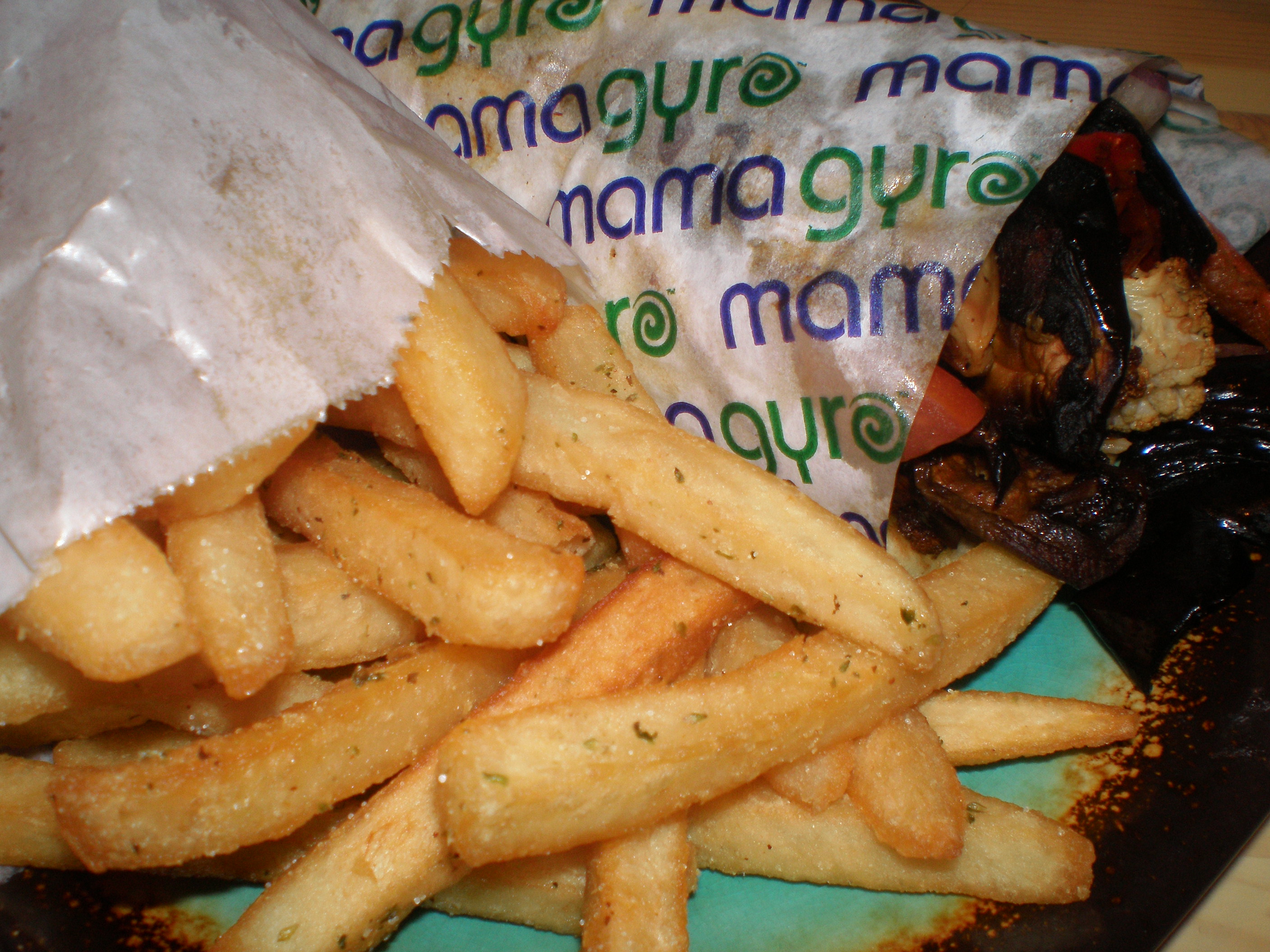
I didn’t feel like cooking so I decided to check out mamagyro.  Isn’t that such a cute name?!  It’s fast-food Greek food on the Upper East Side.

mamagyro is at 1113 Lexington Avenue, New York City.

Parallel Generations

19 Jul

Why is Hollywood taking an interest in the Lost Generation and the Beat Generation?  Are there parallels between the generations of the past and today’s generations?  Is history cyclical?

From a historic standpoint, it makes sense that today’s generations are looking back at the Lost Generation and the Beat Generation.  Like the Lost Generation, the current generation has experienced war.  Although the Lost Generation predates the Great Depression by a few years, novels such as The Great Gatsby have much to say about the disparity of wealth, a topic that this generation has dealt with during the Great Recession.  Part of the seedy wealth distribution of the ‘20s had to do with bootlegging.  Prohibition may not be something today’s candidates have on the table, but there’s a definite right-wing conservatism bent influencing culture today.

The Beat Generation writers were those who were born around the time of the Great Depression and came of age during World War II.  Kerouac and John Clellon Holmes actually were thinking of the Lost Generation when they came up with the idea that they were the Beat Generation.  The obvious parallels between the two generations being the world wars.  While the Lost Generation was going into the Great Depression, the Beat Generation was coming out of it, and so while the Lost Generation was more about decadence the Beat Generation was more about simplicity.  Perhaps, then, today’s older generation is looking toward the Lost Generation and the younger generation looking towards the Beat Generation for confirmation on the way we live our lives.

After all, generations have followed suit in this pattern of economy and war since these generations.  The Baby Boomers were all about the money, and then Generation X was the slacker generation.

Since then we’ve seen Generation Y, also known as the Millennials or Generation Next, who are often thought of as privileged Trophy Kids.  These are the eighties babies (give or take) that are now in their twenties, a few even in their thirties.

Generations X and Y heard Reality Bites, My So-Called Life, and Fight Club tell us our great war was within ourselves.  –And then the terrorist attacks took place on 9/11.  It was around that time that Generation Y turned to indie music, the locavore movement, and reviving arts and crafts.

After that came Generation Z, or Generation I, the kids born in the ‘90s, for whom the Internet, the War on Terror, and the Great Recession are a way of life.  Generations Y and Z are the i-generation, each having their own personal computers, finding fame on blogs and in social media, the generation that is connected and disconnected.  They began looking back at Generation X, wearing flannel.  Miley Cyrus was photographed wearing a Nirvana t-shirt.

The Pew Research Center has a fascinating report that charts the different Generations’ attitudes toward politics, religion, immigration, marriage, and more.

Technology is developing at a faster and faster rate, and with it, generations are shortening and multiplying.  When you think about it, iphones models are even called by their generation, as in the second generation iphone, acknowledging how much generations are defined by technology, as well as money and politics.  Therefore, it’s easy to see how certain generations blend together, which may also be a result, as the Pew Research Center data seems to suggest, of the delayed adulthood.

What generation do you identify with?

Road Trip Writing: On the Road and Through Painted Deserts

16 Jul

Donald Miller’s New York Times-bestselling book Blue Like Jazz recently was made into an indie film, and I had the opportunity to watch a screening in Times Square before the film was officially released on April 13.  I’ve had the immense pleasure of meeting and getting to know some of the “characters” in the book.  I was so proud of them!  Penny Carothers wrote a beautiful article about her experience going to the premier and seeing an actress play her on the silver screen.

The film was very different than the book.  I knew this going into it.  The story of this process of turning a collection of essays from Blue Like Jazz into an actual storyline is told in Miller’s A Million Miles in a Thousand Years.  There’s a scene in A Million Miles when Don is told that he essentially needs to change his life story for the movie.  He says:

“You think they might be bored if we just show my life the way it is,” I clarified. I guess I was asking for reassurance that my life was okay.

From the perspective of a fellow memoirist, I found the process fascinating.   I think memoirists, particularly those who are in the process of turning their book into a movie, should consider reading Blue Like Jazz and A Million Miles in a Thousand Years and then watching the film, just to get a sense of process.

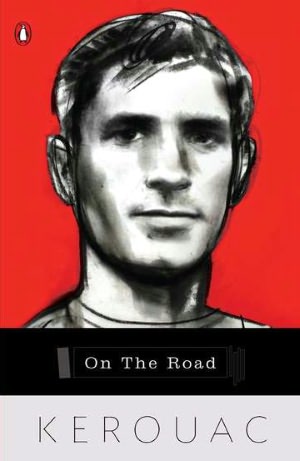
After watching the film Blue Like Jazz, I can’t help but wonder what will happen with the film On the Road.  After all, both are fictional portrayals of real life.  If Blue Like Jazz is any indication, On the Road will be very different than the book.  A guy I interned with years ago at the Bowery Poetry Club left a comment recently in response to one of my Facebook posts, saying that Kerouac wasn’t a good storyteller.  In a way, I kind of agree with him.  On the Road would seemingly make a lot more sense if it was just one big road trip across the United States.  Instead, the protagonist, Sal Paradise, barely hits the road before he turns back around.  There are multiple trips across the country, and the story can get a bit confusing because of that.  Maybe Jack Kerouac was trying too hard to stick to the truth to combine all the trips into one.  Then again, maybe he knew what he was doing.  There’s something so much more telling about Sal Paradise failing his first attempt at road tripping and then frenetically ping-ponging between his mother’s house and the open road than if it had all happened easily, perfectly.  Can the film capture that?  Will it try?  Will gaining cohesive action and a clear plot lessen the reality, the rawness, the beat-ness of life?

While I do recommend Donald Miller’s A Million Miles in a Thousand Years for an honest look at not just the writing process but the process of living life, the Donald Miller book I’d actually recommend as an example of beautiful storytelling and craft is his first book, which was republished as Through Painted Deserts.  This is the book that pays more attention to the way words sound as they roll of the page.  It inspires because of its beauty and simplicity, and not because of grand, sweeping gestures and actions.

Through Painted Deserts is Donald Miller’s road trip book.  Here’s how the overview reads:

This classic road trip tale will inspire readers of all ages.

Fueled by the belief that something better exists than the mundane life they’ve been living, free spirits Don and Paul set off on an adventure-filled road trip in search of deeper meaning, beauty, and an explanation for life. Many young men dream of such a trip, but few are brave enough to actually attempt it. Fewer still have the writing skills of Donald Miller, who records the trip with wide-eyed honesty in achingly beautiful prose. In this completely revised edition, he discusses everything from the nature of friendship, the reason for pain, and the origins of beauty.

As they travel from Texas to Oregon in Paul’s cantankerous Volkswagen van, the two friends encounter a variety of fascinating people, witness the fullness of nature’s splendor, and learn unexpected lessons about themselves, each other, and even God.

Through Painted Deserts is the modern-day, Protestant version of On the Road.  It’s about a young man looking for truth out on the open roads of America.

PS::: You may also like:

my article on Church Hopping with Donald Miller

my article on Church Hopping with Penny Carothers

should i read on the road

13 Jul

Someone found my blog by typing in

“should i read on the road”

I hope they found the correct answer.

From the Lost Generation to the Beat Generation: Hollywood’s Obsession

12 Jul


With Hemingway and Gellhorn currently on HBO and a remake of The Great Gatsby heading to theatres this Christmas, The Observer’s Daniel D’Addario ponders if we’re experiencing a “Lost Generation Boom.”

The Lost Generation refers to the writers during the World War I era, many of whom became expatriates.  The Lost Generation writers include F. Scott Fitzgerald, T. S. Eliot, Gertrude Stein, Ernest Hemingway, and John Dos Passos, among others.  Hemingway popularized the term in A Moveable Feast, in which he quoted Stein as telling him a story about a man who said, “That’s what you all are … all of you young people who served in the war. You are a lost generation.”

D’Addario also references last summer’s Midnight in Paris, but in some regard, we’ve been experiencing the “boom” for quite some time now … at least in the cocktail scene.  A few years ago, speakeasy-type bars became all the rage here in New York.  Dimly lit lounges served up spiked punches in tea cups.  There are also Jazz Age parties on Governor’s Island, where everyone gets all dolled up in fantastic flapper dresses and Sacque suits.  And the Oak Room—which in the ‘20s was Algonquin’s Pergola Room—just reopened.

However, Hollywood isn’t only obsessed with the Lost Generation.  The Beat Generation, which wasn’t popular for a long time, is beginning to see a revival.  On the Road, based on Beat writer Jack Kerouac’s novel, just premiered at Cannes Film Festival in May and will be released Stateside sometime later this year.  Next year, Kill Your Darlings, about a murder involving Kerouac, William S. Burroughs, and others associated with the Beat Generation, will be released.  In 2010, Howl, based on Allen Ginsberg’s poem and the trial that followed its publication, came out.  These aren’t small movies by any means.  Howl starred it-boy James Franco, Kill Your Darlings will star Daniel Radcliffe, and much has been made of On the Road starring Kristen Stewart.

Perhaps we’re trying to figure out our own generation by looking at those in the past.

Social Media Lessons from SXSW 2012

11 Jul

Calvin Reid makes insightful remarks about the role e-technology and social media are playing in publishing in “SXSW 2012: New Publishing Models and the Rise of the Referral Economy.”  If you’re new to publishing and looking to make your mark on the industry and find readers, I’d highly encourage you to read the entire article.  To his point on “curating,” here’s some remarks of his that you might find especially helpful:

  • “Altounian said he’s targeting a demographic under the age of 40 that wants to read on an array of devices anytime they want and they don’t want to pay much, if anything, for the content they read on them. … Altounian was making the point that, at least for emerging artists, getting their content in front of readers through traditional publishers is an uphill battle that doesn’t work for everyone; that his goal is to build a list of self-branded artists (using social media tools) and by offering some free content now, and some for-pay content later when the freebie-oriented audiences for these artists reaches critical mass and wants more of their stuff.”
  • “Certainly one of the most intellectually vivid panels was Curators or the Curated, a panel examining the phenomenon of content sharing—essentially the practice of any and everyone linking to content and sending it out to followers and friends around the web—and what that means to publishers, creators and the curators themselves. … In theory curators bring attention to content and drive traffic to the original site; in practice some curators are having more impact than the publications they curate from. And its generated a debate about the practice and what it means—and of course how to monetize it.”
  • “He also rejected some of the anti-advertising curatorial comments, noting that business platforms were important and that he had worked for a Minn.-based newspaper that did away with escort ads and the loss of revenue killed the newspaper.”

What I take away from this is the following:

Writers need to start building a platform NOW—as in, even before we’ve written our book, we need to start curating content on our subject matter.  This means tweeting, forwarding, and “liking,” other writers’ posts related to our subject and also blogging, tweeting, and writing our own status updates on our subject.

Generate content and don’t be afraid to give it away for free.  It’s better to give our writing away for free in the beginning so that we can establish ourselves as authorities on that topic and/or as interesting storytellers.  Eventually, people will love you and want to buy your writing—but it might take a lot of giving your work away for free first.  Michael Hyatt is a big proponent of giving away free content.  Not only does he give away valuable information on his blog, but he also created an ebook that he gives to anyone who subscribes to his blog.  Both the blog subscription and the ebook are free.

Don’t be all holier than thou about advertising.  Solicit advertising for your blog.  I personally would suggest keeping your advertising in line with your brand—and your brand should probably be consistent with how you’d want to be thought of by your friends and parents as well.  What I mean is, I personally would rather go hungry than earn money from escort ads.  The best ads are going to be ones that relate to your subject matter.  So if I’m writing about Greek identity, ads about learning how to play the harmonica aren’t going to be controversial but they won’t be as relevant as ads about learning how to speak Greek.

Humbly consider the rights to your content.  Bloggers may quote rather heavily from anything you post—and by heavily, I mean they might use your work entirely and just give you credit via a link.  This might be a breach of your copyright, but before you get your knickers in a bunch consider if their promotion of your work might be helping you out with some free advertising.  Maybe it’s bringing new readers to your work.  …But then again, maybe it’s not.  Therefore, always be careful with what sort of content you put on your blog.  Sure, someone could pirate your whole book, but it’s more likely someone will repost a blog entry than your entire book.  With that in mind, be prepared that what you publish on your blog might end up elsewhere.

Pay attention to your e-rights.  Landing a book contract is about more than just the print rights these days.  Make sure your contract expressly states an agreement about electronic and print-on-demand editions.

It feels like writers—and artists of any sort—get a raw deal.  We have to give a lot of free content away.  Professionals in other industries don’t seem to have to do this to the same extent.  Lawyers may work an occasional pro bono case, but they’re not expected to work for free before making it big.  Doctors may do Doctors Without Borders to give back and help people, but this is a personal choice they make.  I suppose in some ways artists giving away their work—and having it stolen from them in the case of extreme curating—is an internship of sorts, but the difference is that artists are expected to intern their entire lives or at least until they hit it big.

Therefore, I’d encourage all artists to be savvy.

Yes, you might feel pressured to build your platform and give away content for free, but make sure you’re getting something in return for your investment.

Don’t let your platform overtake your writing.  Your platform is a means to an end—your book project.

Use the system.  There’s nothing wrong with giving away content for free.  There’s nothing wrong with soliciting ads.  There’s nothing wrong with social media.  Don’t let anyone or any platform rule over you.  Keep your goals in perspective and use the system to your advantage.  Find your target audience, make connections, earn money, promote your projects.

You can find me not only here on this blog, but also on Twitter, Pinterest, and Google+.

Tasty Tuesday: Pictures from Dinner at Village Taverna

10 Jul


While I was getting my MFA in creative nonfiction at The New School, I kept walking by a Greek restaurant that was being built on University Place.  When it finally opened, I was drowning in writing my thesis and Burning Furiously Beautiful.  Right before the semester ended my writer friend Allison–who is obsessed with Greece (a good thing considering all the Greek stories I shared in class)–and I went to check it out.  Village Taverna was definitely worth the wait.

The food at Village Taverna is classic Greek taverna fare served up in a spacious, beautiful dining area with a casual vibe.  The portions were generous–and delicious.  I didn’t try the wine, but they have an impressive Greek wine list.  Village Taverna has the best vegetarian gyro in New York–the grilled vegetables pita wrap.  I want to go back and try their meze–tzatziki and veggie chips, namely–and vegetarian moussaka (it has artichokes in it!).

Who’s with me?!

Your Home Can Smell Like Big Sur

9 Jul

Busy poet Lawrence Ferlinghetti, who is still active at ninety-three years old, moved out to San Francisco and founded City Lights in 1953.  More than just the independent bookstore of Beat pilgrimages, City Lights is a book publisher, and in 1956, Ferlinghetti was arrested on obscenity charges because he had published and sold Allen Ginsberg’s Howl.  He was later found not guilty of a crime.

The year after Ginsberg and Ferlinghetti made the papers, Jack Kerouac finally found fame with On the Road.  The fame was overwhelming, though.  Talk-show hosts invited the naturally shy author on their show.  Wanderlust kids, winos, and dogged readers showed up unannounced at his home.  Fame took a toll on his mind, body, soul.

Ferlinghetti had a cabin, a refuge, out in the wilderness of Big Sur.  He could escape the hustle and bustle of San Francisco for respite along the coast of central California.  After the fame wore him down, Kerouac escaped there too, living for a brief time in Ferlinghetti’s cabin in the woods.  The result of this experience is the 1962 novel Big Sur.

Juniper Ridge now has a room spray called Big Sur.  According to their website, it smells of “wild ginger, burnt honey, salt, damp ground.”  The ingredients are plucked from the deserts and mountains of the West, and 10% of the $20 spray bottle goes back to protecting western wilderness.  They also have a Big Sur soap, essential oil, and sachet.  For $50 you can give the gift of Big Sur, which includes the items already mentioned, plus wild huckleberry jam (perhaps reminiscent of Neal Cassady, whom some have said is Huckleberry Finn incarnate).  The gift comes gift wrapped with real pine cones!  And, like the others, 10% of the profit goes to protecting wilderness.

Road Trip: Club Ed

6 Jul

Throw your rucksack into the trunk of your beat-up ’49 Hudson.  Rev the engine.  Peel out of LA.  An hour into the California desert, and you’ve rolled into Lancaster.  You’ve traveled back in time and hit Club Ed.

One-time film set for Eye of the Storm, Club Ed embodies the nostalgia of On the Road, though IMDB does not report Lancaster as one of the locations the Hollywood version of Jack Kerouac’s novel was filmed.

Club Ed is pure roadside bliss for the wanderlust traveler who wishes to step back into an era, where pie was still made on the premises of greasyspoons and served up by surly waitresses, who kept your mug full of stale coffee.  The menu is written in paint on the window.  You look out and all you see for miles on end is the scorched shrubs dotting the valley.  Mountains loom in the distance.  There’s an old gas station, where you should fill your tank.  You may not see another one soon.

On the Road will inevitably inspire people to hit the road.  Route 66 isn’t what it used to be, though.  Drive through Missouri or Texas, and you’ll likely seen the same chain stores from the highway that you’d seen in Arizona and California.  Club Ed isn’t the real deal, and yet it looks more authentic than a Denny’s.