Tag Archives: Beat Generation

A Collage of Art and Literature at the Guggenheim

14 Aug
 bove2012-copy
Carol Bove, Vague Pure Affection, 2012, wood and steel shelves, paper, brass, concrete, and acrylic, 85″ x 35 1/2″ x 16″. © Carol Bove, photo courtesy Maccarone Inc., New York
When I was growing up, I wanted to be an artist. So I became a writer. At Scripps College, I majored in English literature and minored in studio art. I wrote my thesis on the influence the Abstract Expressionist painters had the Beat Generation. At The New School, I studied the collaboration between the poets and painters of the New York School, which also touched on a lesser extent on the Beats. Next month, at the Festival of Women Writers in the Catskills, I will be teaching a writing class called Cut-Ups, Jazz-Poetry, and Picture Poems: Writing Under the Influence of the Beat Generation.
 
So you can imagine how excited I am about the Storylines exhibit at the Guggenheim. Robert Anthony Siegel did a provocative write-up on it in The Paris Review.
 
* * *
You can pick up your copy of Burning Furiously Beautiful: The True Story of Jack Kerouac’s “On the Road” here.

This May Improve Your Mood about Your Social Media Presence

12 Aug

WereAllKerouacy02 copy

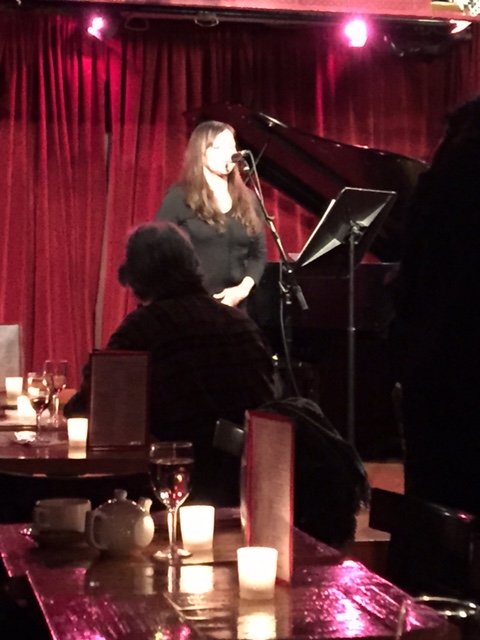
This is me reading at Ronnie Norpel‘s fantastic reading series Tract 187 Culture Clatch at The West End —/ photo by author Nana Ekua Brew-Hammond

Over the years, I’ve blogged about everything from twitter to pinterest, in the effort to help fellow writers think about their social media presence. Why? Because every conference and expo I’ve attended has drilled the need for social media into my head. Swirling around my brain, I hear platform, platform, platform.

But platform is about so much more than social media.

According to Rob Eagar’s article “Stop Grading an Author’s Social Media Presence” on Digital Book World, publishers are “misguided” in how they look at an author’s social media presence. He suggests what authors and publishers should focus on is:

  1. Email list and performance
  2. Monthly website visitors
  3. Speaking schedule or webinar participants
  4. Previous sales history

I’d highly, highly suggest reading the full article. What he says makes a lot of sense.

Does this mean we abandon social media?

By no means! It means social media is simply one tool in our toolbox. Okay, toolbox metaphors aren’t quite my lingo—nor my “brand”—but the point is that publishers, agents, librarians, and readers value the fact that an author uses social media, so we should maintain our online presence, but we should also look to diversify. Give a reading. Engage with people who leave comments. Send out a newsletter. Host a webinar. Maintain your backlist. Participate in a panel.

That’s what I’m doing at least. Or at least trying to do.

You can find the facebook page Paul Maher Jr. and I run for Burning Furiously Beautiful here.
My Twitter handle is @stephanieniko.
I pin about Jack Kerouac and the Beat Generation and lit life and 1950s fashion and nighttime road trips and the Greek beauty and deer on Pinterest.
I write articles for other publications.
I am reading at Word Bookstore in Jersey City.
I am teaching a writing class at the Festival of Women Writers.
I am participating on a panel at BinderCon.
I am co-organizing the faith and writing conference called The Redeemed Writer: The Call and the Practice.

There’s so much more to writing than, well, writing. I enjoy it, though. It’s stretching me as a writer, as an entrepreneur, and as a person.

Pictures from Allen Ginsberg’s Birthday Party at Poet House

18 Jun
IMG_1995
Allen Ginsberg would’ve turned 89 years old on June 3. The author of one of the most important poems of the twentieth century, “Howl,” Ginsberg was born in Newark, New Jersey. While studying at the prestigious Columbia University, he met fellow student Lucien Carr, who introduced him to Jack Kerouac and William S. Burrough. It was the birth of the Beat Generation. Okay, we all know “Beat Generation” is just a convenient label for categorizing poets and novelists and letter writers and friends and fellow artists. Ginsberg is more than a so-called Beat poet. He touched so many people’s lives and influenced diverse thinkers and creators. Eighteen years past his death, he’s still making headlines. Most recently, a teacher was fired after reading one of Ginsberg’s poems to a class. It makes sense then that friends and people who have been inspired by Ginsberg still come together to celebrate his birthday.
And that’s just what happened on June 3 at Poets House. To celebrate the publication of The Essential Ginsberg, its editor Michael Schumacher presided over a fantastic night of poetry and performance featuring Lee Ann BrownEliot KatzAmy LawlessDawn Lundy MartinRyan Doyle MaySharon MesmerEileen MylesUche NdukaBob RosenthalSteven Taylor, and surprise guest Anne Waldman.

It’s Walt Whitman’s 196th Birthday! …Or a Post that Includes References to President Lincoln and Bon Jovi

31 May

WaltBirthplace

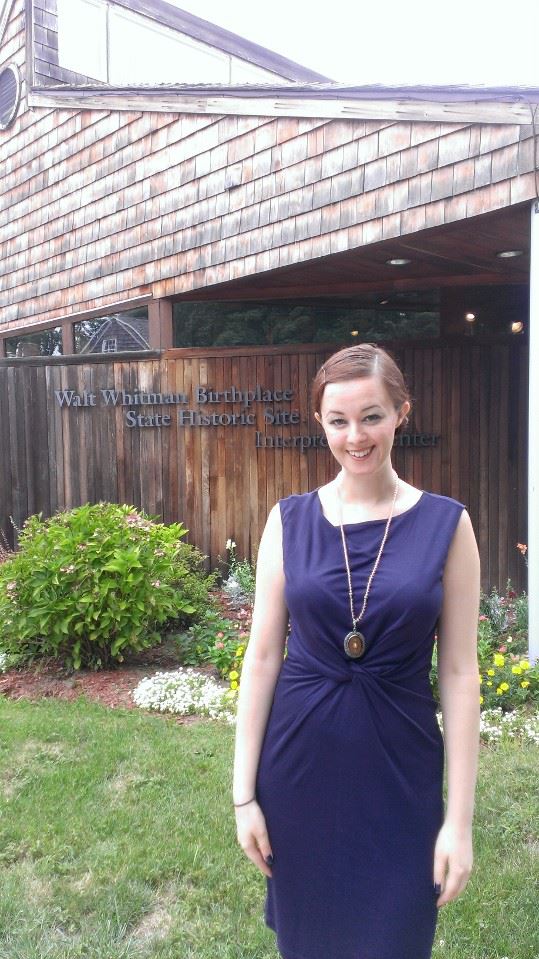
Here I am in 2013 standing outside Walt Whitman’s Birthplace State Historic Site and Interpretive Center in Long Island.

Walt Whitman was born on May 31, 1819, in Huntington, Long Island. He’s best known for Leaves of Grass. American schoolchildren are probably most familiar with the poem “O Captain! My Captain!” from the poetry collection. Written in 1865 and not included in Leaves of Grass until the fourth edition, the poem is about the death of President Abraham Lincoln.

There’s so much more to Whitman than that, though.

Walt Whitman is a complex and endlessly fascinating figure of the American poetry scene. He is regarded as the father of free verse poetry. He was also a reporter. He wrote a temperance novel: Franklin Evans (1842). He didn’t believe that all the works attributed to Shakespeare were actually Shakespeare’s. (Hm… what would Miguel Algarin say?) He at first called for the abolition of slavery … and then later thought the movement was a threat to democracy. He’s been inducted into the Legacy Walk, which celebrates LGBT history and people. He passed away in Camden, and the Garden State claimed him in the New Jersey Hall of Fame; that same year (2009), fellow literary luminaries William Carlos Williams and F. Scott Fitzgerald were inducted in the category of “general” while Whitman was inducted in the category of “historical.” (Jon Bon Jovi was one of the inductees honored in the category “arts and entertainment.) Andrew Carnegie said Whitman was “the great poet of America so far.”

“So far.”

Has any other “great poet of America” come along who has taken Whtiman’s place? It’s difficult to say, but this week we’ll be honoring the Good Gray Poet and talking about the poets that have been inspired by him.

Yep! You guessed it. The Beats.

Robert Frost, Jack Kerouac, Gregory Corso, and the Road Not Taken

16 Apr

Frost

In honor of National Poetry Month, I wanted to share some poems.

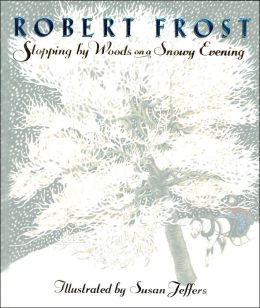
I write a lot about the road. I write about Jack Kerouac’s On the Road and even wrote a whole book about it called Burning Furiously BeautifulWhen I was much younger, though, all the way back in elementary school, I encountered Robert Frost’s “The Road Not Taken.” Here it is for your reading pleasure.

Robert Frost’s “The Road Not Taken”

Two roads diverged in a yellow wood,

And sorry I could not travel both
And be one traveler, long I stood
And looked down one as far as I could
To where it bent in the undergrowth;

Then took the other, as just as fair,
And having perhaps the better claim,
Because it was grassy and wanted wear;
Though as for that the passing there
Had worn them really about the same,

And both that morning equally lay
In leaves no step had trodden black.
Oh, I kept the first for another day!
Yet knowing how way leads on to way,
I doubted if I should ever come back.

I shall be telling this with a sigh
Somewhere ages and ages hence:
Two roads diverged in a wood, and I—
I took the one less traveled by,
And that has made all the difference.

Frost begins his poem, “Two roads diverged in a yellow wood, / And sorry I could not travel both.” It reminds me of the Gregory Corso quote: “If you have a choice of two things and can’t decide, take both.” It’s not always that easy, though, is it? You can’t always choose to go both left and right at the same time. You can’t always choose to stay and to go. Sometimes you have to make a choice.

Robert Frost says, “I took the one less traveled by.” And that’s certainly what Jack Kerouac, Gregory Corso, and the many other poets and writers associated with the Beat Generation did. They choose the road less traveled.

Choosing the road less traveled is not an easy choice, though. It is an unfamiliar one. It is one without precedent. It comes with risk.

Sometimes, though, it’s worth it. It can’t be a reckless risk. It must be, as my father would say, a calculated risk.

Women on Top: Pam Belluck, Hettie Jones, Margot Olavarria, Marci Blackman & Beth Lisick

23 Mar

030615-WomenOnTop-Monthly-flyer-v1-wide-430

At the Burroughs 101 reading, Three Rooms Press announced that their next reading at Cornelia Street Cafe would be Women on Top, featuring “five feisty females”: Pam Belluck, Hettie Jones, Margot Olavarria, Marci Blackman, and Beth Lisick, and hosted by Three Rooms Press’ Kat Georges. My friend and I decided on the spot, without even consulting our schedules, that we were going.

IMG_0483

The main reason I knew I had to be at this reading was Hettie Jones. As a Beat scholar, I’ve long admired Hettie Jones for being a woman who was more than just a muse — she is a writer with her own voice and transcends categorization. I first heard her reading at the Women of the Beat Generation panel at the Bowery Poetry Club, which incidentally was the first time I ever ventured into Bob Holman‘s poetry venue, which became an important part of my own literary upbringing. Later, while studying creative writing at The New School, one of my instructors introduced me to Hettie because he knew I was interested in Beat literature. She was so down-to-earth and honest. She talked with me for a long time, and I greatly valued her insight into the role of women in the Beat Generation. The last time I heard her read was at 2013’s Downtown Literary Festival, where she read at McNally Jackson. Obviously, it had been way too long since I’d heard her read! I loved, loved, loved the poems she selected to read at Three Rooms Press’ Women on Top reading. She read about driving, about New York City, and about the 1940s. Jones didn’t self-analyze, but what I found particularly fascinating to think about was how driving was almost a feminist act at the time. It’s not that women didn’t know how to drive; it’s that the men usually took over the driving. Jack Kerouac, however, hated driving. Occasionally, he took the wheel, but oftentimes he rode Greyhound or let his buddy Neal Cassady do the driving. I don’t think it would be fair to make some sort of leap and question Kerouac’s masculinity because he wasn’t a man who liked driving, but I do think it’s fair to say Jones didn’t let culture dictate what she could or couldn’t do as a woman. She blazed her own path.

IMG_0475

Driving appeared to be the theme of the night. Margot Olavarria, the original bass player for the punk band The Go-Go’s, told tales from life on the road. The world of rock’n’roll is so full of men’s stories that I appreciated hearing what it was like a woman’s experience of life out on tour.

IMG_0477

Marci Blackman had a road connection too — the award-winning novelist is an avid cyclist. Check this out: “An avid cyclist and veteran of the Sister Spit Rambling Road Show, Blackman once spent six weeks in a van with 11 queer writers on a cross country spoken word tour and 12 weeks, alone on a bicycle, pedaling from San Francisco to the outer banks of North Carolina.”

IMG_0493

Beth Lisick is one of those authors whose name is everywhere, so I was excited to hear her read. She did not disappoint. She is a true performer, an author who makes readings lively and entertaining. She read from her work-in-progress. Now I need to work my way through her other five books.

IMG_0503

Pam Belluck is on the health and science staff of The New York Times, and even before that she covered a wide range of fascinating news topics. She regaled the audience with stories of what it was like being a pregnant woman covering major news events.

We’re All Kerouacky!

2 Nov

WereAllKerouacy02 copy

photo by author Nana Ekua Brew-Hammond

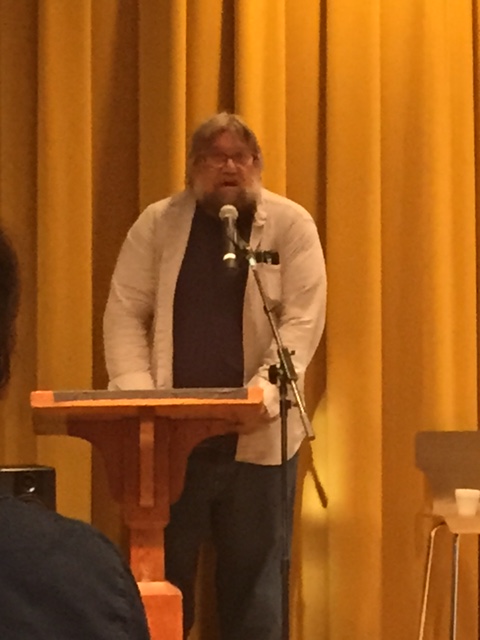
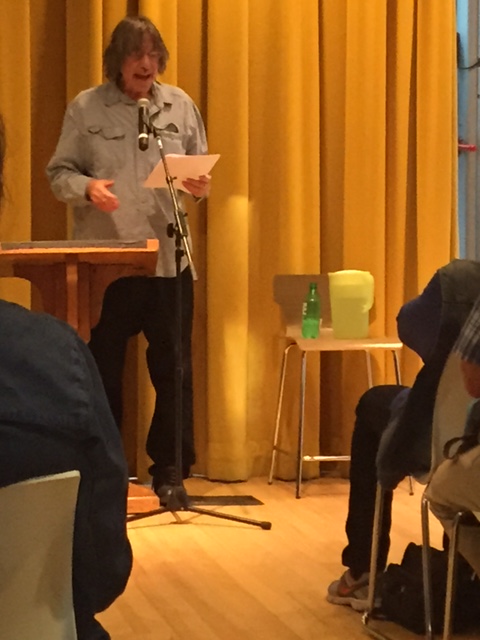
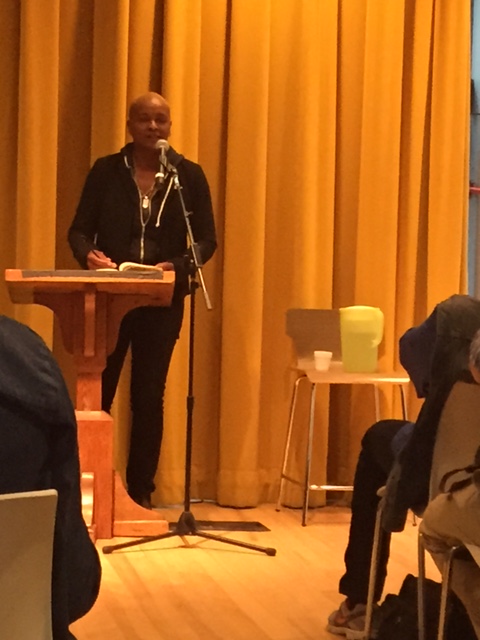
I had the great honor of opening the We’re All Kerouacky edition of Ronnie Norpel‘s fantastic reading series Tract 187 Culture Clatch — aptly* held at The West End — on October 1 with two passages from Burning Furiously Beautiful: The True Story of Jack Kerouac’s “On the Road.”

Ronnie’s an amazing host. I’ve had the pleasure of knowing Ronnie for a while now. We first met at an event organized by RA Araya that she emceed. She’s also the author of probably the only sports book I’ve willingly bought: Baseball Karma & the Constitution Blues.

She organized a killer line up for the event:

WE’RE ALL KEROUACKY EDITION
celebrating Jack Kerouac on the
45th anniversary of his becoming
a Desolation Angel

Featuring:
Kerouac Covers by Jane LeCroy
Monologues from Larry Myers
with Janice Bishop, Tom Fenaghty & Ronnie Norpel
Author Stephanie Nikolopoulos (Burning Furiously Beautiful:The True Story of Jack Kerouac’s “On the Road”)
Music by Elliott Levin, Saxophone (Philadelphia)

I had so much fun mingling and chatting with others who enjoy Jack Kerouac’s writing. I loved seeing the way music and spoken word intertwined. It was a beautiful way to remember Kerouac’s legacy.

Some of my friends from the Redeemer Writers Group even came out, which was really special.


*I say aptly because the writers associated with the Beat Generation used to hang out at a bar called The West End. The Broadway bar closed down years ago, and this new incarnation is at 
955 West End Avenue.


* * *

You can purchase Burning Furiously Beautiful via lulu.

Follow Burning Furiously Beautiful on Facebook.

Remembering Jack Kerouac

21 Oct


Jack Kerouac

March 12, 1922 – October 21, 1969

Jack Kerouac was only forty-seven years old when he passed away. The day before he died, he’d been drinking whiskey and writing at his home in St. Petersburg, Florida, when he suddenly felt ill. He called out to his wife, a Greek American from his hometown of Lowell, and Stella Sampas Kerouac got him to St. Anthony’s Hospital, where he ultimately died from his internal hemorrhage. He was buried in Edson Cemetery in Lowell, in the Sampas family plot.


Remembering Juggling-Poet Robert Lax!

26 Sep

lax

Born in Olean, New York, Robert Lax studied poetry at Columbia, worked for The New Yorker, cofounded the Catholic publication Jubilee, joined the circus, spent thirty-five years on the Greek island of Patmos, and took up a type of meditation founded by Eknath Easwaran before returning to Olean just weeks before he passed away there on this day in 2000.

Lax never achieved the level of success that some of his colleagues did. He was friends with Columbia alum and Trappist monk Thomas Merton and the abstract expressionist Ad Reinhardt, both of whose work reached a wider audience. Yet early on in his career, Kerouac wrote to Lax, praising his work. The New York Times Book Review favorably reviewed Lax’s poetry book Circus of the Sun.

Lax’s work was collected by editor Jim Uebbing as Love had a Compass: Journals and Poetry. Here’s the overview from Barnes & Noble:

Every generation of poets seems to harbor its own hidden genius, one whose stature and brilliance come to light after his talent has already been achieved. The same drama of obscurity that attended the discovery of Emily Dickinson and Wallace Stevens is suggested by the career of Robert Lax. An expatriate American whose work to date—more than forty books—has been published mostly in Europe, this eighty-year-old poet built a following in this country among figures as widespread as E. E. Cummings, Jack Kerouac, and Sun Ra. The works in “Love Had a Compass” represent every stage of Lax’s development as a poet, from his early years in the 1910s as a staff writer for the “New Yorker” to his present life on the Greek island of Patmos. An inveterate wanderer, Lax’s own sense of himself as both exile and pilgrim is carefully evoked in his prose journals and informs the pages of the Marseille Diaries, published here for the first time. Together with the poems, they provide a portrait of one of the most striking and original poets of our age.

Here’s what Publisher’s Weekly said:

Lax is a somewhat legendary poet known primarily for two reasons: he traveled in a circle in the 1930s that included Thomas Merton, John Berryman, Robert Giroux and Ad Reinhardt; and he has lived and written on the Greek island of Patmos since the early 1960s. This combination of famous friendships and personal obscurity has added heat to his reputation but not much lighthis poetry has been obscured by his myth. This volume, however, will likely introduce Lax’s considerable poetic power to a wider audience. Uebbing’s introduction captures the essence of Lax’s work: “A simple response to a simple moment”; “much of his work is almost devoid of imagery.” Lax’s early poems are a mix of emotionality (“for we must seek/ by going down,/ down into the city/ for our song”) and formal experimentation (“black/ black/ white/ white/ black/ black/ white/ white”). But his finest work can be seen in the previously unpublished sequence of poems, Port City: The Marseille Diaries. Drawing on the people and places he encountered during an extended, down-and-out time in the city during the 1950s, in “Port City” Lax finally declares his mission: “I will sing you/ of the moments/ sing you/ of those/ possibly/ meaningless moments.”

Lax’s funeral was held at St. Bonaventure University. Excerpts of his poem were distributed.

“On the Road” Turns 57!

5 Sep

OnTheRoad

Jack Kerouac’s On the Road turns fifty-seven years old today! It’s such a vibrant work that continues to inspire people to pick up a pen or hit the road that it’s hard to believe it’s been around for so long.

The above picture is what the novel looked like when it first came out. Paul and I actually emulated its design on the title page of Burning Furiously Beautiful: The True Story of Jack Kerouac’s “On the Road,” which I personally was excited about! Since 1957, Kerouac’s novel has undergone many, many cover transformations. I talked about the significance of these design changes here. And I talked about On the Road’s “girly” makeover here.

The novel has since inspired other artists, such as Tim Z. Hernandez, who actually tracked down “the Mexican girl”; Larry Closs; Jonathan Collins; and J. Haeske.

The film adaptation (you can read my experience going to see it here), which has a long history, came out recently and starred some of Hollywood’s biggest names. It sparked a lot of dialogue, including whether Hollywood was glamorizing the Beats.

Of course, even when it was first published, On the Road received criticism for its morality or lack thereof.

Despite these digs at its morality, one of the creeds I’ve heard over and over again — and with which I disagree — is that On the Road is a book only for teenagers.

And if you’re not a teenager and you read On the Road, it supposedly makes you undateabable. Unless maybe you’re a woman.

It seems like everyone has an opinion about On the Road. What’s yours?