Tag Archives: Jack Kerouac

Ramblin’ Jack: Just Because You Don’t Like a Book, Doesn’t Mean It Isn’t Well Written

20 Aug

Over the years, many readers have criticized Jack Kerouac’s work for its rambling prose and sounding too colloquial.  Everyone is certainly welcome to his or her own opinions.  The world would be a pretty boring place if we all liked exactly the same thing.  The literary arts are, to a certain degree, subjective.  One doesn’t have to like or enjoy a work, though, to see its importance and value.  Even if it doesn’t change the likeability of a work, it’s important to consider its artistry before completely dismissing it.

Take Of Mice and Men.  This book did nothing for me when I read it in high school.  I didn’t like the story.  The writing style was just fine, but not particularly innovative.  Still, it was a classic!  John Steinbeck!  I should like it, right?  I didn’t.  I moved on to The Red Pony.  Hated it even more.  But I was determined to like John Steinbeck.  Finally, I read Travels with Charley, which became one of my favorite books.  Same thing with Kurt Vonnegut.  As a teenager, I didn’t feel cool because I thought Breakfast of Champions was simultaneously silly and trying too hard.  Afterward, I read Cat’s Cradle, and even though the nature of the subject matter wasn’t of interest to me, I loved the book.

Sometimes it just takes finding that right book by an author.  Just because it’s a classic doesn’t mean we’re going to all like the same book.  And that’s okay, but it doesn’t mean we should dismiss it—it’s a classic for a reason—or give up on the author.  If we do, we face missing out on some really great literature.

I don’t enjoy all of Jack Kerouac’s books.  And perhaps my favorite of his works is one that many people don’t read: Visions of Gerard.  For the people who don’t like Kerouac because of his subject matter, I’d encourage them to check out some of his other books.

However, even for the books we don’t like, we can still learn from them and sometimes even appreciate them.  When I was getting my Master of Fine Arts—I spell this out to emphasize the artistic nature of literature—in creative writing at The New School, instructors always stressed that we didn’t have to like everything we read but we had to keep an open mind and give each work a fair shot.  One of my first instructors always asked whether we liked the book, sometimes taking a poll.  Of course the interesting part came when we debated why or why not.

I’ll be honest: I read a lot of books I did not enjoy.  Many I ended up giving away to anyone who would take them.  But I kept some of the books I did not like—because even though I didn’t find reading them a pleasurable reading experience, either because they weren’t the style I enjoy or the subject matter bored me, I recognized their brilliance.  Sometimes the books I hated reading the most ended up being the very ones that had the most profound influence on my understanding of literature and the craft of my own writing.

One of these books was Alain Robbe-Grillet’s Jealousy.  The antithesis of a beach read, this book requires the reader to concentrate and piece together and analyze.  It’s not so much that the language or concepts were difficult—in fact, quite the contrary.  It was the author’s style, the limited view he gave the reader, that made the book both frustrating and genius.  It challenged my view of what literature was, how literature was supposed to work, and why we read—in a good way!

Now, as far as Kerouac’s prose stylings, there are a few things worth considering:

  • Kerouac’s first language was not English.  He was born in Massachusetts to immigrant parents who spoke to him in the French-Canadian dialect joual.  When he went off to school, half the day was taught in French Canadian and the other half in English.  It wasn’t until he reached high school that he began to feel comfortable speaking in English.
  • While many people critique the American colloquialisms Kerouac uses, it’s worth noting that people praise Mark Twain for doing the same thing.  Kerouac was working to capture a unique American sound, the language of his times.  He used to tape record conversations with his friends and refer to letters they wrote him, just to capture authentic speech patterns and diction.
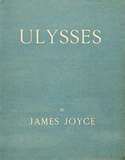
  • The so-called rambling prose wasn’t just echoing true-to-life conversations and speech patterns; it was also referring to the stream-of-consciousness narrative of modernist novels.  One of the books he read that influenced his writing style was James Joyce’s Ulysses, an experimental novel that employed stream of consciousness.  In fact, you know that famous quote from On the Road about the roman candles?  The one that goes:

… but burn, burn, burn like fabulous yellow roman candles exploding like spiders across the stars and in the middle you see the blue centerlight pop and everybody goes “Awww!”

Well, compare it to this line from Ulysses:

…O! then the Roman candle burst and it was like a sigh of O! and everyone cried O! O! in raptures and it gushed out of it a stream of rain gold hair threads and they shed and ah! they were all greeny dewy stars falling with golden, O so lovely, O, soft, sweet, soft!

  • Kerouac read voraciously.  He read the Greek Classics, comic books, the Russian masters, westerns, the bible, and history books.  In his journals, he refers to these works, evidence of his thoughtful contemplation of what he read.  These works influenced both the content and prose style of his own writing.
  • In addition to books, Kerouac’s writing was deeply influence by music.  If you read his work aloud or dissect his sentence structure, you can hear the bebop rhythm of his prose.  He and his musician friend David Amram used to improvise jazz-poetry readings together, creating it spontaneously, on the spot.  This is a lot harder than it sounds.  You have to really have a firm grasp on chord progression, rhythm, rhyme, and language—all while taking cues from someone else who is also improvising.

Sometimes works that seem effortless are the hardest ones of all to create.


Burning Furiously Beautiful: The True Story of Jack Kerouac’s On the Road discusses in more detail Kerouac’s literary development.

14 Road Trip Movies for Every Personality

17 Aug

When I was an arts & entertainment editor for an indie paper in LA county, I used to work a lot with the big Hollywood studios to promote their films.  At the time, the American Pie franchise was all the rage, and the PR execs in Hollywood contacted me about coordinating a free screening for my readers of the similarly raunchy teen comedy Road Trip.  Not exactly the highest form of entertainment, but it just went to prove that there’s a road trip movie for everyone.

As I’ve been working with Paul Maher Jr. on Burning Furiously Beautiful: The True Story of Jack Kerouac’s On the Road, I’ve been thinking about the upcoming film of On the Road and wondering who it will appeal to.  Will it be the die-hard Beat fans that pilgrimage out to Lowell Celebrates Kerouac?  Will it be a new crop of hipsters in the making?  Will it be a bunch of fanged teenyboppers brought in by Twilight’sKristen Stewart, who’s playing LuAnne?  Will it be the social justice league brought in by Walter Salles, of The Motorcycle Diaries?

For the wine lover: Sideways

For the BFFs (emphasis on the last F): Thelma & Louise

For the quirky, dysfunctional family: Little Miss Sunshine

For remembering your own family road trips gone awry: National Lampoon’s Vacation

For brothers: The Darjeeling Limited

For the beer-lovin’, truck-drivin’, betting type: Smokey and the Bandit

For the hippie: Easy Rider

rc=”http://www.youtube.com/embed/UjlxqANj68U&#8221; frameborder=”0″ allowfullscreen></iframe>

For the revolutionary: The Motorcycle Diaries

For the reader who shuns conventional life and his family: Into the Wild

For the scamming father-daughter team: Paper Moon

For fashionable gangsters in love: Bonnie and Clyde

For bored, hormonal teens whose girlfriends are on vacation: Y Tu Mama Tambien

For quirky con artists and an heiress who like their trips European: The Brothers Bloom

For the spoiled heiress and the desperate journalist: It Happened One Night

There are so many other road trip movies.  Which are your favorites?

Clip: On the Highway of Love, Jack Kerouac Divides Men and Women

16 Aug

The Millions published my essay “On the Highway of Love, Jack Kerouac Divides Men and Women.”

The article made the headline in the Page-Turner section of The New Yorker.

It also made it into the On the Shelf section of The Paris Review.

The article was mentioned in The Atlantic Wire.

Poets & Writers mentioned the article in their Daily News on 8/14/12 … and then again on 8/15/12 to note the response the article has gotten.

That second P&W write up was mentioning Slate‘s response.

Jezebel also devoted a whole article to my article.

Guy Librarian referenced the discussion.

The article was also mentioned on The Daily Beast.

The Huffington Post added commentary to the discussion.

8/19/12; 8/22/12: This post was updated to include additional mentions.

Photos from Reading at Sidewalk Cafe

15 Aug

I had so much fun reading at poet RA Araya’s birthday bash at the Sidewalk Cafe this past Sunday!! RA was such a great host and is so encouraging.  There were so many amazingly talented poets and musicians there.  I felt so honored to get to read with them.

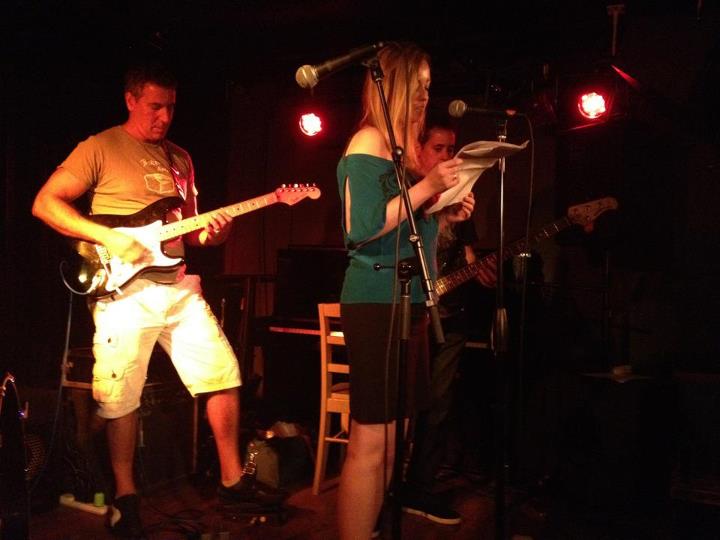
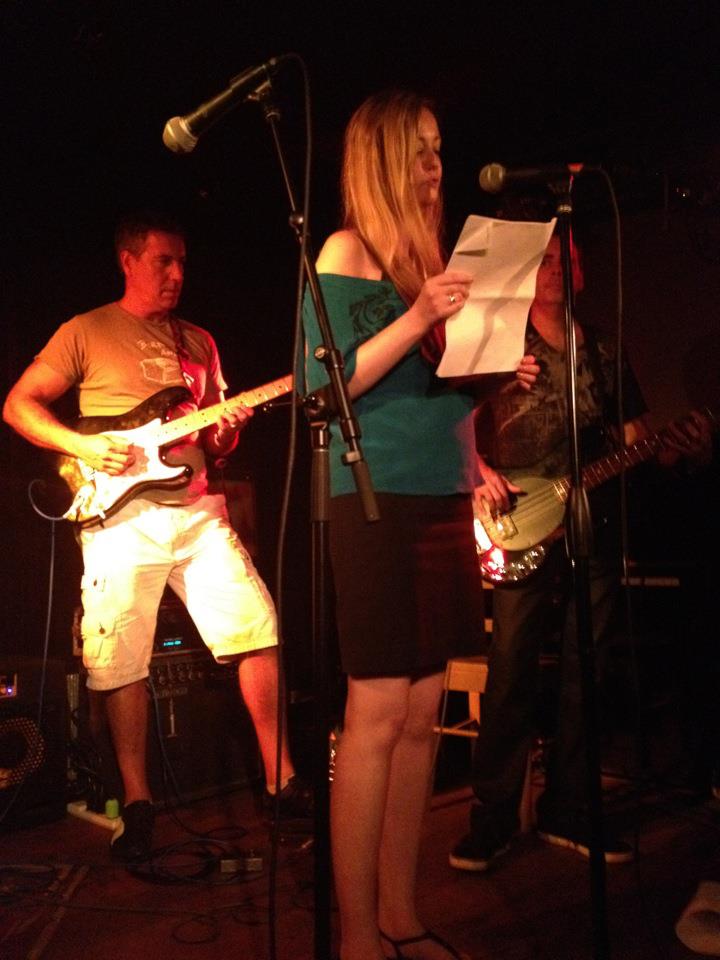
I started off reading the beginning of Homer’s The Odyssey in Ancient Greek (bringing awareness to Greece’s cultural heritage as well as the plight of endangered languages) and then read a section from Burning Furiously Beautiful: The True Story of Jack Kerouac’s On the Road, the book that I’m coauthoring with Paul Maher Jr., while the flashbackpuppy band improvised a jazzy tune.

Here are some pictures RA took.


That’s me sitting next to poet Juan Valenzuela.  In the foreground is poet Miguel Algarin, who co-founded the Nuyorican Poets Cafe and knew Jack Kerouac back in the day.

Special thanks to my friends, who came out to support me.

Bullies and Beauty and Beatitudes

13 Aug

“Bullied teen gets plastic surgery” ran the headline on Yahoo.  The accompanying photo showed a typical teen girl.  I clicked on the link to hear her story.  What had she looked like before the surgery?

As it turned out, that photo was the before photo.  My heart broke.

No, she didn’t look like a supermodel—but how many fourteen year olds do?  She looked like a cute little girl.  The type who in a few years would come into her own, but for now was just a typical adolescent.  Maybe in a year or two she’d start tweezing her eyebrows and wearing a little mascara, but at the moment she looked age appropriate and the only thing missing was a smile!  Oh, that little girl.  I recognized the sadness in her eyes.

It brought tears to my own eyes, bringing me back to my own awkward adolescent years.  I didn’t look all that different than that girl.  Judging from some old photos I have lying around, I may have looked worse.  I had tiny ears, but I felt like they stuck out.  I had terribly crooked teeth and had a full mouth of braces.  I was growing out a perm that never had curl or wave—only frizz.  I was skinny.  Not an attractive skinny.  The type of skinny that prompted the doctor to tell me to gain weight.  The list of insecurities went on and on.  Just like this little girl, I was picked on.  I spent many nights crying myself to sleep.

I’m not going to lie.  I still feel scarred from those years.  Getting bullied, feeling ugly, feeling trapped, it’s the worst.  But you know what?  It really does get better.  Maybe not right away.  And maybe you never forget those feelings, but you can move on, and those things that hurt you in the past hopefully make you a stronger person and also a nicer, more compassionate person.  You also discover that beauty is complex and strange and wild.

The doctor who did this little girl’s surgery said in the article, “She was picked for her surgery because of her deformities.”  Looking at the photograph, I don’t see any deformities.  The surgeon pinned her ears back and worked on her chin and nose, according to the article.  Maybe there’s something I’m not seeing in the before photo, but as far as I can tell she’s not “perfect” looking (who is??) but she certainly doesn’t have deformities.

I’m happy the girl who had the surgery is pleased with the outcome.  I’m not anti-plastic surgery.  If at an appropriate age someone wants to have plastic surgery that’s their prerogative.  But there’s a lot you can do without resorting to plastic surgery.  I do believe looks matter.  If your hair is messy, your roots are grown out, and you dress in ill-fitting, wrinkled clothes, it looks like you have little confidence in yourself, and chances are you’ll probably be treated according to way you present yourself.  I’m a sucker for makeover shows.  I cry almost every time I watch someone on TV get a makeover.  Because it’s not just about your looks—it’s about how you feel.  There’s so much you can do with just a little makeup and learning to dress to your body shape.  One of my favorites is What Not to Wear because they stress that you don’t have to lose weight to look great.

Supermodel Tyra Banks has talked for years about the fact that she herself has a big forehead.  Last month she even challenged people to a big forehead contest.  Over the years, she’s encouraged women to work what they got, telling them that those parts of their bodies that they may think are ugly may in fact be the very thing that makes them unique and interesting and beautiful.  Maybe there are aspects of your looks that truly aren’t desirable but those “flaws”—or “deformities”—should still be celebrated.

Tyra Banks told US Weekly:

This is who I am! I’m Tyra Banks and I have cellulite! That makes me ‘flawsome’ because I own it as part of what makes me unique. Don’t get me wrong: I don’t think my cellulite is beautiful, but I think it’s ‘flawsome.’

My blog caption is “Embracing the Beatific.”  When I was thinking about what my blog is about I knew that, although it’s not exclusively what I blog on, I write a lot about the Beat Generation.  Jack Kerouac said that the word “beat” came from the Beatitudes of the bible.

I realized the Beatitudes expressed my viewpoint.  Life isn’t always what it seems.  The meek will inherit the earth.  The poor in spirit will find a kingdom in heaven. Those who cry now will find happiness later.

Beauty is in the imperfect.


Here are some bullying resources and reading material:::

Dear Bully: 70 Authors Tell Their Stories

the column “Interview with My Bully” on Salon.

stopbullying.gov

It Gets Better

Bible verses on confidence

Workplace Bullying Institute


Exclusive Interview with J. Haeske, Author of Retracing Jack Kerouac

7 Aug

Jack Kerouac is the type of author who inspires pilgrimages. People don’t just read his novels. They endeavor to live his novels. And because much of Kerouac’s work is based on actual places, it’s easy for fans to track down not just his birth home and the bars he wrote in but the very places he describes in his books. J. Haeske did just that. He traveled around the country, visiting places that Kerouac visited, photographing places Kerouac described with words. He records these literary landmarks on his blog, Retracing Jack Kerouac. Each blog entry offers a photograph and some background information to situate the reader. Haeske is currently writing a book based on the material from the blog, entitled Anywhere Road.  Below is my exclusive interview with Haeske, which is interesting for those who are fans of the Beat Generation writers, those with wanderlust, and writers interested in going from blog to book.


Photo via J. Haeske


How did you first become interested in Jack Kerouac?

I believe it was a friend recommending On the Road (what else?) to me about 20 years ago. The main attraction in the beginning I suppose was the description of travel and seeing the US, its landscapes, cities and people, that made the book so fascinating to me. I come from Europe, so an US road trip is appealing as it is so different landscape- and place-wise from what we are used to over here, and of course all the films, songs and books you see, hear and read. The notion of traveling somewhat apart from the usual tourist routes and in a unsual kind of way as portrayed in the book held a special appeal to me, as I guess it held and still holds to most people that care about the book.

What made you decide to physically go on the road and retrace Kerouac’s steps?

As I said in the previous question, a road trip through the US seemed a fascinating idea for a long time, but it took me until 2009 (you know how life is) to decide to finally undertake the trip. The catalyst was actually the record One Fast Move Or I’m Gone (as part of the DVD/CD project by the same name from Kerouac Films) by Jay Farrar and Benjamin Gibbard. When I first listened to the song “California Zephyr,” describing the train journey from New York to San Francisco, it clicked. I knew that the time was ripe to do it, and I set about planning the trip I did take in October of 2010. So you could say it was 20+ years in the making. I also knew that I had to do something a bit more with the photos I would be taking then just load them up onto Flickr, so I came up with the idea of the blog and book. I also like to see both as my own small contribution to work related to Kerouac, as I haven’t had the chance to gather and add any new and first-hand information to all the information about his life that are out there already (and still appearing in books such as yours).

You began your first trip in 2010.  Where did you go, and how long were you on the road for?

I only had 3 weeks for that trip, so I had to leave out a lot of places I ideally would have liked to visit. My first stop was San Francisco and I planned on checking out places I was aware of at that point, such as North Beach, 29 Russell Street and the old Six Gallery. Fortunately I went to the City Lights bookstore on my first day and discovered Bill Morgan’s invaluable guides The Beat Generation in San Francisco and The Beat Generation in New York, so I got to know of many more locations in both cities (not to mention the fantastic time I had in that magic place; it felt overwhelming to sit upstairs in the poetry room reading for a few hours). From San Francisco I took the California Zephyr train to Denver, where I spent a few days, mostly wandering up and down Market, Larimer and Wazee streets in what is now called LoDo. From all I read and saw, I have to say that the area looks much different than what it must have looked like in the 1940s and ’50s, so I didn’t find any of the pool halls and bars Kerouac wrote about in books such as Visions of Cody. Fortunately Union Station apparently looks pretty much the same as the time Kerouac dropped off his mum there when she got on the train back east after his failed 1949 attempt to make a home for them in Denver. I then took another Zephyr train to Omaha, a city which didn’t actually play a big part in Kerouac’s life and is only mentioned a few times in his books, but I went there anyway and found it to be very much (with my limited experience) a typical Midwest city, so it was definitely worth going there. Due to time constraints I took a plane (rather then a train) from Omaha over to Boston and from there a commuter train to Jack’s hometown Lowell, where I also spent a few days. I probably should have stayed longer, and I also wasn’t aware then of quite a few houses he lived in, so another visit to Lowell in the future is due. From Lowell I took another train down to New York where I, again with Bill Morgan’s books’ help, checked out and photographed some more places, such as the area around the Columbia University campus.

Since then, how many other trips have you taken to retrace Kerouac’s travels?

I only undertook one other trip so far, to New York, in March of this year. Although that was a rather short trip, it proved to be very worthwhile, as I got to go to Northport were he spent a number of years in the late 1950s/early 1960s, as usual living with his mum. Compared to the early 1940s he was by that time home much more often and mainly went into New York for business meetings or to go on parties. I found Northport to be very charming and a lovely place, no wonder they stayed there for that long. This being Kerouac, he was of course always planning on moving to various other places, such as cabins in upstate New York or closer to his hometown Lowell, and Florida, where they moved to eventually, after another brief stay in Lowell, when he was married to Stella Sampas.

But there are still quite a few more places I will have to check out at some point: the house he lived in for 3 months in 1949 in Denver and Central City for example, all the places in Florida and North Carolina he and his family lived in, as well the area around San Francisco, such as Bixby Canyon and Marin County and a few others.

How do you think traveling cross country has changed from Kerouac’s time in the 1940s and ’50s to the present day?

Of course most people travel by plane nowadays, which is a shame in my opinion and that’s why I prefer to take trains, simply because it allows you to “read the landscape” as Kerouac loved to do himself. I do not think that it really is a good idea to sleep on the hood of your car in the middle of Mexico nowadays, as Sal, Cody and Marylou did in On the Road. I guess hitchhiking is much more cumbersome nowadays, and I’m not even sure if riding freight trains is even possible anymore nowadays with all the security measures and stuff, but Kerouac has been complaining about this as early as the 1950s.

What did you learn about travel from Kerouac?

I have to admit that my method of traveling is rather boring compared to the trips described in On the Road: no long drives from North Carolina to New York in one go with a wild gang and all that. That said, I will be trying out riding a Greyhound bus on my next US trip, just to find out what that is like, although I can’t imagine I will be enyoing that very much. I also try to be more open-minded when traveling, (I am a bit of a control-freak and tend to plan my travels rather thoroughly). And I try to speak to people I meet more nowadays, which is a something of a challenge for me, as I am rather shy and introverted – so I guess you could say the last two things I mentioned are what Kerouac has told me about travel. Perhaps most importantly though is the urge to actually want to go and see the world as much as I can. Kerouac definitely infected me with the travel bug. I also have to add that the aspect of “reading the landscape” and getting to know places I see has always been the most fascinating aspect of his works On the Road and Lonesome Traveler. I’ve never been all that much into all the drugs and “wild” times Kerouac, Cassady, Ginsberg and Huncke had, as colorful and intriguing that is to read about, it’s just a bit too destructive for me. I guess I’m too normal/boring for that.

What were some of your own memorable experiences from your time on the road?

There are so many I can think of–the whole trip has definitely been the best one I ever undertook so far in my life. The train journey from San Francisco to Denver especially was the most overwhelming travel experience yet, so this is not easy to answer. But If I have to choose one it would be the lucky break I had in Lowell. I was standing in front and taking photographs of his birthplace on Lupine Road, when this pickup drove up and these two guys got out asking me if I was a Kerouac fan. When I told them yes, they asked if I wanted to come inside and have a look around. One of them was the current owner and they were in the process of renovating the apartment before renting it out again, so I had the chance to stand in the room he was apparently born in and check out all the other rooms too – the apartment looked pretty old-fashioned so it is possible (although not very likely, so it’s probably just wishful thinking) that bits in it were there when he was born there in 1922 (maybe the chandelier in the main room, that looked very old). Unfortunately, I was too shy to ask if I could take some photographs from the inside of the apartment, which is my biggest regret about the trip.

The other outstanding experience was my visit to the Kerouac archive at the Berg Collection of the New York Public Library in March this year. Browsing through some of his old family photographs, his correspondence and the travel maps he used was fascinating. I especially loved the hand-drawn map of the US on which he marked the places and cities that were playing a part in On the Road and a short snippet of a draft of the opening paragraph on the back.

The book you’re working on will contain the photographs you’ve taken while visiting places Kerouac has been.  Will it be a photography book or are photos just a portion of your book?

It will to a very large part be comprised of photographs with only a short introduction and an index listing places and/or explaining the reasons for including the photographs I chose, just to give a bit of context. I don’t really feel comfortable enough as a writer to include more text and describing my experiences, so yes it will mainly be a photography book.

What do you think of the Beat photography—for example, work by Fred McDarrah, Robert Frank, and of course Allen Ginsberg—that exists? 

I have to admit that I so far only had the chance to get Allen Ginsberg’s Beat Memories. I am still trying to get hold  a copy of Robert Frank’s The Americans and don’t really know much of Fred McDarrah’s work, so I can’t really comment about those two in detail, especially the latter. However, I like Ginsberg’s photography work a lot. Of course it’s a whole different aesthetic to the photos I take, and he was mainly photographing people, which I don’t really do, but I like the grainy black-and-white style of those photos a great deal. But incidentally my favorite Kerouac photograph is the one taken by Allen Ginsberg on the fire escape of his partment at 206 East 7th Street in the East Village. He also took the saddest one of Kerouac in 1964 in Ginsberg’s apartment at 704 East 5th Street, in which Kerouac at 42 looks about 65 years old, slumped in a chair and marked by his alcoholism – heartbreaking.

What are the top 3 places fans of Kerouac should visit?

  • One can’t really do without Lowell. I especially enjoyed the Centralville part of the town, as I believe it is probably the area that has changed the least since then, whereas, as far as I can tell, the Pawtucketville area has been transformed quite considerably, mainly by all the UMASS buildings.
  • San Francisco, simply because it is such a great city with all that lovely architecture and gorgeous landscape around it. As much as I felt a bit freaked out wandering down Market Street and the rest of the Tenderloin, the image of the (now sadly gone) “redbrick area behind the SP (Southern Pacific) station” and the bum hanging around there is still one of the most memorable images in my mind when it comes to Kerouac’s work.
  • In and around New York: The Columbia University campus, mainly because it played such an important role in his life and brought together the Beat Generation main players. Also the houses in various parts of Queens, such as the one on Cross Bay Blvd in Ozone Park, where the family lived for a few years and in which his dad died. Also the three houses in Northport – as I mentioned before, it’s a lovely little town and the houses he lived in there look very nice and New England-ish, and as such hard for me to understand why he wanted to leave it for a place like Florida, especially considering he couldn’t stand the heat (much as I can’t). I know it was mainly for wanting to escape all the attention in and around New York he’s been getting after the publication of On the Road, but as it turned out, the move didn’t actually prevent his unfortunate and sad early decline.

For more on Retracing Jack Kerouac and Anywhere Road, visit J. Haeske’s blog.

Save the Date! I’m reading at Sidewalk Cafe on August 12

1 Aug

Image via the event’s Facebook invitation

Poet RA Araya invited me to read from Burning Furiously Beautiful: The True Story of Jack Kerouac’s On the Road, the book I’m coauthoring with esteemed biographer Paul Maher Jr.  It’s going to be an AWESOME event!  I’m so honored to have been invited to read as part of R’s birthday jam.

Get a load of this line up:::

RA’s Music Poetry Jam Celebration… FREE ADMISSION Sunday August 12th 5PM-9PM

Featuring:
Cabaret singer Marissa Mulder and pianist composer Mr Bill Sefiro

… Foamola to perform

Opera gospel singer Virdell Williams

Tango singer Steve

Poets Patricia Spears Jones, Sparrow, Puma Perl, Kate Levin, Sarah Sarai, birthday-oh-boy RA “R!” Araya and the German poetry of Hillary Keel

Stephanie Nikolopoulos will read, as the f-b-p band plays, from her upcoming co-authored biography about Jack Kerouac: Burning Furiously Beautiful

RA’s Flashbackpuppy band featuring bassist singer Jon Martinez and guitarist singer composer Peter Becket

With poet Mia Hansford via telephone

MORE PERFORMERS TO BE ADDED AND YET CONFIRMED

Plus invited performers from the audience

Free Admission, one drink minimum

http://www.sidewalkny.com/

It’s my b-day celebration… With artists friends at a nice hip restaurant bar with a stage in the back room, free admission with a one drink or coffee minimum… ’tis to be a sweet four hour event, come and go and come back for more on a Sunday that’s surely be filled with fine seasoned performers… Open-mic with band backing yer poetry or and music… Don’t bring a present, bring a poem 🙂 -R!

Seriously, seriously excited about reading while Flashbackpuppy plays and hearing all the other amazing poets and performers.  This also will be my debut reading from Burning Furiously Beautiful.

Judging On the Road by Its Covers

30 Jul

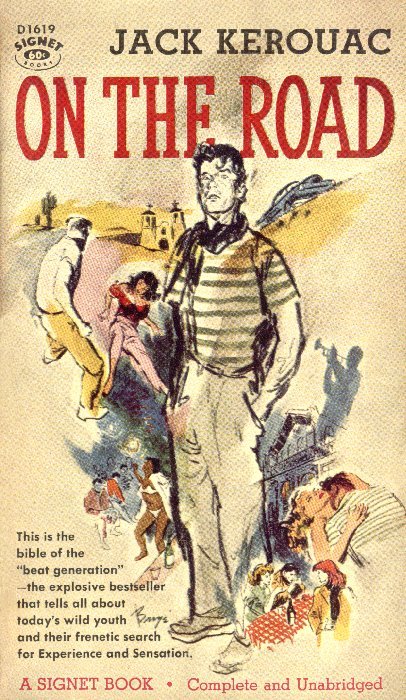
Okay, by now you’ve probably heard about the six year old who guesses what classic novels are about based on their covers, but I can’t resist rehashing her cute take on this early On the Road cover:


 “I think it’s about a car. A car that goes to Mexico, Indonesia and other places. It’s about a car that goes on all sorts of adventures. The guy on the cover is a teen, he likes to drive people places a lot. And he’s French.”

The cover she was looking at was the Signet 1958 edition.  I love that she guesses that the book is an adventure in many places and correctly guesses Mexico is one of them.

The fact that she guesses the main character is French is so perfect.  Of course, her guess is based on the drawing of a man in a Parisian-inspired striped shirt and scarf, which probably anyone would guess means the character is French.

Kerouac indeed was the son of French Canadian immigrants, but the kicker is that he’s usually thought of as either being very American or being anti-American.  In the 1960s, beatniks were depicted as wearing black turtlenecks and berets. In reality, Kerouac didn’t wear a costume of striped shirts or black turtlenecks.  If you look at most pictures of him, his clothes are nondescript.  He wore a lot of t-shirts and flannel and overcoats.

That’s why it’s so fascinating to look at the 1958 edition from a historical perspective on the evolution of Kerouac’s image.  As they’d do with any author, the publishing house tried to brand Kerouac.  In 1958, the striped shirt and scarf flung over his shoulder imparted a worldly, European air, meant to invoke a bohemian vibe.


The only other edition published before that was the Viking 1957 edition.  Of course, if you know about book publishing, you already know that Signet and Viking are both imprints of Penguin.  The difference between these two covers, though, is starting.  The cover of the first edition of On the Road, the Viking 1957 edition, was all black with a small rectangular abstract image in the center.  Bouncing text announced the title.  There was no image of a person or a car at all.  And yet the book sold so well that by the next year when the Signet edition came out, the cartoony line drawing cover featured the ringing endorsement “This is the bible of the ‘beat generation.’”

It should be noted that this Singet cover not only featured the Frenchman, but in the background there was a woman in a bikini and a couple making out.  Again, the publisher was trying to brand On the Road in a very specific way.  The third incarnation of the cover design for the US edition of On the Road came in 1965 when the extraneous people were deleted from the design and just the Frenchman was left standing on his lonesome, without even a car.  It lacked sex appeal, but someone must’ve liked it because two years later all the publisher did was switch from a cream colored background to a white background.  The following year, 1968, saw a cover design of a cartoony couple embracing in a car.  It marked a return to the sex theme.


Since then, the book has undergone many significant cover design changes, but what’s so interesting is that from the 1970s to the ‘90s the covers did not feature people at all.  They returned to the more metaphorical design of the first edition, featuring variations of the sun or a car.  It’s also worth noting that this was the time period in which Jack Kerouac fell out of popularity.

It wasn’t until Penguin released the 1991 paperback that the cover design included a people again.  And this is where it gets really interesting.  The romance angle is completely dropped and has not been seen in any US cover since the Signet 1968 edition.  Now, the focus becomes about friendship—a bromance, if you will—and cool hipsters hanging out in gritty New York.  The cover of the 1991 edition is a photograph of Jack Kerouac and Neal Cassady, the real life inspiration for the main characters of the novel.  The Penguin 1994 edition a collage of photos of Kerouac and his friends.  The US doesn’t see another woman on the cover until the Penguin 2011 amplified edition, which again embraces the photographic collage style.


Other covers published between the ‘70s and today tended to be text only, feature landscape (with or without a car), or a picture of the lone traveler.  They tend to be spectacularly uninspired and ugly.

In Germany and France, where the film version of On the Road has already been released in theatres, there are new editions with covers boasting the poster image for the film.  Will we be seeing a US edition with the actors’ faces instead of Kerouac’s on the cover?

Which cover inspires you to read On the Road?

Road Trip Writing: On the Road and “Human Snowball”

26 Jul

Many summers ago, a couple of poets and I dragged some rickety chairs outside of the Bowery Poetry Club and sat in a circle, chatting about our writing, our day jobs, and life, as people passed by, sometimes stopping to talk to us. One of the girls in the group worked at a publishing house, like I did, and she offered to send us some of the books everyone in her office was buzzing about. About a week later, the package arrived, and I excitedly opened it. It’s been too many years to recall all that was in it, but I do remember it contained a book by Philipppa Gregory, which I in turn gave to another coworker because I have little patience for historical novels about the Tudor period—although I later saw her The Other Boleyn Girl on an airplane and enjoyed it—and Found.

Found started as a magazine that showcased notes, lists, drawings, and other miscellanea that readers found and sent in to the editors. In April 2004, they compiled the best of the best from the magazine and published the book Found: The Best Lost, Tossed, and Forgotten Items from Around the World. Having the book upped my coolness factor among the skinny hipster set I was hanging with at the time, and I began dating one of the guys. When Found’s founder, Davy Rothbart, published a short story collection called The Lone Surfer of Montana, Kansas, in 2005, I gave it to the guy I was dating.

I never read the book myself, but recently I read one of Rothbart’s short stories in the summer 2012 issue of The Paris Review, and it made me wonder if Rothbart might be my generation’s Jack Kerouac. While Rothbart lacks Kerouac’s poetry, they share an ear for dialogue, a captivating retelling of riding in buses and cars, an obsession with music, and an awkwardness with girls. In the short nonfiction story “Human Snowball,” Rothbart takes a Greyhound from Detroit to Buffalo to see a girl who isn’t quite his girlfriend yet or maybe ever and ends up in a carful of eccentric characters, including an ancient black man and a Neal Cassady-esque car thief. It may not have the sensory details that On the Road has, but “Human Snowball” captures characters with such honest and real details and dialogue that you feel like you know them. They’re beat characters. A little rough-around-the-edges, but sensitive and full of life.

In a bit of a Kerouac connection, actor Steve Buscemi, who stars in the film adaptation of On the Road, optioned the rights for Rothbart’s The Lone Surfer of Montana, Kansas. Rothbart himself is a chronic roadtripper. He’s traveled the country and toured with the punk rock band Rise Against, creating the documentary How We Survive for the dvd Generation Lost as well as the documetnary Another Station: Another Mile.

Parallel Generations

19 Jul

Why is Hollywood taking an interest in the Lost Generation and the Beat Generation?  Are there parallels between the generations of the past and today’s generations?  Is history cyclical?

From a historic standpoint, it makes sense that today’s generations are looking back at the Lost Generation and the Beat Generation.  Like the Lost Generation, the current generation has experienced war.  Although the Lost Generation predates the Great Depression by a few years, novels such as The Great Gatsby have much to say about the disparity of wealth, a topic that this generation has dealt with during the Great Recession.  Part of the seedy wealth distribution of the ‘20s had to do with bootlegging.  Prohibition may not be something today’s candidates have on the table, but there’s a definite right-wing conservatism bent influencing culture today.

The Beat Generation writers were those who were born around the time of the Great Depression and came of age during World War II.  Kerouac and John Clellon Holmes actually were thinking of the Lost Generation when they came up with the idea that they were the Beat Generation.  The obvious parallels between the two generations being the world wars.  While the Lost Generation was going into the Great Depression, the Beat Generation was coming out of it, and so while the Lost Generation was more about decadence the Beat Generation was more about simplicity.  Perhaps, then, today’s older generation is looking toward the Lost Generation and the younger generation looking towards the Beat Generation for confirmation on the way we live our lives.

After all, generations have followed suit in this pattern of economy and war since these generations.  The Baby Boomers were all about the money, and then Generation X was the slacker generation.

Since then we’ve seen Generation Y, also known as the Millennials or Generation Next, who are often thought of as privileged Trophy Kids.  These are the eighties babies (give or take) that are now in their twenties, a few even in their thirties.

Generations X and Y heard Reality Bites, My So-Called Life, and Fight Club tell us our great war was within ourselves.  –And then the terrorist attacks took place on 9/11.  It was around that time that Generation Y turned to indie music, the locavore movement, and reviving arts and crafts.

After that came Generation Z, or Generation I, the kids born in the ‘90s, for whom the Internet, the War on Terror, and the Great Recession are a way of life.  Generations Y and Z are the i-generation, each having their own personal computers, finding fame on blogs and in social media, the generation that is connected and disconnected.  They began looking back at Generation X, wearing flannel.  Miley Cyrus was photographed wearing a Nirvana t-shirt.

The Pew Research Center has a fascinating report that charts the different Generations’ attitudes toward politics, religion, immigration, marriage, and more.

Technology is developing at a faster and faster rate, and with it, generations are shortening and multiplying.  When you think about it, iphones models are even called by their generation, as in the second generation iphone, acknowledging how much generations are defined by technology, as well as money and politics.  Therefore, it’s easy to see how certain generations blend together, which may also be a result, as the Pew Research Center data seems to suggest, of the delayed adulthood.

What generation do you identify with?