Tag Archives: On the Road

Neal Cassady’s Birthday Bash!

7 Feb

Neal

Denver is celebrating Neal Cassady’s birthday (which is tomorrow) tonight! Cassady is, of course, the real life inspiration behind Dean Moriarty in Jack Kerouac’s On the Road, lived with The Grateful Dead for a short time, and drove the bus Further.

His children, Cathy, Jami, and John Allen, will be at Mercury Cafe to celebrate their father and mother’s legacy. David Amram will set the tone for the evening with his vivacious jazz.

Here’s what Brown Paper Bag, where you can purchase tickets (only 20 bucks!), has to say about the event:

5th Annual Neal Cassady Birthday Bash
February 7, 2014
8:00pm
Mercury Cafe 2199 California St.  DENVER!
*A full set of jazz from: the David Amram Quartet.
*Tribute to their late mother Carolyn by: Cathy, Jami and John Allen Cassady
*Poetry, music, reefer and revolution from: John Sinclair and the Blues Scholars
*Also: Readings, reminiscences and more on what would have been the 88th birthday of Denver’s self described, “unnatural son” Neal Cassady.

I want to go so badly! Anyone want to buy me a plane ticket?!


Who Is Rollo Greb in “On the Road”?

6 Feb

contact

Some names are practically synonymous with Jack Kerouac’s On the Road: Dean Moriarty/Neal Cassady, Old Bull Lee/William S. Burroughs, and Carlo Marx/Allen Ginsberg, for sure.

But what about Rollo Greb? Who was he?

The character Rollo Greb in On the Road was based on Alan Ansen. Kerouac renamed him in other books. He was Irwin Swenson in Visions of Cody and Book of Dreams, Austin Bromberg in Big Sur, and Amadeus Baroque (love that name!) in Doctor Sax. Burroughs called him AJ in Naked Lunch and Port of Saints. Gregory Corso named him Dad Deform in American Express. (See Beat Book Covers’ excellent character key.)

But who was he in real life?

Born on January 23, 1922, and raised on Long Island, Ansen attended Harvard University, which incidentally was also William S. Burroughs’ alma mater.

After college and back in New York City, in 1948, Ansen became a research assistant/secretary to W. H. Auden. The English poet had come over to the US with author Christopher Isherwood (The Berlin Stories) in the first month of 1939. Auden dedicated his 1950 book of lectures The Enchafèd Flood to Ansen. Based on the notes he took while working with the poet, Ansen published Table Talk of W. H. Auden. Here’s the write up on Amazon:

In New York, between 1946 and 1948, the scholar and poet Alan Ansen made rapid notes of Auden’s inimitable conversation. This book is a record of Auden’s private, offhand and sometimes wayward remarks and opinions about art, literature, music, politics, religion and sexuality.


Sounds like a must read! I’m adding it to my Goodreads list.

By the time Ansen was working for Auden, Kerouac was already in the early stages of the work that would become On the Road. Poet Ted Joans went so far as to say:

Without Alan Ansen there would be no William Burroughs.

Ansen himself went on to become a poet and playwright, but never reached the same heights of fame that his mentor and Beat contemporaries did.

If you’re looking to read one of Ansen’s works, Contact High is a good place to start. Here’s the copy from Barnes & Noble:

“Alan Ansen’s first book,” James Merrill has noted, “Disorderly Houses (1961), dedicated to both W. H. Auden and William Burroughs, was also his last to be published commercially. Since then this prolific and unpredictable poet’s work has been available only in editions of his own devising, distributed to friends at his own caprice. As one of the happy few, I can report that his gifts remain as brightly unnerving as ever.”
Though perhaps best known as the model for some of the most flamboyant characters in Beat fiction (Rollo Greb in Kerouac’s On the Road, A. J. in Burroughs’s Naked Lunch, Dad Deform in Corso’s American Express) and as Auden’s secretary (he helped Auden with the syllabification of The Age of Anxiety), Alan Ansen is an accomplished poet in his own right. Having affinities with both the Beats and the New York school of poets, Ansen fuses Beat sensibility with formalist rigor. Contact Highs is the first comprehensive collection of his poetry, and includes a biographical introduction, an afterword by poet Rachel Hadas, and a bibliography of Ansen’s elusive works.

“Alan Ansen occupies a specialized evolutionary niche in twentieth-century letters, and his poetry has unjustly been too long obscured by its unfashionable classicism and its author’s self-effacing stance towards a poetic career. His writings achieve the scarcely possible: transmuting existence into life.” (William Burroughs)

“Ansen is the most delicate hippopotamus of poets with his monstrous classical versifications—he gets conversational fatness ‘into stricter order’ by use of weird echosyllabics, polyphony, strict rhymeless pindarics, self-annihilating sestinas, mono-amphisbaenic and echo rhyme, skeltonics, versicles & alcaics coherent Palindromes & such like master eccentricities—a hangup on Forms which interestingly pushes academic models beyond polite limits into the area of lunatic personal genius—This is an amazing book, with many sad poems.” (Allen Ginsberg)

“Whatever the styles, the cadences are powerfully relentless and informed by an intellectual complexity rare today. As witty as O’Hara, Ansen also plunges into the depths of the human condition. This may be one of the more significant poetry publications of the decade; four stars.” (Library Journal)

“[Contact Highs] careens in voice from a tone of bravado—an unwavering insistence on seeing the universe in all its mockery and injustice—to one of unabashed tenderness. And such conflict implies the poetry’s central tension: a desire to be immersed in life’s drama, rather than merely to judge it. Ansen . . . is a vivid creator of worlds with words, but never too sober in his verbal wizardry. Sly and wild in the manner of Gregory Corso or Allen Ginsberg, the poet marries exultant anarchy to traditional forms. Dismissing ‘shameless lyrists’ who ‘warble their hearts’ content,’ like an ‘eerie oddity’ Ansen ‘retails his uniqueness’ with some bitterness but more brio, and many readers will be grateful.” (Publishers Weekly 10-20-89)

“Ansen’s poetry . . . joins Apollonian reserve and formal skill to Dionysiac drug taking and homoeroticism. Between those poles, however, he creates a space of truly living poetry. Recommended.” (Booklist 10-1-89)

“Beautifully wrought formal (though outrageous) verses. . . . His poems speak for themselves, combining playfulness with astonishing erudition, in the fashion of the better poets of what was in my mind ‘the Ginsberg nucleus.'” (Carl Solomon, American Book Review Nov-Dec 90)

Just goes to show you, just because the other characters in On the Road became more notorious doesn’t mean the lesser-known characters aren’t equally as fascinating.

“That Rollo Greb is the greatest, most wonderful of all. That’s what I was trying to tell you – that’s what I want to be. I want to be like him. He’s never hung-up, he goes every direction, he lets it all out, he knows time, he has nothing to do but rock back and forth. Man, he’s the end! You see, if you go like him all the time you’ll finally get it.”

~On the Road

Remembering Neal Cassady

4 Feb

“I recently heard a quote in a play, the source I forget: ‘A man’s measure is not from the amount of love he gives to others but the amount he is loved.’ I have to think about that, but Neal was/is certainly loved.”

~ Carolyn Cassady

Just a few days shy of his forty-second birthday, Neal Cassady passed away. On February 3, 1968, he left a wedding party in Mexico, where he’d taken a barbiturate known for its hypnotic effects, and began walking along the railroad tracks in San Miguel to reach the next town. Somewhere along the way, he passed out. He was found in a coma the next morning. He was taken to a hospital, but died a few hours later. The autopsy report read: “general congestion in all systems.” He was apparently cremated.

Popular imagination most readily remembers Neal Cassady as a muse, a character in novels, the man behind the wheel of the bus Further in grainy film footage. Check him out in these “Beat” novels:

  • Dean Moriarty in On the Road by Jack Kerouac
  • Dean in Jazz of the Beat Generation by Jack Kerouac
  • Cody Pomeray in Visions of Cody by Jack Kerouac
  • Cody Pomeray in Book of Dreams by Jack Kerouac
  • Cody Pomeray in Desolation Angels by Jack Kerouac
  • Cody Pomeray in Book of Sketches by Jack Kerouac
  • Neal Pomeray in Neal and the Three Stooges by Jack Kerouac
  • Leroy in The Subterraneans by Jack Kerouac
  • Hart Kennedy in Go by John Clellon Holmes

Ken Kesey, Hunter S. Thompson, and The Grateful Dead also wrote about their experiences with Cassady.

Jack Kerouac’s First Novel Translated in Persian, and It’s Not “On the Road”

3 Feb

dharma

More than fifty years after he rose to literary stardom in America, a novel by Jack Kerouac is being published in Persian for the first time, according to Iran Book News Agency.

Rozaneh Publications hired Farid Qadami to translate Kerouac’s The Dharma Bums.

Apparently you can get Farsi subtitles to the film adaptation of On the Road but the novel hasn’t been translated into Persian yet.

Although this may be the first time a novel by Kerouac is being translated into Farsi, the Iran Book News Agency reported in 2010 that Kerouac’s poetry volume Book of Haikus was translated into Persian by poet Alireza Abiz, a story that David S. Wills covered for Beatdom.

In his now famous interview with Ted Berrigan published by The Paris Review, Kerouac claimed to have Persian origins:

And it’s a Cornish name, which in itself means cairnish. And according to Sherlock Holmes, it’s all Persian. Of course you know he’s not Persian. Don’t you remember in Sherlock Holmes when he went down with Dr. Watson and solved the case down in old Cornwall and he solved the case and then he said, “Watson, the needle! Watson, the needle . . .” He said, “I’ve solved this case here in Cornwall. Now I have the liberty to sit around here and decide and read books, which will prove to me . . . why the Cornish people, otherwise known as the Kernuaks, or Kerouacs, are of Persian origin.”

Here is a story about Houman Harouni translating Allen Ginsberg’s “Howl” into Farsi, which I found via the Allen Ginsberg Project.


Salon Wonders: Is “On the Road” a Classic?

3 Feb

salonOh, hey, that’s an ad for my book on Salon!

What makes a book a classic,” wonders Laura Miller in Salon.

Wouldn’t you know it, Jack Kerouac’s On the Road gets a mention, amongst works by Seamus Heaney, Kurt Vonnegut, David Foster Wallace, Daphne du Maurier, P.G. Wodehouse, Toni Morrison, J. R. R. Tolkien, and Alexandre Dumas. Miller writes:

And what about “On the Road” which to the same reader might seem like an incontestable classic at age 17 and sadly or sentimentally jejune at 45?

Her question in regard to Kerouac’s most famous novel raises some questions of its own:

  • Does our definition of “classic” change with our age?
  • Is On the Road definitively insignificant after age 45?
  • Does content matter more than literary style even for the classics?

But let’s go back to the discussion at hand for a moment to build some context. In her article, Miller points to an interesting discussion on Goodreads:

A fascinating Goodreads discussion on this topic shows participants tossing out all the most common defining characteristics of a classic book. It has stood the test of time. It is filled with eternal verities. It captures the essence and flavor of its own age and had a significant effect on that age. It has something important to say. It achieves some form of aesthetic near-perfection. It is “challenging” or innovative in some respect. Scholars and other experts endorse it and study it. It has been included in prestigious series, like the Modern Library, Penguin Classics or the Library of America, and appears on lists of great books. And last but not least, some people define a classic by highly personal criteria.

She also references an essay by an Italian journalist, translated by Patrick Creagh in 1986:

Perhaps the most eloquent consideration of this question is Italo Calvino’s essay, “Why Read the Classics?,” in which he defines a classic as “a book that has never finished saying what it has to say,” among a list of other qualities.

So does On the Road fit these contrived attributes of a classic?

  • Has On the Road stood the test of time?
  • Does On the Road hold eternal truths?
  • Does On the Road capture its era, the 1940s and ‘50s?
  • Did On the Road have a significant effect on the 1950s?
  • Does On the Road have something important to say?
  • Does On the Road achieve some form of aesthetic near-perfection? Side question: Is aesthetic near-perfection something we can define or is it subjective??
  • Is On the Road challenging? Side question: Does challenging mean from a reading-level standpoint? From a philosophical standpoint?
  • Is On the Road innovative?
  • Has On the Road been included in a prestigious literary series?
  • Has On the Road appeared on a list of great books?
  • Does On the Road fit your own personal criteria of classic?
  • Has On the Road ever finished saying what it’s had to say?

Okay, many of these can be objectively answered as “yes.” One can point to numerous sources that show that Kerouac’s road novel rocked the era in which it was published and continues to be discussed by scholars and pop culture alike today. A few seem debatable, but I would argue that anyone knowledgeable of literary history and criticism would agree—from a literary standpoint—that On the Road is innovative (read Burning Furiously Beautiful for in depth analysis of Kerouac’s literary style) and therefore challenging in both style and content. It also speaks to eternal verities (notably the search for it, for meaning) and therefore has something important to say and continues saying it afresh to new readers. The two questions that remain because they are the most subjective are:

  • Does On the Road achieve some form of aesthetic near-perfection?
  • Does On the Road fit your own personal criteria of classic?

I’d love to hear your thoughts on wrestling with these questions. Is On the Road a classic?

One thing that struck me—hard!—when I was reading Miller’s thought-provoking article is that I immediately agreed that David Foster Wallace’s work is a classic, but was put off by J. R. R. Tolkien being included. While this shows my own personal bias, if pressed I would concede that Lord of the Rings is “a classic” but not “a Classic.” It is, after all, fantasy—genre fiction. And in my mind, as in many other people’s mind, there is a distinction, a dividing line in literature. For some reason, I can concur that magical realism can fall under the category of classic but have a more difficult time with fantasy. Yet, if I hold Lord of the Rings up to the same questions as On the Road, I’m hard-pressed to deny it’s a classic. So what is a classic? What standards should we agree to when defining a work as classic? Are there classics and Classics?

And why do Lord of the Rings nerds get a free pass for liking Tolkien well into their adult years while society derides Kerouac as a novel just for teenagers??

Kerouac Pub Crawl Set in Alabama

23 Jan

WP_20131011_020a photo of a bar in Lowell, MA, where there are also Kerouac pub crawls

Anyone up for a Kerouac-inspired road trip to Alabama?!

There’s an On the Road pub crawl in Gadsden, Alabama, on March 12 at 5pm. David Murdock, an English instructor at Gadsden State Community College, will be giving a lecture on Jack Kerouac’s On the Road at the Back Forty Beer Company and then the group will begin a pub crawl.

There will also be a poetry contest for “beat-style” poems “preferably in ‘stream-of-consciousness'” for those who have pre-registered. You can sign up for the event (seating is limited) with Carol York at carol@gadsdenlibrary.org.

I’ll let anyone who wants to duke out what “beat-style” poetry means do so in the comments section. Here’s a hint: it does not mean saying “man” over and over again while you pound a bongo drum. Want another hint? The poets associated with the Beat Generation each had their own style and voice.

It is, apparently, Gadsden‘s longest running literary pub crawl series. Other authors highlighted in the past have included Hunter S. Thompson, John Milton, and Flannery O’Connor.

For more information on the On the Road pub crawl, visit Al.com.

Oh, and if you’re into beer culture, the story of Back Forty Beer Company is worth checking out. Here’s just a snippet on their name:

Back Forty Beer Company’s name is inspired by an old agricultural term referring to the 40 acres of land situated furthest from the barn. The back 40 acres are historically the most challenging land to maintain and are often overlooked due to their remote location.

Likewise, Alabama is widely seen as the wasteland for craft beer in America. With mass produced light beer being the drink of choice for many Southerners, the craft beer market here has been largely ignored.

However, if you dig a little deeper into the story of the back 40 you will see that because the soil is rarely used, it’s very fertile and is actually capable of producing a tremendous yield.  And just like the farm, the Deep South’s craft beer culture is fertile and primed for harvest.

I visited Alabama once. I saw more Confederate flags and livestock than classic novels and craft beer. Obviously there are probably a lot of different opinions, but I’d be really interested to hear how Kerouac is generally perceived there.

6 Best Books of 2013, According to Me

26 Dec

It’s that time of year when everyone’s doing their Best of 2013 lists, so I figured I’d add mine!

I know most people pick 5 or 10, but I picked 6. Why 6, you ask? For arbitrary reasons. Yes, I read more than 6 books this year. No, they weren’t all from 2013. And no, not every book that I read that was published in 2013 made this list. These just happen to be the very best of the books that I read that were published in 2013.

This isn’t a ranking, but rather a listing in a way that one theme flows into the next.


paradise

This Is Paradise by Kristiana Kahakauwila

I saw this face-out on a shelf at Barnes & Noble, picked it up, and read the first few lines. The prose was exquisite. I’d nearly given up on fiction, frustrated at how it can be so overwritten yet simple at the same time. This was the type of writing I’d been missing in my life. The language is just gorgeous. I want to reread it already.
 

interestings

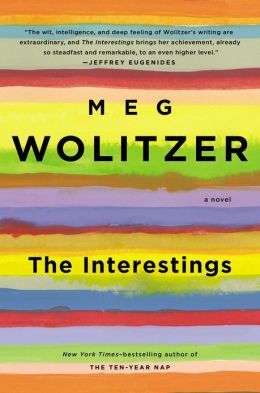
The Interestings by Meg Wolitzer

I had read Wolitzer’s The Wife in grad school and felt it was too heavy-handed, so I cautiously picked this one up after hearing the high praise for it, which almost always dooms a book for me. The Interestings deserves to be on every best of 2013 list. Not only are the story and the themes (the nature of love, the nature of friendships, family, jealousy, career, money, art, New York) thought-provoking on many levels, but the writing strikes that perfect balance of appearing both deliberate and breezy, literary yet conversationally authentic. It’s the type of book I want to now read reviews of and discuss with others, especially women artists.


LeanIn

Lean In: Women, Work, and the Will to Lead by Sheryl Sandberg

I read this for my Scripps College book club, which is composed of alumni from a wide range of class years from the women’s college. We’re all at various stages of our careers, including stay-at-home moms, working moms with infants, moms whose children have flown the nest, recent grads who have just entered the workforce, and mid-career-level women in relationships and not. Some have Ph.D.s, others want to be yoga instructors. The resulting conversation we had about this book is that, in the end, you have to find out what works for you and that may change depending on where you are in your life.

I also happened to finally get around to reading a book a colleague had given to me a few years ago: Patty Azzarello’s Rise: How to be Really Successful at Work AND Like Your Life, which came out in 2010. While Sandberg’s book is chock-full of important statistics and food for thought, Azzarello’s, though perhaps not as carefully edited, offers tips that are actually practical for people in the workforce.
 

Print

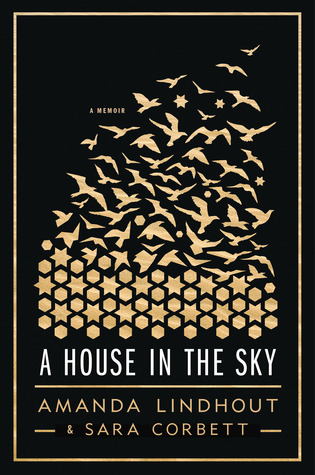
A House in the Sky by Amanda Lindhout and Sara Corbett

This book, the true story about a Canadian journalist and her Australian ex-boyfriend photographer who are kidnapped in Somalia, gave me nightmares. Literally. I became obsessed with the story, reading articles,  watching interviews with the people involved, and following them on Twitter. It got me thinking a lot about perceptions of the West, feminism, and ambition.


Manana

Manana Means Heaven by Tim Z. Hernandez

The publisher sent me this book, and I was a bit leery going into it that it would come off as fan fiction, but Hernandez’s Manana Means Heaven is an incredibly important book to the Beat canon. Through poetic diction, this novel tells the moving story of one of the little-known people who crossed paths with Jack Kerouac. It gives voice to a woman who didn’t even know she’d been written about decades earlier in On the Road.

You can read my interview with Tim here.
 

heart

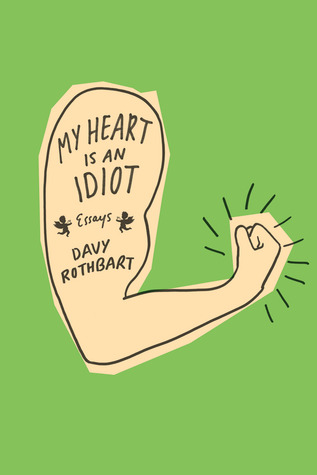
My Heart Is an Idiot by Davy Rothbart

I’ve written about Davy Rothbart before, having encountered one of the stories in this book in The Paris Review and comparing him to Jack Kerouac and then going to see him read in Brooklyn, where I met his dad and pulled a sword out of his cohort. This book technically came out last year, but the paperback came out this year, and it is brilliant. I had to stifle my laughter quite a few times on the subway to keep people from staring at me as I read this book. The thing is, though, there’s a lot of heart in this book too. It’s more than just a bunch of stories that make your eyes bug with incredulity over the antics Rothbart gets himself in. It shows the tenderness and beauty and wonder of humanity in all its forms, from an aspiring DJ to a con-artist.


Tell me your favorite books of 2013 below in the comments section. I’m looking for some new reads, and I figure if you read my blog we probably have similar taste! …And by similar taste, that probably means all over the board.


* * *

Burning Furiously Beautiful: The True Story of Jack Kerouac’s “On the Road” is now available as an ebook and paperback!


10 Books That Have Stuck with Me

17 Dec
gypsy
The other night I fell asleep thinking about the books that have stuck with me over the years. My friend had tagged me in a Facebook post about the ten books that have stuck with her—not necessarily the best books or her favorite books, but the ones that come to mind first. She then tagged me and nine other friends to do the same. I figured it would make for a fun blog post because some of the books may come as a surprise.
Without further ado…:
  1. Bread and Honey by Frank Asch
  2. Squiggly Wiggly’s Surprise by Arnold Shapiro
  3. Charlotte’s Web by E. B. White
  4. Gypsy Summer by Wilma Yeo
  5. Anne of Green Gables by L. M. Montgomery
  6. Sins of the Father by Eileen Franklin
  7. The Dangling Man by Saul Bellow
  8. On the Road by Jack Kerouac
  9. The Pillow Book by Sei Shonagon
  10. Blue Like Jazz by Donald Miller
I could probably write a blog post for each of these titles on why they stuck with me! I could also add so many more books to the list.
There are a few things I’ll point out about the books that actually made the list, though. The first half of the list are children’s books, or perhaps YA. The first two, in fact, are children’s storybooks, but even today their message remains with me. Adult books have a lot more “grey” in them when it comes to morality and message, as we come to understand the complexities and nuances of life, but I think there’s something to be said for the simple and beautiful messages of children’s picture books.
The other thing I’ll point out is that the second half of the list was all read more than ten years ago. Actually, number 6 on the list I read in middle school, and the only book post-undergrad on the list is number 10. It’s obviously not that I haven’t read since then or that I haven’t read good books since then. In fact, I took fantastic literature classes while working toward my MFA and was exposed to books that shaped the way I think about literature and writing. It’s just that when I think of books that have really stuck with me over the years, I was thinking of books that have stood the test of time.
I tag you! What 10 books have stuck with you? Leave them in the comments below.

* * *

Burning Furiously Beautiful: The True Story of Jack Kerouac’s “On the Road” is now available as an ebook and paperback!

Gift Guide: 5 Unique Gifts for the Mad Ones

29 Nov

Happy Black Friday?! The writers associated with the Beat Generation generally avoided vapid commercialism, but if you have a friend, family member, or colleague who is into Beat literature — or if you’re looking to spoil yourself — you may want to bless them with a gift that values their literary interest this holiday season. But what do you get for the Beat reader who has a bookshelf full of dog-eared novels and biographies?

If your friends are “the mad ones, the ones who are mad to live, mad to talk, mad to be saved” — you know, people who religiously read Jack Kerouac — they’ll appreciate these unique literary-inspired gifts.

Then, again, as Kerouac said: “Offer them what they secretly want and they of course immediately become panic-stricken.”

1. A cappuccino cup from Caffe Reggio.

CappuccinoCupMediumImage via Caffe Reggio

Caffe Reggio one of the coffeehouses the Beats hung out at in Greenwich Village.

2. Teavana Global Treasures Tea Gift Set.

teaImage via JC Gourmet Gifts

“‘Now you understand the Oriental passion for tea,'” said Japhy. “‘Remember that book I told you about; the first sip is joy, the second is gladness, the third is serenity, the fourth is madness, the fifth is ecstasy.'” ~Jack Kerouac

3. Chronicle Books Bedside Dream Journal.

Bedside_Dream_JournalImage via Chronicle

“All human beings are also dream beings.” ~Jack Kerouac

4. On the Road key ring from Penguin.

pc_keyring_ontheroadImage via Penguin

Get your kicks on Route 66 with this On the Road key ring from Penguin.

5. Cinnamon Apple Pie Candle from SweetShoppeCandles.

pieImage via Etsy

“I ate apple pie and ice cream—it was getting better as I got deeper into Iowa, the pie bigger, the ice cream richer.” ~Jack Kerouac

You can get more ideas on my Gifts for the Mad Ones Pinterest page and from my blog post last year Gift Guide for the Beat Reader.

And you know what these all pair well with? You guessed it! A copy of Burning Furiously Beautiful: The True Story of Jack Kerouac’s “On the Road.” which is available in paperback through Lulu and Amazon and in ebook through Lulu.


* * *

Burning Furiously Beautiful: The True Story of Jack Kerouac’s “On the Road” is now available as an ebook and paperback!

Big Sur Comes Out Today

1 Nov

BIG_SUR_400

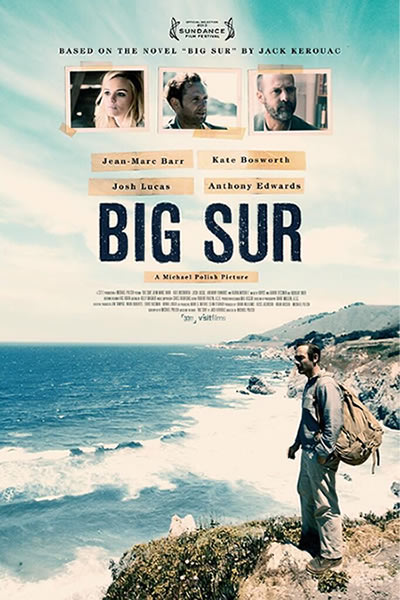
Kalo mina! The film adaptation of Jack Kerouac’s Big Sur comes out today. Will you be watching it?

It stars Jean-Marc Barr as a Jack Kerouac who’s overcome by the notoriety that descends on him after the publication of On the Road. Barr told Salon:

“I’ve been living Kerouac all my life. So there was nothing to play.”

Though that statement seems over-reaching, from the trailers the half-French Catholic does seem to get to a closer emulation of Kerouac than other recent actors.

Of course, he’s also playing Kerouac at a much different point in his life than he’s been portrayed in the other recent films. In “What Hollywood Gets Wrong About Jack Kerouac and the Beat Generation” for The Atlantic, Jordan Larson wrote:

But the current Beat revival arguably goes too far with its re-imagination of the Beat writers’ livelihoods as simple adolescent goofing around—its most prominent writers were, after all, well into their grown-up years when they wrote many of their most notable writings.

Kerouac is definitely an adult in Big Sur. A rather depressed one at that. And it brings up the point I discussed earlier this week when mentioning Karen Yuan’s argument in the article “Notebook: Hollywood shouldn’t glamorize the Beat Generation’s self-destruction” for The Michigan Daily, and that is, whether portraying them as adolescents or as adults, Hollywood and the Beat Generation is being criticized.

What’s interesting about Big Sur, though, is that the executive producer is Jack Kerouac’s nephew Jim Sampas. He was also the producer of One Fast Move or I’m Gone: Kerouac’s Big Sur. Sampas also produced Dr. Sax and the Great World Snake and Joy Kicks Darkness, among other projects.

In 2009, Sampas told IFC:

“‘Big Sur’ is Jack’s most personal and confessional novel. I am blown away by his courage in writing about his own spiral downward with such honesty and depth. My goal is that this film we’ve created influences a younger generation to embrace this work. And if people who see this film are inspired by Jack no holds barred honesty, wouldn’t that be incredible?”

I had the pleasure of meeting Jim Sampas, a fellow Greek American, at this year’s Lowell Celebrates Kerouac, when Billy Koumantzelis (check out his CD on his time with Kerouac) introduced me to him. It will definitely be interesting to view this film in light of the others.

I’ve read mixed reviews, and I’d love to hear what others think of the film. Please post comments if you see it!

* * *

Burning Furiously Beautiful: The True Story of Jack Kerouac’s “On the Road” is now available as an ebook and paperback!