Moose!

24 Aug

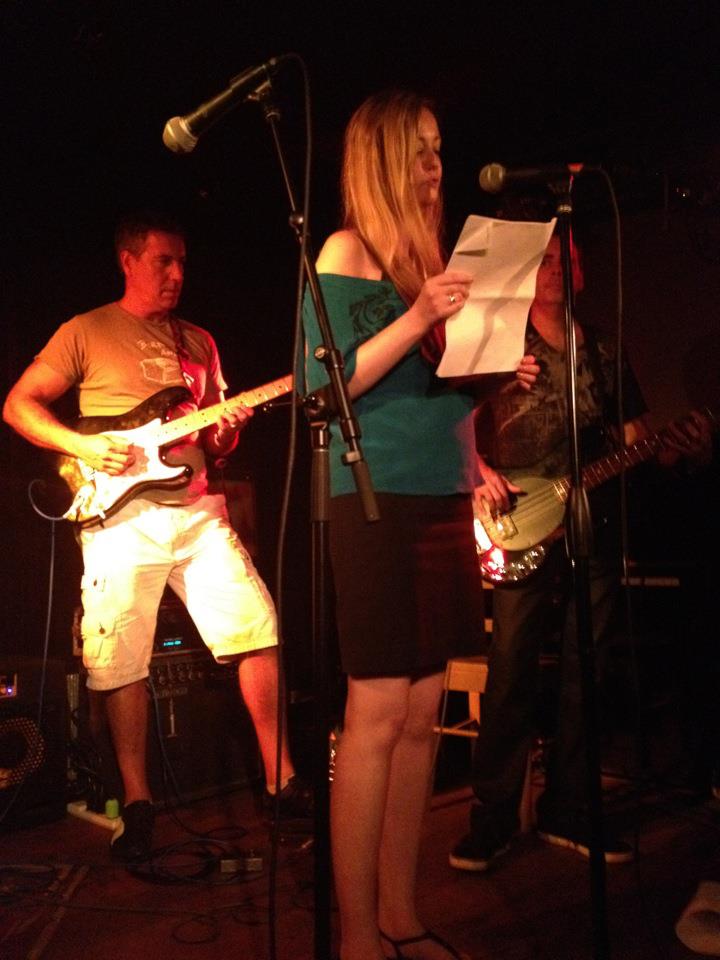
Last Friday night I went to The Buffalo Readings to celebrate poet Kate Levin’s birthday.  It was my first time at the reading series, and everyone was encouraging and inviting, making me feel like part of the group.  It was a real laid-back sort of evening, very far east in the East Village.  A hot and rainy night, where we crowded together on metal folding chairs, listening to different poets read from iphones and sheets of tattered paper stapled together.  Musicians jammed on various instruments, while the poets read.

One of the prose writers told me a hilarious story about working at a camp with Gregory Corso, saying the Beat poet hated all the kids.

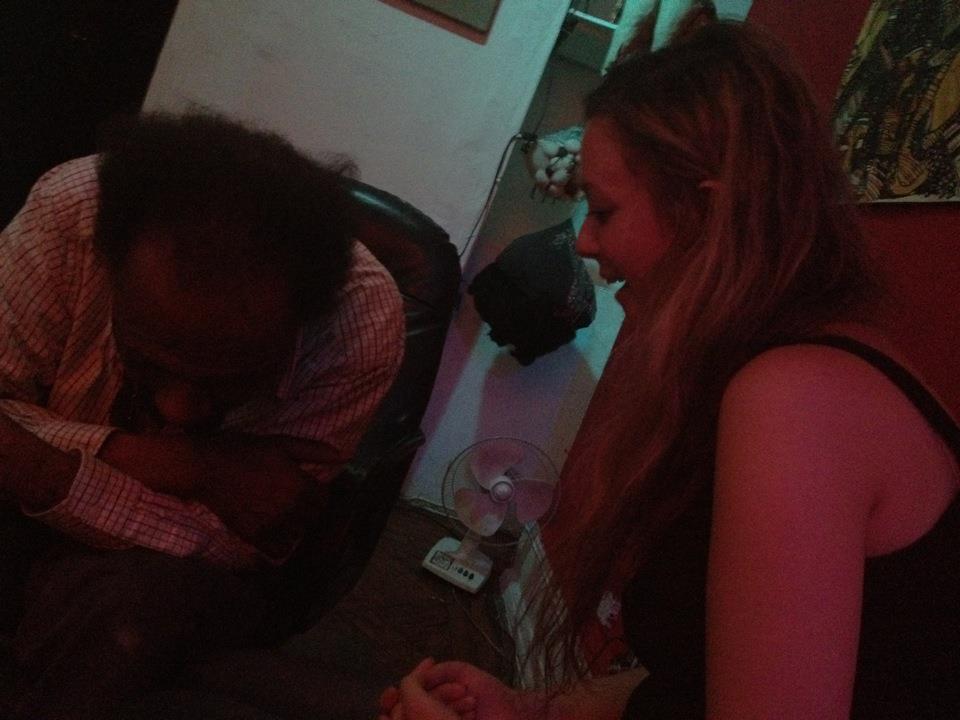
I also spent some time chatting with Steve Cannon, the founder of The Gathering of the Tribes.  We talked for quite some time about the business of poetry and the arts, but we also talked about life … about where we were from and what we’re doing with our lives.  I walked away feeling so blessed when he said, “you’re my type of person.”

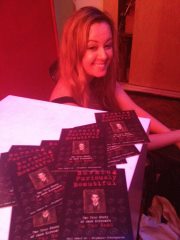
Here are a few photos poet RA Araya — who is probably one of the most encouraging people I’ve ever met; the type of person who is the glue that holds everyone together — took.  The first two are of me promoting Burning Furiously Beautiful (since it was my first time there, I wanted to hear everyone else and didn’t read, but I happened to have a few postcards for the book in my bag, which I was more than happy to share), and the last two are of me with Steve Cannon.


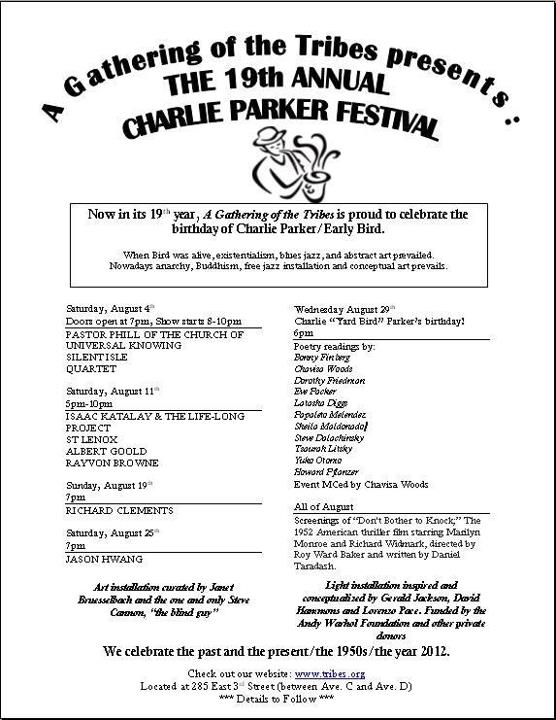
If you’re in the New York City area, you may want to check out this Charlie Parker Festival.


Road Trip with Kevin Russ

23 Aug

I stumbled down the rabbit hole of the Internet into some incredible road-trip photography by Kevin Russ, via Miss Moss. Looking at his photographs of grazing buffalo and wild horses that can’t be broken is like looking into the great American West of the past—and yet his photographs were taken with an iphone.

Kevin Russ’ photographs, wild and natural, rustic and warm, capture a moment that could be any moment in time. Massive mountains and deep gorges speak to the untamed beauty of the American landscape—the type of view that makes you pull over on the side of the road, speechless. You feel small. Not insignificant, but no longer the center of the universe. Your perch in the corner office becomes a little less important. Your eyes readjust. You begin to see.

The photographs have such a timeless quality to them even though there are signs of modern-day life in some of them. There are no people in the photographs that Miss Moss featured, and yet the contemporary traveler is present. There’s the lone yellow school bus traveling in the distance. Mundane-looking cars parked by a corral. The camper on the side of the road. A pastoral home, with what appears to be a kerosene lamp. Teepees. Yellow stripes dashing down grey pavement.

What’s interesting about the absence of people in the photographs is that Russ is actually an amazing portrait photographer. I liked his road-trip work so much that I did a bit of digging around on the Internet and found more of his photos on CameraLuv. He shoots hipsters with envy-inducing haircuts in front of abandoned tires, layers of newspapers, beat-up vans, and industrial fences. Is it any surprise he’s based in Portland?

So then I found his Flickr page and discovered he’s done photography for Radiant, a publication that has published my writing.

I want to languish all day on his Tumblr.

Seeing Kevin Russ’ photography makes me kind of wonder what it would’ve been like if iphones were around when the poets and writers of the Beat Generation were crisscrossing the United States. Allen Ginsberg was the itinerant photographer of the group, capturing hipster friends Jack Kerouac, William S. Burroughs, Gregory Corso, Peter Orlovsky, and the like on their travels.

3 Takeaways on Blogging Advice from A Cup of Jo

22 Aug

It’s been a while since I’ve posted anything about social media, but when I ran across this article, “Blogging As a Career,” with A Cup of Jo’s Joanna Goddard, I knew I had to share it with you.

You’ll want to read the whole article because there’s a tenderness to it, touching on heartbreak and personality types, but here are my three takeaways:::

Follow your dreams. – As cliché as this may sound, you can’t force yourself to enjoy a career that isn’t the right fit for you (in Joanna’s case, law).  You’ll be more successful when you discover what you want and really go after it.  Following your dreams is not easy.  It requires sacrifice.  You may end up not even being able to afford to add a sliced tomato to your bagel with cream cheese.  You may have to work on your honeymoon.  But it’s worth it.

Don’t be afraid to fail. – Sometimes the things in life that feel like the most excruciating at the time, end up propelling you forward.  There is risk involved in work and love and life.

Stay true to yourself. – There are so many blogs out there.  Don’t try to copy other blogs.  Blog in your own voice.  As Joanna says, “When you write a post, imagine your mom or best friend reading it.”  To earn a living as a blogger, you need to secure advertisement; choose companies you love.

Joanna also gives advice on work-life balance, how to start a magazine career, and other insight, so check out her complete interview on her blog.

Evening of David Amram’s Chamber Music and Readings from Jack Kerouac’s On the Road

21 Aug
This promises to be an unforgettable evening:
An Evening of David Amram’s Chamber Music
and Readings From Jack Kerouac’s On The Road with music
Friday, September 7, 8:00 pm


Symphony Space, Peter Jay Sharp Theatre
2537 Broadway @ 95th


A tribute concert to celebrate the chamber music of composer David Amram
as a part of the New York Chamber Music Festival

On Friday September 7 at 8 pm, the acclaimed New York Piano Quartet, internationally renowned flutist Carol Wincenc, violinist and former MET Orchestra concert master Elmira Darvarova, eminent cellist Wendy Sutter, New York Philharmonichornist Howard Wall, Metropolitan Opera principal percussionist Greg Zuber, actor John Ventimiglia (of the The Sopranos), famed pianists Tomoko Kanamaru and Hsin-Chiao Liao, talented young musicians from the award-winning ensemble Face the Music with artistic director Jenny Undercofler, the much talked about David Amram Quartet and multi-instrumentalist David Amram himself, will gather at the Peter Jay Sharp Theater at Symphony Space to celebrate the chamber music of one of the most significant American composers of all times — the indefatigable David Amram, as part of the 2012 New York Chamber Music Festival.

This celebration of David Amram’s chamber music includes a wide variety of the composer’s works which represent his prolific career spanning many decades. Works include the 1960 Violin Sonata, the 1979 piano quartet Portraits, the 1977 Native American Portraits, the 1982 Blues and Variations for Monk, the 1993 Theme and Variations on Red River Valley, the Andante movement from the Concerto for Flute Giants of the Night (commissioned and premiered in 2002 by Sir James Galway), its chamber music version presented at this concert by flutist Carol Wincenc in its New York premiere, and the very recently written 2012 Cancion de Verano (Summer Song), also performed in its New York premiere, by the acclaimed young musicians ensemble Face The Music.  Several of these works are inspired by David Amram’s legendary collaboration with Jack Kerouac, whose iconic work On the Road has its own presence at the September 7 concert, with 5 readings, performed by actor John Ventimiglia (of The Sopranos) and David Amram’s daughter Adira Amram.
Program
Violin Sonata (1960)
Elmira Darvarova (violin) and Tomoko Kanamaru (piano)
Theme and Variations on Red River Valley (1993)
Carol Wincenc (flute) with the members of the Face the Music ensemble
Andante from Giants of the Night* (2002)
Carol Wincenc, flute and Hsin-Chiao Liao (piano)
*New York premiere of the chamber version
Portraits (1979)
Members of the New York Piano Quartet with Wendy Sutter (guest cellist)
Intermission
Cancion de Verano (Summer Song)* (2012)
Members of the Face the Music ensemble
*New York premiere
Blues and Variations for Monk (1982)
Howard Wall (horn)
5 Readings from “On the Road’ by Jack Kerouac (2011)
John Ventimiglia and Adira Amram with the David Amram Quartet
Native American Portraits (1977)
Elmira Darvarova (violin), Greg Zuber (percussion), David Amram (percussion), Tomoko Kanamaru (piano)
*
Tickets: $20 in advance (Symphony Space Members, Students, Seniors $15; Day of Performance $25) at symphonyspace.org or call their Box Office at 212-864-5400


David Amram has conducted more than seventy-five of the world’s great orchestras, composed more than 100 orchestral and chamber works, written two operas and, early in his career, wrote and conducted many scores for theater and films, including Splendor in the Grass and The  Manchurian Candidate. Since being appointed by Leonard Bernstein as the first composer in residence with the New York Philharmonic in 1966, he has become one of the most acclaimed composers of his generation, listed by BMI as one of the 20 Most Performed Composers of Concert Music in the United States since 1974. The Boston Globe has hailed him, “The Renaissance Man of American Music.”
For twenty-nine seasons, Amram was the Music Director, Conductor and Narrator of Young People’s, Family and Free Summer Parks concerts for the Brooklyn Philharmonic at the Brooklyn Academy of Music; and for seventeen seasons, Amram was the Musical Director and Conductor of the International Jewish Arts Festival, conducting members of the Metropolitan Opera Orchestra.  In addition to conducting, he has also performed with symphony orchestras as a soloist on instruments from all over the world, combining jazz, Latin American, Middle Eastern, Native American and folk music alongside the European classics.
Today, Amram continues to perform as a guest conductor and soloist while continuing a remarkable pace of composing. Recently acclaimed new works include Symphonic Variations on a Song by Woody Guthrie; Three Songs: A Concerto for Piano and Orchestra; and Giants of the Night, a flute concerto commissioned and premiered by Sir James Galway.  A Little Rebellion: Thomas Jefferson, a piece for narrator and orchestra, was premiered at the Kennedy Center with Amram conducting;  and Kokopeli, A Symphony in Three Movements, had its world premiere with the Nashville Symphony Orchestra, also with Amram conducting.
A pioneer player of jazz French horn, he is also a virtuoso on piano, numerous flutes and whistles, percussion, and dozens of folkloric instruments from 25 countries, as well as an inventive, funny improvisational lyricist.  He has collaborated with Leonard Bernstein, Dizzy Gillespie, Jack Kerouac, Leopold Stokowski, Langston Hughes, Dustin Hoffman, Willie Nelson, Thelonious Monk, Odetta, Elia Kazan, Eugene Ormandy, Arthur Miller, Bob Dylan, Alan Ginsberg, Charles Mingus, Lionel Hampton, Paddy Chayevsky,  Johnny Depp, Archibald MacLeish, Pete Seeger, Tito Puente and Joseph Papp.
A documentary feature film, David Amram: The First 80 Years, is currently being shown at major music and film festivals throughout the United States and internationally. Directed by Lawrence Kraman, the film includes the New York premier of his Symphonic Variations on a Song by Woody Guthrie and highlights of his comic opera 12th Night.  Amram is also featured in Andrew Zuckerman’s book and new feature film documentary Wisdom: The Greatest Gift One Generation Can Give To Another, as one of the world’s 50 Elder Thinkers and Doers;  and his instructional video, Origins of Symphonic Instruments, released by Educational Video, is shown in over 6,000 schools throughout the United States and Canada.
On Sept 7th, 2012, the 4th Annual New York Chamber Music Festival presents an entire evening of Amram’s chamber music compositions at Symphony Space in Manhattan; and on September 21st and 22nd, Amram conducts the Colorado Symphony in Denver for a program which will include a live recording of his Symphonic Variations on a Song by Woody Guthrie.
For further information of Amram’s activities, access his webpage.
If you haven’t visited the appearances section in a while, you may have missed this news:
September 3, 2012.  8:30pm.  Cornelia Street Cafe (29 Cornelia St.).  New York, NY.  Stephanie will be reading from Burning Furiously Beautiful: The True Story of Jack Kerouac’s On the Road as David Amram plays, just like the first jazz-poetry readings Amram and Kerouac did in 1957. Amram & Co. includes David Amram, Kevin Twigg, John de Witt, and Adam Amram.  $10 cover, plus $10 minimum.
See you there!

Ramblin’ Jack: Just Because You Don’t Like a Book, Doesn’t Mean It Isn’t Well Written

20 Aug

Over the years, many readers have criticized Jack Kerouac’s work for its rambling prose and sounding too colloquial.  Everyone is certainly welcome to his or her own opinions.  The world would be a pretty boring place if we all liked exactly the same thing.  The literary arts are, to a certain degree, subjective.  One doesn’t have to like or enjoy a work, though, to see its importance and value.  Even if it doesn’t change the likeability of a work, it’s important to consider its artistry before completely dismissing it.

Take Of Mice and Men.  This book did nothing for me when I read it in high school.  I didn’t like the story.  The writing style was just fine, but not particularly innovative.  Still, it was a classic!  John Steinbeck!  I should like it, right?  I didn’t.  I moved on to The Red Pony.  Hated it even more.  But I was determined to like John Steinbeck.  Finally, I read Travels with Charley, which became one of my favorite books.  Same thing with Kurt Vonnegut.  As a teenager, I didn’t feel cool because I thought Breakfast of Champions was simultaneously silly and trying too hard.  Afterward, I read Cat’s Cradle, and even though the nature of the subject matter wasn’t of interest to me, I loved the book.

Sometimes it just takes finding that right book by an author.  Just because it’s a classic doesn’t mean we’re going to all like the same book.  And that’s okay, but it doesn’t mean we should dismiss it—it’s a classic for a reason—or give up on the author.  If we do, we face missing out on some really great literature.

I don’t enjoy all of Jack Kerouac’s books.  And perhaps my favorite of his works is one that many people don’t read: Visions of Gerard.  For the people who don’t like Kerouac because of his subject matter, I’d encourage them to check out some of his other books.

However, even for the books we don’t like, we can still learn from them and sometimes even appreciate them.  When I was getting my Master of Fine Arts—I spell this out to emphasize the artistic nature of literature—in creative writing at The New School, instructors always stressed that we didn’t have to like everything we read but we had to keep an open mind and give each work a fair shot.  One of my first instructors always asked whether we liked the book, sometimes taking a poll.  Of course the interesting part came when we debated why or why not.

I’ll be honest: I read a lot of books I did not enjoy.  Many I ended up giving away to anyone who would take them.  But I kept some of the books I did not like—because even though I didn’t find reading them a pleasurable reading experience, either because they weren’t the style I enjoy or the subject matter bored me, I recognized their brilliance.  Sometimes the books I hated reading the most ended up being the very ones that had the most profound influence on my understanding of literature and the craft of my own writing.

One of these books was Alain Robbe-Grillet’s Jealousy.  The antithesis of a beach read, this book requires the reader to concentrate and piece together and analyze.  It’s not so much that the language or concepts were difficult—in fact, quite the contrary.  It was the author’s style, the limited view he gave the reader, that made the book both frustrating and genius.  It challenged my view of what literature was, how literature was supposed to work, and why we read—in a good way!

Now, as far as Kerouac’s prose stylings, there are a few things worth considering:

  • Kerouac’s first language was not English.  He was born in Massachusetts to immigrant parents who spoke to him in the French-Canadian dialect joual.  When he went off to school, half the day was taught in French Canadian and the other half in English.  It wasn’t until he reached high school that he began to feel comfortable speaking in English.
  • While many people critique the American colloquialisms Kerouac uses, it’s worth noting that people praise Mark Twain for doing the same thing.  Kerouac was working to capture a unique American sound, the language of his times.  He used to tape record conversations with his friends and refer to letters they wrote him, just to capture authentic speech patterns and diction.
  • The so-called rambling prose wasn’t just echoing true-to-life conversations and speech patterns; it was also referring to the stream-of-consciousness narrative of modernist novels.  One of the books he read that influenced his writing style was James Joyce’s Ulysses, an experimental novel that employed stream of consciousness.  In fact, you know that famous quote from On the Road about the roman candles?  The one that goes:

… but burn, burn, burn like fabulous yellow roman candles exploding like spiders across the stars and in the middle you see the blue centerlight pop and everybody goes “Awww!”

Well, compare it to this line from Ulysses:

…O! then the Roman candle burst and it was like a sigh of O! and everyone cried O! O! in raptures and it gushed out of it a stream of rain gold hair threads and they shed and ah! they were all greeny dewy stars falling with golden, O so lovely, O, soft, sweet, soft!

  • Kerouac read voraciously.  He read the Greek Classics, comic books, the Russian masters, westerns, the bible, and history books.  In his journals, he refers to these works, evidence of his thoughtful contemplation of what he read.  These works influenced both the content and prose style of his own writing.
  • In addition to books, Kerouac’s writing was deeply influence by music.  If you read his work aloud or dissect his sentence structure, you can hear the bebop rhythm of his prose.  He and his musician friend David Amram used to improvise jazz-poetry readings together, creating it spontaneously, on the spot.  This is a lot harder than it sounds.  You have to really have a firm grasp on chord progression, rhythm, rhyme, and language—all while taking cues from someone else who is also improvising.

Sometimes works that seem effortless are the hardest ones of all to create.


Burning Furiously Beautiful: The True Story of Jack Kerouac’s On the Road discusses in more detail Kerouac’s literary development.

14 Road Trip Movies for Every Personality

17 Aug

When I was an arts & entertainment editor for an indie paper in LA county, I used to work a lot with the big Hollywood studios to promote their films.  At the time, the American Pie franchise was all the rage, and the PR execs in Hollywood contacted me about coordinating a free screening for my readers of the similarly raunchy teen comedy Road Trip.  Not exactly the highest form of entertainment, but it just went to prove that there’s a road trip movie for everyone.

As I’ve been working with Paul Maher Jr. on Burning Furiously Beautiful: The True Story of Jack Kerouac’s On the Road, I’ve been thinking about the upcoming film of On the Road and wondering who it will appeal to.  Will it be the die-hard Beat fans that pilgrimage out to Lowell Celebrates Kerouac?  Will it be a new crop of hipsters in the making?  Will it be a bunch of fanged teenyboppers brought in by Twilight’sKristen Stewart, who’s playing LuAnne?  Will it be the social justice league brought in by Walter Salles, of The Motorcycle Diaries?

For the wine lover: Sideways

For the BFFs (emphasis on the last F): Thelma & Louise

For the quirky, dysfunctional family: Little Miss Sunshine

For remembering your own family road trips gone awry: National Lampoon’s Vacation

For brothers: The Darjeeling Limited

For the beer-lovin’, truck-drivin’, betting type: Smokey and the Bandit

For the hippie: Easy Rider

rc=”http://www.youtube.com/embed/UjlxqANj68U&#8221; frameborder=”0″ allowfullscreen></iframe>

For the revolutionary: The Motorcycle Diaries

For the reader who shuns conventional life and his family: Into the Wild

For the scamming father-daughter team: Paper Moon

For fashionable gangsters in love: Bonnie and Clyde

For bored, hormonal teens whose girlfriends are on vacation: Y Tu Mama Tambien

For quirky con artists and an heiress who like their trips European: The Brothers Bloom

For the spoiled heiress and the desperate journalist: It Happened One Night

There are so many other road trip movies.  Which are your favorites?

Clip: On the Highway of Love, Jack Kerouac Divides Men and Women

16 Aug

The Millions published my essay “On the Highway of Love, Jack Kerouac Divides Men and Women.”

The article made the headline in the Page-Turner section of The New Yorker.

It also made it into the On the Shelf section of The Paris Review.

The article was mentioned in The Atlantic Wire.

Poets & Writers mentioned the article in their Daily News on 8/14/12 … and then again on 8/15/12 to note the response the article has gotten.

That second P&W write up was mentioning Slate‘s response.

Jezebel also devoted a whole article to my article.

Guy Librarian referenced the discussion.

The article was also mentioned on The Daily Beast.

The Huffington Post added commentary to the discussion.

8/19/12; 8/22/12: This post was updated to include additional mentions.

Photos from Reading at Sidewalk Cafe

15 Aug

I had so much fun reading at poet RA Araya’s birthday bash at the Sidewalk Cafe this past Sunday!! RA was such a great host and is so encouraging.  There were so many amazingly talented poets and musicians there.  I felt so honored to get to read with them.

I started off reading the beginning of Homer’s The Odyssey in Ancient Greek (bringing awareness to Greece’s cultural heritage as well as the plight of endangered languages) and then read a section from Burning Furiously Beautiful: The True Story of Jack Kerouac’s On the Road, the book that I’m coauthoring with Paul Maher Jr., while the flashbackpuppy band improvised a jazzy tune.

Here are some pictures RA took.


That’s me sitting next to poet Juan Valenzuela.  In the foreground is poet Miguel Algarin, who co-founded the Nuyorican Poets Cafe and knew Jack Kerouac back in the day.

Special thanks to my friends, who came out to support me.

Tasty Tuesday: Corn on the Cob as Street Food

14 Aug


In Greece a popular street food is grilled corn on the cob.  But unlike here in the States, the husk is left on while the corn grills.  Then it’s doused with a heavy portion of salt.

I found these ears of corn at a market along the side of the road in the Hamptons.  They tasted so much fresher than the corn at the grocery in the city.

Bullies and Beauty and Beatitudes

13 Aug

“Bullied teen gets plastic surgery” ran the headline on Yahoo.  The accompanying photo showed a typical teen girl.  I clicked on the link to hear her story.  What had she looked like before the surgery?

As it turned out, that photo was the before photo.  My heart broke.

No, she didn’t look like a supermodel—but how many fourteen year olds do?  She looked like a cute little girl.  The type who in a few years would come into her own, but for now was just a typical adolescent.  Maybe in a year or two she’d start tweezing her eyebrows and wearing a little mascara, but at the moment she looked age appropriate and the only thing missing was a smile!  Oh, that little girl.  I recognized the sadness in her eyes.

It brought tears to my own eyes, bringing me back to my own awkward adolescent years.  I didn’t look all that different than that girl.  Judging from some old photos I have lying around, I may have looked worse.  I had tiny ears, but I felt like they stuck out.  I had terribly crooked teeth and had a full mouth of braces.  I was growing out a perm that never had curl or wave—only frizz.  I was skinny.  Not an attractive skinny.  The type of skinny that prompted the doctor to tell me to gain weight.  The list of insecurities went on and on.  Just like this little girl, I was picked on.  I spent many nights crying myself to sleep.

I’m not going to lie.  I still feel scarred from those years.  Getting bullied, feeling ugly, feeling trapped, it’s the worst.  But you know what?  It really does get better.  Maybe not right away.  And maybe you never forget those feelings, but you can move on, and those things that hurt you in the past hopefully make you a stronger person and also a nicer, more compassionate person.  You also discover that beauty is complex and strange and wild.

The doctor who did this little girl’s surgery said in the article, “She was picked for her surgery because of her deformities.”  Looking at the photograph, I don’t see any deformities.  The surgeon pinned her ears back and worked on her chin and nose, according to the article.  Maybe there’s something I’m not seeing in the before photo, but as far as I can tell she’s not “perfect” looking (who is??) but she certainly doesn’t have deformities.

I’m happy the girl who had the surgery is pleased with the outcome.  I’m not anti-plastic surgery.  If at an appropriate age someone wants to have plastic surgery that’s their prerogative.  But there’s a lot you can do without resorting to plastic surgery.  I do believe looks matter.  If your hair is messy, your roots are grown out, and you dress in ill-fitting, wrinkled clothes, it looks like you have little confidence in yourself, and chances are you’ll probably be treated according to way you present yourself.  I’m a sucker for makeover shows.  I cry almost every time I watch someone on TV get a makeover.  Because it’s not just about your looks—it’s about how you feel.  There’s so much you can do with just a little makeup and learning to dress to your body shape.  One of my favorites is What Not to Wear because they stress that you don’t have to lose weight to look great.

Supermodel Tyra Banks has talked for years about the fact that she herself has a big forehead.  Last month she even challenged people to a big forehead contest.  Over the years, she’s encouraged women to work what they got, telling them that those parts of their bodies that they may think are ugly may in fact be the very thing that makes them unique and interesting and beautiful.  Maybe there are aspects of your looks that truly aren’t desirable but those “flaws”—or “deformities”—should still be celebrated.

Tyra Banks told US Weekly:

This is who I am! I’m Tyra Banks and I have cellulite! That makes me ‘flawsome’ because I own it as part of what makes me unique. Don’t get me wrong: I don’t think my cellulite is beautiful, but I think it’s ‘flawsome.’

My blog caption is “Embracing the Beatific.”  When I was thinking about what my blog is about I knew that, although it’s not exclusively what I blog on, I write a lot about the Beat Generation.  Jack Kerouac said that the word “beat” came from the Beatitudes of the bible.

I realized the Beatitudes expressed my viewpoint.  Life isn’t always what it seems.  The meek will inherit the earth.  The poor in spirit will find a kingdom in heaven. Those who cry now will find happiness later.

Beauty is in the imperfect.


Here are some bullying resources and reading material:::

Dear Bully: 70 Authors Tell Their Stories

the column “Interview with My Bully” on Salon.

stopbullying.gov

It Gets Better

Bible verses on confidence

Workplace Bullying Institute