Tag Archives: economy

Election 2012: Church of the Presidents

2 Nov

As we gear up to Election Day 2012, one of the main considerations voters have is: how do the candidates’ religious beliefs influence their leadership?  Do their economic plans care for the widows and orphans?  Will extending money to those in need unfairly take away the rights of others to the money they worked hard for?  Do their healthcare plans help all people?  What do family values really mean?  Do they look out for the poor in spirit, the disenfranchised?  Do they protect all people’s rights?  Do they try to play the role of God?  Does their faith make them weak?  Do their beliefs do more good or more harm to the country?  How should we vote when it seems that upholding one of our values leads to hindering one of our other values?

A few years ago, I visited what’s become known as The Church of the Presidents.  St. John’s Church Lafayette Square has had every president of the United States come through its doors since its first service in October 1816 was held.  You can read about it in my Church Hopping column on Burnside Writers Collective.

Greek American Fashion Week Show Recap

14 Sep

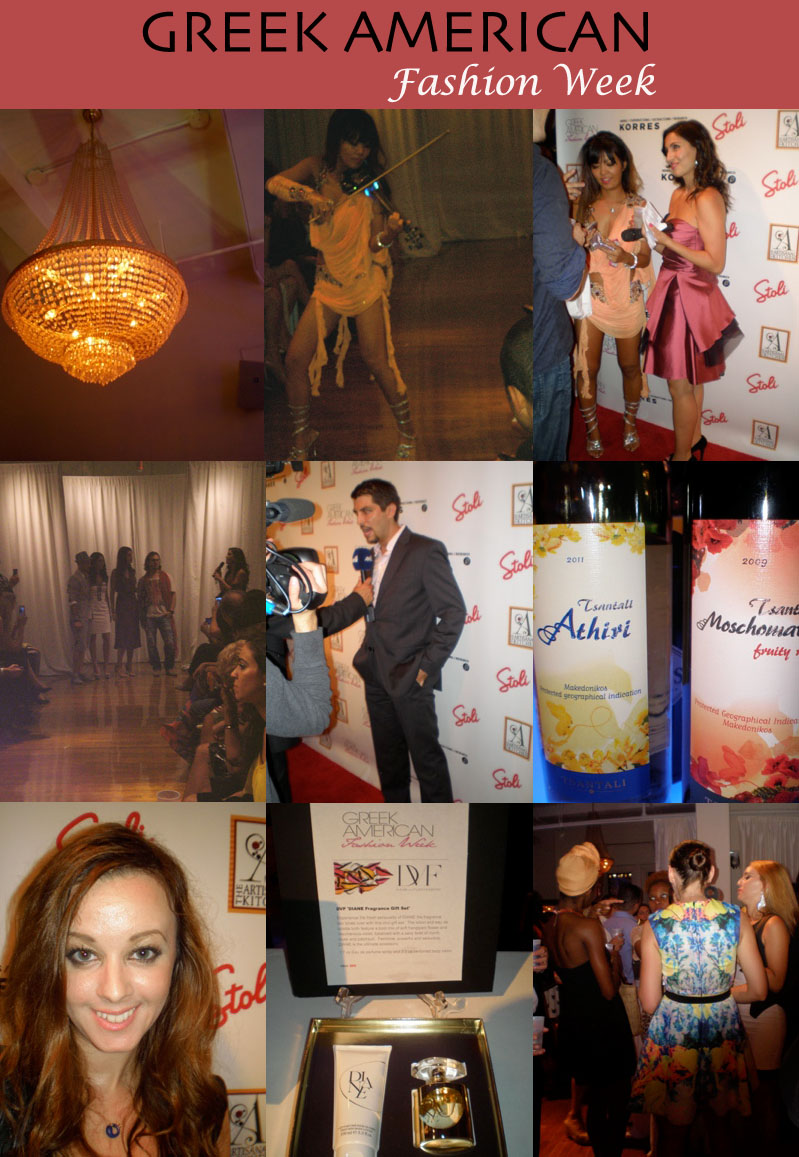
Gate-crashing fashionistas had no luck sneaking into the first Greek American Fashion Week Show, which kicked off Mercedes-Benz Fashion Week in New York City. The hot-ticket event was completely sold out well in advance of its September 7, 2012, date, and the security at the Midtown Loft & Terrace was tight.  After all, some of the biggest names in Greek fashion — ENOE ME by Lia Kastanidi, Timothy George, Angelo Lambrou, and Tatiana Raftis — had come together to preview their Spring/Summer 2013 collections, and even the Consul General at Consulate General of the Republic of CyprusMs. Koula Sophianou, was in attendance to celebrate these bright young Greek designers.  The evening was clearly about more than showcasing lush fabrics, innovative cuts, and taste-making, though.  The Greek American Fashion Week Show was a visually engaging testament to the innovative spirit of Greeks throughout the world.

Organized by the Fashion & Design Committee of the Hellenic American Chamber of Commerce (HACC), the Greek American Fashion Week Show was produced by Ioannis Makris.  Founder/HACCYP Maria A. Pardalis (pictured top row right) emceed the event, looking radiant in a dusty-rose-hued dress designed by Angelo Lambrou and wearing her hair in romantic tendrils.  Peter, also an emcee, took a more casual approach to style, embracing grunge’s comeback by rocking jeans and a plaid button-down shirt.

During intermission, attendees were treated to the captivating Sarina Suno, The Violin Diva (pictured top row middle).  Gyrating her hips, pumping her bow in the air like a rock star, and taming an electric violin into musical submission, the classically trained Japanese violinist, who has played in Athens and throughout the world, became the music she was playing.

Throughout the evening, NXNY, Trump Soho’s resident DJ, kept the atmosphere lively with an eclectic mix of new and old beats.

If you think the fashion forward don’t eat, you’ve never been to a Greek fashion show.  Delicious morsels from Loi, Maria Loi’s Upper West Side restaurant, circled the room, with attendees chasing after the servers for more.  (Incidentally FOS, the Forum on Orthodox Spirituality, will be hosting its outreach party for its new series at Loi on September 25 at 7pm; for more information visit the Archdiocesan Cathedral of the Holy Trinity.)  Flavored Stoli Vodka and other spirits and wines flowed freely at a neon-lit bar.

The event’s platinum sponsors were The Artisnal Kitchen, Jet Airways, Korres (whose products I used to get myself fashion-show worthy! Check out my reviews of the Pomegranate line here and the Wild Rose line here.  I’m pictured bottom row left in the image above.), Make, Mana, and Timothy George.  The Silver sponsors were Hendrick’s Gin, Loi, Snapshotz Photography LLC, Stoli, and YA Mastiha.  Other sponsors included The Cyprus U.S. Chamber of Commerce; Elefteria Georgalis, Greco Title Agency; Petros Georgiadis; George Kolotouros, Hermes Classic Printing; Peter Legakis; Katerina Matzouranis Duarte, Esq.; Evangelia Trilios, Esq.; and Mavromihalis, Pardalis & Nohavicka, LLP. There was also a fantastic silent auction.  The silent auction sponsors included Diane von Furstenberg, Godiva, Livanou, Dennis Bass, Kensie, Thalassa Restaurant, Ammos Estiatorio, Avra Estiatorio, Parea Bistro (check out my review here), Vareli Restaurant and Lounge, and Kefi Estiatorio.

The event was covered by Greek news station ANT1.

I’ll be profiling each of the four designers in the Greek American Fashion Week Show — ENOE ME by Lia Kastanidi, Timothy George, Angelo Lambrou, and Tatiana Raftis — next week!  You’ll get to see exclusive photographs from their Spring/Summer 2013 collections, along with commentary on their styles.  I’ll also give you the inside scoop on who these designers are and where you can find their designs.  You won’t want to miss it!  Each designer is truly unique, creating beautifully made statement clothing.


Parallel Generations

19 Jul

Why is Hollywood taking an interest in the Lost Generation and the Beat Generation?  Are there parallels between the generations of the past and today’s generations?  Is history cyclical?

From a historic standpoint, it makes sense that today’s generations are looking back at the Lost Generation and the Beat Generation.  Like the Lost Generation, the current generation has experienced war.  Although the Lost Generation predates the Great Depression by a few years, novels such as The Great Gatsby have much to say about the disparity of wealth, a topic that this generation has dealt with during the Great Recession.  Part of the seedy wealth distribution of the ‘20s had to do with bootlegging.  Prohibition may not be something today’s candidates have on the table, but there’s a definite right-wing conservatism bent influencing culture today.

The Beat Generation writers were those who were born around the time of the Great Depression and came of age during World War II.  Kerouac and John Clellon Holmes actually were thinking of the Lost Generation when they came up with the idea that they were the Beat Generation.  The obvious parallels between the two generations being the world wars.  While the Lost Generation was going into the Great Depression, the Beat Generation was coming out of it, and so while the Lost Generation was more about decadence the Beat Generation was more about simplicity.  Perhaps, then, today’s older generation is looking toward the Lost Generation and the younger generation looking towards the Beat Generation for confirmation on the way we live our lives.

After all, generations have followed suit in this pattern of economy and war since these generations.  The Baby Boomers were all about the money, and then Generation X was the slacker generation.

Since then we’ve seen Generation Y, also known as the Millennials or Generation Next, who are often thought of as privileged Trophy Kids.  These are the eighties babies (give or take) that are now in their twenties, a few even in their thirties.

Generations X and Y heard Reality Bites, My So-Called Life, and Fight Club tell us our great war was within ourselves.  –And then the terrorist attacks took place on 9/11.  It was around that time that Generation Y turned to indie music, the locavore movement, and reviving arts and crafts.

After that came Generation Z, or Generation I, the kids born in the ‘90s, for whom the Internet, the War on Terror, and the Great Recession are a way of life.  Generations Y and Z are the i-generation, each having their own personal computers, finding fame on blogs and in social media, the generation that is connected and disconnected.  They began looking back at Generation X, wearing flannel.  Miley Cyrus was photographed wearing a Nirvana t-shirt.

The Pew Research Center has a fascinating report that charts the different Generations’ attitudes toward politics, religion, immigration, marriage, and more.

Technology is developing at a faster and faster rate, and with it, generations are shortening and multiplying.  When you think about it, iphones models are even called by their generation, as in the second generation iphone, acknowledging how much generations are defined by technology, as well as money and politics.  Therefore, it’s easy to see how certain generations blend together, which may also be a result, as the Pew Research Center data seems to suggest, of the delayed adulthood.

What generation do you identify with?

Social Media Lessons from SXSW 2012

11 Jul

Calvin Reid makes insightful remarks about the role e-technology and social media are playing in publishing in “SXSW 2012: New Publishing Models and the Rise of the Referral Economy.”  If you’re new to publishing and looking to make your mark on the industry and find readers, I’d highly encourage you to read the entire article.  To his point on “curating,” here’s some remarks of his that you might find especially helpful:

  • “Altounian said he’s targeting a demographic under the age of 40 that wants to read on an array of devices anytime they want and they don’t want to pay much, if anything, for the content they read on them. … Altounian was making the point that, at least for emerging artists, getting their content in front of readers through traditional publishers is an uphill battle that doesn’t work for everyone; that his goal is to build a list of self-branded artists (using social media tools) and by offering some free content now, and some for-pay content later when the freebie-oriented audiences for these artists reaches critical mass and wants more of their stuff.”
  • “Certainly one of the most intellectually vivid panels was Curators or the Curated, a panel examining the phenomenon of content sharing—essentially the practice of any and everyone linking to content and sending it out to followers and friends around the web—and what that means to publishers, creators and the curators themselves. … In theory curators bring attention to content and drive traffic to the original site; in practice some curators are having more impact than the publications they curate from. And its generated a debate about the practice and what it means—and of course how to monetize it.”
  • “He also rejected some of the anti-advertising curatorial comments, noting that business platforms were important and that he had worked for a Minn.-based newspaper that did away with escort ads and the loss of revenue killed the newspaper.”

What I take away from this is the following:

Writers need to start building a platform NOW—as in, even before we’ve written our book, we need to start curating content on our subject matter.  This means tweeting, forwarding, and “liking,” other writers’ posts related to our subject and also blogging, tweeting, and writing our own status updates on our subject.

Generate content and don’t be afraid to give it away for free.  It’s better to give our writing away for free in the beginning so that we can establish ourselves as authorities on that topic and/or as interesting storytellers.  Eventually, people will love you and want to buy your writing—but it might take a lot of giving your work away for free first.  Michael Hyatt is a big proponent of giving away free content.  Not only does he give away valuable information on his blog, but he also created an ebook that he gives to anyone who subscribes to his blog.  Both the blog subscription and the ebook are free.

Don’t be all holier than thou about advertising.  Solicit advertising for your blog.  I personally would suggest keeping your advertising in line with your brand—and your brand should probably be consistent with how you’d want to be thought of by your friends and parents as well.  What I mean is, I personally would rather go hungry than earn money from escort ads.  The best ads are going to be ones that relate to your subject matter.  So if I’m writing about Greek identity, ads about learning how to play the harmonica aren’t going to be controversial but they won’t be as relevant as ads about learning how to speak Greek.

Humbly consider the rights to your content.  Bloggers may quote rather heavily from anything you post—and by heavily, I mean they might use your work entirely and just give you credit via a link.  This might be a breach of your copyright, but before you get your knickers in a bunch consider if their promotion of your work might be helping you out with some free advertising.  Maybe it’s bringing new readers to your work.  …But then again, maybe it’s not.  Therefore, always be careful with what sort of content you put on your blog.  Sure, someone could pirate your whole book, but it’s more likely someone will repost a blog entry than your entire book.  With that in mind, be prepared that what you publish on your blog might end up elsewhere.

Pay attention to your e-rights.  Landing a book contract is about more than just the print rights these days.  Make sure your contract expressly states an agreement about electronic and print-on-demand editions.

It feels like writers—and artists of any sort—get a raw deal.  We have to give a lot of free content away.  Professionals in other industries don’t seem to have to do this to the same extent.  Lawyers may work an occasional pro bono case, but they’re not expected to work for free before making it big.  Doctors may do Doctors Without Borders to give back and help people, but this is a personal choice they make.  I suppose in some ways artists giving away their work—and having it stolen from them in the case of extreme curating—is an internship of sorts, but the difference is that artists are expected to intern their entire lives or at least until they hit it big.

Therefore, I’d encourage all artists to be savvy.

Yes, you might feel pressured to build your platform and give away content for free, but make sure you’re getting something in return for your investment.

Don’t let your platform overtake your writing.  Your platform is a means to an end—your book project.

Use the system.  There’s nothing wrong with giving away content for free.  There’s nothing wrong with soliciting ads.  There’s nothing wrong with social media.  Don’t let anyone or any platform rule over you.  Keep your goals in perspective and use the system to your advantage.  Find your target audience, make connections, earn money, promote your projects.

You can find me not only here on this blog, but also on Twitter, Pinterest, and Google+.

Hipsters Hate Driving

3 Jul

I knew I was getting old the day I saw a car commercial where the driver was clearly younger than I am.

So here’s an interesting bit of news: Generation Y doesn’t like to drive. According to Reuter’s “America’s Generation Y not driven to drive,” the Millennials think driving is more of a hassle than it’s worth.  A California think tank analyst, Tony Dudzik says instead of a driver’s license, a cell phone is the new rite of passage for young adults.

The article points to a few different reasons why Generation Y may be less interested in driving:

  • Smart phones make it easier to know public transportation schedules
  • More Gen-Yers are riding bikes
  • People are more concerned about saving the planet
  • Car-sharing services are making it easier not to have to own a car

From a cultural perspective, this makes total sense.  Gen Y is the hipster culture.  The kids in Williamsburg who listen to low-fi indie music on their hi-tech iphone, knit water-bottle cozies that they sell on etsy, ride their bicycles to work, buy their clothes from Buffalo Exchange, spend their weekends at the food coop, brew their own craft beer, and vlog on YouTube. If they drive, they drive hybrids. Because they’re all about the i-this and the i-that, they seek out community more intentionally. Who needs a car, if your friend or parents (they also happen to be the Peter Pan Generation, living at home after college) have one?

I personally fall somewhere between Gen X and Gen Y, making me part of Generation Flux.  Generation X refers to people born between the early 1960s and 1980s, while Generation Y refers those born between the late 1970s and the 2000s.  I know when I was growing up, there were a lot of cultural arts programs in the school about saving the rainforest and saving the whales, we studied acid rain and the ozone layer, and we joined KAP: Kids Against Pollution.  In drivers ed, they pretty much terrified you with statistics, photos, and videos that suggested it was likely you were going to die if you got behind the wheel. The shows that were popular when I was a teen were Mad About You, Seinfeld, Friends, Will & Grace, and Sex and the City, all of which were set in New York City.  Other popular shows like Ally McBeal, Frasier, and ER were also set in cities. Our stars didn’t drive.  They took cabs and rode the subway. Is it any surprise that we moved into the city and followed suit?

So will a generation who grew up watching Paris Hilton, Lindsey Lohan, and Snooki getting arrested for driving under the influence and/or crashing their cars, a generation coming of age during the Great Recession, a generation who doesn’t care about driving, embrace the 1950s road trip adventure of On the Road when the movie comes out and the novel by Jack Kerouac it is based on?  Well, here’s another interesting twist: Jack Kerouac didn’t like driving either. If you read his novel, you’ll see that most of the time, the character based on him in the novel is on the bus or in the passenger seat.

How do you feel like the era you grew up in influenced you?

Now you can “like” Burning Furiously Beautiful on Facebook!

New Yorker Quips Greeks Invented Tragedy, Not Much Else Lately

15 Jun


I’m getting sick of the way everyone’s always ragging on Greece.  I just read this comment in “Greece Vs. The Rest” in The New Yorker:

Greeks are fond of pointing out that they invented democracy; they invented tragedy, too, and that is what their situation increasingly looks like, whoever wins the election. The problem is that in recent years they haven’t invented much of anything else.

The author clearly thinks he’s being witty, but it is an insensitive and erroneous remark.  We don’t go around mocking other countries that are experiencing crises.  Why is it okay to denigrate Greece?  Is it because, yes, “Greeks are fond of pointing out that they invented democracy,” and therefore come off as braggers?  Or are other countries purely jealous of how much Greece has influenced the world?

Greece in fact is innovating.  Greece is part of the Global Monitoring for Environmental and Security Initiative.  Three years ago, Nanophos SA received first prize for Innovation and Sustainability in the International Exhibition “100% Detail.” Lavrion Technological and Cultural Park is linking culture and technology research. Furthermore, many well-known international companies—such as Coca-Cola, Ericsson, and Motorola—conduct their research and development in Greece.

Sorry, Greece did not invent the ipod.  Let’s remember that much of modern Greece was under oppression.  During World War I, many Greeks were killed, and Greek refugees fled Turkey for Greece, which led to its own economic stresses.  During World War II, Nazis occupied Greece, sending Greek citizens to concentration camps.  From 1946 to 1949, Greece had a civil war, when it rose up against Communism.  And now, even in the years leading up to the economic crisis, the media has lampooned Greece, scaring off tourists and investors.  It’s hard to be creative and inventive when you’re fighting for your life.

What I do agree with is the author’s statement:

An unsustainable burden is being loaded on those sectors of the population who were already paying.

Just like here in the US, where the rich are able to write everything off so as not to pay taxes, there are many people in Greece who are not paying taxes.  Those who do pay their taxes are being overtaxed.  These are the people who are poorer, who are older, who are retired, who are more generous to those in need, who do what is right, who are loyal to their country.

This is why we saw a 77-year-old man shoot himself in the head in Syntagma Square—the Times Square of Athens—back in April.  As the Guardian reported, he shouted, “I’m leaving because I don’t want to pass on my debts.”

It saddens me that the media is not more compassionate towards Greece.  Yes, there are many things that need to change there, but the blame cannot be placed solely on Greece.  The country has suffered many hardships.  There are real people living in Greece who are, yes, experiencing tragedy.  Maybe we need to cling to our heritage to remind us of what we can accomplish and give us some hope for our future.  Maybe instead of lambasting Greece, the foreign media should believe in Greece.  Because you know what?  Greece has overcome many trials and tribulations, and will rise again.

Oxi Day

28 Oct

No!


Happy Oxi Day!  No matter if you spell it “oxi,” “ohi,” or “ochi,” it is the Greek word for “no.”  On October 28, Greeks celebrate the day they stood up and said “no” to the Italian ultimatum in 1940.

At dawn on October 28, 1940, Emanuele Grazzi, the Italian ambassador in Greece, on orders from dictator Benito Mussolini, demanded that the Greek prime minister Ioannis Metaxas grant Axis forces access to “strategic locations” in Greece.

Metaxas’ response?

Oxi!

The citizens of Greece flocked to the streets, yelling “Oxi!”  It didn’t matter their political affiliation.  They stood united to protect their country.

At 5:30 that morning, the Italian troops stationed in Albania attacked the border of Greece.

And with that, Greece had entered World War II.


***


Today, Greeks are back in the streets.  Never fully recovered from World War II, Greece continues to face economic hardship.  The citizens of Greece are fighting back, they’re saying “no,” to the austerity measures.


***


Sometimes you need to take a stand.  Sometimes you need to say no.

What do you need to say no to today?

Do you need to say no to big business?  No to credit card debt?  No to working overtime … again?  No to another social event?  No to another night in?  No to junk food?  No to Uggs?

Saying no doesn’t make you a bad person.  It’s important to say no to some things so you can say yes to others.

What do you want to say yes to today?