Tag Archives: World War II

Life Continues to Be Absurd: Saul Bellow, Jack Kerouac, F. Scott Fitzgerald, and Joseph O’Niell

11 Apr

220px-HendersonTheRainKing

When I was a junior in high school, my English teacher gave our class a list of topics we could do our research papers on. We had never studied Saul Bellow before, but his name was on the list, and I chose to write about his absurd heroes. As Wikipedia states:

In philosophy, “the Absurd” refers to the conflict between the human tendency to seek inherent value and meaning in life and the human inability to find any.

When you’re an angsty teenager, life is Absurd. Writing out Spanish vocabulary words three times each in a row for homework was absurd. Learning square dancing in gym class while living in northern New Jersey was absurd. Having to do math long-hand when calculators existed was absurd. Parents were absurd. The routine of waking up, eating cold cuts for lunch, doing homework until bedtime was all absurd. Surely, there had to be more to life than this humdrum suburban life?

When I became an adult, working in a cubicle, my personal email address had the following quote from Saul Bellow’s The Dangling Man:

It may be that I am tired of having to identify a day as ‘the day I asked for a second cup of coffee,’ or ‘the day the waitress refused to take back the burned toast,’ and so want to blaze it more sharply, regardless of the consequences. Perhaps, eager for consequences.

It turned out, even when you’re an adult, life is Absurd. I was supposed to be over that the melodramatic apathy of a teenager, but I couldn’t shake that feeling that there had to be more to life. And I don’t think I was living a life more boring than most people. I was working in New York City. I had an enviable job. I had my own one-bedroom apartment. I had a boyfriend. I had a great group of friends. I was happy. But the routine of the day-in, day-out felt so mundane and ordinary … and meaningless. Being happy and successful wasn’t enough.

This is what Saul Bellow’s books capture so wonderfully. At the end of Henderson the Rain King–it came out in 1959; deal with the spoiler–the main character realizes that instead of searching to fulfill his own desires, he should have been helping others get what they want. It’s a long book, and it takes Henderson a long time to get there. Isn’t that just like life? He goes on a road trip of sorts to Africa. He sort of bumbles his way through adventures and has a lot of philosophical mad talk.

It’s because I first read and studied Saul Bellow that I was primed to understand Jack Kerouac. Even though I read it first, Henderson the Rain King actually came out two years after Kerouac’s On the Road, in which bumbling characters frenetically philosophized while road tripping across America. Both Bellow’s and Kerouac’s characters, sensing the alienation and Absurdism of life, have a longing that can best be described as spiritual. The dates of these books’ publications are important to note: Both Bellow and Kerouac had been in the merchant marine during World War II, and these are postwar novels dealing with the philosophical questions about the meaning and purpose of life.

Tonight, Joseph O’Niell is reading at the Saul Bellow Slam II at Housing Works. O’Niell is the author of  Netherland. This beautiful novel isn’t written in the aftermath of World War II, like Bellow’s and Kerouac’s works, but of September 11. James Wood, however, wrote in the New Yorker, that it has been “consistently misread as a 9/11 novel, which stints what is most remarkable about it: that it is a postcolonial re-writing of The Great Gatsby.” Astute as that revelation is, F. Scott Fitzgerald’s The Great Gatsby is a post-World-War-I novel, whose narrator is  war veteran swept up in Gatsby’s boozy parties that allow people to escape the mundaneness of their lives through social interaction. Netherlands, likewise, deals with the human need for connection.

We live in an Absurd world. We live in a sanitized, consumer, over-educated-and-underemployed culture. There are mass shootings and stabbings and an ongoing war. It is tempting to disengage, to “turn on, boot up, jack in,” as Timothy Leary said. Oftentimes, those who do choose to engage fashion themselves as critics and don a coat of irony. They comment on life from afar instead of risking to bumble through it.

I struggle with letting my walls down, with opening up. I don’t like the idea that people might think the most memorable thing about my day is that I had two cups of coffee or ate burnt toast. It’s hard to admit I long for something more, that I’m not satisfied. I keep turning to this literature, though, and I sense that this dissatisfaction or angst is a good thing. This world will never satisfy, and if I am too comfortable or too fulfilled or too put-together then I am probably deluding myself.

Review: Ferlinghetti: A Rebirth of Wonder

14 Mar

ferlinghetti_splash

I caught the documentary Ferlinghetti: A Rebirth of Wonder (2009) at Anthology Film Archives this past weekend. Lawrence Ferlinghetti is one of my favorite poets, for his use of language and whimsy. I’ve long appreciate his commitment to freedom of speech, and this documentary made me more aware of how he used his position as a poet and bookseller for activist purposes. Quirky fact: he uses the windows of his office at City Lights as a “blog,” writing his political thoughts for all who pass by to see.

Ferlinghetti: A Rebirth of Wonder is star-studded, including informative interviews and clips with everyone from Amiri Baraka, David Amram, Jack Hirschman, Michael McClure, Anne Waldman, and George Whitman to Giada Diano, Bill Morgan, Dave Eggers, and Lorenzo Ferlinghetti. It impresses upon the viewer just how important Ferlinghetti is by indicating his support of Bob Dylan, his place in American poetry, awards given to him, and the naming of a street after him.

The biographical background information is fascinating, particularly when we hear about Ferlinghetti’s rearing in France, how his mother’s ineptitude at caring for him led to his being raised by the daughter of the founder of Sarah Lawrence College, and his service in World War II (spoiler alert: he saw Nagasaki right after the bomb dropped). There’s even a scene in which Ferlinghetti searches for his roots in Italy, where he was arrested for trespassing when he tried to get a sneak peek at where his father grew up! This of course is all balanced with his founding of City Lights, the Howl trial, and the Human Be-In.

All of it is wonderful, but its broad scope and pacing left the film falling flat in terms of its aesthetics. As a biographer, I understand how director/producer Christopher Felver must have struggled with the editing process. How could he cut anything out when it’s all so important? No one wants to see significant and appealing research fall on the cutting room floor. As a viewer, though, I would have preferred a more limited scope or narrative approach. It would have been a stronger film if Felver, who worked on the documentary for ten years, ruthlessly edited his work to give it a story arc. This film is best suited for those interested in learning more about the free speech movement, poetry in America, the Beat Generation (though Ferlinghetti adamantly declares in one scene “Don’t call me a Beat! I never was a Beat!”), San Francisco, and the 1950s and ‘60s. I’d recommend Ferlinghetti: A Rebirth of Wonder for high-school English classes as well as for writers in general, as it motivates one to consider poetry as subversive action.

Clip on Xu Beihong Plus Thoughts on Calligraphy, the Beats, and the Abstract Expressionists

19 Feb

plant2

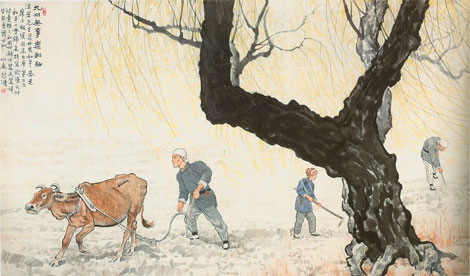
Burnside published my art post “A Time to Plant and a Time to Uproot” today.

It only occurred to me as I was posting this clip how interesting it is that Xu Beihong’s painting is from 1951. Doesn’t the seemingly traditional shuimohua painting seem much older? Xu is actually known for his Western sensibilities and is considered a forerunner in modern Chinese art.

Xu studied calligraphy with his father before attending the famous École Nationale Supérieure des Beaux-Arts — you know, that Parisian school where Degas, Matisse, Monet, and Renoir studied at. In 1917, Xu Beihong went to Japan to study art. During World War II, he sold his paintings in exhibitions throughout Asia, giving the proceeds to the Chinese whose lives had been upturned because of the war. As a teacher and artist, Xu’s policies greatly influenced the way both colleges and the government respond to art in Communist China. He died in 1953.

Meanwhile, over in Oregon at Reed College in the early 1950s, Gary Snyder, Philip Whalen (who served Stateside during World War II), and Lew Welch–who are associated with the Beat Generation–were studying with calligrapher Lloyd Reynolds. Snyder and Whalen later spent time in Japan, where they studied zen. The US State Department initially denied Snyder a passport, alleging he was a Communist.

Asian influences can also be seen in the art of the time period, most notably the abstract expressionist art of Franz Kline, Adolph Gottlieb, and Theodoros Stamos. Note this opening paragraph from the Guggenheim’s article “Abstract Art, Calligraphy, and Metaphysics“:

Following World War II New York City became the center of the avant-garde art world. Artists were working in new ways, and some were exploring the energy of the gesture with loose brushwork that reflected the impact of the artist’s bold movements. The calligraphic brushstroke was an approach to abstract painting that focused on the spontaneous gesture of the artist’s hand and was informed by the East Asian art of calligraphy and popular writings on Zen and its principles of direct action.

The article goes on to say:

In Chinese and Japanese calligraphy the brush becomes an extension of the writer’s arm, indeed, his or her entire body. The artist’s stroke not only suggests the movement of the body, but also inner qualities. Abstract as it appears, calligraphy also conveys something about the essence of the individual artist. It is therefore not surprising that 20th-century American Abstract Expressionists who sought to convey emotion through paint were drawn to it.

Because so many soldiers were stationed in the East during World War II, both the West and the East were influenced by each other.

What I personally find fascinating with calligraphy is the collision of art and literature, the visual and the literal, words becoming art, and art becoming words.

The Light Holds Harvey Shapiro

8 Jan

9780819560964_p0_v1_s260x420

I have just learned that Harvey Shapiro passed away yesterday.

Shapiro, whose first language was the endangered language of Yiddish, is the person who suggested Martin Luther King, Jr., compose a letter while he was in jail. The result was “Letters From Birmingham Jail,” which Shapiro wasn’t able to get published at The Times Magazine, where he was editor, but which was published by The Christian Century, among others.

Shapiro was a poet in his own right, crafting poems both witty and profound and oftentimes reflecting on life in New York City. Born in 1924 and obtaining his master’s degree in American literature from Columbia University in 1948, he was a contemporary of the Beats. He served in World War II and edited the volume Poets of World War II.

I had the good fortunate of hearing him speak at McNally Jackson Books two years ago. One of the big takeaways I had was that one must persevere in writing. Here was someone who even in his eighties was still engaged in the literary community and encouraging writers.

Big Sur and the Best Laid Plans….

15 Oct

I just got back from a trip where everything seemed to go awry.

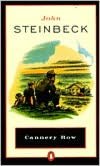
On my recent trip to San Francisco for a friend’s wedding, I had big plans to visit John Steinbeck’s Monterey, where Cannery Row is set, and Jack Kerouac’s Big Sur, where he spent time in his friend poet Lawrence Ferlinghetti’s cabin and the title of one of his books.  This idea, mind you, came after plans had already gone awry when I discovered none of my other friends were able to make it to the wedding or were flying in just in time for the wedding, leaving me with a few days to myself.  I’d been to San Francisco a few times and already done the big touristy things and the Beat literary things in the city (minus the Beat Museum, which wasn’t around the last time I was there–and which will have its own post coming up soon!), so I figured I’d take my literary wanderings a bit further south.

Steinbeck’s Cannery Row came out in 1945, two years before Kerouac made that first big trip out West.  Post-World War II, both Steinbeck and Kerouac spent time in the same area of California—Monterey, Big Sur, Salinas—and wrote about migrant workers, the working class, the down and out, absurd heroes.  Steinbeck writes of Cannery Row:

Its inhabitants are, as the man once said, “whores, pimps, gamblers and sons of bitches,” by which he meant Everybody. Had the man looked through another peephole he might have said, “Saints and angels and martyrs and holy men,” and he would have meant the same thing.

Steinbeck’s message is very much Kerouac’s as well.  Kerouac writes about “the holy con-man with the shining mind” and other Beat characters whom society might consider derelicts but whom he considers saint-like.

I planned to do a close study of Steinbeck’s Cannery Row and to reread Kerouac’s Big Sur to compare and contrast the places, characters, themes, and language.  Visiting a place can sometimes be the best form of research.  You see and hear things that aren’t in books, get a sense of proportion and distance, and see how the landscape has changed.  I wanted to see the land, to feel the sand between my toes, to have the salty ocean breeze whip through my hair, to smell the sardines.  I wanted to experience the rough terrain that so embodied Kerouac’s mind frame in Big Sur.

Unfortunately, a trip to Big Sur would not happen for me.  My plans went awry when I discovered that after Labor Day public transportation to Big Sur stopped running during the week and that the only tour that stops at Big Sur was sold out before I got to book it.  Discovering this two days before I was supposed to leave—okay, so they weren’t exactly “the best-laid plans…”—put a wrench in my itinerary.

Well, here’s my Pinterest inspiration board for Big Sur.

Here’s an article called “Steinbeck vs. Kerouac: Gentlemen, Start Your Engines!” from Big Think.

And here’s an article from Monterey County Weekly on the film adaptation of Kerouac’s Big Sur.

I was, however, able to book a different tour that at least went to Monterey.  I had to get up super early–did I mention there were several conferences going on in San Francisco so the only hotel I could find within my budget was an hour away?–to get to the 9am bus.  I got there right on time, getting one of the few remaining seats in the very back of the bus, on the side that wouldn’t have a good view.  …Two hours later, we were still in San Francisco.  The bus was blowing hot air through the vents and overheating–not great for all the senior citizens on the trip (oh, did I not mention the demographic was ever-so-slightly older?).  They brought in mechanics, and when they failed to fix it, we eventually got a new bus.  About half the people on the tour were so mad that their precious vacation time was wasted that they refused to get on and left the tour completely.  The good news: I got a better seat.

Here are a few pictures from Salinas and Monterey.

John Steinbeck references the aphorism “the best-laid plans of mice and men often goes awry” in the title of one of his other books, Of Mice and Men.  The phrase can be traced back to Robert Burns’ poem “To a Mouse”:

The best-laid schemes o’ mice an’ men
Gang aft agley

Don’t you love that eighteenth-century Scottish English?  (One day I will have to describe my misadventures in Scotland too….)

One of the things I love best about On the Road is Jack Kerouac’s candor that trips often do go awry.  When Sal Paradise, the narrator based on Kerouac, starts his first big road trip from the East Coast to the West, he has grand plans of traveling one great highway all the way there.  That doesn’t work out—nor does he even get out of state before having to turn back and come home again.  He’d been trying to hitchhike his way out of New York City and ended up stranded in a torrential downpour in Bear Mountain, one of the places my own family frequented when I was growing up.  Not one to let problems rain on his parade, Paradise/Kerouac heads back to New York City and buys fare for public transportation that will take him to the first leg of his destination.

Sometimes you just gotta keep on truckin’!  It’s a good lesson for traveling and for life.

What’s the worst that has ever happened to you on your vacation?

* * *

I’m reading tonight at 7pm at  The Penny Farthing (103 3rd Ave., downstairs in the speakeasy) here in New York City! This is a Storytellers event, hosted by C3.  I’ll be reading from Burning Furiously Beautiful: The True Story of Jack Kerouac’s On the Roadcoauthored with Paul Maher Jr.

Parallel Generations

19 Jul

Why is Hollywood taking an interest in the Lost Generation and the Beat Generation?  Are there parallels between the generations of the past and today’s generations?  Is history cyclical?

From a historic standpoint, it makes sense that today’s generations are looking back at the Lost Generation and the Beat Generation.  Like the Lost Generation, the current generation has experienced war.  Although the Lost Generation predates the Great Depression by a few years, novels such as The Great Gatsby have much to say about the disparity of wealth, a topic that this generation has dealt with during the Great Recession.  Part of the seedy wealth distribution of the ‘20s had to do with bootlegging.  Prohibition may not be something today’s candidates have on the table, but there’s a definite right-wing conservatism bent influencing culture today.

The Beat Generation writers were those who were born around the time of the Great Depression and came of age during World War II.  Kerouac and John Clellon Holmes actually were thinking of the Lost Generation when they came up with the idea that they were the Beat Generation.  The obvious parallels between the two generations being the world wars.  While the Lost Generation was going into the Great Depression, the Beat Generation was coming out of it, and so while the Lost Generation was more about decadence the Beat Generation was more about simplicity.  Perhaps, then, today’s older generation is looking toward the Lost Generation and the younger generation looking towards the Beat Generation for confirmation on the way we live our lives.

After all, generations have followed suit in this pattern of economy and war since these generations.  The Baby Boomers were all about the money, and then Generation X was the slacker generation.

Since then we’ve seen Generation Y, also known as the Millennials or Generation Next, who are often thought of as privileged Trophy Kids.  These are the eighties babies (give or take) that are now in their twenties, a few even in their thirties.

Generations X and Y heard Reality Bites, My So-Called Life, and Fight Club tell us our great war was within ourselves.  –And then the terrorist attacks took place on 9/11.  It was around that time that Generation Y turned to indie music, the locavore movement, and reviving arts and crafts.

After that came Generation Z, or Generation I, the kids born in the ‘90s, for whom the Internet, the War on Terror, and the Great Recession are a way of life.  Generations Y and Z are the i-generation, each having their own personal computers, finding fame on blogs and in social media, the generation that is connected and disconnected.  They began looking back at Generation X, wearing flannel.  Miley Cyrus was photographed wearing a Nirvana t-shirt.

The Pew Research Center has a fascinating report that charts the different Generations’ attitudes toward politics, religion, immigration, marriage, and more.

Technology is developing at a faster and faster rate, and with it, generations are shortening and multiplying.  When you think about it, iphones models are even called by their generation, as in the second generation iphone, acknowledging how much generations are defined by technology, as well as money and politics.  Therefore, it’s easy to see how certain generations blend together, which may also be a result, as the Pew Research Center data seems to suggest, of the delayed adulthood.

What generation do you identify with?

Tasty Tuesday: Chew on These Greek Crisis Cooking Tips

13 Dec


My yiayia (grandma) never threw anything out.  She repurposed plastic bottles and sewed up the runs in cheap, drugstore pantyhose.

When she made chicken, the leftover bones got thrown into soups.

Raising her family in Greece during World War II, she had to stretch the drachma as far as it could go.  Now, with the economic crisis in Greece, Greeks are having to return to the thrifty ways of their yiayias.

The Associated Press takes a look at Eleni Nikolaidou’s book “Starvation Recipes,” a collection of recipes and “survival tips” based in Nazi-occupied Greece, and chef F. T. Bletsas’ budget-minded cooking tips in his Greek tv show “Mama’s Cooking” and English-language website www.cookingeconomy.com.

One tip from the article: You’ll feel like you’re eating more if you chew your food veeeeerrrrrrrryyyyyy sssssllllloooowwwwlllllyyyyy.

Do the Brits Love Kerouac More than the Yankees?

3 Dec


Jack Kerouac is the Tupac of the literary world.  Even though he died in the infamous year of 1969, new works of Kerouac’s keep surfacing.  Recent years have seen the publication of Orpheus Emerged (2002) and When the Hippos Were Boiled in Their Tanks (2008), for which he collaborated with William S. Burroughs.  Around Thanksgiving The Sea Is My Brother came out.

Sort of.

The Sea Is My Brother was published in England on November 24, 2011, but it won’t come out in the States until March 6, 2012.  I know this because I’ve been stalking the BN.com product page and was confused when all of a sudden I started getting news that the novel had come out.  I thought maybe it had been released early.  Okay, for any of you who work in publishing, you know that I was really taking a wild leap with that one.  Pub dates shift out further.  Books rarely come in earlier than expected.  So what gives?  Why is a quintessential American author – the author that hitchhiked his way across the United States – being published overseas before in the States?

The good news is if you go to Penguin’s website, you can have the book shipped to you from the UK.  (The rights for the ebook are restricted to the UK.)  You just have pay a whole lot more than if you wait until spring.  Dear Santa….

Here’s the synopsis from Penguin:

Described by Kerouac as being about “man’s simple revolt from society as it is, with the inequalities, frustration, and self-inflicted agonies”, the 158-page handwritten manuscript was Kerouac’s first novel, but was not published during his lifetime. He wrote in his notes for the project that the characters were “the vanishing American, the big free by, the American Indian, the last of the pioneers, the last of the hoboes”. The novel follows the fortunes of Wesley Martin, a man who Kerouac said “loved the sea with a strange, lonely love; the sea is his brother and sentences. He goes down.”

Jack began this work not long after his first tour as a Merchant Marine on the S.S. Dorchester in the late summer of 1942 during which he kept a journal detailing the gritty daily routine of life at sea. Inspired by the trip, which exemplified Jack’s love for adventure and the character traits of his fellow shipmates, the journals were spontaneous sketches of those experiences that were woven into a short novel soon after disembarking from the S.S. Dorchester in October of 1942.

The book also contains correspondence between Kerouac and his Greek childhood friend Sebastian Sampas, with whom he grew up with in Lowell, Massachusetts.  Sampas died while serving in World War II, and Kerouac married his friend’s sister, Stella Sampas.

The BBC’s interview with Dawn Ward quotes the editor as saying Kerouac “‘opens up and shows a side to him that we don’t normally see in his books.'”

The top image is from the hardcover edition published by Penguin the UK.  Below is the cover image being used by Da Capo, an imprint of Perseus Books, which is publishing the book in the States.